President Donald Trump Booed at Madison Square Garden
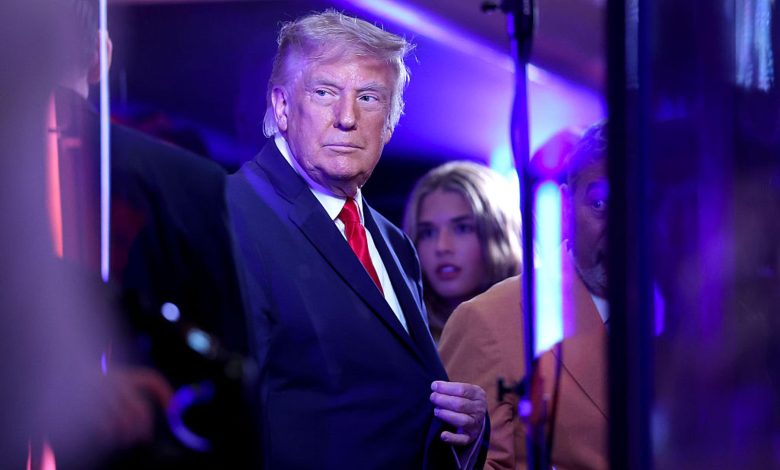
President Donald Trump was met with a historic, thunderous barrage of boos at Madison Square Garden on Monday, June 8, 2026, during Game 3 of the highly anticipated 2026 NBA Finals between the New York Knicks and the San Antonio Spurs. The intense reception highlighted the deep political division within his hometown of New York City, even as he made history as the first sitting United States president to attend an NBA Finals game. The evening was a high-stakes blend of championship sports, intensive Secret Service operations, and raw political drama, leaving an indelible mark on one of the most significant sporting events of the decade.
Table of Contents
- The Scene at Madison Square Garden
- Security Lockdown and Watch Party Cancellations
- The Anthem Incident and Jumbotron Backlash
- From Jeers to Cheers for Jalen Brunson
- High-Profile Guests in the Owner’s Box
- Key Political Figures in Attendance
- Game 3 Analysis: Knicks vs. Spurs
- Victor Wembanyama’s Dominant Performance
- The Social Media Fallout and Viral Sleep Accusations
- Historical Context of Presidents at Sporting Events
- Political Dynamics in New York City
The Scene at Madison Square Garden
Madison Square Garden, widely celebrated as “The World’s Most Famous Arena,” was primed for a night of pure sports ecstasy. After more than fifty years of championship drought, the New York Knicks were on the precipice of glory, holding a commanding 2-0 series lead. The energetic, basketball-starved local fans had turned Midtown Manhattan into a festival of orange and blue. However, the unexpected arrival of the president fundamentally altered the logistics, mood, and atmospheric energy of the historic evening. The sheer magnitude of hosting a sitting commander-in-chief introduced an unprecedented scale of administrative, law enforcement, and security parameters to the venue, shifting the focus of the night well beyond the bounds of the hardwood court.
| Detail Category | Event Information |
|---|---|
| Event Date | Monday, June 8, 2026 |
| Location | Madison Square Garden, New York City, NY |
| Occasion | Game 3 of the 2026 NBA Finals (Knicks vs. Spurs) |
| Notable Guest of Honor | President Donald Trump |
| Accompanied By | James Dolan, Doug Burgum, Sean Duffy, Lee Zeldin, Dan Scavino, Boris Epshteyn, Jared Kushner, Kai Trump |
| Crowd Reaction | Loud, heavy booing when shown on Jumbotron; followed by cheers for Jalen Brunson |
| Game Outcome | San Antonio Spurs defeated New York Knicks (115-111) |
| Security Impacts | Penn Station temporary blocks, cancellation of outdoor MSG watch parties |
Security Lockdown and Watch Party Cancellations
To ensure the safety of the presidential entourage, the United States Secret Service, in close coordination with the New York Police Department (NYPD), established an expansive security perimeter around the arena hours before the tip-off. Transit hubs were heavily impacted, with NYPD and federal officers temporarily blocking access to sections of Penn Station directly beneath the arena. This created massive bottlenecks for commuters and fans trying to navigate Midtown. Furthermore, the high-security protocols forced the cancellation of the highly anticipated, free outdoor watch parties scheduled to take place immediately outside the arena. These watch parties had become a beloved staple of the Knicks’ postseason run, gathering thousands of local fans together in the streets. The cancellation drew swift condemnation from progressive lawmakers, including Representative Alexandria Ocasio-Cortez, who publicly called the disruption a “vibe killer” on social media. The Knicks issued official statements urging ticket-holders to arrive at least two hours early, leading to hours-long queues that resembled international airport security more than a typical professional sports game.
The Anthem Incident and Jumbotron Backlash
The transition from anticipation to raw public reaction came during the pre-game ceremonies. Avery Wilson was invited onto the floor to perform “The Star-Spangled Banner”. Initially, the arena buzzed with patriotic enthusiasm, with crowds initiating spontaneous and roaring chants of “U-S-A! U-S-A!” as the American flag was displayed. The unity was brief. Midway through the national anthem, the television production crew displayed the president’s face on the massive center-court Jumbotron. Standing inside the arena’s glass-encased owner’s box, the president gave a solemn military salute. Almost instantaneously, the patriotic chants collapsed, replaced by a deafening, unified wave of boos and jeers that echoed through the rafters. Despite the loud disapproval, the president maintained a stoic smirk, holding his salute throughout the remainder of the performance.
From Jeers to Cheers for Jalen Brunson
Recognizing the rising tension, the in-arena broadcast crew swiftly redirected the focus of the Jumbotron. The camera panned down to the court, showcasing Knicks star guard Jalen Brunson preparing for tip-off. The transition worked like a theatrical switch. In a fraction of a second, the overwhelming boos vanished, replaced by an explosive, unified roar of cheers, applause, and “M-V-P” chants for the beloved franchise star. The sudden contrast emphasized the distinct priorities of the 20,000 fans in attendance: they had gathered to support their hometown athletic heroes, and they resented the intrusion of federal political theater into their sacred basketball sanctuary.
High-Profile Guests in the Owner’s Box
The president did not attend the high-stakes game alone; he arrived as the guest of honor of New York real estate magnate and Knicks owner James Dolan. Dolan, a long-time associate and prominent donor to conservative political campaigns, hosted the presidential delegation in his private executive suite. Notably, this specific suite is the only box in the entire arena structurally reinforced with heavy security-grade bulletproof glass, a necessary precaution given the profile of the evening’s distinguished guest.
Key Political Figures in Attendance
The executive box was populated by a significant cohort of administration officials, political advisers, and close family members. Among those spotted in the suite were White House Deputy Chief of Staff Dan Scavino, Environmental Protection Agency (EPA) Administrator Lee Zeldin, Interior Secretary Doug Burgum, and Transportation Secretary Sean Duffy. Additionally, the president was joined by his personal adviser Boris Epshteyn, his son-in-law Jared Kushner, and his granddaughter Kai Trump. U.S. special envoy to the Middle East Steve Witkoff was also seen conversing with the president during the game, underlining the highly political and exclusive nature of the gathering. At various points, the president was observed conversing with NBA Commissioner Adam Silver, who stopped by the suite to exchange greetings.
Game 3 Analysis: Knicks vs. Spurs
While the political drama captivated commentators, the actual basketball game on the court was an absolute thriller. The Knicks entered Game 3 with immense momentum, riding an incredible 13-game postseason winning streak and looking to take a decisive 3-0 stranglehold on the series. Fans expected a coronation on home court. However, the visiting San Antonio Spurs, under intense pressure to salvage their championship hopes, executed a flawless defensive and offensive strategy designed to quiet the raucous New York crowd. According to reports and analysis published on the official NBA website, the Spurs capitalized on early Knicks turnovers, setting the tone for a gritty, physical matchup that kept fans on the edges of their seats until the final buzzer.
Victor Wembanyama’s Dominant Performance
The star of the night was undoubtedly San Antonio’s French prodigy, Victor Wembanyama. The sophomore sensation delivered a legendary Finals performance, carving through the Knicks’ defense to score 32 points, grab 14 rebounds, and block several crucial shots in the fourth quarter. Backed by Wembanyama’s historic performance, the Spurs successfully closed out a hard-fought 115-111 victory, handing the Knicks their first loss of the postseason and narrowing the series to 2-1. Although Jalen Brunson put together a spectacular 28-point performance, the Knicks’ late-game rally fell short, dampening the spirits of the local faithful who had hoped to celebrate a historic victory in front of their home crowd.
The Social Media Fallout and Viral Sleep Accusations
The political controversy did not end with the pre-game national anthem. As the game transitioned into the second half, spectators and television viewers noticed a peculiar detail on the broadcast. Several fan-recorded videos and high-definition screenshots quickly circulated on social media, appearing to show the president sitting in the owner’s box with his eyes tightly closed for extended periods during the live action. This sparked a massive wave of internet jokes, memes, and intense political commentary. Progressive politicians immediately seized on the viral moment to criticize the administration. Representative Alexandria Ocasio-Cortez took to social media, writing a viral post that simply read, “WAKE TF UP”. Representative Yassamin Ansari of Arizona also commented on the situation, questioning why public transit and community watch parties were shut down across the city only for the president to seemingly doze off in a luxury executive suite. Administration officials quickly dismissed the allegations, asserting that the president was merely focusing and resting his eyes during timeouts, but the viral clips continued to dominate the post-game news cycle.
Historical Context of Presidents at Sporting Events
The presence of a sitting commander-in-chief at a major athletic event has long been a powerful tool for public relations, national unity, and political messaging. However, this particular visit was exceptionally unique, marking the first time in modern sports history that a sitting president attended an NBA Finals game. Historically, presidents have carefully selected sporting events where they could expect a warm, unified reception. Examples include George W. Bush throwing out the iconic ceremonial first pitch at Yankee Stadium following the tragic events of September 11, 2001, or Barack Obama establishing an annual tradition of sharing his NCAA tournament brackets with sports networks. In contrast, professional basketball arenas—especially those located in highly populated metropolitan hubs like New York City—tend to draw a younger, highly diverse, and politically progressive demographic. By entering Madison Square Garden, the president stepped into a highly partisan environment, making a public clash almost inevitable.
Political Dynamics in New York City
The hostile crowd reaction at Madison Square Garden serves as a vivid micro-reflection of the ongoing political polarization gripping the nation, particularly the deep divide between the federal executive branch and major urban centers. New York City, despite being the president’s longtime home, has consistently stood as an electoral and ideological stronghold for the opposition party. The local population’s dissatisfaction is rooted in deep policy differences and ongoing legislative battles. Throughout his term, urban administrations have consistently challenged federal policies. For example, progressive legal coalitions have fought executive actions in court, such as when grants halted by the Trump administration were deemed unconstitutional.
Furthermore, the administration’s aggressive trade policies have faced intense local and global pushback, notable in high-profile legal battles where tariffs were deemed illegal and courts struck down Trump’s global import taxes. This economic friction has deeply affected local businesses in metropolitan trade hubs, amplifying the local resentment on display at the arena. Beyond policy and economic disputes, the negative reception in New York is intimately connected to the president’s extensive legal troubles within the state’s judicial system. Over the years, the president has fought numerous high-stakes legal battles in Manhattan courts, culminating in major financial judgments and appeals, including instances where Trump appealed his $83 million defamation verdict to the Supreme Court. When these legislative, economic, and judicial conflicts are viewed together, the chorus of boos at Madison Square Garden was not merely a reaction to a temporary security inconvenience; it was a loud, public manifestation of a deep-seated urban resistance to the administration’s overall agenda.