Bedford train collision: One dead and 89 injured near Elstow
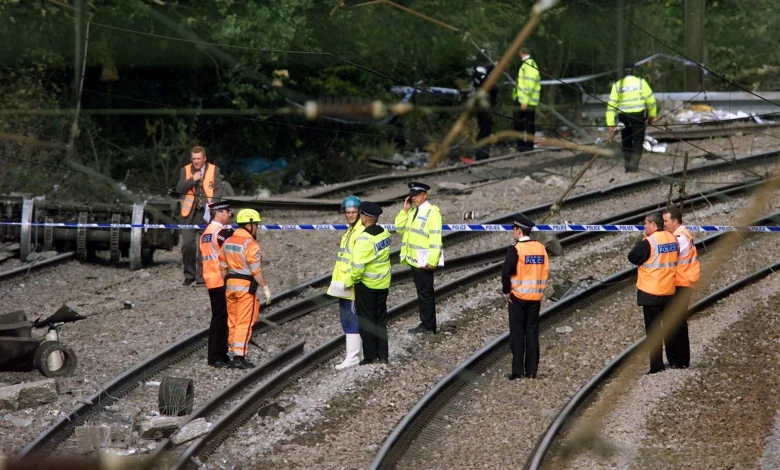
Table of Contents
Bedford train collision events are exceedingly rare in the modern era of United Kingdom rail transport, making the disaster of June 19, 2026, an incredibly shocking occurrence for the entire country. Two southbound passenger trains bound for London St. Pancras station collided outside the town of Bedford around 5:15 p.m., resulting in one fatality and dozens of injuries. The disaster, which unfolded on the busy Midland Main Line, immediately triggered a massive response from regional emergency services and has prompted a full-scale investigation by the Rail Accident Investigation Branch (RAIB). This detailed news report examines the timeline of the accident, the technical specifications of the trains involved, the rescue operations, the passenger experiences, and the safety questions that investigators must now address.
1. Overview of the Collision
The collision occurred on a Friday afternoon, a time when commuter services are traditionally packed with passengers traveling from Nottinghamshire, Northamptonshire, and Bedfordshire toward Central London. According to rail tracking logs, the incident occurred at approximately 17:12 BST (5:12 p.m. local time). The point of impact was near the village of Elstow, just south of the Bedford South Junction on the Midland Main Line. This line is one of the primary arteries of the UK railway network, connecting London St. Pancras with the East Midlands and Yorkshire.
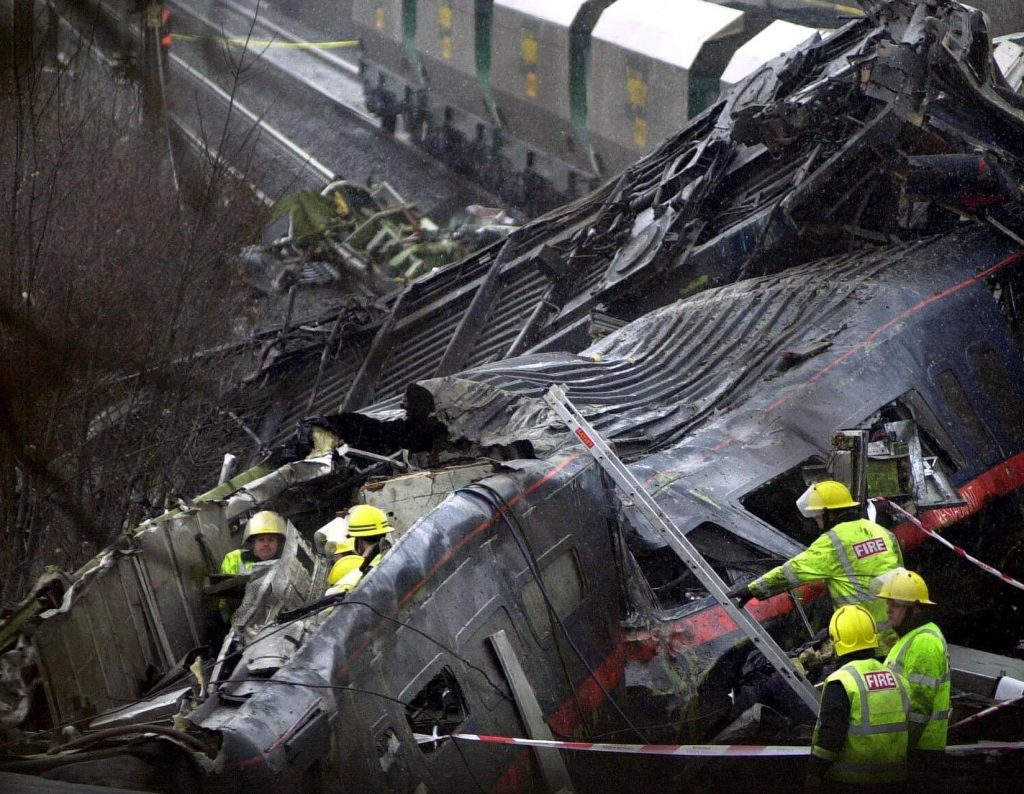
Initial tracking data indicated that both passenger trains were traveling on the same track in a southbound direction. The leading train had come to a halt on the Up Fast line, reportedly suffering from a technical malfunction. The following train, traveling on the same line, failed to stop in time and collided with the stationary train’s rear carriage. The impact was severe enough to crush the leading driver’s cab of the rear train, causing structural damage to multiple carriages and throwing passengers from their seats.
Details of the Trains Involved
To fully comprehend the mechanics of the collision, it is necessary to examine the specific rolling stock involved in the accident. Both passenger trains were operated by East Midlands Railway (EMR), a prominent rail operator under the private Transport UK Group. However, the two trainsets represented very different technological generations:
- The Leading Train (Nottingham Service): This service was the 15:50 departure from Nottingham to London St. Pancras (reporting number 1B67). It was operated by a Class 810 ‘Aurora’ bi-mode multiple unit, manufactured by Hitachi. These trains are the newest addition to the EMR fleet, designed to run on both diesel power and overhead electric lines. Having been introduced to public service less than a year prior, the Class 810 was regarded as a cornerstone of EMR’s modernization program. On the afternoon of the crash, the train was running approximately 18 minutes late and had stopped near the Tarmac Elstow siding due to an unresolved technical fault.
- The Trailing Train (Corby Service): This service was the 16:40 departure from Corby to London St. Pancras (reporting number 1H46). It was operated by a Class 360 electric multiple unit, manufactured by Siemens. The Class 360 trainsets are reliable workhorses of the commuter lines, having entered service on the Midland Main Line several years ago. The train departed Bedford station on time from platform 1 at 17:10. According to signal logs, it passed through Bedford South Junction at 17:12, where it crossed over from the Up Slow line to the Up Fast line, putting it directly on a collision course with the stationary Nottingham train.
The collision was essentially a rear-end impact. While the modern design of the Class 810 Aurora trainset provided significant crashworthiness, the older design of the Class 360’s cab bore the brunt of the kinetic energy, leading to catastrophic damage to the driver’s cabin.
2. Immediate Emergency Response and Major Incident Declaration
Following reports of the impact, British Transport Police (BTP) and local emergency services were alerted at approximately 5:15 p.m. Realizing the scale of the collision and the potential for high casualties, BTP immediately declared a ‘major incident’. This designation allowed for the rapid mobilization and coordination of resources from across the East of England.
First responders faced a challenging scene. The trains had collided on an embankment near the Elstow interchange, where the busy A421 and A6 roads meet. Accessing the tracks required emergency personnel to carry heavy equipment across fields and climb the steep railway embankment. Bedfordshire Police, Bedfordshire Fire and Rescue Service, and the East of England Ambulance Service worked in close cooperation to establish a secure perimeter and begin the triage process.
To support the massive rescue effort, emergency services deployed specialized resources, including multiple air ambulance helicopters, which landed in adjacent fields. The East of England Ambulance Service also dispatched its Hazardous Area Response Team (HART), which is specifically trained to operate in dangerous environments, including unstable railway structures. Fire crews utilized specialized cutting equipment to gain access to the crushed driver’s cab and heavily damaged passenger carriages.
Casualty Breakdown and Medical Evacuation
The human toll of the collision was severe, necessitating a rapid and highly organized medical evacuation plan. The East of England Ambulance Service later released a comprehensive breakdown of the casualties treated at the scene and transported to regional hospitals.
| Injury Severity Category | Number of Casualties | Key Medical Actions & Patient Status |
|---|---|---|
| Fatalities | 1 | Pronounced dead at the scene; confirmed to be the driver of the Class 360 train. |
| Very Serious Injuries | 11 | Air-lifted or rushed via land ambulance to major trauma centers; suffering from critical head and torso injuries. |
| Serious Injuries | 22 | Transported to regional hospitals; treated for complex fractures, severe concussions, and deep lacerations. |
| Minor Injuries | 56 | Treated at temporary triage tents set up near the tracks or at local emergency departments; subsequently discharged. |
| Uninjured / Mild Shock | Dozens | Evacuated on foot along the tracks to the nearby Progress Park family reunification center. |
The single fatality was confirmed to be the driver of the Corby-to-London train. As a veteran driver and former representative of the RMT union, his death caused immense grief within the rail community. The remaining injured passengers were distributed among several local medical facilities, with the Luton and Dunstable University Hospital taking the majority of the patients. Due to the sudden influx of casualties, hospital administrators urged members of the public to avoid attending the emergency department unless they were experiencing a genuine, life-threatening emergency.
3. Eyewitness Accounts and Passenger Experience
The experience of those on board the trains was marked by sudden terror and confusion. Because the collision occurred without warning, passengers had no time to brace themselves. The sudden deceleration caused individuals, luggage, and personal items to be violently thrown across the carriages.
Peter Knapp, a passenger traveling on the rear train, described the harrowing moments of the impact. ‘There was a moment of being flung into the chair in front, and then I saw smoke. People were crying, screaming. People were so scared and confused’. Knapp, who suffered gouges to his shins but was otherwise able to walk, described a chaotic scene inside the carriage. ‘I got up and I saw a lot of people who were unable to speak, had broken legs. And then I managed to get out of the train and because I’m quite thin I was able to squeeze out through the gap in the doors’.
Other survivors recounted the immediate aftermath, describing the smell of electrical burning and the sudden hiss of escaping steam or smoke. Many praised the actions of off-duty medical professionals and fellow passengers who immediately began administering first aid to those with severe bleeding or broken limbs. The camaraderie among the passengers was notable, with stronger individuals helping elderly travelers and children navigate the narrow, darkened corridors of the derailed and damaged carriages.
4. Immediate Aftermath and Disruption to Rail Services
The collision had a catastrophic effect on the UK’s rail infrastructure, particularly along the Midland Main Line. Immediately following the crash, Network Rail suspended all services between London St. Pancras and Leicester. This suspension cut off major cities, including Nottingham, Derby, Sheffield, and Leicester, from their primary rail link to the capital.
East Midlands Railway released urgent statements advising passengers not to travel and warning that disruptions would persist for days. Because the collision occurred on the main fast tracks, the physical clearance of the damaged trains was expected to be a prolonged and highly complex engineering task. Heavy recovery cranes had to be positioned near the Elstow siding to lift the heavy steel carriages back onto the rails or load them onto flatbed transport vehicles.
For passengers stranded at London St. Pancras and stations along the Midland Main Line, alternative travel arrangements were put in place. Rail operators coordinated ticket acceptance with the West Coast Main Line (operated by Avanti West Coast) and the East Coast Main Line (operated by LNER) to allow travelers to reach the North via alternative routes. However, these diversions added hours to journey times and caused secondary overcrowding across the wider network.
5. Official Statements and Political Reactions
The scale of the disaster quickly drew responses from the highest levels of the British government and the wider political establishment. The tragedy occurred at a time of heightened national focus on infrastructure safety and public transport investment, making the crash a matter of intense national debate.
Prime Minister Keir Starmer expressed his deep concern, releasing a statement on social media: ‘Hugely concerning reports of a collision involving two passenger trains near Bedford. First and foremost, my thoughts are with the family of the person who has sadly lost their life, and with those who have been seriously injured. I am grateful to the emergency services for their swift response to this tragic incident’.
Transport Secretary Heidi Alexander echoed these sentiments, confirming that her department was working in lockstep with Network Rail, EMR, and emergency services. ‘We are working quickly with the rail industry and local partners to support passengers,’ Alexander said, adding that a thorough, independent investigation would be launched immediately to determine how such a failure could occur on a modern rail network.
Trade unions also voiced their devastation and anger. Eddie Dempsey, general secretary of the RMT union, highlighted the loss of the train driver: ‘We are devastated to learn that a train driver and former RMT rep has tragically died as a result of today’s crash between Luton and Bedford. The thoughts of RMT are with their family, friends, colleagues and the ASLEF trade union at this awful time’. The ASLEF union, representing train drivers, emphasized the need to examine cabin safety and the structural integrity of older commuter trains like the Class 360.
6. RAIB Investigation and Safety Inquiries
The primary responsibility for determining the cause of the disaster falls to the Rail Accident Investigation Branch (RAIB). A team of highly specialized safety inspectors was dispatched to Elstow on Friday night to begin the painstaking process of gathering physical evidence and analyzing digital data logs.
The investigation is expected to focus on several critical areas of inquiry:
- The Signaling System: Investigators must determine why the signaling system permitted the Class 360 Corby train to enter the block of track occupied by the stationary Class 810 Nottingham train. Modern British railways utilize advanced signaling networks designed to maintain a safe stopping distance between trains at all times.
- The Train Protection and Warning System (TPWS): TPWS is designed to automatically apply a train’s emergency brakes if it passes a signal at danger (SPAD) or is traveling too fast for the track conditions. Investigators will analyze whether the TPWS functioned correctly on both trainsets or if there was a technical bypass or hardware failure.
- The Technical Failure of the Class 810: The newly introduced Hitachi Class 810 ‘Aurora’ train stopped due to a reported technical fault. The RAIB will investigate the nature of this fault, how long the train was stationary before the impact, and whether the train crew followed correct emergency communication protocols to alert the regional signaling center.
- Crossover Dynamics: The Class 360 train had just crossed over from the Up Slow to the Up Fast line at Bedford South Junction. Inspectors will verify if the mechanical switches and interlocking software operated correctly during this maneuver.
To understand the technical standards governing rail accident investigations, the public can review Wikipedia’s documentation of the 2026 Bedford train collision, which tracks ongoing updates on the physical evidence gathered at the site.
Historical Safety Context of British Railways
Despite the severity of the Bedford crash, the United Kingdom’s rail network remains historically one of the safest in the world. Fatal rail accidents have become exceedingly rare over the past two decades. Prior to the Bedford incident, the last fatal passenger train-on-train collision occurred in Powys, Wales, in October 2024, which resulted in a single fatality. Before that, the Salisbury rail crash in 2021 caused injuries but no deaths, and the Stonehaven derailment in Scotland in 2020 claimed three lives following a landslide.
The low frequency of such accidents is the direct result of strict safety regulations implemented following the watershed disasters of the late 20th century. The Clapham Junction crash of 1988, which killed 35 people, led to a complete overhaul of signaling maintenance practices. Similarly, the Ladbroke Grove crash of 1999, which claimed 31 lives, accelerated the development and deployment of TPWS across the national network. The RAIB’s findings in the Bedford case will undoubtedly influence future safety mandates, particularly concerning the integration of newer, bi-mode trainsets with existing regional signaling infrastructures.
7. Next Steps for Railway Infrastructure and Technical Reviews
In the coming months, the focus will transition from emergency response and immediate recovery to long-term systemic reform. Network Rail will face intense pressure to review its track-circuiting systems on the Midland Main Line. This line has undergone extensive modernization, including electrification and the installation of upgraded digital signaling systems, making the failure to detect a stationary train particularly troubling to safety experts.
Furthermore, EMR and Hitachi will conduct a thorough review of the Class 810 ‘Aurora’ fleet. If the technical fault that caused the Nottingham train to stall is found to be a systemic issue, it could lead to the temporary grounding or restricted operation of these high-speed bi-mode trains. Such a move would have widespread implications for rail travel across the East Midlands, forcing the operator to rely on older, less efficient diesel rolling stock.
For the families of the victims, the long road to answers has just begun. The RAIB is expected to release an interim report within several weeks, detailing the initial facts and established timelines of the collision. A full, comprehensive report, containing formal safety recommendations for the wider rail industry, will likely take up to a year to complete. In the meantime, the rail community continues to mourn the lost driver, while engineers work tirelessly to restore safe operations on one of Britain’s most critical transit routes.