Iran Accuses UAE: OPEC Exit Tied to War Retaliation
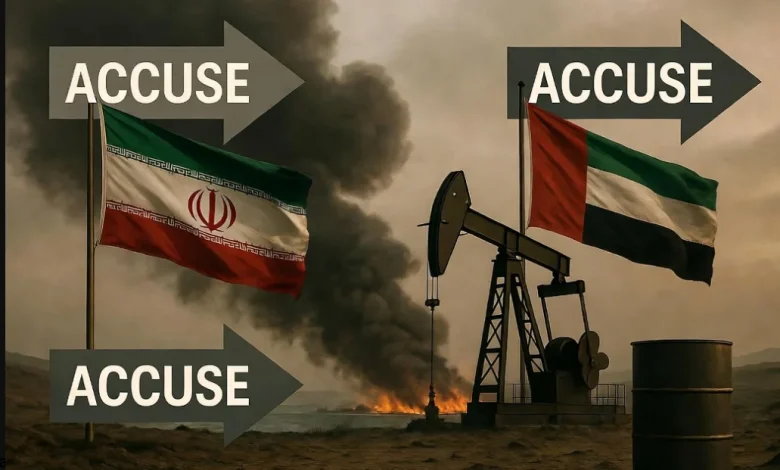
Iran Accuses UAE: A Geopolitical Firestorm Over OPEC Exit
Iran accuses UAE of leveraging its recent exit from the Organization of the Petroleum Exporting Countries (OPEC) as a direct act of retaliation for Tehran’s firm stance in the ongoing regional conflict. This serious accusation, voiced by Iranian officials, plunges the already volatile Middle East into a deeper state of geopolitical uncertainty, intertwining energy policy with escalating military and diplomatic tensions. The United Arab Emirates officially announced its withdrawal from both OPEC and the broader OPEC+ alliance, effective May 1, 2026, ending a nearly six-decade-long membership. While Abu Dhabi cites national economic interests and a desire for greater flexibility in its oil production strategy, Iran views the move through a much more confrontational lens, perceiving it as a deliberate affront and an alignment with its adversaries.
The timing of the UAE’s departure is particularly poignant, coming amidst a significant regional conflict, often referred to as the ‘Iran war’ or the ‘US-Israel war against Iran,’ which began around February 28, 2026. This conflict has seen US and Israeli strikes against Tehran, prompting Iranian retaliation that has, at times, targeted UAE infrastructure. The critical Strait of Hormuz has also experienced significant disruptions, further exacerbating global oil supply concerns. This article delves into the intricate layers of this accusation, exploring the stated reasons for the UAE’s exit, the specific nature of Iran’s allegations, the broader geopolitical context of the regional conflict, and the potential ramifications for global oil markets and regional stability.
The UAE’s OPEC Departure: A Strategic Pivot
The United Arab Emirates’ decision to leave OPEC, announced on April 28, 2026, and effective May 1, 2026, represents a significant shift in its long-standing energy policy. For nearly 60 years, the UAE has been an influential member of the cartel, often ranking as its third-largest producer behind Saudi Arabia and Iraq. Emirati officials have consistently framed this withdrawal as a strategic imperative driven by national economic interests and a desire for greater autonomy in managing its vast oil resources.
At the core of the UAE’s rationale is the ambition to achieve “unfettered flexibility” in its long-term energy planning. The Abu Dhabi National Oil Company (ADNOC) has aggressively pursued an investment strategy aimed at boosting crude oil production capacity to 5 million barrels per day (bpd) by 2027, an acceleration from an earlier 2030 target. This is a substantial increase from its current official capacity of 4.5 million bpd and its recent production levels, which hovered around 3.6 million bpd due to OPEC quotas. The UAE has long expressed frustration with OPEC’s production quotas, viewing them as restrictive and potentially hindering its ability to capitalize on market opportunities and maximize revenues. By exiting, the UAE aims to decouple its production decisions from collective OPEC mandates, allowing it to respond more dynamically to global demand shifts and solidify its position as a key global energy supplier.
This strategic move is also seen by some as a move to strengthen ties with major oil-importing partners, such as China, by potentially offering more flexible supply arrangements outside of OPEC’s coordinated efforts. Furthermore, the UAE’s economy, with its substantial sovereign wealth fund, is increasingly diversified and tied to global economic growth rather than solely to the global price of oil, which may have reduced its incentive to adhere to OPEC’s price-stabilization objectives.
Tehran’s Allegations: An Act of ‘Vengeful Reaction’
In stark contrast to the UAE’s economic justifications, Iran has explicitly condemned Abu Dhabi’s OPEC exit, interpreting it as a politically motivated act of retaliation. Iran’s Foreign Ministry spokesperson, Esmaeil Baghaei, did not mince words, describing the UAE’s departure as an “unconstructive and negative reaction” and even a “vengeful reaction” towards fellow member states.
Baghaei’s accusations extend beyond mere disapproval of the exit. He directly linked the UAE’s decision to its perceived “inappropriate behavior” and “alignment with the aggressors,” specifically implicating Abu Dhabi in assisting Israel and the United States during the ongoing conflict with Iran. “We have witnessed inappropriate behavior by the United Arab Emirates over the past 50 days, including its alignment with the aggressors, which created many problems,” Baghaei stated on May 4, 2026. These statements clearly articulate Tehran’s belief that the UAE’s energy policy is now being weaponized as a tool in the broader regional power struggle.
From Iran’s perspective, the UAE’s actions undermine the unity and collective interests of oil-producing nations, particularly at a time of heightened regional instability. Tehran reaffirmed its commitment to its obligations within OPEC+, emphasizing the importance of cooperation for global energy stability. The severity of Iran’s rhetoric suggests a perception of betrayal, viewing the UAE’s independent course as a direct challenge to its own regional standing and security concerns.
Iran’s Stance in the Regional Conflict
To fully grasp Iran’s accusations, it is crucial to understand its perspective and role in the complex regional conflicts. The current ‘Iran war,’ triggered by US and Israeli strikes against Tehran around late February 2026, has significantly escalated tensions across the Middle East. Iran views this conflict as an “existential war,” prompting it to warn of escalation and the deployment of its regional proxies, including groups like Hezbollah, Hamas, and the Houthis.
During this period, Iran has reportedly launched numerous drone and missile attacks, with some directly targeting infrastructure in the UAE. The Strait of Hormuz, a vital chokepoint for global oil and liquefied natural gas flows, has also been effectively closed or severely disrupted by Iranian actions, causing significant concern for energy security worldwide. This disruption has had a tangible impact on the UAE’s export capabilities, with reports indicating a reduction in production by up to 44% in March due to logistics constraints in the Strait.
Iran’s allegations stem from a belief that the UAE, by potentially increasing its oil production outside OPEC quotas and aligning more closely with the US and Israel, is actively working against Iranian interests during a critical time. An Iranian lawmaker even publicly warned that the UAE would be “taught a lesson” if it sided with Washington in any future hostilities against Tehran, suggesting that Abu Dhabi could assist US operations from its territory. These threats underscore the deep-seated mistrust and the volatile interplay between energy decisions and security perceptions in the Gulf.
OPEC’s Fragmentation and Global Oil Markets
The UAE’s exit marks a significant blow to OPEC’s cohesion and its ability to influence global oil markets. As one of the cartel’s largest and most flexible producers, its departure reduces the group’s collective capacity to coordinate supply and stabilize prices. Analysts widely predict that this move will lead to increased fragmentation within the producer alliance and heighten oil price volatility in the medium to long term.
Immediately following the UAE’s announcement, other OPEC+ members, including Saudi Arabia and Russia, increased their collective oil production quota by 188,000 barrels per day (bpd) for June. This move was interpreted as an attempt to project stability and demonstrate that OPEC+ still controls global oil markets despite the UAE’s departure and ongoing disruptions in the Strait of Hormuz. However, the actual impact on physical supply remains limited as long as the Strait of Hormuz constraints persist.
Table 1: Key Oil Market Data for UAE (Pre-OPEC Exit & Projections)
| Metric | Pre-Exit (2026 Q1/Q2 Est.) | Post-Exit Target (by 2027) | Global Context |
|---|---|---|---|
| Crude Oil Production (bpd) | ~3.6 million | ~5 million | #7 global producer (as of 2024) |
| Production Capacity (bpd) | 4.5 million | 5 million | Holds 25% of OPEC’s total spare capacity |
| Proven Oil Reserves | 113 billion barrels (as of 2025) | N/A | #6 globally (as of 2025) |
| Share of Global Oil Output (Pre-exit) | ~3% of global supply | Expected to increase | OPEC accounted for ~44% prior to Iran war |
This data highlights the UAE’s significant role as a major producer and its potential to dramatically increase supply, which would inevitably reshape the global energy landscape outside of OPEC’s traditional control. While the immediate market impact might be limited by current logistical bottlenecks, the long-term implications for oil prices and market stability are substantial.
OPEC: A Historical Perspective
OPEC was founded in Baghdad in 1960 by five members – Iran, Iraq, Kuwait, Saudi Arabia, and Venezuela – with the primary goal of coordinating and unifying petroleum policies among member countries to secure fair and stable prices for producers. Over the decades, OPEC’s influence grew, most notably during the 1970s oil crises when it wielded considerable power through coordinated actions, such as the 1973 oil embargo against the United States and its allies.
However, the organization has consistently faced internal divisions due to the diverse economic, political, and strategic interests of its members. Historically, conflicts in the Middle East have often strained OPEC’s cohesion and effectiveness. The current geopolitical landscape, marked by the Iran war and deepening rivalries, represents another critical juncture challenging the cartel’s foundational principles of collective discipline and unified policy. The UAE’s departure is a stark manifestation of these long-standing internal pressures and diverging national interests. For more historical context on OPEC’s evolution, readers can refer to the Council on Foreign Relations’ timeline on OPEC in a Changing World.
Economic and Geopolitical Ramifications
Beyond the immediate rhetoric, the UAE’s exit from OPEC and Iran’s accusation carry profound economic and geopolitical implications for the Middle East and the global stage. Economically, a free-pumping UAE could, in the medium to long term, exert downward pressure on global oil prices by significantly increasing supply. This would be welcomed by oil-importing nations and could be viewed as a foreign policy win for the United States, which has historically criticized OPEC for inflating prices. However, the current disruptions in the Strait of Hormuz mean that any immediate surge in supply from the UAE is unlikely, keeping crude oil prices elevated in the short term.
The Strait of Hormuz Disruption
The ongoing ‘Iran war’ has profoundly impacted the Strait of Hormuz, a narrow waterway through which roughly 20% of the world’s oil and a significant portion of its liquefied natural gas pass. Iran’s actions, including a blockade or significant disruption of the Strait, have created what the International Energy Agency describes as the “largest energy security threat in modern history”. This situation constrains exports from Middle East Gulf countries, affecting their ability to physically deliver oil, regardless of production capacity. The UAE’s ability to fully exploit its newfound freedom from OPEC quotas hinges on a resolution to these logistical and security challenges in the Strait. The enduring uncertainty surrounding this critical chokepoint continues to drive price volatility and complicates the global energy outlook.
UAE-Saudi Arabia Tensions and Regional Realignment
The geopolitical landscape of the Gulf region is undergoing a significant realignment, and the UAE’s OPEC exit is a potent symbol of this shift. Deepening fractures between Abu Dhabi and Riyadh, OPEC’s de facto leader, have been evident for years. These tensions stem from disagreements over production quotas, regional policies (e.g., conflicting stances in Yemen), and broader strategic visions. The UAE’s unilateral withdrawal, without prior consultation, underscores its increasing pursuit of national autonomy and challenges Saudi Arabia’s traditional leadership within the cartel.
Furthermore, the UAE has demonstrated increasing foreign policy independence, notably by normalizing relations with Israel in 2020 through the Abraham Accords. This move, alongside its alleged assistance to the US and Israel during the current conflict with Iran, contrasts with Saudi Arabia’s more cautious approach to regional de-escalation efforts. Some analysts suggest that the UAE is aligning itself more closely with Washington and Tel Aviv, while Saudi Arabia may be drifting in another direction. This divergence could force other regional countries to choose sides, further fragmenting alliances and creating new axes of power in the Middle East. The UAE’s exit, therefore, is not merely an economic decision but a geopolitical earthquake, exposing fault lines that have been accumulating for years across a vast geography.
Expert Analysis and Future Outlook
Energy analysts and geopolitical experts are closely scrutinizing the implications of the UAE’s OPEC exit, particularly in light of Iran’s accusations. Many concur that the move fundamentally challenges OPEC’s market-balancing mechanism and will lead to a structurally weaker organization in the long term. Joshua Aguilar, an analyst at Morningstar, noted, “While the impacts of the UAE’s withdrawal won’t be immediately felt, given the disruptions in the Strait of Hormuz, we’re confident there will be long-term reverberations leading to a structurally weaker OPEC”.
The shift towards independent supply management by a major producer like the UAE is expected to increase volatility risks across oil markets. Oil prices are likely to become more sensitive to regional supply disruptions and national policy decisions rather than coordinated cartel actions. This could lead to a more competitive oil market, potentially benefiting consuming countries but posing challenges for higher-cost producers.
From a geopolitical standpoint, the UAE’s decision is interpreted as a clear assertion of its foreign policy diversification. It reflects a growing trend where national sovereignty and strategic interests increasingly outweigh collective discipline within international alliances. Anwar Gargash, diplomatic adviser to the UAE president, articulated this sentiment, stating that Gulf states’ policies of containing Iran through diplomatic or economic engagement had “failed miserably” and that a “brutal and pre-planned [Iranian] aggression poses a vital threat”. Such statements underscore Abu Dhabi’s hardening stance and its willingness to chart an independent course.
The ongoing conflict with Iran is a critical variable in this equation. With Iran viewing the war as existential and actively reconstituting its military capabilities, the potential for further escalation remains high. Any perceived alignment or assistance to Iran’s adversaries by the UAE will only deepen the animosity and increase the risk of targeted responses. The interplay between the UAE’s pursuit of energy autonomy and Iran’s security concerns creates a highly combustible dynamic in the region.
Conclusion: A New Era of Volatility and Independent Energy Policy
The accusation by Iran that the UAE’s OPEC exit is a retaliatory move rooted in Tehran’s stance in the regional war marks a dangerous escalation in the complex geopolitics of the Middle East. While the UAE publicly attributes its departure to long-term economic strategy and the desire for greater production flexibility, Iran firmly believes the move is a punitive measure linked to its support for adversaries in the ongoing conflict. This divergence in narratives highlights the deep chasm of mistrust and competing interests that define relations between these two significant regional powers.
Regardless of the immediate market impact, which is currently tempered by the disruptions in the Strait of Hormuz, the UAE’s exit fundamentally reshapes the global energy landscape. It weakens OPEC’s ability to act as a unified force, signaling a new era of fragmentation and increased volatility in oil markets. Geopolitically, the move further exacerbates tensions between the UAE and Iran, deepens the rift within the Gulf Cooperation Council, and potentially encourages a broader realignment of regional alliances. The Middle East, already grappling with an intense regional conflict, now faces an added layer of unpredictability where energy policy is inextricably linked to national security and diplomatic maneuvering. The world watches closely as these dynamics unfold, understanding that the repercussions will resonate far beyond the shores of the Persian Gulf.