2 Teens Injured in Shocking Mount Si Bear Attack on Popular Hiking Trail
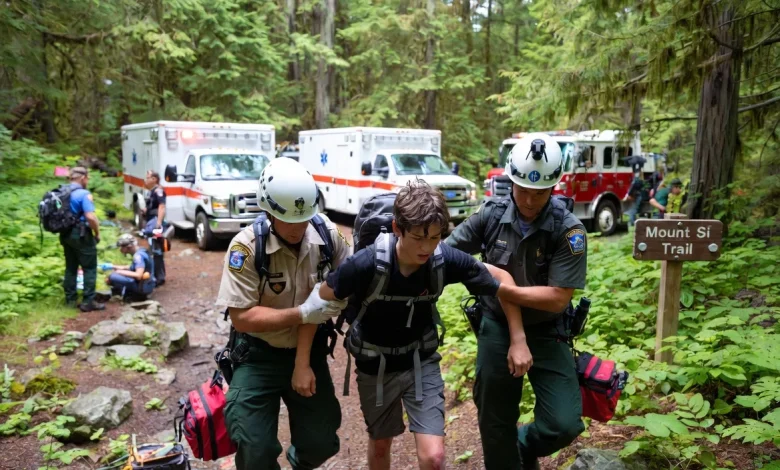
The Incident: How the Mount Si Bear Attack Unfolded
The afternoon of Tuesday, June 16, 2026, began like any other sunny summer day for hikers tackling the rugged terrain of Mount Si Trail . However, the atmosphere turned to sheer panic for a group of three teenage boys hiking together. At approximately 11:30 a.m., as they made their way past the mid-point of the trail—about 2.7 miles up the mountain—a black bear suddenly emerged from the dense Pacific Northwest forest. Without warning, the bear charged the group and swiped aggressively at them.
The sudden charge left the teenagers with virtually no time to deploy standard deterrents or retreat. During the brief but violent encounter, the bear made physical contact with one of the boys, scratching him across the body and tossing him around. The terrifying sequence of events highlights the unpredictable nature of wild animals, even on trails that are heavily traveled by humans. Though black bears are generally known to be timid and quick to run away from human voices, this bear exhibited a striking lack of fear, charging directly into the group of three.
Rescue Operations and Medical Treatment of the Injured Teens
Following the attack, the hikers were able to distance themselves from the bear and call 911. The emergency response was immediate and highly coordinated. King County Search and Rescue (KCSAR) crews, Eastside Fire & Rescue, and WDFW officers rushed to the trailhead to coordinate an extraction. Because the encounter occurred nearly three miles up a steep, rocky trail, rescuing the injured teen required specialized equipment.
Rescue crews utilized an all-terrain vehicle (ATV) to reach the teenage boy and safely transport him down the mountain around 2:30 p.m. Brandyn Hull, a spokesperson for the King County Sheriff’s Office, confirmed that the boy suffered non-life-threatening injuries and was semi-ambulatory when searchers reached him. He was subsequently transported to a local hospital for thorough medical evaluation and treatment.
King County Sheriff’s Office deputy Peter Linde provided further details on the victim’s condition, stating, “His injuries were very minor, but he was of course terrified. The bear tossed him around a little bit, but nothing serious. He’s on his way to the hospital right now to be checked out, get the wounds clean, and maybe get some antibiotics.” Additionally, Eastside Fire & Rescue confirmed that a second teenager in the group was treated for less serious injuries that did not require hospitalization. It remains unclear whether the second teen’s injuries were caused directly by the bear or sustained while trying to flee the scene in panic.
The Investigation: Washington Department of Fish and Wildlife Action
Immediately following the extraction of the injured hikers, WDFW police officers and biologists took control of the scene. The agency’s primary objective is to locate the bear involved in the attack to assess its behavior and protect public safety. Under standard WDFW protocol, any bear that has made physical contact with a human or demonstrated predatory behavior is considered a severe threat to public safety and must be humanely euthanized.
To assist in the search, wildlife officers may deploy Karelian bear dogs—specially trained canines utilized by the department to track, corner, and sometimes haze bears and mountain lions. In addition, biologists are collecting DNA samples from the victim’s clothing and the site of the encounter. This genetic fingerprinting allows officials to confirm if a captured bear is indeed the individual responsible for the attack. Finding the bear in the vast, densely forested terrain of the Mount Si Trail Natural Resources Conservation Area is a challenging task, and officers are using all available resources to resolve the situation as quickly and safely as possible.
A Troubling Pattern: Second Hiker Group Followed
What makes this specific incident particularly concerning to wildlife biologists is that it does not appear to be an isolated event. Shortly after the attack was reported, a second, unrelated group of hikers came forward with their own chilling account. According to the WDFW, this second group reported being closely followed for several miles by a black bear on the same day in the same general vicinity.
A bear following humans for an extended distance is a classic sign of habituation. Habituated bears have lost their natural, instinctive fear of humans, often because they have been rewarded with human food or garbage in the past. When a bear begins to associate humans with easy meals, it becomes bolder and more demanding. This behavior can quickly escalate from passive following to aggressive confrontations, as demonstrated by the attack on the teenage hikers. Biologists warn that once a bear reaches this level of habituation, the risk of a serious conflict increases exponentially, making the animal’s removal necessary for public safety.
Historical Context: How Rare Are Black Bear Attacks in Washington?
While the news of the Mount Si Trail bear attack has caused understandable alarm, wildlife experts emphasize that such incidents are extraordinarily rare in Washington state. The state is home to an estimated 22,000 to 25,000 black bears, while millions of residents and tourists recreate in bear habitats every year. The vast majority of these encounters go completely unnoticed, as bears typically hear or smell humans long before contact is made and quietly slip away into the brush.
Historically, there have been only about 20 documented black bear encounters resulting in human injury in Washington since 1970. In the state’s recorded history, only one encounter has ended in a human fatality, which occurred over five decades ago in 1974 when a child was killed near Sultan. Prior to the Mount Si Trail incident, the most recent injury-causing attack occurred in August 2022, when a black bear attacked a man jogging on a forested trail north of Lake Whatcom. Later that same year, in October 2022, a woman in Leavenworth survived a close-range charge by punching a sow black bear in the nose, illustrating that aggressive encounters, while terrifying, are anomalous. The table below outlines notable black bear incidents in Washington state over the years.
| Year | Location | Incident Details | Outcome / Injury Level |
|---|---|---|---|
| 2026 | Mount Si Trail (North Bend) | Black bear charged a group of three teenage hikers and swiped at one. A second group was followed closely. | Minor scratches; victims treated at hospital; trails closed immediately. |
| 2022 | Lake Whatcom (Bellingham) | Black bear charged and attacked a male jogger on a popular trail. | Non-life-threatening injuries; animal subsequently euthanized by WDFW. |
| 2022 | Leavenworth | Adult female black bear charged and knocked down a woman walking her dog; woman punched bear in nose. | Non-life-threatening injuries; sow euthanized, cubs safely rehabilitated. |
| 1974 | Barclays Creek (Sultan) | Tragic black bear attack involving a young child playing near a cabin. | Fatal; the only documented black bear fatality in Washington history. |
Understanding Black Bear Behavior in the Pacific Northwest
To coexist safely with wildlife, it is crucial to understand the biology and behavior of black bears (Ursus americanus). Black bears are the only bear species currently native to western Washington, as grizzly bears are exceedingly rare and generally restricted to remote areas of northeastern Washington and the North Cascades. Black bears are highly adaptable omnivores, with diets consisting of up to 90 percent plant matter, including berries, roots, grass, and insects, supplemented by fish and carrion.
Typically, a black bear will only charge a human under specific circumstances. These include defending their cubs, protecting a carcass or other high-value food source, or when they are startled at close range. In some cases, a bear may perform a “bluff charge”—bounding toward a human but stopping short or veering off at the last second. This behavior is meant to intimidate and establish dominance rather than initiate an actual attack. However, when a bear actively makes physical contact, as occurred on Mount Si Trail , it represents a breakdown in normal wild behaviors, often caused by habituation or sickness.
Essential Safety Guidelines: What to Do If You Encounter a Bear
While the statistical likelihood of experiencing an aggressive wildlife encounter is low, knowing how to react in the moment can make the difference between a harmless sighting and a serious injury. Wildlife officials and outdoor safety experts emphasize several key guidelines for hikers traversing bear country:
First and foremost, do not run. Running can trigger a bear’s predatory chase instinct, and because black bears can run at speeds of up to 35 miles per hour, you cannot outrun them. Instead, stand your ground, identify yourself as a human by standing tall, slowly waving your hands above your head, and speaking in a calm, assertive, low-toned voice. If you are with a group, cluster together to appear as large and intimidating as possible.
Furthermore, hikers should always carry bear spray in an easily accessible location—such as a hip holster or chest harness—rather than buried deep inside a backpack. Bear spray is a highly effective, non-lethal deterrent made of aerosolized red pepper that creates a dense cloud of irritation, stopping charging bears in their tracks. In the rare event that a black bear does make physical contact, do not play dead. Playing dead is a tactic reserved for grizzly bear encounters. For a black bear, you must fight back aggressively using sticks, rocks, or your bare hands, targeting the bear’s sensitive nose, eyes, and face.
The Ecological Significance of the Mount Si Natural Resources Conservation Area
The Mount Si Trail Natural Resources Conservation Area (NRCA) is a vital ecological corridor encompassing over 13,000 acres of protected forest, wetlands, and rugged peaks. Managed by the Washington State Department of Natural Resources, the area provides critical habitat for a diverse array of wildlife, including black bears, cougars, mountain goats, and elk. The proximity of this massive wilderness area to the Seattle metropolitan region creates a unique set of challenges at the wildland-urban interface.
As urban development continues to expand outward from King County, the buffer zone between human communities and wild animal habitats shrinks. This geographic reality underlines the critical need for responsible outdoor recreation. Hikers must adhere to “Leave No Trace” principles, ensuring that all food scraps, wrappers, and scented items are packed out and never left behind on trails. Leaving food or garbage on trails not only endangers hikers by drawing predators closer to active pathways but also represents a death sentence for the animals themselves, which must often be euthanized once they become habituated to human food.
Trail Closures and Public Advisory for Hikers
In the wake of the Mount Si Trail bear attack, the Washington Department of Fish and Wildlife, in coordination with land managers, enacted immediate trail closures. All trails accessing Mount Si Trail , including the main Mount Si Trail, the popular Talus Loop Trail, the Douglas Fir Trail, and trails leading to Mount Teneriffe, are closed to the public until further notice. These emergency closures are necessary to prevent further human-wildlife conflicts and to allow tracking dogs and wildlife officers to search the area thoroughly without interference.
Hikers planning trips to the North Bend area are urged to respect these closures and seek alternative recreation destinations. Venturing past trail closure signs not only compromises the safety of wildlife officers working to capture the bear but also puts individual hikers at extreme risk. Local authorities will provide updates on trail reopenings once the WDFW has successfully resolved the situation and deemed the area safe for public use. In the meantime, outdoor enthusiasts are encouraged to remain vigilant, hike in groups, and always carry safety gear when exploring the beautiful but wild landscapes of the Pacific Northwest.