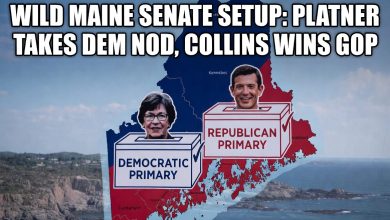
Graham Platner Urged to Apologize by Rep. Ro Khanna

Graham Platner, the insurgent Democratic candidate for the U.S. Senate in Maine, is facing a critical juncture in his campaign as high-profile political allies, including Representative Ro Khanna, demand a public apology for past behavior described as misogynistic, volatile, and toxic. Running as an oyster farmer, Army veteran, and working-class outsider, Platner’s political rise has been as swift as it has been volatile. In a political landscape increasingly sensitive to allegations of interpersonal misconduct, toxic masculinity, and historical insensitivity, his candidacy serves as a complex case study. As he seeks to secure the Democratic nomination to challenge five-term Republican Senator Susan Collins, his path has been heavily obstructed by a succession of deeply damaging personal revelations. The tension between his progressive policy platform and his documented past has forced both local organizers and national figures to confront uncomfortable questions: At what point does a candidate’s private conduct disqualify them from public office, and when is contrition truly sufficient for political redemption? These questions have taken on a burning urgency as Maine’s primary election looms, drawing high-profile surrogates into a delicate balancing act of endorsement and ethical critique.
The Intersection of Redemption and Reform
The core of Platner’s appeal has always been his status as an everyday outsider. Supporters point to his work as an oyster farmer and his military service as evidence of an authentic connection to working-class Mainers, a contrast to the slick, careerist profiles that dominate modern politics. However, this same background has brought with it a series of unpolished, highly controversial chapters from his past that have now entered the public sphere. For many in the progressive movement, Platner represents a crucial battle against the political establishment, offering a platform focused on systemic reform, environmental stewardship, and anti-corporate politics. Yet, the steady drumbeat of scandals has challenged this clean narrative of reform. The campaign has increasingly had to rely on a message of redemption, framing the candidate as an imperfect man who has learned from his mistakes and is actively striving to improve. This narrative of contrition is now being tested under the national spotlight, forcing voters to decide whether personal growth can truly offset allegations of deeply troubling behavior.
Dissecting Ro Khanna’s Public Intervention
Representative Ro Khanna, the prominent progressive Democrat representing California’s Silicon Valley, traveled to Maine to stand alongside Platner at a high-energy campaign rally in Bar Harbor. However, while Khanna’s physical presence at the historic Criterion Theatre signaled continued political alliance, his rhetorical stance behind the scenes highlighted a stark internal conflict. In a candid interview with NBC News, Khanna took a firm stand on the candidate’s personal conduct, asserting that Platner had a moral obligation to go further in addressing the grievances of the women in his past. Khanna said that Platner has shown redemption. When asked whether Platner should go further and apologize to the women, Khanna agreed. “I think he should apologize. I believe what he did was wrong, was misogynistic, was toxic or volatile,” he said in a brief interview with NBC News. “I know he’s ashamed of it and I certainly think it would be appropriate to apologize and say how he now understands why it’s important to stand up to a misogynistic culture.”
Khanna’s intervention illustrates the profound discomfort of the progressive establishment. By calling on Platner to issue a direct apology and explicitly acknowledge his role in a misogynistic culture, Khanna attempted to preserve progressive integrity without withdrawing his vital political endorsement. This dual-track strategy—supporting the candidate’s political mission while condemning his personal actions—reveals the agonizing tightrope that modern progressives must walk when trying to flip crucial Senate seats. It highlights a pragmatic calculation where the policy-driven goals of the party are prioritized, but not without public, highly uncomfortable reminders that ethical boundaries must still be respected.
A Chronology of Campaign-Shaking Controversies
To fully comprehend the gravity of the current moment, one must trace the chronological sequence of scandals that have battered the Platner campaign over the past year. Platner’s bid for the Senate initially gained immense momentum as he positioned himself as an authentic, anti-establishment champion of the working class. His path to the nomination became significantly clearer in late April 2026 when Maine Governor Janet Mills suspended her own Senate campaign, leaving Platner as the presumptive nominee. However, rather than coasting to an easy primary victory, his campaign has been forced into an almost continuous cycle of damage control. Each step forward in political organizing has been met with a devastating revelation from his past, creating an exhausting rhythm of exposure, contrition, and defiance that has left the local electorate deeply divided and national party leaders profoundly anxious.
The Explicit Extramarital Messaging Scandal
The most recent cycle of controversy began in late May 2026, when reports surfaced indicating that Platner had exchanged sexually explicit text messages with several women during his marriage. The revelation of these extramarital messages struck a blow to his image as a relatable, family-oriented veteran. In response, the campaign adopted a highly personalized defense strategy. Platner’s wife, Amy Gertner, released a public video addressing the scandal head-on. She explained that she had been aware of the messages, that the couple had actively worked through the infidelity in marital counseling, and that they had emerged from the crisis stronger and more united. For some progressive commentators and voters, this explanation was sufficient, with many arguing that marital infidelity is a private matter that has no bearing on a candidate’s legislative capabilities. However, for critics, the scandal was not an isolated incident of marital discord but rather the first of several indicators of a deeper, systemic pattern of behavior regarding women.
The New York Times Exposé and Accusations of Physical Aggression
The private-matter defense was severely undermined on June 4, 2026, when The New York Times published a deeply reported exposé featuring detailed accounts from three women who had been romantically involved with Platner in the past. These former partners described a pattern of behavior that went far beyond online indiscretions, painting a portrait of a partner who was toxic, emotionally abusive, and physically threatening. Most alarmingly, one former girlfriend accused Platner of physical aggression, alleging that he had twisted her arm during a heated argument and locked her inside a room to prevent her from leaving. Platner immediately and vehemently denied the allegations of physical abuse, labeling them outright lies that were being weaponized by political opponents to derail his Senate bid on the eve of the primary. While some loyal supporters quickly accepted his denials, the gravity of the physical allegations shifted the narrative from one of marital unfaithfulness to one of potential physical harm and domestic abuse, triggering the urgent response from surrogates like Representative Khanna.
The Totenkopf Tattoo and Historic Reddit Comments
These fresh scandals do not exist in a vacuum; rather, they build upon a pre-existing foundation of controversy that has plagued Platner since late 2025. In October of that year, scrutiny intensified over a prominent chest tattoo of a Totenkopf—a skull and crossbones emblem historically used by the Nazi SS. Platner initially claimed he had received the tattoo years ago without understanding its hateful connotations, subsequently apologizing and having the symbol covered up. However, the June 2026 New York Times report threw this defense into question, with ex-girlfriend Lyndsey Fifield stating that Platner was well-aware of the symbol’s history and had even taught her the term Totenkopf. This controversy coincided with the unearthing of historical Reddit posts written under his handle P-Hustle between 2016 and 2021, which contained homophobic slurs, misogynistic rants, and offensive jokes targeting the LGBTQ+ community. Additionally, Platner was forced to apologize in April 2026 for using an ableist slur (the r-word) during an interview with the Maine Monitor. Together, these incidents have painted a highly troubling picture of his character, rendering his redemption narrative increasingly difficult to defend.
Comparing the Major Controversies Involving the Candidate
Given the rapid succession of scandals, it is helpful to categorize and review the key issues that have emerged throughout the campaign. The following table provides a comprehensive summary of the major controversies surrounding Platner, his corresponding public defenses, and the associated political fallout:
| Controversy Category | Key Allegations & Details | Timeline of Exposure | Candidate’s Public Response | Electoral & Staffing Impact |
|---|---|---|---|---|
| Extramarital Messaging | Sexually explicit text messages sent to multiple women during marriage. | Late May 2026 | Admitted to misconduct; wife released a video stating they resolved it in therapy. | Strained relations with Senate leaders; sparked public debate on character. |
| NYT Abuse Claims | Three ex-girlfriends alleged toxic, volatile behavior; one accused him of arm-twisting and locking her in a room. | June 4, 2026 | Denied claims of physical violence, calling them politically motivated lies. | Prompted Rep. Ro Khanna to publicly call for an apology to the women. |
| Nazi Symbol Tattoo | Chest tattoo of a Totenkopf (Nazi SS skull). Claimed ignorance of its history. | Late 2025 | Covered up the tattoo and apologized; however, ex-girlfriend disputed his claim of ignorance. | Resignation of political director Genevieve McDonald; heavy local criticism. |
| Homophobic Reddit Comments | Unearthed posts on Reddit under the handle P-Hustle containing anti-LGBTQ+ slurs and jokes. | October 2025 | Acknowledged the posts but blamed a dark period post-military service. | Severe blow to progressive credentials, particularly in Maine’s LGBTQ+ hubs. |
Political Stakes: The Battle to Unseat Susan Collins
Despite the staggering volume of personal scandals, Platner’s political support has remarkably held firm among a significant portion of the progressive base in Maine. The reason for this resilience lies in the cold, hard mathematics of national politics. Susan Collins, a moderate Republican who has represented Maine in the Senate for five terms, is widely regarded as one of the most formidable incumbents in the country. For Democrats, winning back or solidifying a majority in the U.S. Senate is a paramount national objective, and Maine is seen as a must-win battleground. After Governor Janet Mills suspended her campaign, Platner became the only viable vehicle for progressive and Democratic hopes in the state. Consequently, many national strategists and local voters have adopted a hyper-pragmatic stance. In their view, the overarching goal of passing progressive legislation, protecting reproductive rights, and shifting the balance of power in Washington outweighs any reservations they might hold about a candidate’s personal conduct. This high-stakes environment has created an atmosphere where ethical concerns are routinely subjugated to the raw pursuit of electoral power.
The Left’s Ideological Dilemma and Moral Compromise
The defense of Platner has sparked intense ideological debate within the progressive movement, exposing what many critics describe as a profound double standard. For years, progressive Democrats have argued that allegations of misconduct, misogyny, and toxic behavior—such as those leveled against Supreme Court Justice Brett Kavanaugh or former President Donald Trump—warrant exhaustive investigation, public accountability, and immediate political disqualification. However, faced with similar allegations against a candidate of their own ideological stripe, some prominent progressive voices have taken a markedly different approach. Commentators and online defenders have sought to minimize the scandals, sometimes going so far as to mock the idea that personal character or marital fidelity should matter in a political race. This defense has drawn sharp criticism from feminist organizers and moderate Democrats, who argue that dismissing toxic masculinity and physical aggression in the name of political expediency completely hollows out the moral authority of the progressive movement. It forces a painful realization: when the stakes are high enough, ideological alignment can become a shield for behaviors that would otherwise be universally condemned.
Voter Sentiments and the “Other Shoe” Anxieties
Among the grassroots activists and local party officials in Maine, the prevailing mood is a mixture of fierce loyalty and paralyzing anxiety. At the Bar Harbor rally, hundreds of enthusiastic supporters queued up to hear Platner and Representative Khanna speak, with many expressing a deep-seated belief that the candidate has grown, changed, and apologized for his past actions. For these voters, Platner represents a rare opportunity to elect a genuine working-class representative who is uncorrupted by corporate interests. Yet, behind the public displays of enthusiasm, there is an undercurrent of dread. Local leaders, such as Deb Dagnan, chair of Maine’s Piscataquis County Democrats, have publicly voiced the fears of many party insiders who worry that nominating Platner is a massive gamble. The fear is that the primary is merely the beginning, and that more damaging revelations could emerge during the general election campaign when it is too late for the party to field an alternative candidate. This other shoe anxiety highlights the immense risk of tying a party’s fortunes to a candidate with such a highly volatile personal history.