Aaron Spencer Case Dismissed After Police Lose Key Evidence
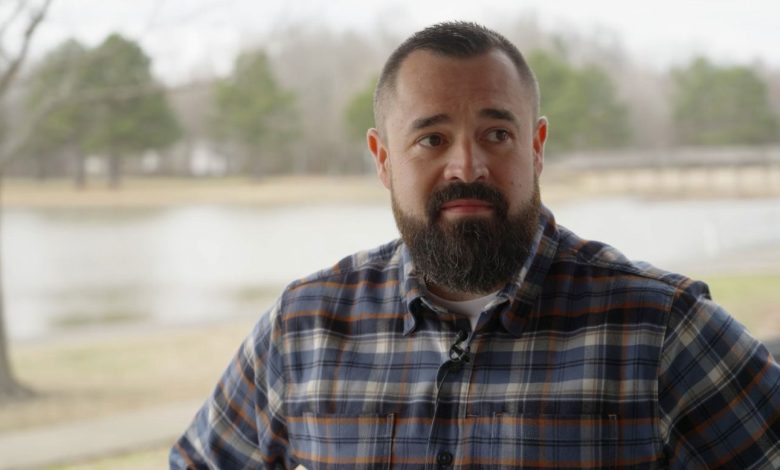
Aaron Spencer, an Army veteran and Republican candidate for sheriff, has had his second-degree murder charges dismissed in what legal analysts are calling a historic blow to local law enforcement credibility. On Thursday, June 4, 2026, Special Circuit Court Judge Ralph Wilson Jr. issued a scathing 19-page ruling dismissing the state’s criminal prosecution against Spencer. The judge determined that the Lonoke County Sheriff’s Office exhibited conduct “so egregious” in mishandling vital evidence that continuing the trial would constitute a severe violation of Spencer’s constitutional due process rights. The decision brings a sudden, dramatic end to a case that has captured global attention and deeply divided public opinion over the boundaries of parental protection, self-defense, and institutional accountability.
The case stems from the tragic events of October 8, 2024, when Spencer shot and killed 67-year-old Michael Fosler. At the time of his death, Fosler was out on bond, facing dozens of felony charges related to the sexual abuse of Spencer’s then-13-year-old daughter. The abrupt dismissal of the murder trial occurred just weeks before a jury was set to hear the case, instantly reshaping the upcoming local election where Spencer is running for Lonoke County Sheriff against the very department that arrested him.
Introduction: The Arkansas Case That Gripped the Nation
The legal battle surrounding Spencer has been one of the most highly publicized cases in Arkansas history, sparking intense debates on parental rights, self-defense, and police competence. When Spencer was originally charged with second-degree murder in late 2024, the community of Lonoke County—and observers worldwide—expressed outrage. To many, Spencer was a father acting under the ultimate duress to protect his child from an active sexual predator who had violated his bond conditions. To prosecutors, however, the pursuit and subsequent shooting represented an act of vigilantism that bypassed the formal legal system.
However, the trial was repeatedly delayed as dramatic twists unfolded behind the scenes. Earlier in 2026, the Arkansas Supreme Court took the rare step of removing the original presiding judge, Barbara Elmore, from the case, leading to the appointment of retired Special Circuit Court Judge Ralph Wilson Jr. It was under Judge Wilson’s oversight that the defense team unearthed systemic failures in how local law enforcement preserved the physical evidence of the shooting. The ultimate dismissal of the charge has transformed the narrative from a debate on vigilante justice to a stark examination of police misconduct and institutional integrity.
The Encounter: Waking Up to a Father’s Worst Nightmare
The details of the confrontation on October 8, 2024, read like a parent’s worst nightmare. In the early morning hours, Spencer woke up to discover that his 13-year-old daughter was missing from her bedroom. Fearing the worst, he immediately began searching for her while having his wife call 911 to report the disappearance. Spencer soon spotted Fosler’s truck nearby. Suspecting his daughter was inside, Spencer pursued the vehicle, eventually striking the rear of the truck to force it off the road.
Upon confronting Fosler, Spencer ordered the 67-year-old to get out of the vehicle. According to court documents, Spencer told detectives that Fosler lunged at him, prompting Spencer to fire a single fatal shot in self-defense and defense of his daughter. Immediately following the shooting, Spencer contacted 911 a second time, informing the dispatcher that he “had no choice” but to shoot to defend his child and himself.
Fosler’s presence in the county, let alone near the Spencer residence, was a point of extreme contention. He had been released on bond despite facing 43 separate sexual offense charges involving Spencer’s daughter. For the Spencer family, the formal justice system had already failed to keep a dangerous predator away from their child, setting the stage for the tragic high-speed encounter.
Critical Evidence Lost: The Missing Dashcam SD Card
The core of the defense’s motion to dismiss rested on a single, indispensable piece of physical evidence: a dash camera and its internal SD memory card retrieved from Michael Fosler’s truck. Because the shooting occurred in a dark, rural area with no independent eyewitnesses, the forward-facing dashcam footage was the only objective, unbiased record of the confrontation. It was highly expected to verify Spencer’s claim that Fosler lunged at him, which would have legally solidified his claim of self-defense.
According to court testimony, Lonoke County Sheriff’s Office Detective Robbie McCain recovered the dashcam and its SD card from the crime scene. Rather than securing the device in an official evidence locker and documenting its chain of custody, McCain took the SD card to his personal office and viewed its contents on his personal computer. The evidence was never formally logged into the department’s evidence tracking system and sat unaccounted for in McCain’s personal workspace for over a year.
When Spencer’s defense team, led by attorney Erin Cassinelli, requested access to the footage to prepare for the June 2026 trial, the sheriff’s office admitted that the SD card had gone missing and could not be found. The defense immediately filed a motion to dismiss, arguing that the state had destroyed or lost key evidence that was central to establishing Spencer’s innocence.
The Judicial Ruling: Egregious Conduct and Bad Faith
Special Circuit Court Judge Ralph Wilson Jr. did not mince words in his 19-page ruling. Under constitutional precedents such as Brady v. Maryland, California v. Trombetta, and Arizona v. Youngblood, the state has a strict duty to preserve evidence that is material to a defendant’s case. If the state acts in “bad faith” to destroy or lose “potentially useful” evidence, it violates the defendant’s due process rights under the Fifth and Fourteenth Amendments.
Judge Wilson applied the legal framework established in the recent Arkansas Supreme Court precedent State v. Clarks (2024), concluding that the detective’s handling of the SD card crossed the line from simple negligence into bad faith. McCain’s decision to remove the card, bypass official logging procedures, and store it in an unsecure personal office constituted a reckless disregard for basic police standards.
While the prosecution argued that the loss was accidental and did not warrant throwing out a homicide case, Judge Wilson disagreed. “The court finds that conduct by law enforcement was so egregious that dismissal of this case is warranted,” Wilson wrote, describing the dismissal of a murder charge as an “extraordinary and extreme remedy” that was nevertheless necessary to preserve the integrity of the judicial system.
Case Metrics and Legal Timelines Summary
The following table provides an overview of the key details, legal developments, and timeline of the Spencer case:
| Key Parameter | Details and Timeline Case Facts |
|---|---|
| Defendant | Aaron David Spencer (Army Veteran) |
| Deceased | Michael Fosler, 67 (Out on bond for 43 sexual offenses) |
| Date of Incident | October 8, 2024 |
| Initial Criminal Charge | Second-Degree Murder |
| Critical Missing Evidence | Fosler’s dashcam SD card (lost by Sheriff’s Office) |
| Political Status | Won Republican primary for Lonoke County Sheriff in March 2026 |
| Presiding Special Judge | Retired Judge Ralph Wilson Jr. (Appointed after Judge Barbara Elmore’s removal) |
| Case Outcome | Dismissed with prejudice on June 4, 2026, due to due process violations |
Political Shockwaves: Spencer’s Quest for Lonoke County Sheriff
Beyond the courtroom, the dismissal of charges has monumental political ramifications for Lonoke County. In an extraordinary turn of events, Spencer ran for Lonoke County Sheriff in early 2026 while actively under indictment for murder. He campaigned on a platform of transparency, reform, and restoring institutional trust, directly targeting the department that had arrested and investigated him.
In March 2026, Spencer won a resounding victory in the Republican primary, capturing over 53% of the vote against the three-term incumbent sheriff whose deputies had botched his case. The primary win was a stunning rebuke of the local sheriff’s office by the county’s 76,000 residents, who signal-boosted Spencer’s message that the local department was plagued by incompetence and systemic issues.
Had Spencer been convicted of a felony, he would have been legally disqualified from serving as sheriff. With the charges completely dismissed, Spencer heads into the November 2026 general election against Democratic nominee Brian Mitchell Sr. as a free man and the heavy favorite to win the office. If elected, Spencer will take command of the very department that mishandled his evidence, presenting a rare and fascinating scenario of a reform candidate taking over the agency that sought his imprisonment.
Institutional Trust and Parallel Legal Battles
The systematic failures exposed in the Spencer investigation represent a broader, national conversation regarding how law enforcement agencies handle high-stakes criminal investigations. While police accountability often manifests in different legal structures, such as when prosecutors detail timelines and charges in complex criminal proceedings, the complete dismissal of a homicide case due to institutional failures represents an extraordinary and rare check on police power.
This development highlights the razor-thin margin of error in cases involving lethal force and police misconduct, drawing comparisons to other highly watched national trials. For instance, public trust is deeply tested when law enforcement officers themselves face trial for controversial shootings, as seen when former deputy Jason Meade was convicted in Ohio. In both scenarios, the public demands absolute transparency, and any perceived attempts by law enforcement to bypass procedural standards trigger severe societal backlash.
Furthermore, Judge Wilson’s direct intervention to protect Spencer’s constitutional rights highlights the judiciary’s role as a vital check on state overreach. The court’s decision is highly reminiscent of other landmark procedural rulings where a judge denies requests and cites procedural flaws to halt government actions that fail to meet constitutional standards. Without these stringent judicial checks, the rights of citizens would remain entirely vulnerable to bureaucratic and administrative failures.
Conclusion: Parental Protection vs. The Rule of Law
The dismissal of the second-degree murder case against Spencer is a landmark moment in Arkansas jurisprudence. According to detailed coverage by CBS News, the decision represents a major vindication for Spencer’s defense team, who maintained from the beginning that the father should never have been prosecuted for protecting his child.
In a statement released shortly after the ruling, Spencer expressed deep gratitude to his family and the global community that rallied behind him. “Neighbors here in Lonoke County, people from every part of Arkansas, and folks I’ve never met from around the world reached out, prayed for us, and refused to stay quiet,” Spencer said. “When I couldn’t speak for myself, you spoke for me. I’ll never be able to thank you the way you deserve, but I’ll spend the rest of my life trying to live up to it.”
Ultimately, the Spencer case will be remembered as a intersection of a father’s protective instincts, a community’s political revolt, and a major institutional failure by law enforcement. As Spencer prepares for his political future and the upcoming sheriff election, Lonoke County must now grapple with the fallout of a botched investigation that allowed a high-profile murder trial to collapse, forever altering the local political and legal landscape.