United Launch Alliance Vulcan Rocket Fails in Major Setback for Amazon Satellite Network 2026
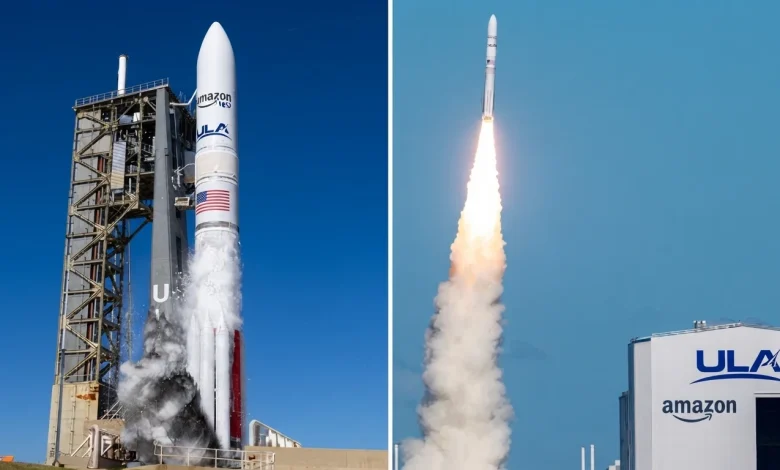
Table of Contents
Incident Overview: The Vulcan Failure
In a dramatic turn of events at the Cape Canaveral Space Force Station, a United Launch Alliance (ULA) Vulcan rocket—a joint venture between aerospace giants Boeing and Lockheed Martin—experienced a catastrophic failure roughly ten minutes after liftoff. This mission, intended to accelerate the deployment of Amazon’s satellite internet constellation, ended prematurely, resulting in the total loss of 40 orbital assets.
The mission marked the first failure for the two-decade-old company, which has long prided itself on its perfect launch record. As investigators begin the arduous task of forensic analysis, the space industry is left grappling with the immediate ramifications of this anomaly. For more insights on the broader tech landscape during this period, explore recent software AI discoveries.
Impact on Amazon’s LEO Network
Amazon’s Kuiper initiative—its massive Low Earth Orbit (LEO) internet network—suffered a significant blow with the loss of these 40 satellites. Designed to compete with SpaceX’s Starlink, the project is a cornerstone of Amazon’s long-term infrastructure strategy. The delay necessitated by this failure will undoubtedly cascade through the development timeline, forcing stakeholders to re-evaluate the reliability of their current launch partners.
The loss of 40 assets represents more than just a financial hit; it is a tactical delay in the global race for satellite-based connectivity.
United Launch Alliance at a Strategic Crossroads
The Vulcan rocket was designed to be the future of ULA, effectively replacing the aging Atlas V and Delta IV Heavy platforms. By utilizing the BE-4 engines developed by Blue Origin, ULA aimed to secure its position in the competitive launch market. This failure, however, places extreme pressure on the company’s management team to demonstrate that the Vulcan design is fundamentally sound. With volatility in the markets, similar to the recent NASDAQ selloff, investors are watching closely.
| Factor | Significance |
|---|---|
| Launch Vehicle | Vulcan Centaur |
| Customer | Amazon (Kuiper) |
| Payload Loss | 40 LEO Satellites |
| Status | Under Investigation |
The Technical Investigation: Seeking Answers
The precise cause of the failure remains elusive as of Sunday evening. Telemetry data recovered from the vehicle is being scrutinized by a joint task force consisting of ULA engineers, federal regulators, and independent safety consultants. Early speculation centers on potential issues within the upper stage ignition sequence, though officials caution against premature conclusions.
Market Implications and Future Outlook
The ripple effects of this failure extend beyond aerospace. With Amazon’s dependence on reliable launch cadences, the company may be forced to diversify its launch provider portfolio, potentially engaging with other entities, such as the increasingly dominant SpaceX, which has recently seen its own market impact, as noted in reports on NASDAQ surges. ULA must now pivot to a recovery phase, ensuring that the next flight is not only successful but serves to restore confidence in the Vulcan platform’s reliability.