Togliatti Drone Attack: Russian Petrochemical Sites Damaged 2026
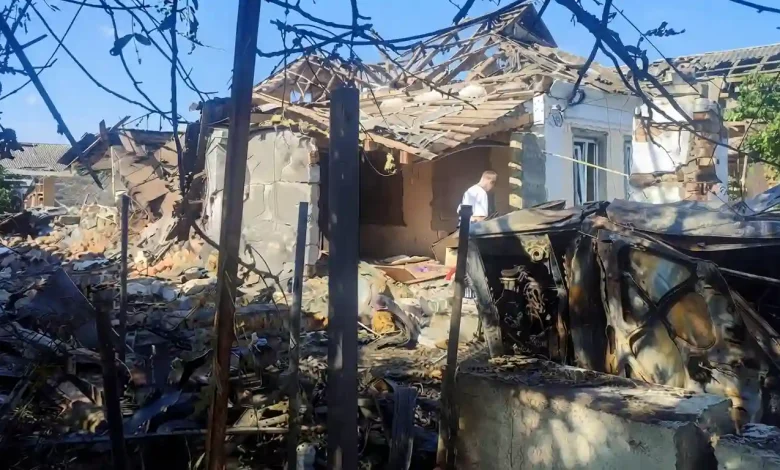
Table of Contents
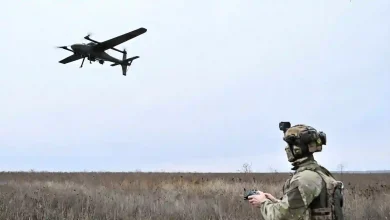
Togliatti drone attack operations struck deep within Russian territory on Saturday, damaging multiple industrial facilities in the major manufacturing and chemical hub situated along the Volga River. Local administrative figures confirmed that unmanned aerial vehicles triggered explosions and localized fires across industrial zones within Samara Oblast. Concurrently, defense planners in Kyiv acknowledged targeting primary petrochemical refining and production infrastructure in the district, underlining a persistent operational push to undermine logistical and dual-use supply chains supporting the ongoing military campaign.
Overview of the Strike in Samara Oblast
The dawn assault sent shockwaves through Togliatti, an industrial powerhouse situated more than 900 kilometers from the Ukrainian border. Eyewitness video circulated on local social messaging platforms depicted low-flying autonomous craft navigating the tree line before several loud detonations echoed across the northern and eastern municipal manufacturing corridors. Thick plumes of smoke billowed above the city skyline, visible from several kilometers away, pointing toward impacts at volatile refining units.
Regional authorities scrambled emergency responders immediately to contain secondary flare-ups. The attack follows similar strategic incursions across the Volga basin, where facilities previously assumed to be beyond ordinary drone ranges have faced repeated aerial barrages. This sustained deep-strike campaign parallels broader disruptions across energy transit corridors, reminiscent of how Ukraine drone strikes force Russian air defense assets to reposition from active frontlines toward domestic infrastructure nodes.
Official Statements and Casualty Reports
Addressing the population via official digital channels, Togliatti Mayor Ilya Sukhikh confirmed that industrial installations within city boundaries sustained damage as a direct consequence of unmanned strikes. Sukhikh highlighted that preliminary emergency diagnostics revealed no civilian casualties, fatalities, or serious workplace injuries among staff members present during the early-morning shift change. Emergency service teams established cordons around affected perimeter zones to neutralize lingering ordnance risks and extinguish remaining combustions.
However, Sukhikh refrained from explicitly naming the targeted industrial facilities, citing ongoing operational reviews and local security concerns. In contrast, operational briefs released in Kyiv openly noted successful direct hits on central petrochemical assets located within the city. Military commentators observed that this divergence in rhetoric is standard for deep-strike operations, as municipal officials endeavor to contain panic while defense monitors verify precise structural damage metrics.
Strategic Significance of the Togliatti Industrial Complex
Togliatti is globally known as an automotive and heavy chemical production center. The municipality hosts massive facilities dedicated to synthesizing ammonia, fertilizers, synthetic rubber, and complex petrochemical derivatives. Compounds engineered in the region feed into vast networks of state-run industrial supply chains, providing essential raw inputs for specialized polymers, heavy machinery lubricants, and synthetic vehicular components essential for maintaining state logistics.
Targeting the petrochemical heart of Samara strikes a severe blow against dual-use production capacities. Without continuous chemical synthesis, related assembly corridors in automotive and heavy transport face immediate constraints. Such interruptions occur in an environment of escalating international pressure, similar to the cascading economic strains observed when Russia oil revenues double to 19b amid Iran war fallout and force regional industrial restructuring.
Ukrainian Long-Range Drone Doctrine
The operational success of strikes at distances exceeding 900 kilometers highlights significant technological refinement in long-range autonomous navigation. Ukrainian defense engineers have developed composite-fuselage long-range loitering munitions equipped with digital scene-matching navigation and hardened satellite communication arrays, designed specifically to bypass sophisticated electronic warfare belts positioned across western Russia.
Rather than exhausting precious tactical munitions along fortified battle lines, military strategists increasingly apply economic attrition doctrines. By systematically targeting distillation towers, chemical catalytic converters, and regional fuel depots, the intent is to drain maintenance capacity and degrade capital equipment that cannot be easily replaced under current trade embargoes. These long-range initiatives reflect shifting military mechanics across diverse modern theaters, much like how drone interceptor systems and autonomous hardware have disrupted traditional tactical planning globally.
Operational Impact Summary Table
The following table outlines the operational facets and reported details regarding the strike on Togliatti’s manufacturing sector:
| Parameter | Official Russian Stance | Ukrainian Assessment | Analytical Context |
|---|---|---|---|
| Primary Target | Unspecified industrial facilities | Major petrochemical refinery plant | Focus on critical refining and synthesis nodes |
| Reported Casualties | Zero fatalities, zero injuries | Personnel not explicitly targeted | Consistent with early-morning shift timing |
| Estimated Distance | ~900+ km from frontline | Launched from within sovereign territory | Demonstrates enhanced deep-strike range |
| Operational Status | Fires contained; damage assessments ongoing | Key refining unit disrupted | Specialized chemical units require long repair times |
| Air Defense Activity | Local interception routines engaged | Air defense systems bypassed | Highlights inland air defense radar coverage gaps |
Russian Air Defense Vulnerabilities Deep Inland
The ability of unmanned aerial formations to penetrate deep within the Volga basin underlines substantial geographic vulnerabilities in domestic airspace protection. Russia’s air defense doctrine historically prioritized fixed strategic sites, federal command bunkers, and border military staging corridors. Dispersing high-tier surface-to-air missile batteries like the S-400 across thousands of inland industrial facilities strains logistics and stretches asset availability thin.
Furthermore, standard radar systems often struggle with low-radar-cross-section loitering craft navigating low altitude along river channels. Electronic countermeasure corridors deployed near frontlines become diluted across vast continental interior expanses. As municipal centers attempt to adjust, national planners face growing pressure to protect infrastructure assets, a dynamic increasingly visible as Ukraine news forces disrupt Russian spring offensive timelines by crippling peripheral logistical pathways.
Airspace Coordination Challenges
Inland civilian air corridors frequently complicate domestic interception routines. Following the initial detonations in Togliatti, regional civil aviation authorities temporarily imposed flight restrictions over Samara and nearby airfields to prevent friendly fire incidents between territorial interceptor aircraft and commercial flights. Managing low-level perimeter tracking amidst commercial transit hubs remains an unresolved operational dilemma for regional defense posts.
Economic and Supply Chain Consequences
The structural vulnerability of petrochemical assets creates disproportionate economic repercussions. Unlike administrative structures or standard storage warehouses, fractional distillation columns, cracking furnaces, and high-pressure compressors rely on specialized Western components and precision automation modules that fall under strict sanctions regimes. A targeted explosion at an ethylene or ammonia converter can disable entire industrial chains for quarters, if not years.
These supply constraints ripple into the consumer economy, driving inflationary spikes in fertilizers, agricultural chemicals, and basic plastics. Compounding broader macroeconomic pressures, municipal disruptions of this nature reflect systemic trends seen when Hormuz closure sparks 11 surge in EU natural gas futures or other global supply lines suffer kinetic shocks. As facilities operate below capacity, domestic supply chains contract, forcing municipal leaders to absorb rising industrial restoration costs.
Impact on the Automotive Corridor
Togliatti serves as the traditional nucleus of domestic automotive assembly, home to extensive industrial assembly plants. Petrochemical complexes in the vicinity supply essential materials ranging from vehicle seat foam to dashboard trim polymers and synthetic rubber for radial tires. Prolonged shutdowns in local chemical processing threaten to slow manufacturing output across automotive production floors that were already grappling with chronic microelectronics shortages.
Geopolitical Repercussions and Retaliation Risks
Kinetic strikes deep inside sovereign borders consistently escalate diplomatic tensions between competing international factions. Western partners supporting Kyiv closely evaluate the impact of deep-strike campaigns against domestic industrial targets, weighing military effectiveness against the likelihood of severe retaliatory barrages on critical civilian infrastructure. These escalatory dynamics mirror broader global crises, such as when Cuba blackouts Trumps silent blockade sparks mass protests and regional security standoffs escalate unpredictably.
As authorities in Moscow condemn the strike as reckless industrial sabotage, retaliatory doctrine dictates potential reciprocal strikes against energy infrastructure across central and western Ukraine. The recurring cycle of targeted infrastructure warfare signals an expanding operational tempo where distance from active combat zones no longer guarantees immunity from asymmetric aerial bombardment. Similar geopolitical standoffs continue across diverse regions, illustrated by how Trump waives key Russia policy clauses or shifts strategic postures to navigate volatile regional conflicts.
Ultimately, the strikes on Togliatti highlight a new reality in modern warfare: industrial resilience depends as much on comprehensive localized air defense as on baseline manufacturing capacity. Until integrated interception envelopes can effectively seal inland skies against low-observable drone technology, energy complexes and critical industrial hubs hundreds of kilometers behind the frontlines remain high-value, vulnerable targets in an attritional campaign of endurance and economic strain. As global security architectures grapple with expanding tactical battlefields, events like these echo broader geopolitical tensions, such as when Iran and United States confrontations test strategic resilience across multiple international sectors.