Operation Epic Fury: Trump Hints at New Strikes on Iran 2026
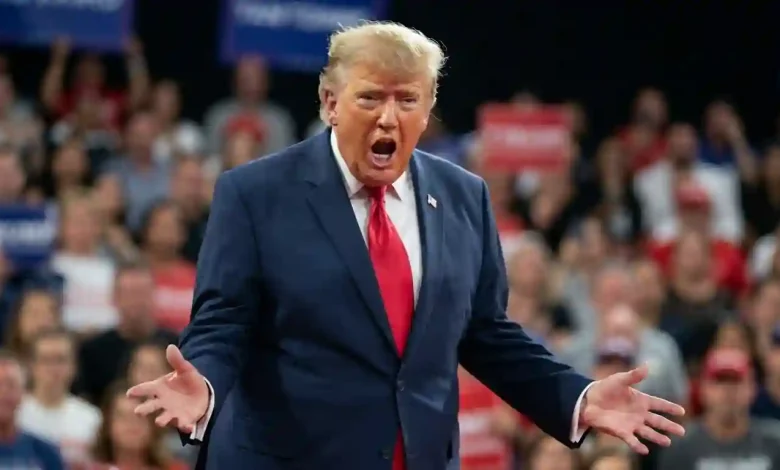
Table of Contents
Operation Epic Fury remains at the center of American foreign policy and military doctrine as former and current administration figures navigate an increasingly complex theater of conflict across the Middle East. Addressing an energized campaign crowd at a rally in Florida, Donald Trump explicitly floated the prospect of fresh air assaults against Tehran, declaring, ‘We may do another little Epic Fury.’ Although he refrained from detailing precise tactical parameters, targeting envelopes, or launch schedules, the offhand remark reverberated throughout defense circles, diplomatic quarters, and energy commodity desks globally.
The declaration followed earlier statements where Trump openly debated Washington’s long-term endgame, musing whether the United States ought to pursue a decisive, swift conclusion to hostilities or alternatively allow the multi-front confrontation to gradually wind down through protracted economic and naval friction. That equivocation underscores the contradictory objectives that have defined Washington’s posture since direct combat operations erupted earlier this year, creating heightened volatility across international markets while military leaders manage delicate alliance commitments.
Florida Rally Remarks and Tactical Teases
Trump’s remarks to the Florida rally audience provided a stark glimpse into the political framing of the military intervention. By employing the codename chosen by the Pentagon for initial precision attacks, Trump linked the broader geopolitical offensive directly to his campaign identity. The terminology itself, Operation Epic Fury, originally encompassed high-intensity air and sea strikes coordinated alongside Israeli defense forces against critical Iranian defensive and command infrastructure.
Observers noted that while the speech was delivered with standard campaign bombast, foreign ministries across Europe and the Middle East parsed the phrasing carefully. A ‘little’ operation could indicate localized punitive actions targeting coastal anti-ship missile sites, drone fabrication hubs, or military intelligence nodes. Alternatively, it might simply serve as rhetorical pressure designed to induce diplomatic leverage while backchannel contacts continue through intermediaries in Muscat and Islamabad.
Debating the Endgame: Swift Conclusion vs. Prolonged Attrition
Earlier during the same campaign swing, Trump acknowledged the profound divide among his national security advisers regarding conflict resolution. He noted that the United States theoretically retains the strategic depth and firepower to crush opposing infrastructure rapidly, yet he questioned whether an immediate surge of lethal force aligns with wider American interests. A hasty tactical victory, analysts argue, could destabilize the entire regional order, precipitating systemic state collapse in Tehran and unleashing uncontrollable asymmetric proxy blowback.
Conversely, allowing the conflict to burn at a simmer presents severe economic and operational risks. Long deployments exhaust naval strike carrier groups and deplete interceptor inventories, forcing Washington to confront harsh tradeoffs. The dilemma mirrors historical deliberations where decisive military intervention clashed with open-ended stabilization objectives. With Trump maintaining that hostilities will conclude soon ‘one way or the other,’ civilian planners and military commanders remain tasked with formulating viable operational pathways that reconcile political rhetoric with dynamic tactical realties.
Electoral Calculations and the November Midterm Factor
Domestic politics heavily constrain the administration’s military maneuvers. Trump previously gave assurances that the United States would refrain from launching a comprehensive, large-scale offensive against Iranian sovereign territory prior to the pivotal November 3 congressional elections. The Republican Party currently maintains razor-thin majorities across both the Senate and the House of Representatives, leaving congressional leadership acutely sensitive to consumer sentiment, gasoline price fluctuations, and geopolitical anxieties.
Unpredictable surges in crude futures directly impact domestic pump prices, historically dampening voter enthusiasm for the governing party. Past developments illustrate how sudden energy supply threats provoke immediate economic fallout, as demonstrated during the Iran oil crisis earlier this campaign season. Maintaining a fragile status quo until voters cast ballots appears to be the paramount political priority, even as defense strategists warn that operational windows against fortified adversary installations are continuously narrowing.
Origins of the Conflict: The February 28 Preemptive Assault
The contemporary warfare traces directly back to the joint military strikes executed on February 28, when American stealth platforms and Israeli strike packages unleashed massive kinetic bombardments across western and central Iranian command posts. Billed as a preemptive campaign against accelerating ballistic programs and unconventional weapon stockpiles, the strikes precipitated an immediate, multi-theater war that shattered years of delicate deterrence architecture.
In the aftermath of the initial operational phase, regional trade routes fractured instantly. The disruption of key maritime transit arteries triggered immediate supply chain blockages, closely analyzed when the Strait of Hormuz crisis crippled merchant shipping routes and sent marine insurance premiums into unprecedented territory. Tehran responded not with surrender, but by deploying sophisticated anti-access/area-denial networks that challenged allied control over regional maritime corridors.
Regional Escalation and Gulf Base Security
Tehran’s kinetic retaliation was swift, broad, and coordinated across multiple geographic vectors. Rather than restricting responses strictly to Israeli territory, Iranian missile forces targeted military installations and logistical hubs throughout neighboring Gulf states hosting American garrisons and forward logistics elements. Command facilities in Qatar, airbases in Kuwait, and naval support headquarters across the Persian Gulf came under recurring ballistic missile barrages and synchronized one-way attack drone salvos.
This retaliatory wave demonstrated severe asymmetric vulnerabilities, prompting urgent defensive realignments following the first US deaths in Kuwait strikes. Forward-operating logistics nodes and energy hubs came under immediate fire, forcing host governments to carefully weigh their security arrangements with Washington against direct vulnerability to retaliatory Iranian firepower. Allied states found their vital desalination facilities, industrial zones, and civilian ports increasingly exposed to peripheral crossfire.
Humanitarian Toll in Iran and Across Lebanon
The human dimension of the conflict has grown catastrophic. Heavy strikes across urban Iranian logistics corridors and industrial hubs have resulted in thousands of military and civilian fatalities, severe infrastructural degradation, and widespread systemic utility blackouts. The humanitarian crisis expanded exponentially when allied Israeli operations broadened into intensive aerial and ground incursions across southern Lebanon and southern Beirut, seeking to sever regional command connections.
International aid agencies report that displacement across the Levant and Western Asia has reached severe historical milestones. Millions of civilians have been uprooted, overwhelming public service infrastructure in neighboring countries and igniting severe cross-border humanitarian emergencies. Healthcare delivery systems have fractured, water distribution networks are critically compromised, and basic sustenance distribution remains severely interrupted by damaged transit arteries.
Military Readiness, Munitions, and Geopolitical Strategy
Behind the combative political exchanges lies a severe logistical challenge for the Pentagon: the high-tempo expenditure of high-end ordnance. Prolonged combat operations have exposed acute vulnerabilities in defense manufacturing supply chains, draining stockpiles of Standard Missile-3 and Patriot interceptors designed to neutralize Iranian ballistic systems. Strategic planners now confront the realities detailed in high-level reviews of the empty arsenal, which constrain open-ended military adventures.
Furthermore, internal diplomatic maneuvering continues to generate mixed signals across allied capitals. Diplomatic backchannels pursued by regional go-betweens have repeatedly sputtered, reflecting the delicate dynamics surrounding US-Iran negotiations. While Washington demands total cessation of ballistic development and proxy support, Tehran insists upon total sanctions relief and a permanent withdrawal of forward-deployed Western forces from the Persian Gulf before any lasting armistice can be drafted.
Comparative Analysis of Strategic Outcomes
To understand the structural divergence between initial operational aims and current real-world metrics, the following data table summarizes key theaters and parameters of the ongoing campaign:
| Operational Theater | Original Strategic Objective | Current Battlefield Reality | Primary Risk Factor |
|---|---|---|---|
| Persian Gulf Maritime | Guarantee open commercial navigation | Recurring asymmetric drone assaults | Global energy transport gridlock |
| Iranian Mainland | Neutralize ballistic infrastructure | Hardened facilities remain functional | Escalation into regional total war |
| Levant / Southern Lebanon | Degrade northern missile threat to Israel | Mass displacement; urban warfare stalemate | Uncontrollable multi-front refugee surge |
| Gulf Cooperation Council | Provide secure forward allied staging | Bases subjected to direct missile strikes | Strained regional host partnerships |
| Domestic US Front | Demonstrate decisive global deterrence | Political volatility ahead of midterms | Inflation spikes via oil shockwaves |
As the conflict nears pivotal diplomatic and political turning points, shifting objectives continue to provoke discord among coalition partners. While high-level commanders review unprecedented Iran strike options, geopolitical reality dictates that neither total military victory nor seamless diplomatic accommodation remains readily accessible. Even as Washington attempts to balance military deterrence with political survivability, the unresolved contradictions of the campaign ensure that whether the next action is a ‘little’ operation or a prolonged siege, the stakes for global stability will remain exceptionally perilous.