Giorgio Armani Evolution Collection: Milan Runway Redefines Luxury 2026
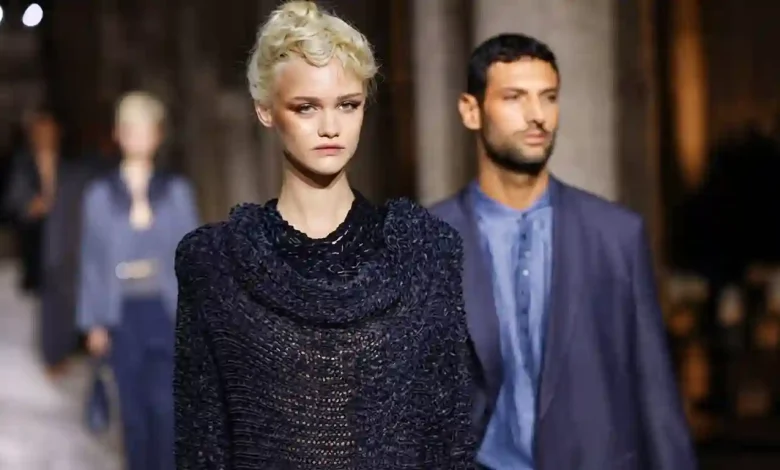
Table of Contents
Giorgio Armani Evolution collection took center stage in Milan on Sunday, presenting a decisive statement of continuity, refined craft, and sartorial forward motion. Marking exactly twelve months since the passing of founder Giorgio Armani, the Italian luxury maison faced its most scrutinized runway in decades. Guided by the visionary hand of Silvana Armani—the late designer’s niece and longtime head of womenswear design—the Spring/Summer showcase demonstrated that the house’s storied identity remains vibrant, uncompromised, and attuned to the modern demands of global luxury.
A Defining Moment in Milan
The atmosphere inside the subterranean theater at Via Borgonuovo was charged with reverence and anticipation. When an independent fashion empire loses its singular patriarch after half a century of autocratic creative direction, skeptics often anticipate a diluted aesthetic or erratic commercial pivot. Instead, the Giorgio Armani Evolution collection reaffirmed the brand’s quintessential codes while injecting an unmistakable kinetic vitality. Attendees witnessed a sophisticated dialogue between structural menswear-inspired cuts and shimmering, diaphanous textiles that captured the house’s timeless poise.
As contemporary houses navigate seismic transformations across the international fashion calendar, from seasonal presentations to broader shifts seen when Prada expands Milan footprint, the Armani show delivered an anchoring sense of permanence. Rather than abandoning the deconstructed tailoring that built the brand into a multibillion-euro global powerhouse, Silvana Armani explored the architecture of power dressing through an unapologetically modern feminine lens.
Succession and Creative Leadership
Silvana Armani is no newcomer to the inner mechanics of the maison. Having worked alongside her uncle for decades, she absorbed the fundamental ethos of understated opulence that transformed Italian ready-to-wear in the late twentieth century. Her elevation to the sole creative helm of the primary womenswear line was executed through a meticulously designed succession framework established years prior by the founder.
This runway marked the culmination of that transition. Where many creative directors newly entrusted with heritage labels attempt radical overhauls to secure short-term virality, Silvana demonstrated exceptional curatorial restraint. Her design vocabulary did not erase the founder’s signatures; it distilled them. This artistic philosophy mirrors historical transitions across the world of haute couture, preserving the founder’s ethos much like observers witness during major retrospectives and the preservation of enduring legacy of fashion houses globally.
Sartorial Deconstruction: The Evolution Aesthetic
The collection opened with a masterclass in proportional balance. Jackets cut with distinct 1980s references commanded the runway, utilizing broad, defined shoulder construction without collapsing into retro parody. The sharp horizontal lines of the shoulders were countered by deliberate softening through the waist, maintaining the effortless drape that made the Armani silhouette synonymous with effortless authority.
Eighties Power Shoulders and Proportional Harmony
Unlike the stiff internal padding characteristic of original 1980s corporate attire, these jackets made use of whisper-light floating canvas, giving the garments structural integrity while allowing unrestrained physical movement. These statement jackets were paired systematically with knee-length trousers—a cropped, tailored bermuda silhouette that bridged daytime formality with warm-weather practicality. The juxtaposition challenged traditional notions of corporate suiting, introducing bold geometries that felt freshly tuned to current high-fashion tastes.
Palette Refinement: Ivory, Black, and Liquid Gold
Color theory played a vital role in communicating the collection’s title theme. Silvana discarded transient trend shades in favor of a focused, disciplined triad: pristine ivory, impenetrable nocturnal black, and warm, liquid gold. Ivory served as the palette cleanser, opening the show through washed linen blazers, double-pleated culottes, and silk-twill shirting. As the presentation advanced, deep blacks established contrast and structure, grounding the lighter pieces with velvet trims, jet buttons, and sharp lapel contours.
Gold entered the narrative not as gaudy surface embellishment, but as an atmospheric element woven directly into the fabrics. Lurex threads caught the runway illumination, producing a subtle radiance that shifted with every stride. The careful deployment of metallic accents reinforced the collection’s status among discerning international luxury clients looking beyond seasonal trends, echoing the appetite for enduring elegance seen across high-profile fashion trends worldwide.
Textile Innovation and Eveningwear Mastery
Eveningwear within the Evolution presentation offered some of the most memorable sequences of Milan Fashion Week. Silvana transitioned seamlessly from daytime tailoring into column silhouettes and body-skimming gowns that flowed over the form like poured metal. Micro-sequin embroidery was applied to silk georgette in fluid wave motifs, creating an illusion of liquid motion.
Fabrics throughout this segment showcased the technical capabilities of the brand’s northern Italian weaving mills. Silk organza layered over gossamer lamé yielded garments of deceptive lightness that retained three-dimensional geometric shape. These pieces paid direct homage to the red-carpet pedigree that Giorgio Armani established decades ago in Hollywood, maintaining the level of craftsmanship celebrated at the highest tiers of red-carpet styling and couture aesthetics.
Runway Specifications and Collection Architecture
To fully grasp the scope of Silvana Armani’s Spring/Summer presentation, the following analytical table outlines the design metrics, fabrication profiles, and aesthetic classifications deployed throughout the runway presentation:
| Segment | Core Silhouettes | Primary Materials | Dominant Colorways | Styling Accents |
|---|---|---|---|---|
| Daytime Tailoring | Broad-shoulder single-breasted jackets, knee-length tailored shorts | High-twist wool crepe, washed silk-linen blends | Ivory, chalk white, pale greige | Architectural horn buttons, flat leather brogues |
| Transitional Smartwear | Fluid duster coats, geometric wrap tunics, tapered trousers | Silk twill, fluid viscose, sheer organza underlays | Onyx black, deep charcoal, brushed gold | Micro-leather cinch belts, minimalist brass chokers |
| Cocktail & Lounge | Decollete waistcoats, wide-leg satin palazzo trousers | Hammered silk satin, metallic lurex jacquards | Gilded bronze, matte black, ivory trim | Geometric envelope clutches, architectural drop earrings |
| Evening Formal | Body-skimming column gowns, bias-cut slips, caped sheer dresses | Silk georgette, liquid lamé, hand-embroidered bugle beads | Liquid gold, shimmering midnight black | Reflective paillettes, crystal-encrusted evening sandals |
Commercial Stability Amid Luxury Industry Volatility
Beyond its artistic triumph, the collection represents a critical economic benchmark for the Armani Group. The luxury sector is contending with shifting international demand, changing consumer patterns, and macroeconomic headwinds. While mass-market fast-fashion players grapple with shifting regulatory frameworks and global retail supply shifts, heritage houses face pressure from institutional conglomerates like LVMH and Kering seeking acquisition opportunities.
Armani’s fiercely guarded independence remains anchored in the Giorgio Armani Foundation, established by the late founder to safeguard the enterprise from predatory takeovers and maintain operational sovereignty. By proving that the creative product can evolve without losing its core identity, Silvana Armani provided immediate reassurance to the group’s worldwide retail partners, private banking allies, and retail franchisees.
The strategic retention of signature cuts directly addresses recurring critiques that the luxury sector has alienated its core demographic with overly eccentric or alienating designs. As global luxury apparel grapples with dynamic competition across the broader apparel commerce landscape, maintaining an authentic, identifiable house style is a key competitive differentiator.
Critical Reception and Industry Implications
Fashion journalists and retail buyers greeted the finale of the Evolution show with a standing ovation, an unusual display of uninhibited enthusiasm in a typically reserved Milan front row. Reviewers highlighted the poise with which the design team tackled the monumental challenge of succeeding an industry titan. By sidestepping the trap of mere archival nostalgia, Silvana demonstrated that the house’s foundational grammar remains flexible enough to articulate contemporary themes.
Industry analysts observed that the collection sets a standard for family-led luxury management. As British and European fashion icons continually reassess their identities on the international stage—a phenomenon visible when heritage labels like Burberry showcases recalibrate their signature outerwear codes—the Armani house has demonstrated that stability and reinvention are not mutually exclusive. The subtle integration of 1980s tailoring answered the modern appetite for clean, authoritative suiting, while the luminous textile treatments provided the escapist glamour required of high-end eveningwear.
The Future of the Armani Empire
As the fashion world leaves Milan to conclude the ready-to-wear season in Paris, the reverberations of Sunday’s presentation will influence the commercial luxury discourse for seasons to come. The Giorgio Armani Evolution collection succeeded in answering the singular, high-stakes question hanging over the fashion capital: can the Armani legacy thrive in the absence of its eponymous creator? The affirmative answer provided on the runway was resounding, nuanced, and beautifully constructed.
Silvana Armani has firmly claimed her creative authority, proving that her stewardship of the brand is not merely custodial, but intrinsically evolutionary. By balancing pristine tailoring with shimmering textiles and grounding progressive design in decades of proven craft, the house of Armani has entered its next half-century with clarity, autonomy, and enduring cultural relevance.