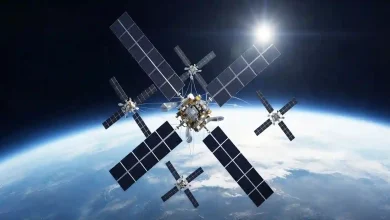
Space Weapons: US Admits On-Orbit Defense Capabilities 2026
Table of Contents
Space weapons have officially transitioned from the realm of classified whispers to overt military doctrine following unprecedented public disclosures by top Pentagon leadership. Senior American defense authorities have explicitly confirmed that the United States operates operational, on-orbit counterspace capabilities engineered to protect joint military operations from adversary disruption. The admissions indicate a calculated departure from decades of ambiguous signaling, signaling to global rivals that low Earth orbit and geostationary belts are contested operational warfighting domains.
Space Weapons Admission: The Strategic Shift in Orbit
For decades, the United States maintained an intentional posture of strategic ambiguity regarding offensive and defensive mechanisms positioned in outer space. While intelligence agencies tracked adversarial development of kinetic kill vehicles and directed-energy weapons, American officials routinely deflected questions regarding orbital hardware, framing American orbital infrastructure solely around communication, navigation, and surveillance. However, remarks delivered during high-level defense symposiums in the Washington metropolitan area revealed that on-orbit architecture includes proactive systems explicitly fielded to neutralize hostile actions.
This disclosure mirrors shifting technological dependencies observed across modern conflicts. As international flashpoints multiply, secure orbital paths are essential for theater communication and intelligence. Allied initiatives such as saab space defense architectures reflect how regional powers are recalibrating their posture to confront adversarial jamming and kinetic threats.
Troy Meink and Douglas Schiess Reveal Active Capabilities
The strategic revelation gained momentum when U.S. Air Force Assistant Secretary Troy Meink bluntly stated that the nation possesses on-orbit space control weapons designed to defend the Joint Force against hostile adversary action. Meink’s confirmation represents the most unequivocal public admission by an executive military official regarding active orbital combat capabilities. Rather than relying entirely on ground-based jammers or passive electronic hardening, the U.S. space defense infrastructure includes dynamic assets orbiting alongside allied satellites.
Shortly after Meink’s address, U.S. Space Force Lieutenant General Douglas A. Schiess reinforced the administration’s posture. Schiess emphasized that space domain operations demand both operational readiness and deterrent clarity. The Department of Defense has recognized that silence no longer deters sophisticated adversaries. Instead, public acknowledgment of deployed capabilities signals that any attempt to dismantle American orbital assets will trigger immediate tactical countermeasures.
The Pentagon’s investments extend deeply into orbital resilience, as examined in broader studies on space weapons us space strategies, where survivable constellations and rapid reconstitutions serve as core deterrence mechanisms.
From Strategic Silence to Active Space Control
The conceptual framework of space control encompasses both defensive counterspace—safeguarding friendly systems from attack—and offensive counterspace, which denies adversaries the continuous exploitation of their space-based networks. Historically, public declassifications have been limited to ground-to-space capabilities, such as the Counter Communications System (CCS), a terrestrial radiofrequency jammer operated by Space Force guardians.
Acknowledging on-orbit weaponized counterspace systems marks a foundational transformation. Military analysts note that offensive space control platforms could incorporate high-powered microwave emitters, robotic inspection satellites equipped with grappling appendages, localized radiofrequency blinds, or chemical propellants that can push an adversary craft out of its designated orbital path. The integration of robust space transport, such as operations surrounding boeing starliner eyes and commercial resupply models, has expanded military understanding of rendezvous and proximity operations (RPO), making close-approach maneuvers standard tactical procedures.
Comparative Overview of Orbital Space Warfare Capabilities
The acknowledgment of space combat hardware comes after years of documented maneuvers by Russia and China, both of which have tested systems designed to impair or destroy orbital hardware. The table below outlines the core counterspace architectures currently tracked by international defense monitors.
| Category | Operational Characteristics | Strategic Purpose | Key Proponents |
|---|---|---|---|
| Direct-Ascent Anti-Satellite (DA-ASAT) | Terrestrial or air-launched ballistic missiles targeting orbital assets via kinetic impact. | Rapid kinetic destruction of low Earth orbit constellations; leaves extensive debris. | China, Russia, United States (demonstrated historically) |
| Co-Orbital Inspection & Intervention | Maneuvering satellites deployed in identical orbits capable of physical interference, grappling, or electronic jamming. | Discreet inspection, mechanical tampering, mission payload disruption, or orbital pushing. | United States, China, Russia |
| Directed-Energy & Electronic Warfare | Ground-based and space-based laser dazzlers, high-power microwaves, and RF jammers. | Sensor blinding, communications degradation, and localized subsystem frying without creating debris fields. | United States, China, Russia |
| High-Altitude Orbital Nuclear / EMP | Detonation of nuclear or radiological devices in space to disable unhardened satellites via radiation belts. | Indiscriminate destruction of entire orbital orbital regimes; asymmetric disruption. | Suspected Russian development programs |
Countering Counterspace Assets: The China and Russia Threat Vector
Pentagon officials have raised alarms over Chinese and Russian orbital doctrines. The People’s Liberation Army Strategic Support Force has integrated space-based cyber warfare, electronic jamming, and specialized inspection satellites such as the Shijian series, which demonstrated the capability to latch onto and displace disabled satellites. Meanwhile, Russia’s deployment of the Cosmos inspector satellites, notorious for tailing classified U.S. spy satellites, underscored vulnerability in critical military orbits.
The Pentagon’s disclosures address broader geopolitical entanglements. Escalations across maritime choke points, where communications links are vulnerable, mirror orbital threats. Just as regional maritime standoffs develop along trade waterways—seen in ongoing disputes over the strait of hormuz iran 9—space represents the ultimate high-ground maritime highway that cannot fall under unchecked rival hegemony. Broader foreign policy dynamics involving state actors, such as documented in analyses of trump warns iran un, reveal that multi-domain deterrence is fundamentally interconnected across land, sea, air, and orbit.
Victoria Samson and the Declassification Momentum
Weighing in on the historic policy evolution, Victoria Samson, chief director of space security and stability at the nonprofit Secure World Foundation, stated that the comments highlight an increasing comfort level within the U.S. government regarding open discussion of aggressive space activities. Samson observed that this comfort has matured steadily as military planners realized that classified deterrents are non-functional: an adversary cannot fear or factor in a weapon system whose existence remains totally hidden.
For years, defense experts argued that hyper-secrecy around space control programs hindered international norms building and weakened deterrence. By unveiling the existence of on-orbit defense mechanisms, Washington aims to establish boundaries of acceptable interaction in space. Rapid advances in artificial intelligence are also reshaping real-time orbital calculations, a trend mirrored across global industries as evaluated in reports detailing ai agent in australia development, where automated agents manage complex sensor inputs far faster than human operators.
Doctrinal Implications for the Joint Force and International Law
The Outer Space Treaty of 1967 bans weapons of mass destruction from orbit, but it does not prohibit conventional, directed-energy, or electronic warfare systems. The public acknowledgment of U.S. space weapons highlights an urgent legal debate over the militarization of low Earth orbit and geosynchronous transfer paths. While international consensus condemns kinetic anti-satellite tests due to catastrophic debris generation, non-kinetic counterspace capabilities evade simple classification.
Deploying defensive space control mechanisms directly supports theater commanders worldwide. Every modern brigade, strike group, and air wing relies on space assets for targeting, timing, and navigation. Disabling orbital links cripples precision strikes on Earth. The broader strategic calculation has shifted: maintaining orbital supremacy is now identical to securing terrestrial airspace. Economic stability is equally bound to orbital assets, with global market forecasting and sovereign operations often feeling the ripples of security panics, as seen in macroeconomic coverage of inflation expectations 2.
The deployment of complex, resilient systems also draws attention to domestic fiscal oversight. Debates surrounding public spending—such as broader analyses covering u s 30 year costs—routinely collide with the astronomical expenditures needed to engineer, deploy, and maintain survivable orbital constellations capable of high-tempo maneuvers.
The Trajectory of Orbital Weapons Architecture
Looking ahead, the explicit admission of orbital weapons indicates that future defense procurement will prioritize proliferated low Earth orbit architectures combined with active maneuver defense. Single, multi-billion-dollar satellites are being phased out in favor of resilient mesh networks that can absorb losses while active space-control assets defend high-value orbits. The boundary between defensive and offensive technology will continue to blur, as any spacecraft capable of complex orbital rendezvous can theoretically be used to alter, blind, or disable a competitor’s system.
As defense leaders like Schiess and Meink normalize discussions of active orbital combat, the global space race has entered an era of overt military posturing. Transparency serves as a double-edged sword: it anchors deterrence and sets clear boundaries for adversaries, yet simultaneously accelerates an international technological arms race to command the high ground above the atmosphere.