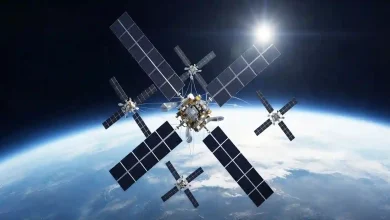
Saab Space Defense Expansion: Powering Sweden’s Sovereign Orbit 2026

Table of Contents
Saab space defense capabilities represent a transformative leap forward for Nordic sovereign security, addressing the modern operational theater where orbital assets dictate tactical superiority on land, sea, and air. With defense doctrine increasingly dependent on real-time data flow, precision navigation, high-throughput communications, and early-warning apparatuses, the Swedish defense contractor has moved swiftly to position itself at the nexus of Scandinavian aerospace innovation. The strategic realization that defense can no longer end at the edge of the atmosphere has catalyzed a coordinated push to assemble a unified, domestic supply chain capable of withstanding acute geopolitical disruptions.
Strategic Imperative Behind Orbital Sovereignty
In contemporary operational doctrines, orbital superiority is no longer a peripheral support element; it is the fundamental baseline upon which modern command, control, computers, communications, cyber, intelligence, surveillance, and reconnaissance (C5ISR) infrastructures rely. National security strategists increasingly recognize that vulnerabilities in space directly compromise surface assets. For nations operating in sensitive northern theaters, such as Scandinavia and the wider Baltic basin, maintaining independent launch, communications, and tracking systems is paramount. Saab’s leadership has identified this shift as both an operational necessity and a burgeoning commercial frontier for Sweden’s domestic defense and high-tech manufacturing sector.
As contemporary conflicts highlight the severe operational vulnerability of contested or jammed commercial links, sovereign orbital architecture becomes essential. Sweden’s geographical position, hosting premier sub-Arctic launch facilities and advanced telemetry stations, grants it a geographic edge in the European theater. By assembling institutional partnerships and consolidating technical expertise, Saab aims to bridge the gap between commercial off-the-shelf satellite platforms and militarized, hardened space equipment. This dynamic is reinforced by broad regional initiatives, mirroring how the Greenland defense deal emphasizes comprehensive Arctic and sub-Arctic perimeter defense.
Marcus Wandt and the Technical Architecture
Central to this strategic expansion is Marcus Wandt, Saab’s Head of Strategy and Technology and a veteran European Space Agency (ESA) astronaut. Wandt’s operational background as a fighter pilot combined with his direct orbital experience provides a rare technical lens through which space capabilities are integrated directly into tactical multi-domain operations. Under his leadership, the strategy revolves around the realization that fragmented space efforts dilute national capability. To effectively counter high-end adversaries, Sweden requires a tightly integrated technological ecosystem where data flows uninterrupted from low-Earth orbit (LEO) directly into the Gripen cockpit or naval combat systems.
Wandt has repeatedly noted that modern conflict timelines leave zero margin for reliance on third-party constellations whose availability might fluctuate during cross-domain crises. Saab’s focus lies in building an agile architecture where tactical satellites can be rapidly deployed, reconfigured, or tasked in theater. This agile operational mindset closely parallels international developments, such as the rapid evolution of space weapons US Space command has analyzed, where deterrence is predicated on rapid reconstitution, responsive launch infrastructure, and resilient data processing directly on orbit.
Key Pillars of Saab Space Collaborations
The cooperation agreements struck by Saab target five structural components necessary to field an autonomous operational capability. Rather than acting as a solitary developer of launch hardware or small satellites, Saab serves as the systems integrator and mission architect, aligning diverse Swedish aerospace enterprises under a coherent operational framework. The formal partnerships encompass:
- Satellite Systems: Hardened, responsive small-satellite constellations engineered for rapid manufacturing, featuring radiation-tolerant components and encrypted payloads.
- Launch Infrastructure: Seamless interfaces between domestic launch sites, mobile launch pads, and multi-mission deployment vehicles.
- Ground Services: High-bandwidth telemetry, tracking, and control (TT&C) facilities capable of managing multi-satellite operations securely.
- Mission Support: Real-time situational management networks that interpret satellite telemetry and integrate it into standard military communications networks.
- Communications Technologies: Jam-resistant laser cross-links, software-defined radios, and optical downlinks designed to deliver untamperable data pipelines to frontline operators.
Although the financial parameters of these commercial partnerships remain undisclosed under proprietary defense procurement rules, the industrial mobilization indicates capital commitment across the Nordic defense innovation hub. These systemic alliances ensure that Swedish companies can compete globally alongside larger players developing platforms like the Boeing Starliner eyes deep-space exploration and orbital resupply missions.
Launch Infrastructure and the Role of Esrange
A vital geographic and technical pillar supporting this Swedish ambition is the Esrange Space Center, situated above the Arctic Circle near Kiruna. Operating since 1966 for sounding rockets and scientific research, Esrange has transitioned into mainland Europe’s most modern orbital launch site. Saab’s space initiative relies significantly on the strategic availability of this sovereign launching site, which affords Europe the rare capability to insert defense payloads directly into polar or sun-synchronous orbits without navigating maritime logistics across other continents.
Developing resilient launch infrastructure is essential for responsive space operations—a doctrine mandating that lost or degraded satellites be replaced within days, rather than the traditional multi-year procurement cycles. The ability to launch responsive micro-satellites from Esrange grants Swedish and allied commanders unprecedented survivability in their reconnaissance and tactical communication loops. This capability mirrors commercial breakthroughs in low-cost orbital access, reminiscent of the cadence seen in Starship flight test 14, proving that launch accessibility directly alters defense posture.
Orbital Surveillance and Early Warning Integration
The ongoing modernization of Nordic defenses places acute emphasis on real-time awareness across complex maritime and Arctic littoral zones. Saab’s sensor pedigree—honed through decades of developing Erieye Airborne Early Warning and Control (AEW&C) radars and maritime combat suites—is now migrating into space-based payloads. Synthetic Aperture Radar (SAR) and electro-optical/infrared (EO/IR) sensor satellites operating in polar orbits offer round-the-clock, weather-agnostic visibility over high-latitude zones where traditional terrestrial radar arrays encounter extreme line-of-sight limitations.
By directly linking space-derived surveillance into integrated defense networks, allied command nodes can monitor maritime troop movements, submarine port activities, and airborne ingress trajectories well before threats breach sovereign boundaries. This orbital early-warning umbrella provides an indispensable layer of survivability, operating along lines similar to how the scientific sensor arrays of the Nancy Grace Roman space 3 mission yield deep visual fidelity, repurposing such cutting-edge detection physics for military perimeter protection.
Overview of Sweden’s Expanding Space Capabilities
The strategic deployment of space assets requires a multidimensional operational matrix. The following breakdown synthesizes the primary segments of Sweden’s expanding defense infrastructure across orbit, ground networks, and operational integration.
| Domain Component | Primary Strategic Focus | Key Operational Capabilities | Defense Impact |
|---|---|---|---|
| Tactical SmallSats | Low-Earth Orbit Reconnaissance | Synthetic Aperture Radar (SAR), Multi-Spectral Imaging | Near real-time situational awareness across the High North and Baltic |
| Secure Communications | Jam-Resistant Tactical Backbones | Laser Inter-Satellite Links (ISL), Frequency-Agile Radios | Maintains C2 resilience even under heavy electronic warfare jamming |
| Responsive Launch | Rapid Constellation Replenishment | Polar orbit deployment via Esrange Space Center | Guarantees payload replacement during crises or targeted orbital strikes |
| Integrated Ground Architecture | Telemetry, Tracking, and Distribution | Distributed Arctic downlinks, automated data processing nodes | Compresses sensor-to-shooter timelines for ground and air defense forces |
| Multidomain Command Node | Integration with Tactical Gripen and Naval Assets | Interoperable C5ISR data buses and sovereign cloud processing | Empowers decentralized military units with sovereign targeting data |
Nordic Alignment and NATO Multidomain Integration
Sweden’s full-fledged accession into NATO fundamentally shifted the strategic calculation of Baltic security, and its orbital roadmap is tightly interwoven with alliance doctrine. NATO’s overarching space policy classifies orbit as an operational domain on par with land, sea, air, and cyberspace. In this expanded architecture, Sweden’s contribution is not merely tactical hardware, but specialized expertise in operating under harsh Arctic electromagnetic environments, where auroral activity and high-latitude propagation anomalies complicate telemetry.
Saab’s proactive approach ensures that Swedish-built space solutions seamlessly plug into NATO’s Allied Command Transformation pipelines and joint multidomain exercises. Rather than developing isolated national systems, the emphasis is placed on open architecture standards that allow data sharing across allied systems while retaining sovereign security keys. This comprehensive regional security effort is reflective of broad diplomatic initiatives aimed at collective deterrence, matching steps like the Ukraine defense deal that emphasize industrial base collaboration across European frontiers.
Commercial Opportunities in the Swedish Space Sector
Beyond defensive fortification, Saab’s initiative catalyzes the wider Scandinavian commercial aerospace ecosystem. Sweden has built an impressive industrial collective consisting of advanced component fabricators, specialized sensor creators, software designers, and university research facilities. By acting as the prime integrator, Saab creates a sustained market for domestic small and medium enterprises (SMEs) that previously struggled to transition theoretical innovations into commercial or defense-grade operational hardware.
The dual-use nature of modern aerospace platforms allows Swedish enterprises to scale operations by serving both governmental security procurement and lucrative private commercial markets. Constellation management, optical communication payloads, and edge-computing microchips developed for military resiliency possess immediate commercial utility for global broadband, maritime route tracking, and climate monitoring enterprises. The expansion of these sophisticated tech hubs offers tangible regional economic resilience, matching international trends where firms explore advanced engineering breakthroughs such as Starfall SpaceX space projects that bridge commercial ambition with defense capabilities.
Mitigating Counter-Space Threats and Resilience
Modern military planning must confront the reality of counter-space operations, ranging from reversible electronic jamming and cyber incursions to destructive direct-ascent anti-satellite (ASAT) missiles and co-orbital rendezvous weapons. Recognizing that high-value, exquisite orbital platforms represent attractive targets for near-peer adversaries, Saab’s strategy shifts focus toward proliferated architectures. Proliferation distributes capability across constellations of numerous smaller, cost-effective spacecraft rather than concentrating critical missions inside a handful of massive, vulnerable satellites.
Resilience is further reinforced through dynamic orbit maneuvering capabilities, on-orbit cryptography updates, and robust autonomy algorithms. In the event of ground telemetry sabotage or heavy uplink interference, satellites can autonomously execute orbital defense maneuvers and store-and-forward tactical communications. This technical prioritization addresses the vulnerability paradigms observed throughout international corridors, where contested supply networks and cyber warfare threaten national sovereignty, demanding a defensive infrastructure as hardened as the frameworks deployed across the mutual economic exposure policies of interconnected states.
Future Milestones for Sovereign Space Assets
Looking toward the next decade, the roadmap spearheaded by Saab outlines clear milestones aimed at achieving true end-to-end space independence. The primary objectives prioritize the launch of inaugural tech-demonstrator satellites equipped with sovereign communications packages, followed by integrated live-fire drills where Swedish Gripen E fighters receive real-time targeting vectors fed directly from low-Earth orbit satellites. Furthermore, Swedish industry intends to solidify Esrange’s status as Europe’s premier responsive spaceport, establishing pre-integrated standby launch vehicles ready for short-notice orbital insertion.
As Marcus Wandt and Saab’s engineering leadership continually iterate these initiatives, Sweden asserts itself not merely as a passive participant in allied security arrangements, but as an indispensable architect of modern aerospace security. The fusion of combat-tested sensor mastery, commercial software agility, and strategic polar launch geography firmly places Sweden among the vanguard of nations capable of safeguarding their interests from soil to stars.