Masoud Pezeshkian Says US Must Choose When Iran War Ends 2026
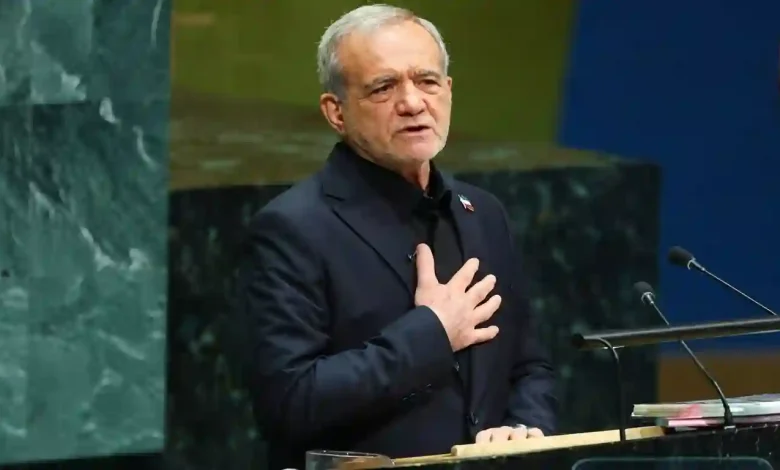
Table of Contents
Masoud Pezeshkian, President of the Islamic Republic of Iran, has explicitly placed the burden of resolving the ongoing regional war squarely upon the shoulders of the United States. Addressing international reporters when questioned whether the confrontation could conclude before the end of the year, the Iranian president delivered a blunt message: Tehran will not capitulate under military duress, and the timeline for peace depends entirely on Washington’s willingness to halt hostile policies. His statements mark a decisive rhetorical pivot in an attritional confrontation that has shaken regional security, roiled global commerce, and tested the limits of international diplomacy.
Masoud Pezeshkian and the Diplomatic Dilemma
The latest assertions from President Pezeshkian reflect an escalating crisis between Tehran and Western powers. Throughout his tenure, Pezeshkian has walked an exceedingly fine line between signaling openness to constructive engagement and presenting an unyielding national security perimeter. With clashes expanding across multiple fronts, the Iranian head of government emphasized that military de-escalation cannot occur in a vacuum. Instead, Washington must reconsider its sweeping embargoes and show genuine intent to cease punitive measures before any durable armistice can take shape.
Tehran’s geopolitical stance has hardened in response to persistent aerial raids and economic restrictions. Observers note that while previous communications oscillated between conditional reconciliation and stern warnings, Pezeshkian’s latest remarks underscore that Iran views itself as operating strictly in self-defense. By asserting that the White House holds the key to ending the conflict, the administration aims to counter narratives depicting Iran as an intractable adversary unwilling to negotiate.
Core Statements: Putting the Decision on Washington
During the press briefing, reporters asked specifically whether the mutual exchanges of strikes, maritime interdictions, and localized clashes could realistically wind down before the year expires. Pezeshkian reiterated that the conflict was neither sought nor expanded by his country. “It is not us who initiated this confrontation, nor are we the ones perpetuating this instability,” Pezeshkian noted, framing the duration of the war as a calculated political choice by American decision-makers rather than an inescapable geopolitical reality.
This rhetoric arrives at a moment when diplomatic observers are closely watching the administration in Washington. As high-level strategic warnings continue to emanate from the Oval Office—drawing parallels to previous moments where trump warns iran un summits of severe consequences—Pezeshkian’s framing seeks to invert global pressure. By pointing out that military posturing cannot extract diplomatic concessions, Tehran signals that prolonged hostilities will impose mutual, rather than unilateral, penalties.
Strategic Context and Escalating Confrontations
The conflict has evolved into an interconnected theater encompassing drone technology, precision missile salvos, and asymmetric skirmishes across vast expanses of the Middle East. Over several intense months, the war has disrupted critical supply chains and triggered recurring tactical maneuvers across maritime zones. The broader standoff has seen shifting red lines, where every minor provocation threatens to ignite a full-scale conflagration.
Tehran has continually justified its operational readiness by referencing external military encirclement. Western analysts monitor the regional security architecture closely, especially following extensive defense reviews and recurring missile exchanges. Regional observers frequently highlight the friction surrounding trade pathways, recalling how irans conditions reopen vital economic corridors had previously collapsed amid escalating conditions and retaliatory maneuvers.
Maritime Chokepoints and the Strait of Hormuz
Perhaps no component of this sustained standoff carries greater international consequence than the security of maritime waterways. The vital passage through the Persian Gulf remains a persistent flashpoint. Iranian naval assets and Revolutionary Guard contingents have repeatedly exerted pressure on international commercial vessels, responding to naval blockades and asset freezes implemented by the United States and its partners.
As commercial insurers raise maritime risk premiums to unprecedented heights, naval activity around the chokepoint continues to drive energy price volatility. Sustained friction along the strait of hormuz iran 9 navigation route underscores why Pezeshkian insists that cessation of hostilities requires Washington to demilitarize its containment posture. The Iranian leadership maintains that unimpeded freedom of navigation must apply mutually, warning that attempts to choke off Iranian crude exports will make the transit of global energy supplies equally untenable.
Economic Fallout and Global Energy Repercussions
Beyond tactical engagements, the economic warfare between the opposing sides has reached critical dimensions. Rigorous enforcement of financial blockades, coupled with aggressive secondary sanctions on non-Western buyers of Iranian oil, has curtailed Tehran’s domestic revenues while driving sharp inflationary spikes across global commodity markets. Western central banks find themselves caught between cooling domestic economic volatility and managing the persistent energy price shocks stemming from the conflict.
The compounding pressure has triggered broader systemic volatility, fueling elevated inflation expectations 2 across major global economies. As freight companies reroute vessels around major oceanic straits and supply chains absorb mounting security costs, financial institutions have had to adjust long-term fiscal planning. Analysts emphasize that while Washington hoped economic strangulation would force rapid concessions, Tehran has adapted by deepening parallel trade networks and leaning on non-Western partners to preserve core industrial functionality.
Diplomatic and Strategic Posture Overview
The following table illustrates the contrasting demands, operational realities, and strategic prerequisites articulated by Washington and Tehran regarding an end to the confrontation:
| Strategic Dimension | United States Position | Iranian Stance (Pezeshkian Administration) |
|---|---|---|
| Primary Precondition for Truce | Complete cessation of regional asymmetric attacks and full rollback of nuclear enrichment milestones. | Immediate suspension of aggressive economic sanctions and withdrawal of Western naval containment forces. |
| Maritime Passage Rights | Unconditional freedom of transit for international commercial tankers under international law. | Reciprocal security guarantees; maritime security is indivisible and applies to Iranian exports as well. |
| Timeline for War Conclusion | Contingent upon measurable strategic concessions and verifiable regional demilitarization by Tehran. | Can terminate immediately if Washington halts unilateral coercive strikes and sanctions. |
| Diplomatic Format | Preference for direct negotiations backed by credible military deterrence. | Reliance on regional intermediaries (e.g., Muscat, Doha) until mutual respect is demonstrated. |
Regional Intermediaries and Backchannel Negotiations
Despite sharp public rhetoric, discreet diplomatic communication channels remain functional. Gulf intermediaries, most notably Oman and Qatar, continue to relay urgent messages between security advisors in Washington and diplomatic envoys in Tehran. These fragile backchannels seek to prevent tactical miscalculations from escalating into full-scale regional conflict.
Diplomats point to intermittent engagements involving regional non-state actors as critical indicators of whether broader de-escalation is feasible. For example, recent diplomatic summits where u s officials meet houthi representatives in oman 2026 served as litmus tests for measuring the degree of coordination between regional armed factions and Tehran. President Pezeshkian indicated that while regional security matters are deeply interrelated, sovereign decision-making rests on each national entity’s defense calculus, further complicating bilateral negotiations between Washington and Tehran.
The Role of Multilateral Diplomacy
At the international level, both Beijing and Moscow have maintained active diplomatic dialogues with Tehran. International summits have seen repeated interventions urging an immediate cessation of unilateral measures. European powers, eager to stabilize oil markets and preserve humanitarian shipping lanes, have increasingly called for structured confidence-building steps. Nevertheless, without direct alignment between Washington and Tehran, multilateral frameworks remain largely advisory rather than binding.
Domestic Pressures Inside Tehran and Washington
The conflict cannot be understood without examining the complex domestic political landscapes of both countries. Inside Iran, President Pezeshkian faces substantial domestic expectations. While elected partly on promises of economic stabilization and international pragmatism, the escalation of direct strikes has empowered conservative factions within parliament and the military command who argue against making unilateral concessions to Western pressure.
Simultaneously, the political environment in the United States exerts its own powerful influence over foreign policy decision-making. Public scrutiny over overseas entanglements, combined with fluctuating political approval numbers, plays an enormous role in determining White House strategy. Fluctuations in executive standing, including how shifting domestic sentiments track alongside the trump approval rating, directly shape the administration’s appetite for either bold diplomatic overtures or sudden escalation. In this environment, neither capital feels it can afford to be perceived as retreating.
Military Readiness and Attrition Dynamics
Logistical and defense calculations also limit long-term escalation. The expenditure of precision air-defense munitions, combined with the strain placed on military supply chains, imposes practical boundaries on operations. Defense departments in both hemispheres face mounting costs, forcing operational commanders to weigh the risks of indefinite deployment against the unpredictable perils of sudden withdrawal.
Prospects for Conflict Resolution Before Year End
As the final quarter of the year approaches, the question of whether this devastating conflict will find resolution hinges on political will. President Pezeshkian’s assertion that the United States must choose when the war ends reflects a fundamental truth of modern asymmetric warfare: protracted containment rarely produces complete victory, and endurance often dictates the eventual diplomatic endgame.
If Washington maintains its maximum-pressure strategy without providing off-ramps for sanctions relief, the probability of regional hostilities spilling over into the new year remains dangerously high. Conversely, should mediated discussions yield even temporary security guarantees regarding trade routes and localized strikes, a phased pathway toward de-escalation may emerge. For now, the world remains on edge, awaiting Washington’s response to Tehran’s public ultimatum.