SpaceX ISS missions Extended by NASA in $946M Contract Deal 2026
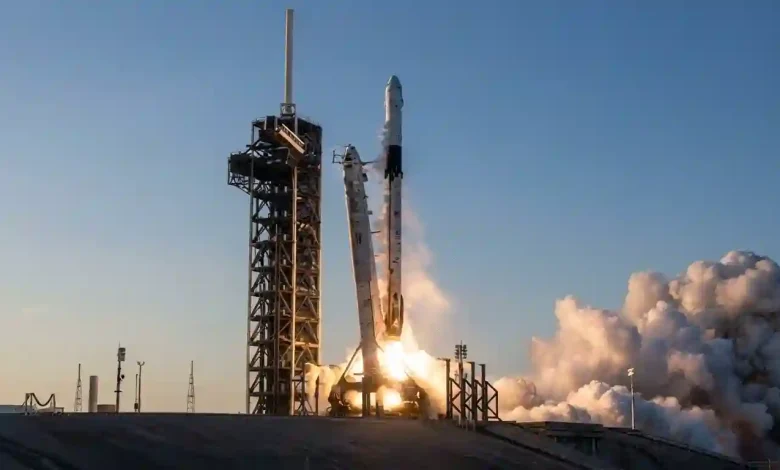
Table of Contents
SpaceX ISS missions have officially secured a massive $946 million contract modification from NASA, cementing Elon Musk’s aerospace giant as the primary transport provider for American astronauts through the end of the decade. The newly finalized agreement awards SpaceX three additional crewed flights to the International Space Station, ensuring continuity in low Earth orbit operations during a critical period of transition. This landmark amendment raises the total number of contracted flights to 17 and elevates the cumulative contract value to an astonishing $5.92 billion.
This major development comes at a time when NASA is navigating complex logistical challenges. While the agency continues its long-term planning influenced by federal aerospace spending and administrative transitions, the reliability of SpaceX has proven indispensable. The contract extension guarantees that the United States will maintain its robust presence in space, even as alternative transport options experience persistent developmental and technical hurdles.
NASA and SpaceX Forge Deepened Alliance for Spaceflight
The relationship between NASA and SpaceX represents one of the most successful public-private partnerships in modern industrial history. Under the Commercial Crew Program, SpaceX has systematically dismantled the traditional cost-plus contracting model, replacing it with a leaner, milestones-based approach that emphasizes rapid iteration and reuse. This operational philosophy has allowed the company to execute a flawless series of operational crewed flights, starting with the historic Demo-2 mission in 2020.
By securing these three additional missions, SpaceX has effectively guaranteed that it will remain the cornerstone of human spaceflight for the United States. These missions will carry international crews, scientific equipment, and critical supplies required to sustain the station’s delicate infrastructure. The dependency on SpaceX highlights how deeply integrated commercial partners have become in the execution of national space policy, fundamentally altering the dynamics of global aerospace leadership.
Analyzing the Financial Structure of the Crew Program
To fully grasp the magnitude of the $946 million award, one must analyze the broader financial landscape of the Commercial Crew Transportation Capability (CCtCap) contracts. Originally awarded in 2014, these contracts were designed to stimulate domestic competition and eliminate American reliance on Russian Soyuz spacecraft. Over time, the balance of these contracts has shifted as SpaceX demonstrated superior flight readiness and operational consistency.
As the aerospace industry navigates macroeconomic shifts, including global financial market turbulence, NASA’s targeted investments in proven platforms yield maximum security. This long-term fiscal commitment highlights how space exploration relies on a stable domestic economic base, contrasting with more volatile sectors like government energy policy or fossil fuel industries.
| Contract Metric | SpaceX (Crew Dragon) | Boeing (Starliner) |
|---|---|---|
| New Extension Value | $946 Million | $0 (No recent extension) |
| Total Flights Awarded | 17 Missions | 6 Missions (Operational) |
| Total Contract Value | $5.92 Billion | $4.2 Billion (Initial value) |
| Current Status | Operational (Active) | Developmental/Post-Test |
Extending Low Earth Orbit Presence: The 2030 Timeline
The decision to extend SpaceX’s launch services through 2030 aligns perfectly with the international consensus to prolong the operational lifespan of the ISS. Originally slated for decommission earlier in the decade, the station remains a vital hub for microgravity research and international diplomacy. Extending the International Space Station operation programs allows scientists to maximize the return on billions of dollars of collective investment.
However, maintaining an aging facility in the harsh environment of space requires constant monitoring, system upgrades, and structural reinforcing. The steady cadence of SpaceX flights ensures that fresh crew members and cutting-edge replacement parts are always available. It also allows NASA to systematically plan the eventual, controlled deorbiting of the massive facility at the end of the decade, a feat that will require specialized vehicles and highly coordinated maneuvers.
The Role of the ISS in Modern Scientific Research
The scientific output of the ISS is unprecedented, spanning biotechnology, physical sciences, and human health research that cannot be replicated on Earth. Astronauts aboard the station act as both scientists and test subjects, gathering invaluable data on how long-term microgravity affects the human cardiovascular, muscular, and skeletal systems. These insights are essential if humanity is to successfully venture further into the solar system, including planned crewed missions to Mars.
Furthermore, the station serves as an open laboratory for private enterprises looking to develop new materials, pharmaceutical drugs, and advanced manufacturing techniques. By fostering these orbital habitation initiatives, NASA is laying the groundwork for a transition to commercially owned and operated space stations in the post-2030 era.
The Second Option: Boeing Starliner and Redundancy Strategy
While SpaceX continues to execute its missions with precision, NASA’s original strategy was built around having two independent, domestic launch providers. This strategy, known as dissimilar redundancy, was designed to protect against the grounding of one launch system due to an anomaly. Boeing, with its CST-100 Starliner spacecraft, was supposed to be the equal partner in this endeavor, but its development path has been plagued by delays, technical anomalies, and budget overruns.
Boeing’s Starliner has faced high-profile software glitches, valve failures, and thruster issues during its uncrewed and crewed test flights. These setbacks have forced NASA to rely almost exclusively on SpaceX to meet its staffing requirements on the ISS. Although Boeing is actively working to resolve these issues and certify Starliner for regular operational flights, the timeline remains uncertain, leaving SpaceX as the sole guarantor of American access to the orbital lab.
Why NASA Mandates Two Independent Spaceflight Platforms
The insistence on maintaining Boeing as a viable second option is not merely a bureaucratic preference; it is a critical safety strategy. In the history of spaceflight, unexpected anomalies have repeatedly grounded fleets for months or even years. If a technical issue were to temporarily halt the expanding range of SpaceX orbital missions, the United States would be left without a domestic method to send astronauts to space, potentially forcing a return to relying on foreign nations.
Therefore, NASA is willing to invest time, resources, and patience into bringing Starliner to operational status. Having two distinct spacecraft designs, launch vehicles, and operational teams ensures that an isolated engineering flaw on one system does not compromise the entire national space program.
How Crew Dragon Became the Workhorse of NASA
The ascendancy of the Crew Dragon spacecraft is a testament to SpaceX’s engineering prowess and commitment to rapid innovation. Derived from the cargo variant of the Dragon capsule, Crew Dragon features state-of-the-art touchscreen controls, advanced life support systems, and a revolutionary launch escape system powered by SuperDraco thrusters. Launched atop the reliable Falcon 9 booster, the platform has achieved an unprecedented level of operational maturity.
SpaceX’s ability to rapidly refurbish and reuse both the Falcon 9 first stage and the Crew Dragon capsule has dramatically lowered the marginal cost of spaceflight. This reusable architecture, combined with utilizing modern techniques in advanced satellite integration and autonomous docking, has set a new global standard for aerospace engineering, making older, expendable rocket systems look increasingly obsolete.
The Next Era of Commercial Space Transport
The implications of this contract extension reach far beyond the immediate operations of the ISS. The expertise and financial stability gained by SpaceX through these government contracts are directly fueling its ambitious deep-space projects, including the massive Starship rocket system. As SpaceX refines its crew transport capabilities in LEO, it is simultaneously building the infrastructure needed to colonize Mars and establish a permanent presence on the Moon.
We are also witnessing a dramatic shift in how the lower orbit of Earth is managed, characterized by the crowding of Earth’s orbits with low Earth orbit constellations from private players. As commercial entities take over the routine transportation of humans and cargo to space, government agencies like NASA can focus their limited resources on deep-space exploration, scientific discovery, and pushing the absolute boundaries of human knowledge.




One Comment