Indiana State Senate Race: 3 Dramatic Turns as Copenhaver Takes Lead

Table of Contents
Indiana state Senate primary results for District 23 have been dramatically overturned after the Indiana Recount Commission discarded several votes over technical errors, stripping incumbent Senator Spencer Deery of his narrow victory and handing the lead to his challenger, Paula Copenhaver. While national attention often focuses on massive geopolitical updates, such as when international news channels report on an Iran airstrikes pause, local state senate primaries have proven to be highly consequential arenas for shaping domestic policy and testing the political capital of national figures. In this case, the GOP primary in Senate District 23, representing portions of Tippecanoe, Fountain, Warren, Vermillion, and Montgomery counties, became a key proxy battle between local legislative independence and the national MAGA movement.
Introduction to the District 23 Upheaval
The race originally concluded in May with Senator Spencer Deery clinging to an incredibly narrow, three-vote lead of 6,337 to 6,334 over Copenhaver. Soon after the election results were certified, Copenhaver petitioned for a recount. Following months of procedural maneuverings, the state’s election recount panel took up the matter. On Monday, the Indiana Recount Commission threw out a total of ten ballots—eight that were cast for Deery and two that were cast for Copenhaver. The decision obliterated Deery’s narrow advantage and pushed Copenhaver into a three-vote lead, with a final certified total of 6,332 to 6,329.
This dramatic shift is a monumental blow to Deery, a first-term senator from West Lafayette, who has built a reputation as an academic and policy-focused conservative. For Copenhaver, the Fountain County Republican Chair and a staff member for Lt. Gov. Micah Beckwith, the result is a validation of a aggressive campaign strategy that aligned itself fully with Donald Trump’s broader efforts to reshape state houses across the country.
| Candidate | Initial Certification (May) | Post-Recount Margin (August) | Net Ballots Thrown Out | Final Outcome |
|---|---|---|---|---|
| Spencer Deery (Incumbent) | 6,337 | 6,329 | -8 | Defeated (Pending Appeal) |
| Paula Copenhaver (Challenger) | 6,334 | 6,332 | -2 | Declared Winner (+3) |
| Margin | Deery (+3) | Copenhaver (+3) | N/A | Flipped by 6 votes |
Understanding the Technicalities: Why Ballots Were Thrown Out
The central mechanics of this recount did not rest on allegations of widespread voter fraud or systemic ballot box stuffing. Instead, the final result turned entirely on minute, administrative technicalities regarding how county clerks and precinct-level poll workers processed mail-in absentee ballots. This hyper-procedural approach is common in modern election disputes. This local legal friction reflects how American election laws have evolved over the last 47 years, shifting toward a hyper-focus on technical parameters and strict structural compliance.
The commission’s rulings focused on a handful of ballots that lacked key administrative markings, such as the initials of bipartisan poll workers or the official signature and stamped seal of the county clerk. While the voters themselves cast these ballots in good faith, the commission determined that the absence of these mandatory verification marks required the ballots to be legally discarded. This decision effectively disenfranchised ten voters due to the administrative errors of county personnel, leading to a fierce debate over whether procedural rules should override voter intent.
The Demands of Fountain County Republican Chair Paula Copenhaver
Paula Copenhaver and her legal counsel, led by prominent attorney Bill Bock, originally attempted to launch a broad challenge that questioned the eligibility of crossover voters. Copenhaver’s legal team initially requested subpoenas to question voters under oath about their past political participation, suspecting that Democrats had crossed over to vote in the Republican primary to save Deery. However, the commission did not offer traction for these sweeping accusations, denying the voter subpoenas.
Stymied on that front, Copenhaver’s legal team successfully pivoted to the technical ballot markers. By focusing on county errors, Copenhaver successfully argued that the law must be applied precisely as written. Copenhaver declared victory following the hearing, stating, “It’s about the better candidate, and so far, the better candidate prevailed. I am asking for the Republicans, and even those who aren’t, to rally behind me.”
The Defense of Incumbent Spencer Deery
Spencer Deery’s defense, presented by attorney Samantha DeWester, argued vigorously that the administrative omissions of local county staff should not punish the voters. DeWester emphasized that there was no evidence of fraud or voter misconduct, and that state law provides protections for voters when administrative workers make minor mistakes.
Deery took to social media platform X shortly after the commission adjourned, expressing deep frustration with the ruling. He called the decision an “attempt to undermine the will of voters by treating ballots differently based on whether they furthered the president’s political goals.” DeWester echoed these concerns, warning that throwing out votes over missing clerk signatures sets a dangerous precedent that will encourage future election losers to overturn democratic outcomes on minor procedural technicalities.
The Broader Political Landscape: Donald Trump’s Redistricting Vendetta
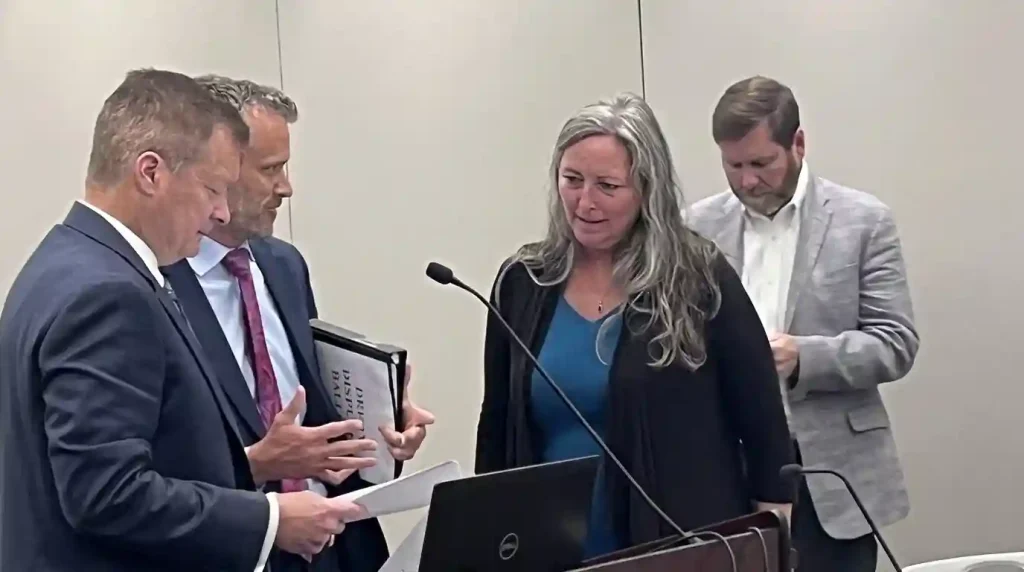
To fully grasp the stakes of this primary, one must look back to the contentious legislative push for congressional redistricting pushed by Donald Trump. Last year, Trump lobbied heavily for a redrawn congressional map in Indiana designed to secure safer, more hyper-partisan Republican districts. While most of the GOP-dominated state Senate supported the effort, seven Republican senators broke ranks to vote down the map, citing concerns over fairness, local community representation, and political overreach.
Trump vowed retaliation, backing a slate of conservative primary challengers to oust those seven independent-minded senators. In the digital sphere, state-level campaigns are increasingly sophisticated, mirroring national tactics where digital groups like Trump’s social team baits ideological rivals to build grassroots momentum. In Indiana, this strategy proved incredibly effective, as five of the target incumbents were decisively defeated in the May primary. Deery was the last remaining survivor of that targeted group, clinging to his razor-thin margin until Monday’s commission decision flipped the seat.
How the Six Other Incumbents Fared in the Primary
The primary cycle was a bloodbath for the anti-redistricting Republican faction. Out of the seven senators targeted by Trump’s endorsements, five suffered clear defeats on election night as grassroots conservative voters aligned themselves with the former president’s recommendations. This purge of moderate and independent voices has significantly shifted the ideological center of gravity in the Indiana state Senate, cementing the influence of the populist wing of the party. Deery’s fight was the final unresolved chapter in this sweeping effort to enforce party discipline.
The Role of the Indiana Recount Commission
The Indiana Recount Commission is a three-member body tasked with resolving contested state-level elections. During the intense four-hour hearing on Monday, the commission examined approximately 15 disputed ballots. The decisions to discard ballots were often made on split 2-1 votes, reflecting the deeply partisan and legally complex environment surrounding the recount.
The meticulous nature of election administration requires strict adherence to code, not unlike how the Morrisville police enforce municipal guidelines or how national news networks follow unfolding criminal investigations like that of the Philadelphia gunman to emphasize strict procedure. In this case, the commission’s strict adherence to administrative perfection stripped away votes cast in good conscience by citizens who assumed their local election officials had completed all necessary paperwork correctly.
A Deep Dive into Indiana Election Law (Indiana Code)
Indiana election code outlines specific statutory requirements for a ballot to be considered valid. Absentee ballots must feature the initials of the two precinct election board members of opposite political parties, as well as the signature of the circuit court clerk. However, the law also contains provisions meant to prevent the disenfranchisement of voters due to clerical oversight. Deery’s legal team argued that the commission ignored the spirit of these protective clauses, choosing instead to enforce a hyper-literal interpretation of the code that favors technical compliance over the fundamental right of a citizen to have their vote counted.
Appeal Strategy: Spencer Deery Takes His Case to the Court of Appeals
Following the adverse ruling, Deery’s attorney Samantha DeWester announced immediate plans to appeal the Indiana Recount Commission’s decision to the Indiana Court of Appeals. The appeal will likely center on the argument that the commission exceeded its authority and misapplied state election law by tossing out ballots solely due to clerical errors.
While global spectators examine international power alignments like the Washington Tehran standoff or track key regional players like Ali Nikzad, domestic election disputes in the American heartland present their own high-stakes theater. This court battle will be watched closely by election attorneys across the country, as it could establish a critical judicial precedent regarding the balance between administrative perfection and voter intent in close elections.
Implications for the November General Election
The legal battle over Senate District 23 injects massive uncertainty into the upcoming November general election. If Copenhaver’s victory stands, she will carry the Republican banner into the fall campaign. Copenhaver’s alignment with Lt. Gov. Micah Beckwith and the populist wing of the Indiana Republican Party could mobilize the conservative grassroots, but it also risks alienating moderate and independent voters in key areas like West Lafayette.
If the Court of Appeals rules in Deery’s favor and reinstates his discarded ballots, the primary results would flip once again, restoring the incumbent as the nominee. This ongoing instability leaves District 23 in a state of political limbo, as both campaigns must prepare for the general election while simultaneously fighting an intense legal war in the state courts. Regardless of the judicial outcome, the bitter primary struggle has exposed deep, structural divisions within the Indiana Republican Party that are unlikely to heal before November.