Iran-backed Proxy Banned by UK After Antisemitic Arson Attacks 2026
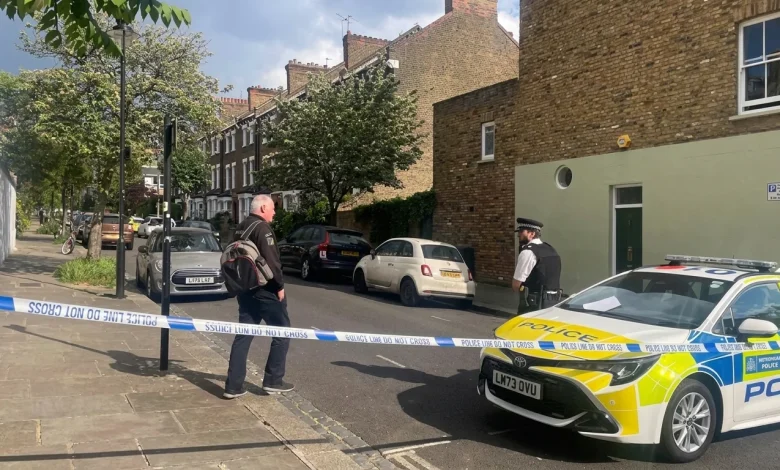
Table of Contents
Iran-backed proxy operations in Western Europe have crossed a critical red line, triggering a historic and sweeping national security response from the British government. On Monday, July 13, 2026, the United Kingdom formally announced the proscription and banning of the Islamic Movement of the Companions of the Right (IMCR), also known in Arabic as Harakat Ashab al-Yamin al-Islamia. This rapid-response legislative action comes after a series of targeted arson and vandalism attacks across London and continental Europe that directly singled out Jewish communal infrastructure, including synagogues, volunteer medical services, and independent media organizations critical of the Iranian regime.
In an escalation of diplomatic and intelligence policy, the Home Office also declared its intention to designate Iran’s powerful paramilitary force, the Islamic Revolutionary Guard Corps (IRGC), under robust new national security laws. Simultaneously, the UK government is banning the GRU Volunteer Corps, a proxy structure controlled by Russian military intelligence. These moves reflect a coordinated effort to dismantle hostile state-sponsored networks operating covertly on British soil, marking a major policy shift and a zero-tolerance approach to foreign-backed sabotage and intimidation campaigns.
Who is Harakat Ashab al-Yamin al-Islamia (IMCR)?
Historically, pro-Iranian militant groups have operated overtly in regional conflict zones such as Lebanon, Iraq, Yemen, and Syria. However, the emergence of the Islamic Movement of the Companions of the Right (IMCR) represents a novel, highly dangerous iteration of Iranian asymmetric warfare. The group, which utilizes the name Harakat Ashab al-Yamin al-Islamia, first appeared in the digital sphere in early March 2026, rapidly broadcasting propaganda videos and claims of responsibility across social media channels linked to the broader “Axis of Resistance” network.
Security analysts and counter-terrorism experts initially observed that the group’s branding, logos, and rhetoric heavily mirrored those of established Iraqi Shiite militias and Hezbollah. However, the speed of its operational deployment suggested that it was not a grassroots domestic movement but rather a carefully structured front group. Evidence compiled by European intelligence agencies indicates that the IMCR was manufactured to serve as a plausible deniability mechanism for Iranian state intelligence. By claiming responsibility for low-tech, high-impact acts of terror under a localized, seemingly independent banner, the Iranian regime sought to project power and intimidate its adversaries while insulating itself from direct state-level retaliation.
Chronology of the European Arson and Vandalism Campaign
The operational timeline of the IMCR is characterized by a series of fast-paced, highly symbolic attacks starting in March 2026, immediately following geopolitical escalations in the Middle East. While these incidents resulted in no physical injuries, the choice of targets and the intent to terrorize local Jewish populations and dissident voices were unmistakable.
The campaign began on March 9, 2026, with an improvised explosive device detonated outside a historic synagogue in Liège, Belgium. Just days later, the group claimed a string of attacks across the Netherlands and Greece. In the United Kingdom, the group focused its efforts on London, claiming responsibility for seven distinct acts of sabotage and arson. These included targeting synagogue buildings, burning vehicles belonging to a Jewish volunteer ambulance charity in North London, and attacking a London-based Persian-language media outlet known for its critical reporting on the Islamic Republic of Iran.
The following table outlines the key incidents attributed to or claimed by the IMCR across Europe during this campaign:
| Date (2026) | Location | Target Category | Nature of Attack | Reported Casualties |
|---|---|---|---|---|
| March 9 | Liège, Belgium | Jewish Place of Worship | Explosion (IED outside Synagogue) | None (Property damage only) |
| March 11 | Athens, Greece | Unspecified Jewish Site | Vandalism & Threatened Sabotage | None |
| March 13 | Rotterdam, Netherlands | Jewish Place of Worship | Arson (Synagogue fire) | None |
| March 14 | Amsterdam, Netherlands | Educational Institution | Explosion outside Jewish School | None |
| March 23 | London, United Kingdom | Communal Healthcare | Arson (Jewish charity ambulances) | None |
| April–June | London, United Kingdom | Dissident Press & Synagogues | Arson & Vandalism (7 claims total) | None |
The Directing Hand of the IRGC Quds Force
Behind the facade of the IMCR lies the sophisticated command-and-control architecture of Iran’s primary external operations unit. U.K. Security Minister Angela Eagle stated unequivocally that “sitting behind IMCR were members of Iran’s Islamic Revolutionary Guard Corps Qods Force, who almost certainly directed IMCR attacks across Europe”. The Quds Force, tasked with unconventional warfare and military intelligence operations abroad, has historically cultivated, funded, and directed regional proxy groups.
By utilizing the Quds Force to steer the IMCR, Tehran expanded its operational reach directly into the sovereign territories of European nations. The transition from funding armed insurgencies in the Middle East to directing covert, localized attacks against civilian infrastructure in Western capitals signals a dangerous evolution in Iran’s geopolitical strategy. Western intelligence agencies note that these actions are designed to exert psychological pressure on European governments, warning them of the potential domestic costs of opposing Iranian foreign policy or supporting its regional adversaries.
The Mechanics of Hybrid Terrorism: Outsourcing to Criminals
One of the most concerning aspects of the IMCR’s operations is the hybrid model of execution adopted by the IRGC. Rather than deploying trained, state-affiliated operatives who could easily be tracked by counter-espionage agencies, the Quds Force has increasingly turned to outsourcing. By recruiting local criminal syndicates, gang members, and radicalized individuals, the Iranian state has established a commercialized network for carrying out sabotage.
This outsourcing strategy offers several distinct advantages for state sponsors of terror:
- Plausible Deniability: If a perpetrator is caught, they appear to be a common criminal or a lone-wolf actor with no apparent ties to Tehran.
- Low Operational Cost: Utilizing local criminals avoids the logistical challenge of smuggling foreign operatives and specialized weapons across international borders.
- Rapid Mobilization: Criminal networks already possess the local knowledge, stolen vehicles, and materials needed to execute arson and vandalism quickly.
The resulting actions, while technically simple, carry immense symbolic weight. An arson attack on a volunteer ambulance service or a synagogue requires very little training, yet it successfully generates widespread fear, dominates news cycles, and polarizes local communities.
Details of the UK Proscription and Punitive Measures
The response from the British Home Office and Security Ministry is designed to systematically dismantle these hybrid networks. By utilizing the robust framework of the UK’s Counter-Terrorism and National Security legislation, the government has placed both the IMCR and the IRGC on the country’s list of banned, proscribed organizations.
This proscription carries severe legal consequences designed to choke off any domestic support for these entities:
- Criminalization of Support: Under the new measures, it is a serious criminal offense to invite support for the IMCR or the IRGC, express opinions intended to encourage support, or display their logos and flags in public.
- Asset Freezing: Any financial assets, bank accounts, or properties associated with the banned groups within the jurisdiction of the United Kingdom will be subject to immediate seizure and freezing.
- Enhanced Prosecutorial Powers: Committing sabotage, espionage, or logistical coordination on behalf of these foreign-backed entities will now carry a maximum penalty of up to life imprisonment.
The legislation, which is expected to pass through Parliament with broad cross-party support by the end of the week, gives law enforcement and intelligence agencies the expansive powers necessary to preemptively disrupt plots before they can manifest in physical violence.
Countering Russian State Interference: The GRU Connection
While Iran remains a focal point of the current national security intervention, the UK government has simultaneously targeted hostile activities originating from Moscow. In the same legislative package, Britain designated the GRU Volunteer Corps—a specialized unit controlled directly by the Russian Federation’s military intelligence agency—as a proscribed national security threat.
Western intelligence services have documented a parallel pattern of Russian-backed hybrid operations across Europe, involving sabotage of critical infrastructure, cyber-warfare, and physical intimidation. By addressing both the Iranian and Russian state-backed threats in tandem, the British government is sending a clear, unequivocal message to hostile foreign states: sovereign Western nations will not allow their cities to become battlegrounds for proxy conflicts, nor will they tolerate the terrorizing of their civilian populations by foreign intelligence agencies.
Impact on the Jewish Community and National Security Reaction
The series of attacks has profoundly affected British Jewish communities, who have experienced a sharp rise in antisemitic incidents and security concerns since late 2023. The targeting of volunteer ambulances run by a Jewish charity in London and historic synagogues is seen as a deliberate attempt to undermine the safety of everyday Jewish life.
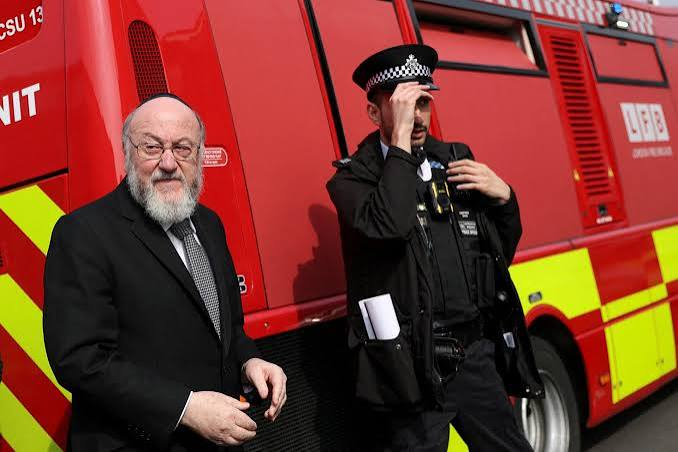
In a show of solidarity and reassurance, Prime Minister Keir Starmer hosted a high-level reception with prominent members of the Jewish community at Downing Street on Monday, July 13, 2026. The meeting focused on reinforcing government support, coordinating local police protection around Jewish institutions, and ensuring that community security organizations have the necessary resources to protect schools, synagogues, and cultural centers. The classification of the IMCR as a proscribed terrorist entity has been widely welcomed by communal leaders, who have long called for a more aggressive state response to foreign-directed antisemitic threats.
Global Counter-Terrorism Context and Diplomatic Fallout
The UK’s decision to ban the IRGC and the IMCR places it in alignment with other international allies, such as the United States, which designated the IRGC as a Foreign Terrorist Organization (FTO) in 2019. For years, British political figures debated the diplomatic consequences of such a ban, with some expressing concern that it could permanently sever diplomatic channels with Tehran. However, the escalation of physical attacks, state-sponsored cyber-attacks, and assassination plots targeting journalists on British soil ultimately left the government with no choice but to prioritize domestic security over diplomatic protocol.
As Europol and other international security agencies continue to monitor the activities of Harakat Ashab al-Yamin al-Islamia and other shadowy hybrid groups, the UK’s legislative actions are likely to serve as a template for other European nations. With similar attacks recorded in Belgium and the Netherlands, pressure is mounting on continental governments to implement identical proscriptions and crack down on the criminal networks facilitating Iran’s proxy warfare. The coming months will be critical in determining whether these robust legal measures succeed in deterring state-sponsored sabotage, or if hostile actors will continue to seek new, covert pathways to project threat and division within Western societies.