Fontainebleau forest fire 2026: Paris evacuations & Europe heatwave
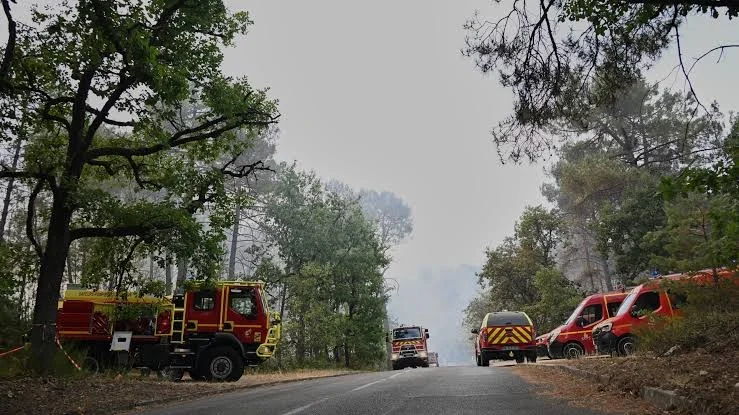
Table of Contents
Fontainebleau forest fire occurrences are historically rare in northern France, but the massive blaze that erupted on Sunday has shattered that precedent, forcing the urgent evacuation of residential areas and disrupting major transportation corridors just miles south of Paris. As Western Europe bakes under its third red-alert heatwave of the season, this historic forest—a former royal hunting ground and a major tourist destination—has become the latest battleground in a summer of extreme weather.
The sudden and intense wildfire in the historic Fontainebleau forest has sent shockwaves through France and the wider European region. Below is a comprehensive breakdown of the escalating situation, its ecological impacts, transport disruptions, and the broader context of the 2026 European heat crisis:
- The Outbreak and Scale of the Fontainebleau Forest Fire
- Evacuation and Local Impact on the Edge of Paris
- Severe Disruption to Paris Transportation and Infrastructure
- Firefighting Operations: Deploying Water-Bombing Planes for the First Time
- The Broader Crisis: Europe’s Deadly Red-Alert Heatwave
- Spanish Wildfires: Devastation and Loss in Los Gallardos
- Climate Change and the Rapidly Warming European Continent
- Comparative Analysis: Fontainebleau vs. Los Gallardos Wildfires
- Long-Term Consequences for Cultural Heritage and Local Ecology
The Outbreak and Scale of the Fontainebleau Forest Fire
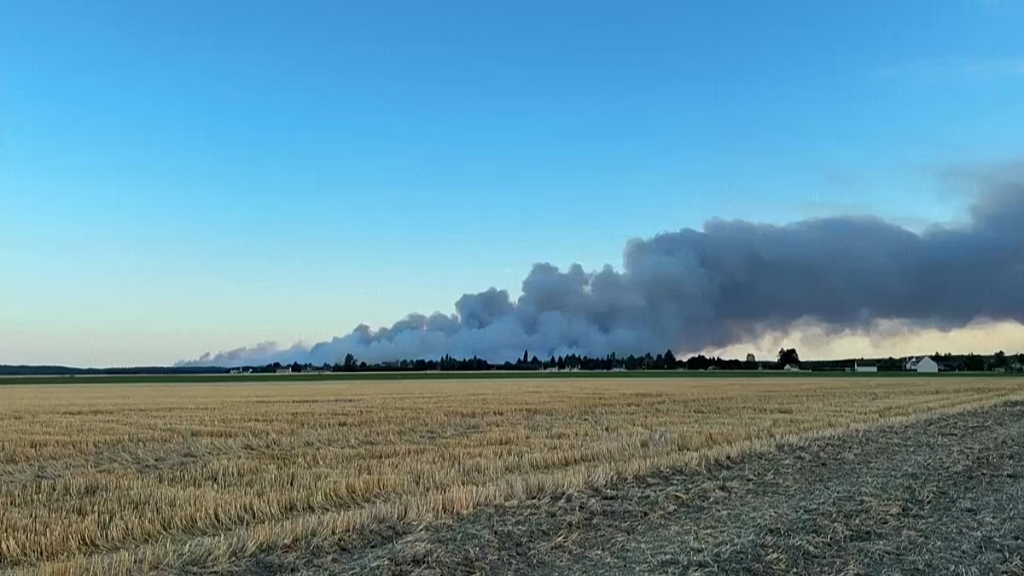
The fire erupted late Sunday afternoon in the sprawling Fontainebleau forest, situated approximately 60 kilometers (40 miles) southeast of Paris. Characterized by officials as “very virulent” and of “exceptional scale,” the blaze raced across 800 hectares (2,000 acres) of dense woodland by early Monday morning. This rapid expansion represents a footprint larger than Gibraltar, presenting an unprecedented challenge for regional disaster response teams accustomed to milder climates.
While the meteorological conditions—namely severe drought and high winds—facilitated the rapid spread, authorities are investigating a potentially malicious origin. French Interior Minister Laurent Nunez announced that investigators are exploring the strong possibility of arson, noting that there were approximately 10 distinct fire ignition points discovered within a concentrated perimeter of just 1,000 meters. This clustering strongly suggests that the fire was deliberately set, escalating the incident from an environmental emergency to a high-priority criminal investigation.
The Fontainebleau forest, known for its unique ecosystem of ancient oaks, Scots pines, and sandy soil, has been left highly vulnerable by successive heatwaves. The dry undergrowth, built up over several seasons of below-average rainfall, acted as a direct accelerant. As the flames jumped from the dry brush to the canopy, the fire quickly transitioned into a fast-moving crown fire, throwing embers hundreds of meters ahead of the main front and creating new spot fires that continuously bypassed firefighting lines.
Evacuation and Local Impact on the Edge of Paris
The immediate threat to human life prompted swift evacuations in the quiet villages bordering the forest. In Le Vaudoue, a historic village of roughly 750 residents, the atmosphere transformed from summer tranquility to sheer panic. Around 15 homes on the immediate edge of the forest were evacuated on Sunday night as the fire line crept dangerously close. Didier Buguinet, the deputy mayor of Le Vaudoue, voiced the collective despair of the community, stating that he had never witnessed a disaster of this scale in his three decades of local governance, adding, “We are going to weep for our forest”.
Displaced residents described the terrifying speed at which the fire approached. Valerie and her husband Daniel recounted the moment authorities knocked on their door, urging them to flee as thick ash fell like snow over their property. “We put the cats and dogs in the car… we could see the fire on both sides,” Valerie recalled while waiting near the village war memorial, uncertain of whether her home would survive the night.
Despite the danger, the disaster has highlighted deep-seated community solidarity. Many residents returned to the danger zone shortly after evacuating to assist first responders. Cindy Fuyard, a local nurse, fled with her family but quickly returned to open her gates, allowing firefighters unrestricted access to her swimming pool water to replenish their dry equipment. In addition, local farmers mobilized their tractors to plow emergency firebreaks through adjacent fields, successfully preventing the flames from jumping into the heart of the residential neighborhoods.
Severe Disruption to Paris Transportation and Infrastructure
Due to its unusual proximity to the French capital—about 42 miles south of Paris—the Fontainebleau forest fire has had a disproportionately large impact on national transportation infrastructure. The fire forced the partial closure of the busy A6 highway, which serves as the primary north-south artery connecting Paris to Lyon and the Mediterranean coast. Closing this critical route during a peak summer travel weekend caused massive traffic jams extending for miles, trapping thousands of holidaymakers in extreme temperatures.
Simultaneously, the rail network suffered severe disruptions. High-speed and regional trains traveling to and from the bustling Gare de Lyon station in Paris were halted or severely delayed late Sunday as thick smoke blew across the tracks, reducing visibility to near zero and posing a risk of heat damage to electrical overhead lines. Although SNCF, the national rail operator, managed to restore a semblance of normal operations by Monday morning, commuter networks across the Seine-et-Marne department remained heavily impacted, with several branch lines suspended.
This infrastructure paralysis underscores the vulnerability of northern France’s highly centralized transit system to extreme weather events. Authorities are now reviewing contingency plans to ensure that critical links between the capital and the south can remain operational during future climate-induced emergencies.
Firefighting Operations: Deploying Water-Bombing Planes for the First Time
The response to the Fontainebleau forest fire required an unprecedented mobilization of aerial and ground assets. For the first time in the history of the Paris region, authorities scrambled water-bombing planes normally stationed in the south of France to tackle the blaze. Regional fire service spokesperson Paul Laurain confirmed that two water-dumping aircraft were deployed over the canopy, performing continuous runs to douse the flames with water and fire retardants.
On the ground, hundreds of firefighters from multiple regional departments battled the “very virulent” blaze. However, the terrain of the Fontainebleau forest—characterized by deep gorges, high sandstone boulders, and narrow paths—severely restricted the movement of heavy fire trucks. This forced ground crews to lay thousands of meters of hose by hand, climbing steep rock faces to reach burning pockets of vegetation.
The operations faced a major setback when nightfall forced the temporary suspension of all aerial water-dumping runs on Sunday night. Without the planes, the fire expanded unchecked across several hundred hectares before the aircraft could resume operations at first light on Monday. Fire commanders emphasized that without the immediate deployment of the planes, several other nearby villages would have faced mandatory evacuations.
The Broader Crisis: Europe’s Deadly Red-Alert Heatwave
The environmental emergency at Fontainebleau is not an isolated incident; it is part of a broader, systemic climate crisis gripping Western Europe. The region is currently baking under its third red-alert heatwave of the summer. Temperatures have shattered records across France, surpassing 40 degrees Celsius (104 degrees Fahrenheit) across western and central areas, and hovering around a blistering 37 degrees Celsius (98 degrees Fahrenheit) in Paris itself.
These extreme temperatures have parched soils and lowered humidity levels to historic lows, turning vast swathes of the European countryside into tinderboxes. In southern France, large wildfires have already scorched thousands of hectares since last week, stretching national firefighting resources to their absolute limits and disrupting major public events, including the Tour de France cycling race. The compounding effect of three consecutive heatwaves has left municipal water supplies low and emergency services severely fatigued.
Spanish Wildfires: Devastation and Loss in Los Gallardos
While France battles to protect its capital region, Spain is reeling from even more devastating blazes. In the southern region of Andalusia, a ferocious wildfire ripped through a remote, largely expatriate community in Los Gallardos last week, resulting in one of the country’s deadliest fires in recent memory. On Monday, regional authorities confirmed that 13 people had been killed, while 10 people remained unaccounted for as search and rescue teams combed through the charred remains of homes and vehicles.
The victims, many of whom were elderly British and European retirees, were caught completely off guard by the speed of the flames. Many perished in their vehicles or on foot as they desperately tried to flee the fast-moving firestorm. Among the latest confirmed casualties was a 93-year-old British national who succumbed to severe burn injuries in a local hospital on Sunday.
Spanish Prime Minister Pedro Sánchez scheduled a visit to the disaster site on Monday to coordinate federal aid and express solidarity with the devastated community. Although regional authorities managed to contain the Los Gallardos fire on Sunday, it has already blackened over 70 square kilometers (27 square miles) of protected forest and agricultural land, destroying critical infrastructure and local livelihoods.
Climate Change and the Rapidly Warming European Continent
The escalating frequency and intensity of these wildfires are clear indicators of a rapidly changing climate. According to the European Union’s Copernicus Climate Change Service, Europe is the world’s fastest-warming continent. Temperatures across the European landmass have been increasing at twice the global average rate since the 1980s, creating an environment increasingly conducive to extreme weather events.
Climatologists warn that the traditional boundary separating the fire-prone Mediterranean region from the cooler, wetter north is rapidly dissolving. Wildfires of the scale seen in Fontainebleau are highly unusual for the Île-de-France region, which has historically enjoyed a temperate maritime climate. The fact that water-bombing planes had to be sent to the outskirts of Paris is a stark reminder that climate change is actively redefining geographic risk zones, forcing northern European nations to rapidly adapt their emergency response infrastructure.
Comparative Analysis: Fontainebleau vs. Los Gallardos Wildfires
To understand the differing dynamics, scale, and impacts of these two major Western European wildfires, the table below provides a detailed side-by-side comparison of the crisis in France and Spain:
| Metric / Feature | Fontainebleau Forest Fire (France) | Los Gallardos Wildfire (Spain) |
|---|---|---|
| Location | Seine-et-Marne, Île-de-France (42 miles south of Paris) | Almeria, Andalusia (Southern Spain) |
| Area Affected | 800 hectares (2,000 acres) | 70 square kilometers (approx. 7,000 hectares) |
| Casualties & Missing | No deaths reported; minor injuries; evacuations of several towns | 13 deaths confirmed; 10 people remain missing |
| Key Infrastructure Impact | Closure of A6 highway; disruptions to Gare de Lyon rail lines | Destruction of residential expat community; loss of agricultural farms |
| Suspected Cause | Arson suspected (10 separate ignition points within 1,000m) | Extreme drought, high winds, and soaring temperatures |
| Response Forces | Hundreds of ground firefighters; 2 water-bombing planes | Federal military emergency units; regional aviation units |
Long-Term Consequences for Cultural Heritage and Local Ecology
Beyond the immediate physical damage and transportation chaos, the Fontainebleau forest fire represents a devastating blow to French cultural heritage and local biodiversity. Sprawling over 25,000 hectares, Fontainebleau is one of the most celebrated and ecologically diverse forests in Europe. For centuries, it served as a royal hunting ground for French monarchs, housing the majestic Fontainebleau Chateau, which was favored by rulers from François I to Napoleon Bonaparte.
The forest is also globally recognized as the birthplace of the Barbizon school of painters, who laid the groundwork for Impressionism by painting directly from nature (en plein air). Its unique sandstone rock formations draw hundreds of thousands of hikers, rock climbers, and nature lovers from Paris and around the globe every year. The destruction of these pristine landscapes threatens not only the local tourism economy but also a delicate habitat that supports rare species of flora, fauna, insects, and birds.
As recovery efforts begin, ecological experts are calling for a fundamental shift in how France manages its historic forests. This includes establishing wider firebreaks, planting more fire-resistant deciduous tree species, and installing advanced thermal imaging cameras to detect early signs of smoke. The battle at Fontainebleau is a clear warning: the preservation of Europe’s cultural and natural treasures now depends on proactive climate resilience and aggressive wildfire prevention strategies.