JD Vance Refers Walz and Ellison to DOJ for Criminal Fraud Probe
The Scope of the DOJ Criminal Referral
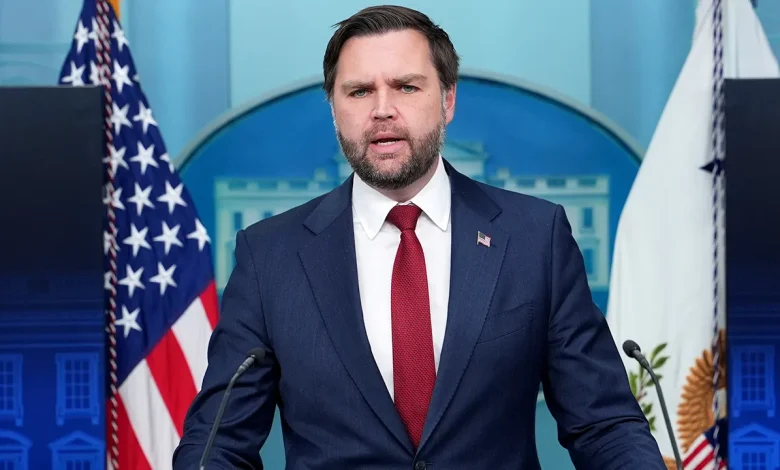
JD Vance, the Vice President of the United States, announced on Monday that he has formally referred Minnesota Governor Tim Walz and state Attorney General Keith Ellison to the Department of Justice (DOJ) for a criminal fraud investigation. The referral, which Vance published via a detailed statement on the social media platform X, alleges that both Democratic leaders may have facilitated widespread taxpayer fraud, lied under oath about what they knew, and actively harassed or intimidated whistleblowers who attempted to expose the corruption. According to the announcement, the referral has been sent directly to the Department of Justice’s fraud division, overseen by Assistant Attorney General Colin McDonald. This aggressive legal action marks a major escalation in the federal government’s newly declared “war on fraud,” placing Minnesota’s top leadership under intense national scrutiny.
The criminal referral was catalyzed by a comprehensive report and an accompanying letter delivered to Vice President Vance by the Republican-led House Oversight Committee, chaired by Representative James Comer. The committee’s findings accuse senior officials in Minnesota of demonstrating a severe dereliction of duty by failing to act on rampant corruption within federal social service programs. “Minnesota state officials are not above the law,” Vance wrote. “If they facilitated fraud, lied under oath about what they knew, or harassed and intimidated whistleblowers, they must face justice”. The move has sent shockwaves through both local and national political landscapes, highlighting deep state-federal tensions and intensifying debates over the management of billions of dollars in taxpayer-funded welfare programs.
The House Oversight Committee Report: “The Cost of Doing Nothing”
The foundation of Vice President Vance’s criminal referral rests upon a scathing, multi-page report published by the House Oversight Committee titled, “The Cost of Doing Nothing: How Tim Walz and Keith Ellison Fueled Minnesota’s Fraud Explosion”. The document details what the committee calls “one of the most stunning oversight failures in modern history”. According to the committee’s investigators, Governor Walz and Attorney General Ellison had been aware of widespread taxpayer fraud in federally funded social programs for several years but chose to repeatedly ignore red flags and delay corrective actions.
The report claims that concerns regarding systemic fraud were elevated to the highest levels of the Minnesota state government as early as 2019. Despite possessing the legal, administrative, and procedural authority to immediately suspend payments to suspicious non-profit entities and bar fraudulent providers from participating in these programs, state administrators allegedly permitted the flow of cash to continue unabated. Investigators asserted that instead of acting on credible warnings, state officials allowed the situation to deteriorate, permitting fraudulent actors to siphon off massive amounts of public funds.
Billions of Dollars in Taxpayer Funds Unaccounted For
The financial scale of the alleged negligence outlined in the House Oversight Committee’s report is staggering. According to figures compiled by investigators and highlighted by federal lawmakers, the oversight failures have resulted in the potential loss of billions of taxpayer dollars. Specifically, the report and subsequent statements from state representatives like Congressman Pete Stauber indicate that up to $9 billion in Medicaid funds and approximately $300 million in federal child nutrition funds may have been compromised or lost to fraudulent actors. These programs, which are designed to support low-income families, vulnerable children, and disabled individuals, were allegedly exploited on an “industrial scale” by criminal rings operating within the state.
Furthermore, the committee’s report notes that the failure to halt these payments did not just result in domestic financial loss. It raises alarming concerns that some of the fraudulently obtained funds may have been diverted into international networks or otherwise utilized for illicit purposes. The scale of the financial leak has prompted calls from the committee for a total audit of all social services expenditures, enrollment records, and reimbursement claims in Minnesota from 2019 to the present day.
Retaliation Allegations and Whistleblower Intimidation
Beyond the immense financial losses, one of the most legally damaging allegations in the referral involves the treatment of state employees who attempted to expose the ongoing schemes. The House Oversight Committee report alleges that internal whistleblowers who noticed the fraud and raised alarms were met not with support or administrative action, but with hostility and professional retaliation. Employees within the state’s educational and human services agencies reportedly faced systematic intimidation, designed to silence their concerns and keep the fraudulent operations hidden from public view.
The referral calls on the DOJ to investigate whether Walz, Ellison, or other senior state officials actively participated in, authorized, or turned a blind eye to this whistleblower harassment. Under federal law, the retaliation against or intimidation of individuals reporting the theft of federal funds carries severe criminal penalties. This aspect of the referral elevates the case from an issue of administrative incompetence to potential criminal complicity and active obstruction of justice.
| Metric / Aspect | Details of the Referral / Oversight Findings |
|---|---|
| Primary Target Individuals | Minnesota Gov. Tim Walz, State Attorney General Keith Ellison |
| Referring Authority | Vice President JD Vance (Head of White House Anti-Fraud Task Force) |
| Investigative Agency | Department of Justice (DOJ) Criminal Division, Fraud Section |
| Key Allegations | Complicity, facilitation of fraud, lying under oath, and whistleblower retaliation |
| Estimated Taxpayer Losses | $9 billion in Medicaid funds, $300 million in child nutrition programs |
| Prompting Document | House Oversight Committee Report: “The Cost of Doing Nothing” |
| Federal Actions Taken | Paused federal Medicaid reimbursements; FBI / DHS raids of targeted facilities |
Background: The Minnesota Fraud Epidemic and Federal Action
The ongoing legal battles in Minnesota are not a sudden development, but rather the culmination of years of escalating scandals surrounding the state’s administration of federal welfare dollars. The state first entered the national spotlight during the Biden administration with the uncovering of the “Feeding Our Future” scandal—a massive child nutrition fraud scheme that resulted in federal charges against dozens of individuals, many of whom have since been convicted. This case laid the groundwork for deeper investigations into other state-administered programs, including daycare networks, autism treatment centers, and adult healthcare services.
The Medicaid and Childcare Center Scams
The federal government’s scrutiny intensified in early 2026 following revelations of a massive Medicaid scam targeting programs meant to aid children on the autism spectrum. According to federal investigators, fraudulent operators established a network of sham autism treatment centers and childcare facilities to claim millions of dollars in federal reimbursements for services that were never actually provided to patients. Vice President Vance and other administration officials have pointed to these schemes as prime examples of systemic exploitation, alleging that the state’s lax oversight made it an attractive target for organized criminal elements.
In response to these growing concerns, federal agencies, including the Federal Bureau of Investigation (FBI) and Homeland Security Investigations (HSI), executed more than 20 coordinated search warrants across the Twin Cities in April 2026. Armed agents raided several childcare and autism centers, removing truckloads of financial records and administrative documents. While state officials, including Governor Walz, publicly welcomed the raids as a necessary step to secure justice, the federal action underscored the deep distrust between the White House and Minnesota’s executive leadership.
The White House Anti-Fraud Task Force Interventions
The federal crackdown is being driven by the White House Task Force to Eliminate Fraud, which was established by President Donald Trump in February 2026 following his State of the Union address. Vice President Vance was appointed to lead the task force, which has been granted sweeping powers to coordinate anti-fraud efforts across various federal departments. Under Vance’s leadership, the task force has made Minnesota a primary target of its enforcement actions.
Shortly after the task force’s formation, Vance, alongside Centers for Medicare & Medicaid Services (CMS) Administrator Dr. Mehmet Oz, took the unprecedented step of pausing more than $250 million in federal Medicaid reimbursements to Minnesota. The administration justified the freeze by arguing that the state had failed to implement basic program integrity measures, allowing rampant fraud to continue unchecked. The freeze of federal funds immediately escalated the political conflict, setting up a high-stakes constitutional and regulatory battle between the state and federal governments.
Political Aftershocks and Response from Democratic Leaders
The criminal referral has dramatically altered the political landscape in Minnesota and has had significant national repercussions. Governor Tim Walz, who was a prominent national figure and the Democratic vice-presidential nominee in the 2024 election, has faced immense political pressure over the ongoing fraud scandals. Although Walz has consistently denied allegations that his administration ignored financial abuse, the compounding scandals took a heavy toll. In January 2026, amid mounting criticism and escalating federal investigations, Walz announced that he would not seek a third term as governor, a move that stunned the political establishment and highlighted the severity of the crisis.
In response to the latest criminal referral, spokespeople for Governor Walz and Attorney General Ellison have dismissed the House Oversight Committee’s report as a partisan political attack. Walz has previously accused the Trump-Vance administration of weaponizing federal agencies to punish “blue states” like Minnesota. He argued that the suspension of Medicaid funds had “nothing to do with fraud” and was instead a “campaign of retribution” designed to damage political opponents. The decision to pause federal Medicaid funds has been a particularly fierce flashpoint. Minnesota state lawyers have pointed out that unilaterally freezing such funds mimics previous executive actions that were struck down by federal courts. For example, similar grants halted by Trump administration directives have been declared unconstitutional, as judges ruled that the executive branch cannot unilaterally block money already appropriated by Congress.
Legal Implications and Next Steps in the Criminal Investigation
The referral of Governor Walz and Attorney General Ellison to the DOJ’s fraud division represents a significant legal escalation that could lead to formal grand jury investigations and potential indictments if federal prosecutors find sufficient evidence of criminal wrongdoing. The Department of Justice will now review the House Oversight Committee’s report, internal state communications, and whistleblower testimonies to determine if there is a legal basis to proceed with a formal criminal probe. Legal experts note that proving criminal complicity or “willful blindness” on the part of high-ranking elected officials is a high bar, requiring evidence that they actively facilitated the fraud or took deliberate steps to cover it up.
These sweeping federal procedures have raised serious constitutional questions regarding executive power and state-level sovereignty. Defense teams representing individuals caught up in the wider federal crackdown have begun filing challenges in federal courts. Similar procedural questions arise across other high-profile federal legal arenas; for example, when defense lawyers challenge suicide watch protocols, arguing that administrative overreach can violate essential due process rights under the Constitution. In this case, attorneys for Minnesota entities targeted by the task force are likely to file similar claims of overreach, arguing that the federal government is utilizing criminal investigations to bypass standard regulatory and administrative channels.
Federal Funding and Oversight Reforms under Debate
As the legal battles play out in court, the controversy has also ignited a fierce debate in Congress over federal funding oversight and the mechanism of distributing welfare grants to states. Republican lawmakers are using the findings of the Minnesota investigation to push for a series of legislative reforms aimed at tightening federal control over state-administered social programs. The House is currently considering several bills designed to increase reporting requirements, mandate regular independent audits of state agencies, and give federal administrators the explicit authority to halt funding immediately upon the discovery of credible fraud allegations.
Critics of the administration’s “war on fraud” argue that bypassing established regulatory processes to freeze state resources damages the balance of federalism. They argue that these aggressive sweeps reflect a broader administrative pattern of implementing controversial policies via executive decree rather than legislative action. This strategy mirrors other legal showdowns where federal courts have reigned in the executive branch, such as when sweeping tariffs deemed illegal were struck down by judges who ruled that the administration had overstepped its constitutional boundaries. Whether the administration’s actions in Minnesota will meet a similar judicial roadblock remains a critical question as the DOJ reviews the criminal referral and decides on its next steps.