Roman Abramovich: Zelenskyy Confirms Secret Putin Backchannel
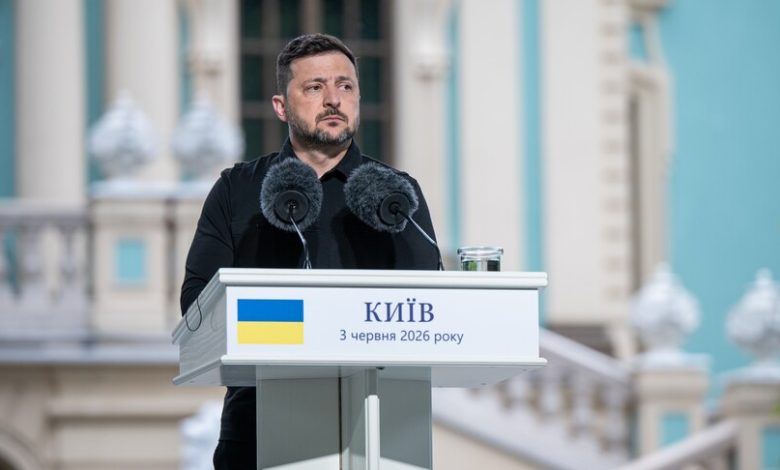
Roman Abramovich was recently confirmed by Ukrainian President Volodymyr Zelenskyy as a critical intermediary delivering personal messages between Kyiv and Moscow. In an exclusive interview with Sky News, Zelenskyy revealed that the billionaire Russian oligarch and former Chelsea Football Club owner traveled directly to the Ukrainian capital carrying a message from Russian President Vladimir Putin. According to the Ukrainian president, Putin’s message centered on a desire to understand what Ukraine is ‘ready to do’ to bring an end to the ongoing hostilities, with Abramovich offering to convey Kyiv’s response directly back to the Kremlin.
This revelation sheds light on the highly secretive diplomatic backchannels operating beneath the surface of the devastating conflict. While official diplomatic channels remain largely frozen or performative, private actors with unique access to both Eastern oligarchic structures and Western elite circles have stepped in to bridge the gap. Simultaneously, the geopolitical landscape continues to harden. As these clandestine peace feelers emerge, the European Union’s foreign policy chief announced a proposed new round of sanctions against Russia, featuring 80 listings designed to cripple Moscow’s military-industrial complex, punish human rights abusers, and silence state-aligned propagandists. This dual-track reality—secret diplomacy playing out against a backdrop of escalating economic warfare—highlights the complex, multi-layered nature of the modern international order.
The Hidden Backchannel: Zelenskyy Discloses Abramovich’s Role
The role of wealthy elites as diplomatic couriers is not a modern anomaly, but Roman Abramovich’s involvement represents one of the most high-profile instances of billionaire diplomacy in the 21st century. Zelenskyy’s public acknowledgment to Sky News confirms what international observers had long suspected: that the former Chelsea owner possessed the rare, high-level clearance required to cross active frontlines and serve as a reliable conduit for the heads of both warring states. Oligarchs have historically operated as informal envoys because their financial networks span national borders, granting them access to halls of power that are closed to career diplomats during active hostilities.
By stepping into this mediator role, Abramovich attempts to navigate an incredibly narrow path. On one hand, he must protect his massive global assets from crushing Western sanctions; on the other, he must maintain his standing within the Kremlin’s elite circle. His participation in these talks is a calculated risk, showcasing how the interests of the transnational billionaire class frequently intersect with high-stakes statecraft.
The Logistics of the Secret Mission to Kyiv
Traveling into a war zone under the cover of secrecy is a logistical nightmare, particularly for a figure as recognizable as Abramovich. The journey to Kyiv involved complex security protocols, coordinating with multiple intelligence agencies, and securing safe passage through heavily contested airspace and ground routes. Zelenskyy noted that Abramovich physically arrived in the capital, bypassing standard diplomatic protocols to deliver Putin’s direct inquiry.
The choice of Abramovich as a messenger is strategic. As an oligarch with deep roots in Russia’s post-Soviet economic transition, he has maintained a degree of proximity to Putin while simultaneously cultivating a Western persona through high-society investments in London and Europe. This dual identity made him an ideal candidate to bridge the gap between two leaderships that share profound mutual distrust. Zelenskyy’s willingness to receive him indicates that, despite public rhetoric rejecting negotiations with the current Russian regime, Kyiv remains pragmatic enough to keep communication lines open to assess Moscow’s true intentions. It also highlights the reality that backchannel diplomacy often operates with a level of flexibility and deniability that official state-to-state dialogue simply cannot afford.
Deciphering Putin’s Message to Kyiv
The core of the message carried by Abramovich was surprisingly direct: Russian President Vladimir Putin wanted to understand what concessions or strategic shifts Ukraine was willing to make to initiate a resolution. According to Zelenskyy, Abramovich presented this as an exploratory mission, offering to take Ukraine’s immediate feedback back to Moscow.
This inquiry suggests that despite Moscow’s aggressive public posturing, there is an underlying acknowledgment of the unsustainable costs of a prolonged war of attrition. By using a private intermediary, Putin could test Ukraine’s willingness to negotiate without displaying weakness or official desperation. If the response from Kyiv were favorable, it could pave the way for formal talks; if rejected, the Kremlin could easily disavow the exchange as an informal, unauthorized initiative by a private citizen.
Evaluating Ukraine’s Counter-Proposals and Red Lines
From Ukraine’s perspective, responding to such backchannel feelers is a delicate balancing act. Kyiv must project absolute strength and unwavering commitment to its territorial integrity while avoiding the trap of appearing completely closed to diplomatic resolutions. Zelenskyy’s public disclosure of the meeting itself serves as a tactical move, signaling to Western allies that Ukraine is being approached for terms but remains transparent about these overtures.
The timing of these backchannel messages coincides with massive shifts in global security architectures. As conventional alliances undergo stress, nations are preparing for alternative security frameworks. For instance, the shifting dynamics of global alliances can be seen as Europe builds a NATO alternative without America in 2026, signaling a continent-wide realization that reliance on traditional superpower security guarantees is no longer absolute. Within this landscape of shifting alliances and independent defense plans, secret channels like the one brokered by Abramovich become critical valves for preventing catastrophic miscalculations. Ukraine must navigate these waters carefully, ensuring that any backchannel discussions do not undermine its public standing or weaken its leverage with Western security partners.
The EU’s Response: A Targeted Wave of Sanctions
While private actors seek diplomatic openings, the institutional machinery of the West continues to tighten the economic screws on Moscow. The European Union’s foreign policy chief recently detailed a comprehensive new sanctions package designed to hit Russia’s state infrastructure where it hurts most. This round of sanctions represents a deliberate shift away from broad macroeconomic measures toward hyper-targeted listings.
By focusing on specific entities and individuals, the EU aims to minimize collateral damage to global markets while maximizing the friction within Russia’s domestic power structures. The strategy is designed to create a sense of personal consequence for those who directly enable or profit from the continuation of the war.
Sanctioning the Russian Military-Industrial Complex
The primary target of the EU’s latest effort is Russia’s military-industrial complex. By cutting off access to dual-use technologies, high-end electronics, and manufacturing components, Brussels aims to starve the Russian war machine of the tools required to sustain long-term operations. This economic pressure is designed to directly counteract Russia’s attempts to out-produce Western support for Ukraine.
This systemic targeting of defense capabilities is a common geopolitical strategy seen worldwide. For example, similar military escalations and counter-containment strategies are visible in other theaters, such as when North Korea enhances border artillery to project power and deter external intervention. The EU’s sanctions are intended to ensure that Russia cannot achieve a similar level of industrial self-sufficiency, keeping its military capacities bottlenecked by technological scarcity. Without access to advanced microprocessors and precision machinery, Moscow’s capacity to replenish its precision-guided munitions and heavy armor is severely compromised over the long term.
Targeting Human Rights Violators and State Propagandists
In addition to industrial assets, the proposed EU sanctions explicitly target 80 listings comprising individuals deemed responsible for human rights abuses in occupied territories, alongside state-backed media figures and propagandists. The inclusion of propagandists reflects a growing recognition that information warfare is just as lethal as conventional kinetic warfare. By freezing the assets and restricting the travel of those who shape the Kremlin’s domestic war narrative, the EU aims to degrade the ideological cohesion of Russia’s state media machine.
Propagandists serve a vital function in autocratic regimes by maintaining public support for costly conflicts and manufacturing consent for human rights violations. By isolating these figures from their luxury properties and bank accounts in Europe, the EU seeks to inject discord and resentment into the regime’s elite communication apparatus, showing that compliance with state directives comes with a steep personal cost.
Geopolitical Context: Europe’s Evolving Defense and Diplomacy
The simultaneous occurrence of secret diplomacy and aggressive sanctioning illustrates the “dual-track” strategy of the modern international order: speak softly, but wield a massive economic stick. European policymakers are increasingly forced to balance the immediate need to defend Ukraine with the long-term reality that some form of negotiated settlement will eventually be required to secure continental stability.
As the conflict drags on, the limits of pure military escalation become apparent. While advanced weaponry keeps Ukraine in the fight, it cannot unilaterally deliver a lasting peace without accompanying political frameworks. Consequently, European nations are preparing for a future where they must manage their own security and diplomatic portfolios independently of transatlantic consensus, creating a more fragmented but highly active diplomatic environment.
Comparison Table of Diplomatic Backchannels and Sanction Targets
To understand the dual strategies of diplomacy and economic containment currently at play, we can examine the structural differences between these two approaches:
| Diplomatic Aspect | Backchannel Negotiations (e.g., Abramovich) | Institutional Sanctions (e.g., EU Packages) |
|---|---|---|
| Primary Actors | Private billionaires, trusted emissaries, oligarchs | State governments, supranational bodies (EU, G7) |
| Strategic Goal | Establish trust, probe concessions, avoid public posturing | Degrade military capacity, punish human rights abusers, isolate elite |
| Level of Transparency | Highly secretive, deniable, informal | Publicly announced, legally binding, highly documented |
| Target Audience | Direct leadership (Putin, Zelenskyy) | Military-industrial complex, propagandists, public sentiment |
| Key Advantage | Flexibility, directness, reduced political risk if failed | Systemic economic impact, demonstrates international unity |
This division of labor shows that while state institutions enforce rigid, public boundaries through sanctions, private emissaries like Abramovich provide the fluid, deniable contact necessary to test the waters for eventual compromise.
High-Tech War and the Necessity of Human Intermediaries
In an era dominated by cyber warfare, artificial intelligence, and automated intelligence gathering, it is ironic that the most critical diplomatic breakthroughs still rely on face-to-face meetings of trusted human intermediaries. The modern battlefield has become highly digitized; nations rely heavily on advanced surveillance, such as when a spy satellite handover by China arms Iran with orbital eyes, illustrating how global powers use advanced technology to gain strategic dominance.
Similarly, the integration of advanced tools in combat planning and execution is reshaping the battlefield, as seen in the rising threat of autonomous operations where Mythos AI cyberattacks and Anthropic’s tool redefine warfare. These developments demonstrate that the parameters of modern conflict are being written in code and tracked in real-time by orbital arrays. Yet, despite the omnipresence of orbital sensors and cyber intelligence, technology cannot capture the nuanced psychological shifts of a state leader. It cannot gauge sincerity, fear, or a willingness to compromise. That is why human couriers like Abramovich remain indispensable. They can deliver a message with the proper emotional context, observe body language, and carry verbal assurances that would never be committed to digital channels for fear of interception or leakage.
The Future of Backchannel Negotiations in the Russo-Ukrainian Conflict
The revelation of Abramovich’s trip to Kyiv is unlikely to be the last we hear of backchannel diplomacy. As the war of attrition continues to grind down both sides, the utility of these private corridors will only increase. Publicly, both Kyiv and Moscow must maintain hardline stances to satisfy domestic audiences and maintain the morale of their armed forces. Privately, however, the economic toll of sanctions and the human cost of the conflict will force both administrations to continuously probe each other’s breaking points.
We are likely to see an increase in the variety of mediators. While oligarchs provide an immediate bridge due to their pre-existing networks, neutral third-party states and international organizations will also continue to vie for the role of peace broker. The challenge will be translating the raw data gathered from these backchannels into formal, structured peace negotiations that both sides can accept without appearing defeated.
Ultimately, the dual approach of diplomatic exploration and economic escalation defines the current phase of the war. Whether Abramovich’s efforts will lead to a formalized peace framework remains to be seen, but they prove that even in the darkest hours of conflict, the lines of communication are never truly severed. The geopolitical landscape of 2026 demands a sophisticated understanding of both public economic warfare and secret, personal diplomacy to truly comprehend how modern conflicts are managed and eventually resolved.