White House UFC Lawsuit 2026: Battle to Block South Lawn Fight 1
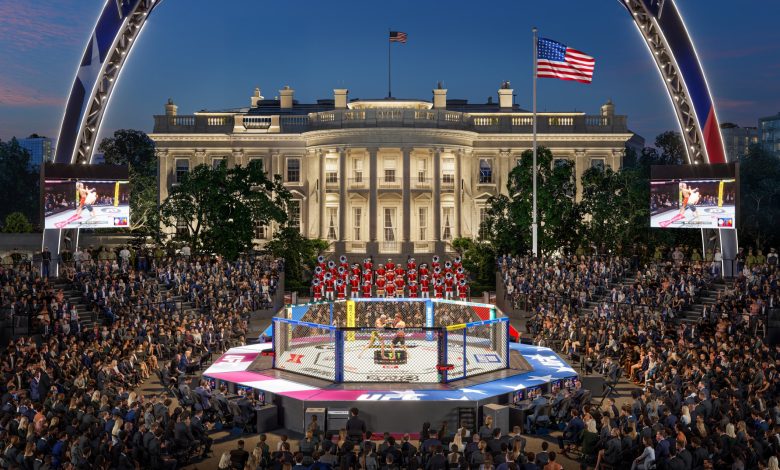
White House UFC lawsuit filings have triggered an unprecedented legal showdown that fuses constitutional law, professional combat sports, and executive authority into a single high-stakes battle. On Saturday, June 6, 2026, a federal lawsuit was launched targeting the United States government, directly requesting that a federal judge issue an emergency injunction to block an Ultimate Fighting Championship (UFC) fight card scheduled for the historic South Lawn of the White House. This event, formally named “UFC Freedom 250,” is slated to occur on June 14, 2026—a date that aligns with Flag Day but also coincides with President Donald Trump’s 80th birthday. Organized by UFC CEO Dana White, a prominent campaign surrogate and long-time ally of the President, the event has drawn intense scrutiny. Watchdog groups accuse the administration of using a public monument and national parklands for private commercial enrichment and personal political theater, setting off a fierce legal dispute with only days remaining until the scheduled opening bout.
The Legal Battle Over UFC Freedom 250
The legal struggle surrounding UFC Freedom 250 represents the latest in a series of conflicts where private citizens and advocacy groups have sought to check actions promoted by the executive branch. This landmark case centers on the propriety of transforming the executive mansion’s lawn into a pay-per-view sports stadium. According to the court documents filed in the U.S. District Court for the District of Columbia, the federal government bypassed multiple standard protocols to approve the fight night.
UFC CEO Dana White house has repeatedly downplayed the timing of the fight, asserting that the date was selected to celebrate the nation’s 250th anniversary (the Semiquincentennial) and is not designed as an 80th birthday celebration for Donald Trump. However, the litigation points out that the nation’s actual anniversary is July 4, nearly three weeks after the scheduled event, and that the administration’s claims of national celebration are a facade. Crucially, the lawsuit highlights that White acknowledged the event was entirely Trump’s idea, further tying the presidency to the commercial entity of the UFC.
The Plaintiffs and the Public Integrity Project White House
Bringing the lawsuit is the Public Integrity Project, a prominent anti-corruption watchdog organization that specializes in holding public officials accountable to statutory mandates. The group is acting on behalf of two primary plaintiffs: a highly decorated Vietnam War veteran and a dedicated Virginia civic activist. The plaintiffs argue that as taxpayers and citizens, they have a vested interest in preventing the degradation and commercial exploitation of the nation’s most sacred public landmarks.
Represented by legal counsel Brendan Ballou, the plaintiffs argue that allowing a private, for-profit sports organization unrestricted access to the White House and the nearby Lincoln Memorial violates the public trust. The Public Integrity Project emphasizes that the executive mansion belongs to the American public and is not a personal playground for presidential allies or a backdrop for lucrative corporate sponsorships.
Key Legal Arguments in the Lawsuit
The lawsuit relies on a multifaceted legal framework, accusing the Trump administration of violating federal administrative rules, public land regulations, and constitutional provisions. The crux of the legal argument is that the executive branch has overstepped its constitutional limits, ignoring statutory restrictions established by Congress regarding the preservation of federal lands and historic monuments.
The litigation emphasizes three primary areas of illegality: the violation of specific National Park Service regulations, the failure to secure congressional authorization for major structural overhauls, and the omission of necessary environmental impact assessments. Together, these claims present a compelling case that the approval process was deeply flawed and highly irregular.
Alleged Violations of National Park Service Regulations
At the heart of the statutory challenge is the claim that the event violates established National Park Service (NPS) regulations. The White House grounds, specifically the South Lawn, are classified as federal parklands and are subject to strict administrative oversight. Under federal law, these properties are meant to be preserved for public use and historic conservation, and are explicitly barred from hosting commercialized, for-profit athletic events.
The lawsuit argues that by giving Dana White and the UFC “unfettered access” to the White House and the Lincoln Memorial, the administration has authorized an illegal commercial venture on protected grounds. Under standard NPS guidelines, permits for private events that charge admission or restrict public access for corporate promotion are routinely denied. The plaintiffs contend that the administration carved out an unlawful exception to benefit a political ally and a multi-billion-dollar sports promotion company.
Lack of Congressional Consent and Environmental Oversight
Another major legal hurdle highlighted in the filing is the physical alteration of the South Lawn. In preparation for the event, construction crews have been transforming the historic grounds, erecting a massive steel archway and stadium-style seating with a capacity of approximately 5,000 spectators. The lawsuit points out that this towering steel arch—frequently referred to as “The Claw”—stands taller than the White House itself, drastically altering the historic visual corridor of the executive mansion.
The plaintiffs assert that the administration failed to obtain congressional consent for these structural changes. Additionally, they allege that no environmental review was conducted prior to commencing construction. Typically, projects of this scale on federal land require rigorous reviews under the National Environmental Policy Act (NEPA) to assess soil compaction, historical preservation impact, and ecological damage. The complete lack of an Environmental Assessment (EA) or Environmental Impact Statement (EIS) forms a primary procedural basis for the lawsuit’s request to halt the construction and dismantle the arena.
Financial Conflicts of Interest and Profit Motives
Beyond statutory violations, the lawsuit brings to light serious ethical concerns regarding financial conflicts of interest. Critics have long argued that Trump’s close personal and professional relationships with UFC leadership blur the lines between official government business and private financial interests. The planned event has reportedly attracted high-net-worth individuals and corporate sponsors, with VIP tickets priced at upwards of $1 million each.
These exorbitant ticket prices and associated corporate sponsorships highlight the purely commercial nature of the event, which stands in stark contrast to traditional public celebrations. The Public Integrity Project argues that public resources, security detail, and iconic federal properties are being utilized to generate massive corporate revenue for private entities, as reported by CBS News, which obtained copies of the filing details.
Trump’s Stock Acquisition in UFC’s Parent Company
A particularly controversial point in the lawsuit involves President Trump’s personal financial portfolio. According to public financial disclosure records cited in the legal filings, President Trump purchased between $15,000 and $50,000 of stock in TKO Group Holdings—the parent company of the UFC—on March 25, 2026. This purchase occurred just weeks before the official announcement and planning phases of the White House fight card.
The timing of this stock acquisition raises significant conflict-of-interest concerns. Plaintiffs argue that because the president holds a direct financial stake in the parent company of the promotion staging the event, he stands to benefit personally from the massive promotional value and branding opportunities generated by using the White House as a backdrop. This direct connection between presidential action and personal financial enrichment lies at the core of the lawsuit’s claims of corruption.
The Role of Dana White and Paramount SkyDance
The lawsuit also names and examines the roles of major corporate actors involved in the production. UFC Chief Executive Dana White is highlighted as a primary beneficiary. White, a longtime political ally and campaign surrogate for Trump, has secured unprecedented access to federal monuments, including the Lincoln Memorial, which is scheduled to host the ceremonial weigh-ins for the fighters on Friday, June 12.
Furthermore, the broadcast rights for the event are held by Paramount, which plans to stream the fights live on Paramount+. The parent company of CBS News, Paramount SkyDance, which is controlled by prominent figures Larry and David Ellison, stands to capture substantial advertising revenue from the broadcast. This commercial entanglement of political power, corporate media, and professional sports has drawn fierce condemnation from legal experts who argue that it sets a dangerous precedent for the privatization of public assets.
| Aspect of Event | UFC Freedom 250 (Proposed June 14) | Traditional White House Events |
|---|---|---|
| Access & Ticketing | Paid VIP tickets up to $1,000,000; exclusive corporate sponsorship packages. | Free public lottery (e.g., Easter Egg Roll) or formal state invitations. |
| Broadcasting & Media | Commercial stream on Paramount+; private commercial ads. | Public broadcasting, pool reporters, and non-commercial live streams. |
| Lawn Infrastructure | 600-ton steel arch (“The Claw”), 5,000-seat stadium, major earthworks. | Temporary tents, wooden stages, minimal lawn alteration. |
| Primary Purpose | Commercial expansion; private promotion; President’s 80th birthday. | Diplomatic statecraft, national heritage, and public community engagement. |
| Environmental Review | Bypassed standard NEPA reviews and environmental assessments. | Strict compliance with federal agency conservation standards. |
Logistics and the Transformation of the South Lawn
The logistical scale of UFC Freedom 250 is unprecedented for any event hosted at the executive mansion. Historically, the South Lawn has hosted peaceful garden tours, state dinners, and seasonal celebrations. However, the current transformation involves industrial-scale construction. Crews have been working around the clock to erect a massive 5,000-seat arena right outside the front door of the White House, complete with a professional octagon-shaped cage.
In addition to the South Lawn stadium, the event’s footprint extends to the surrounding areas of the National Mall. To accommodate the expected crowd of spectators, large digital broadcasting screens are being set up at the nearby Ellipse. The UFC has announced plans to distribute up to 85,000 free tickets for fans to gather on the Ellipse and watch the live broadcast. The logistical layout has turned the heart of Washington, D.C., into a massive sports festival, drawing criticism from local residents and urban planners who warn of severe traffic disruptions and potential damage to historic green spaces.
The Administration’s Defense: An ‘Obstructionist’ Lawsuit
In response to the legal challenge, the White House has issued a strongly worded defense, characterizing the lawsuit as an “obstructionist, baseless, and dilatory” political attack. Administration officials argue that President Trump has the legal authority to use the executive grounds to host cultural, athletic, and historical events that promote American excellence.
The administration contends that the UFC fight card is fundamentally no different from other permitted events that take place on federal parklands throughout the year, such as the annual Easter Egg Roll or state-sponsored concert series. They assert that all necessary local permits were properly obtained and that the event serves to honor the country’s historic milestone in a modern, culturally relevant manner. White House spokespersons have dismissed the allegations of conflict of interest, stating that the event’s primary focus remains on national unity and celebrating American history.
Historical Precedents of White House Sporting Events
To understand the legal gravity of this case, it is essential to examine the historical precedents of athletics at the executive mansion. Many presidents have incorporated sports into the White House fabric. Theodore Roosevelt famously established a tennis court on the grounds, Dwight D. Eisenhower installed a putting green, Richard Nixon added a bowling alley, and Barack Obama modified the tennis court to accommodate full-court basketball games.
However, legal historians emphasize that these historical additions were strictly for personal recreation or diplomatic bonding and did not involve commercial enterprises. Never before has the White House grounds been leased or provided to a multi-billion-dollar private company to host a pay-per-view sporting event where corporate sponsors pay millions for advertising space. The plaintiffs argue that this shift from personal recreation to commercial exploitation represents a fundamental break from historical precedent and a violation of the public trust.
Potential Judicial Outcomes and the Injunction Decision
With the event scheduled for June 14, 2026, the federal judge presiding over the case faces an extremely tight timeline. To stop the fight, the judge must issue a preliminary injunction. This legal remedy requires the plaintiffs to demonstrate a high likelihood of success on the merits, proof of irreparable harm if the event proceeds, a balance of equities in their favor, and a showing that the injunction serves the public interest.
The primary legal hurdle for the plaintiffs will be establishing standing. In federal jurisprudence, plaintiffs must show a concrete, particularized “injury-in-fact” rather than a generalized grievance about government behavior. Legal analysts are divided on whether a Vietnam War veteran and a local activist can establish sufficient standing to halt a presidential event. If the court grants the injunction, it would represent a historic rebuke of executive overreach. If the court denies the request, the UFC will proceed with what is poised to be the most controversial and highly publicized card in mixed martial arts history.