Raman Overtakes Spencer Pratt 1 in LA Mayoral Race Surge
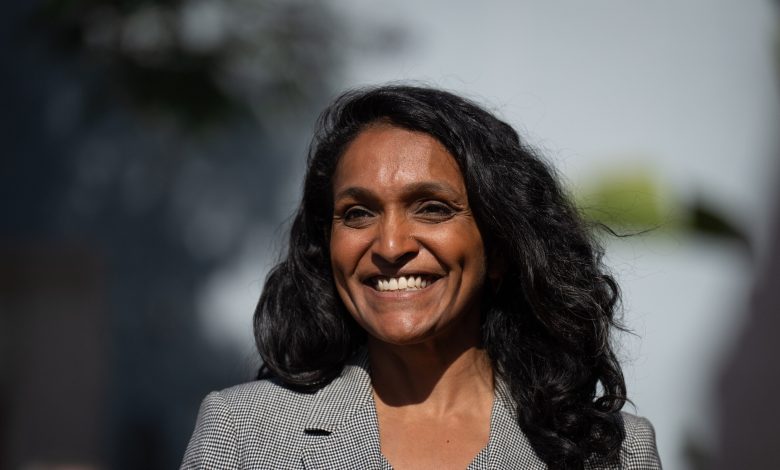
Raman, the progressive Los Angeles City Councilmember and Democratic Socialists of America (DSA) member, has taken a narrow but historic lead over former reality TV star and registered Republican Spencer Pratt. This remarkable shift secures her position for the second-place slot in the race to take on incumbent Los Angeles Mayor Karen Bass in the upcoming November runoff election. Pratt, who mounted an aggressive campaign challenging Bass from the right in this nonpartisan mayoral primary, saw his early lead slowly evaporate as election officials worked through a massive backlog of mail-in ballots. This development represents a monumental shift in the municipal landscape of Southern California, transforming what once looked like a moderate-to-conservative upset into a classic ideological battle between the city’s progressive left and its mainstream Democratic establishment.
Raman’s Late Ballot Surge: Overturning the Lead
Raman, a prominent member of the Los Angeles City Council representing the 4th district, has pulled off a dramatic comeback in the nonpartisan mayoral primary. When the first batches of votes were released on Tuesday, June 2, 2026, the initial results heavily favored former reality television star Spencer Pratt, who held a solid grip on the second-place spot. This initial lead gave Pratt and his supporters immense hope that a conservative challenger could force incumbent Mayor Karen Bass into a difficult head-to-head runoff in November. However, the subsequent updates from the Los Angeles County Registrar-Recorder began to tell a very different story.
With each successive daily ballot count update released since Wednesday, Raman steadily chipped away at Pratt’s lead. By Friday night, she had successfully cut his lead in half, reducing the gap to just over 20,000 votes. By Sunday night, the progressive councilwoman had officially overtaken Pratt, moving ahead by a margin of several thousand votes. In an emotional and rallying speech to her supporters on election night, when the outcome was still highly uncertain, Raman acknowledged the complex road ahead: “There are still many ballots to count, and we may not get an answer we like. But regardless of what happens next, nobody, nobody can take away what all of us have built together.” Those words proved prophetic, as her grassroots coalition’s late mobilization efforts successfully pushed her into a winning position.
The Dynamics of California’s Mail-In Ballot Counting
The shifting of vote totals over several days is a staple of California’s electoral process, often referred to by political analysts as the “blue shift” or “progressive drift.” Under California law, every active registered voter is mailed a ballot. These ballots are counted as long as they are postmarked on or before Election Day and received by county election officials within seven days. Because of this, the initial ballots counted on election night—often consisting of early mail-in ballots and in-person votes cast on Election Day—frequently lean more moderate or conservative.
As the remaining mail-in ballots dropped off on Election Day are processed, verified, and counted, the results typically trend toward more progressive and younger candidates. This administrative delay, while frustrating to some candidates, ensures that every legitimate vote is counted. In Los Angeles, where voter turnout can be highly decentralized across diverse neighborhoods, this process often completely reorganizes the leaderboard in highly competitive municipal contests. It mirrors the dynamics observed in other highly contested primary elections, where early results are merely a prelude to a much longer and more representative tallying process.
Spencer Pratt’s Reality TV Campaign Meets Political Reality
Pratt entered the race as a highly unconventional candidate. Having risen to fame on MTV’s *The Hills*, Pratt leveraged his significant social media presence and pop-culture notoriety to launch a populist campaign. Running as a registered Republican in a city where registered Democrats have an overwhelming registration advantage, Pratt focused his message almost entirely on the city’s perceived crises: homelessness, public safety, and a deteriorating business environment. He sought to tap into deep-seated voter frustration with the status quo, presenting himself as a political outsider willing to take drastic measures.
As the late-counted ballots began to erode his initial lead, Pratt’s reaction on social media captured a mixture of skepticism and anxiety common among conservative candidates navigating California’s election system. On Saturday, he shared an image of Russell Crowe’s John Nash from *A Beautiful Mind* on X, with a caption reading, “Me trying to figure out how votes get counted in LA.” A day prior, he had posted a photo of himself in front of Los Angeles City Hall with the single-word caption, “Patience.” For political analysts, Pratt’s transition from an apparent runner-up to third place highlights the difficulty that right-leaning candidates face when trying to build a sustainable citywide coalition in modern Los Angeles.
Challenging Karen Bass from the Right
Pratt’s campaign was designed to be a direct referendum on the leadership of Mayor Karen Bass. By positioning himself as a defender of traditional business interests and an advocate for increased policing, Pratt aimed to win over moderate homeowners and commercial property owners who feel alienated by the city’s progressive drift. He campaigned extensively in the San Fernando Valley and other areas of the city that have historically skewed more conservative.
His success in holding second place for several days demonstrated that there is a persistent, vocal block of voters in Los Angeles who favor a more conservative approach to local governance. However, the limit of this strategy became apparent as broader voter participation via mail-in ballots began to favor Raman. While Pratt successfully galvanized a dedicated base of conservative and moderate voters, he struggled to expand his appeal to the broader, more progressive electorate that typically dominates Los Angeles municipal runoffs.
Mayor Karen Bass and the Battle for Los Angeles
Bass, who made history in 2022 as the first female mayor of Los Angeles, secured her place in the November runoff with a comfortable first-place finish, capturing approximately 34.8% of the vote. Bass’s first term has been defined by her signature “Inside Safe” initiative, which aimed to move thousands of unhoused Angelenos from street encampments into temporary and permanent housing. While Bass has received praise for her hands-on leadership and her ability to secure federal funding, her administration has also faced intense scrutiny.
With Raman now poised to be her opponent, Bass faces a very different kind of challenge in the general election. Rather than defending her record against a conservative critic who opposes her basic policy goals, Bass must now defend her moderate, establishment approach against a progressive insurgent who argues that her policies do not go far enough. This matchup will force Bass to navigate the delicate balance between satisfying her moderate supporters while preventing her progressive base from defecting to Raman.
A Progressive vs. Moderate Clash in November
The upcoming runoff between Bass and Raman promises to be a defining moment for the future of progressive politics in Southern California. Unlike a traditional Democrat-versus-Republican contest, this race will be an intra-party struggle that reflects broader debates occurring within the national Democratic Party. This ideological friction is highly reminiscent of the ongoing debates over the progressive coalition’s future, where different factions contest the best way to address systemic inequalities and govern major metropolitan areas.
Raman’s supporters will argue that Bass’s administration has been too cautious, particularly on issues like rent control, climate change, and alternative responses to policing. Bass’s supporters, conversely, will frame Raman’s policies as unrealistic and ideologically rigid, arguing that effective governance requires coalition-building, pragmatism, and working within established political frameworks.
The Role of the Democratic Socialists of America (DSA)
Raman’s political rise has been heavily fueled by her alignment with the Democratic Socialists of America (DSA). When she first ran for City Council in 2020, her victory over an entrenched incumbent was seen as a watershed moment for the progressive left in Los Angeles. Throughout her time in office, Raman has maintained strong ties to grassroots activist networks, tenant rights organizations, and progressive labor unions.
Her campaign’s ability to mobilize a massive volunteer apparatus was the key driver behind her late surge in the primary. While Pratt relied heavily on media appearances and name recognition, Raman’s campaign executed a highly disciplined field operation focused on door-knocking, phone banking, and chasing outstanding mail-in ballots. This organized grassroots effort proved to be a highly effective counterweight to Pratt’s celebrity-driven campaign, demonstrating that strong field operations remain a crucial component of local political success.
Shifting Coalitions in Southern California
The shifting political coalitions in Los Angeles are part of a broader transformation occurring throughout California. The state’s traditional political establishment is increasingly squeezed by a highly organized progressive movement on the left and a populist, right-leaning movement on the right. This dynamic is frequently highlighted in public discussions regarding California’s prominent political figures, who must constantly navigate these competing pressures to maintain their political standing.
In Los Angeles, this polarization has led to a highly fragmented electorate. While the city has historically been a stronghold for mainstream, moderate Democrats, the rise of candidates like Raman suggests that the progressive wing is becoming increasingly dominant in local municipal elections. The runoff will test whether a progressive candidate can build a broad enough coalition to win a citywide race in Los Angeles, or if the moderate establishment will continue to hold sway.
Key Statistics and Voting Trends in the Primary
To fully understand the electoral landscape of the 2026 mayoral primary, it is helpful to look at the voting shares and ideological alignments of the top three candidates. The table below provides a detailed breakdown of the candidates’ performance and their positions in the race as of the most recent ballot counts.
| Candidate | Party / Affiliation | Ideological Stance | Primary Vote Share (Approx.) | Runoff Status |
|---|---|---|---|---|
| Karen Bass | Democrat | Moderate/Establishment Liberal | 34.8% | Qualified (1st Place) |
| Nithya Raman | Democrat (DSA Endorsed) | Democratic Socialist / Progressive | 27.1% | Qualified for Runoff (2nd Place) |
| Spencer Pratt | Republican | Populist Conservative / Right-Wing | 26.7% | Eliminated (3rd Place) |
These numbers reflect a highly divided city. With nearly two-thirds of the electorate voting for candidates other than the incumbent, Mayor Bass faces a challenging road to re-election. The runoff will require both candidates to appeal to the voters who backed Spencer Pratt and other eliminated candidates, making the strategic positioning of both campaigns critical in the months ahead.
Analyzing the Broad Political Alignment in California
The outcome of the Los Angeles mayoral primary has significant implications for state and national politics. As seen in recent debates over national Democratic strategies, the balance between moderate governance and progressive activism remains a highly contentious issue. Raman’s success in overtaking Pratt demonstrates that progressive voter turnout remains strong, particularly when mobilized around concrete local issues like housing affordability and police accountability.
For California Democrats, the race serves as a reminder that the party’s progressive base cannot be taken for granted. While moderate candidates may perform well in initial counts, the long-term trend of mail-in voting continues to favor progressive candidates who possess strong grassroots organization. This dynamic will likely influence future campaigns across the state, from municipal races to statewide contests.
What Lies Ahead for the Fall Runoff Campaign
As the campaign transitions into the summer and fall, both Raman and Bass will need to refine their messages for a citywide audience. Raman must demonstrate that her progressive platform is not only visionary but also practical and executable. She will need to address concerns from moderate voters who worry that her policies could lead to municipal overreach or economic instability.
Bass, meanwhile, must re-energize her base and make a compelling case that her collaborative, establishment-style leadership is the most effective way to address the city’s challenges. She will need to convince progressives that she shares their goals, even if her methods are more gradual.
The November 3, 2026 runoff will undoubtedly be one of the most closely watched municipal elections in the country, offering a clear test of the strength of the progressive movement in one of America’s largest cities. To follow the official updates and detailed results of this historic election, observers can visit the 2026 Los Angeles Mayoral Election Overview.