Trump Defends ‘Anti-Weaponization’ Fund 2026 in Heated Clash
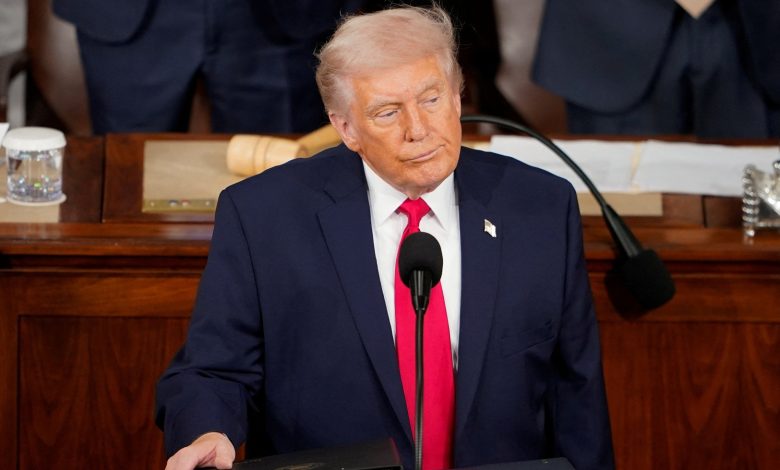
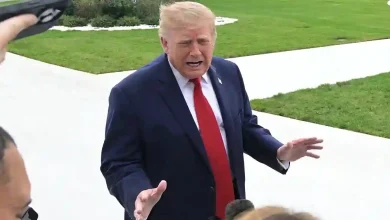
Trump defended what his administration has dubbed an “anti-weaponization” fund, saying the protesters who breached the Capitol on Jan. 6 were unfairly targeted by prosecutors and deserved compensation. In a dramatic television appearance that culminated in a sudden walkout, the president underscored his enduring commitment to rewriting the narrative of the 2021 insurrection while throwing his weight behind a highly controversial $1.776 billion federal program. The interview, which aired on NBC’s Meet the Press on June 7, 2026, put on full display the deep ideological and procedural rifts currently fracturing Washington.
During the intense exchange, moderator Kristen Welker repeatedly pressed the president on the legal, ethical, and fiscal boundaries of this proposed fund. When Welker specifically asked whether those who attacked police officers that day should get payouts with taxpayer funds, Trump said: “I wouldn’t be inclined to say so, but I have to see it.” He then segued into a broader defense of his prosecuted supporters, calling the 2020 presidential election “dirty” and pointing to the ongoing ballot count in California as evidence of modern election irregularities.
The Barnstorming Clash on Meet the Press
The highly anticipated interview was intended to address multiple compounding national issues, ranging from domestic economic pressures to escalating global conflicts. However, the conversation rapidly devolved into a direct confrontation over the rule of law and the administration’s attempt to establish what critics have described as a partisan legal defense fund. Trump’s insistence on keeping the anti-weaponization fund on the table—despite explicit pushback from both courts and his own Department of Justice—highlights his desire to maintain control over the political narrative surrounding the Capitol riot.
Welker’s persistent questioning focused heavily on the mechanics of the payout program, challenging the president to justify using public money to compensate individuals who had been convicted of federal offenses. Trump remained recalcitrant, asserting that the vast majority of the defendants were victims of a biased justice system operated by the previous administration. The dialogue illuminated a fundamental disagreement over the definition of judicial weaponization and the constitutional limits of executive redress.
The Tense Chippewa Falls Barn Setting
The physical atmosphere of the interview mirrored the stormy political exchange. Conducted inside a rustic farm barn in Chippewa Falls, Wisconsin, the taping was repeatedly interrupted by heavy downpours drumming against the metal roof, making auditory communication difficult. As the rain intensified, so did the friction between Welker and the president.
Frustrated by Welker’s refusal to accept his assertions of widespread electoral fraud and his defense of the settlement fund, Trump abruptly ended the session after approximately 50 minutes. Standing up and casting off his microphone, he lashed out at the veteran journalist and her network, labeling them part of a “crooked” and “fake” press. The walkout stands as one of the most volatile press encounters of his current term.
Inside the $1.776 Billion Anti-Weaponization Fund
To understand the source of the controversy, one must examine the legal and financial structure of the proposed fund. Officially announced in mid-May 2026, the $1.776 billion initiative was presented as a standardized system managed by the Department of Justice. Its stated purpose was to hear and redress claims of citizens who had suffered from government overreach, administrative targeting, or “lawfare”.
The establishment of this fund represents a novel attempt to use executive authority to bypass traditional congressional appropriations, triggering intense scrutiny from constitutional scholars. Similar instances of legally dubious administrative actions, such as when grants halted by the Trump administration were deemed unconstitutional, have historically shown the limits of using federal programs to achieve ideological goals.
The Genesis: Settlement of Trump’s IRS Lawsuit
The money for the anti-weaponization fund did not originate from a direct legislative appropriation. Instead, it was conceived as part of a sweeping settlement agreement in the civil lawsuit Donald J. Trump v. Internal Revenue Service. The president and his family had sued the IRS over the unlawful leak of their tax returns by a private contractor in 2019.
Under the terms of the settlement, Trump agreed to drop his $10 billion civil claim against the IRS, along with administrative damage claims stemming from the federal search of Mar-a-Lago and the investigation into Russian electoral interference. In return, the Department of Justice agreed to allocate $1.776 billion from the federal Judgment Fund—a perpetual appropriation used to settle legal disputes against the United States—to establish this redress system. While Trump received a formal apology, no personal monetary damages were paid directly to him.
Bipartisan Opposition and Legal Freezes
The announcement of the fund immediately met a wall of opposition. Democrats decried the initiative as a taxpayer-funded “slush fund” designed to reward Trump’s most ardent supporters, while several prominent Republicans voiced deep discomfort with the mechanism. Critics pointed out that the program completely lacked judicial oversight and congressional authorization.
The political backlash soon transitioned to the courts. On May 29, 2026, a federal judge issued a temporary restraining order, halting the creation of the fund while a civil lawsuit seeking its permanent termination is litigated. Legal experts argue that using the Judgment Fund to establish a broad-based, executive-controlled compensation pool for non-litigants stretches the statutory authority of the Treasury and the Department of Justice to its breaking point.
The Question of Police Assault Payouts
The most politically sensitive aspect of the fund is its potential to compensate individuals involved in the violent breach of the U.S. Capitol. In the years following the events of January 6, hundreds of individuals were prosecuted for a range of federal offenses, from parading in a restricted building to seditious conspiracy and assaulting federal officers.
During the Meet the Press broadcast, Welker repeatedly focused on the ethical dilemma of using taxpayer dollars to assist individuals convicted of violent crimes. Trump’s response—stating that while he “wouldn’t be inclined” to pay those who assaulted police, he would still “have to see it”—refused to close the door completely on such payouts. This stance provoked immediate condemnation from law enforcement advocacy groups and political rivals alike, who argued that any payout to convicted rioters undermines the justice system.
Trump sought to reframe the conversation by focusing on the broader impact of the prosecutions. “Well, look – if it was up to me, I’d pay them the kind of money that they deserve,” the president stated, claiming that federal investigations had driven some defendants to financial ruin, loss of employment, and even suicide. According to his narrative, the federal government’s legal actions amounted to a “fake weaponization” that shattered innocent lives.
A Growing Disconnect Within the Administration
The president’s vocal defense of the fund on national television reveals a stark policy disconnect within the highest echelons of his own administration. While Trump continues to champion the program, key administrative officials have already moved to distance themselves from it under immense political and legal pressure.
This internal divide raises serious questions about the operational cohesion of the executive branch. While the president publicly maintains that the fund remains a viable and necessary tool, his administration’s official legal stance before Congress paints a completely different picture.
Acting Attorney General Todd Blanche’s Flat Denial
Just days before the interview, on June 2, 2026, Acting Attorney General Todd Blanche testified before a House Appropriations subcommittee regarding the Justice Department’s budget. When questioned by lawmakers about the status of the $1.8 billion initiative, Blanche was unequivocal.
“We are not moving forward with the fund, period,” Blanche stated under oath. When pressed by Representative Grace Meng on whether the suspension was permanent, Blanche responded with a simple: “Correct.” This blunt testimony was widely seen as a major concession by the administration to secure critical legislative priorities in the Senate. Yet, during his interview with Welker, Trump openly contradicted Blanche, asserting that he still strongly supports the concept and is disappointed by the roadblocks.
Election Denial and the Rigged Narrative Redux
In addition to defending the controversial compensation fund, Trump utilized the media platform to reiterate his long-standing grievances regarding the U.S. electoral system. When challenged on his assertions, the president doubled down, characterizing the 2020 election as “dirty” and “rigged”.
This persistent focus on past election cycles remains a cornerstone of Trump’s political messaging, serving to validate the actions of his supporters on January 6. By maintaining that the democratic process is fundamentally compromised, the administration seeks to provide a retrospective justification for the protests that disrupted the certification of the 2020 vote.
Attacks on the California Primary and 2020 Results
The president did not limit his criticisms to past elections; he actively targeted the ongoing ballot tallies from the California primary elections held on June 2, 2026. Pointing to the fact that election officials in the state were still counting votes into the weekend, Trump labeled the process suspect.
“It’s four days and they aren’t even close to counting [ballots],” Trump complained. Welker countered that a prolonged counting period is standard practice in California due to its extensive mail-in ballot laws designed to ensure every legal vote is tallied. Despite the lack of any evidence indicating fraud, Trump used the delay to attack the credibility of the primary outcomes, which featured a highly competitive gubernatorial race.
Geopolitical Context: War with Iran and Campaign Rhetoric
The domestic political controversies surrounding election integrity and the weaponization fund occurred against a backdrop of deep international crisis. During the interview, Welker questioned Trump on his signature 2024 campaign promise to prevent the United States from entering “new wars,” contrasting his campaign rhetoric with the active, costly military conflict with Iran that began on February 28, 2026.
Trump rejected the premise that the conflict constituted a betrayal of his campaign pledges, arguing that he “didn’t guarantee” a total absence of military action and that the brief, three-month campaign was necessary to prevent a nuclear-armed Iran. This escalation has drawn widespread international concern and domestic economic debate, especially as a trillion-dollar Iran war Harvard expert forecasts huge cost for the American taxpayer. Furthermore, the administration continues to face stiff diplomatic resistance abroad, particularly as Iran defies US demands and slams Trump in fierce negotiations designed to bring a halt to regional hostilities.
Legal and Constitutional Ramifications of Executive Payouts
The battle over the anti-weaponization fund touches upon fundamental constitutional principles, specifically the separation of powers and the Power of the Purse. Under Article I of the Constitution, Congress is granted the sole authority to appropriate federal funds. The use of the Judgment Fund—a mechanism meant for resolving specific legal liabilities of the United States—to establish a broad executive-run program represents a significant expansion of administrative power.
If an administration can unilaterally redirect billions of dollars to compensate political allies under the guise of legal settlements, it could fundamentally alter the balance of power between the legislative and executive branches. Constitutional attorneys warn that such a precedent could allow future presidents to establish similar unchecked funds to achieve their own political objectives, bypassing the legislative process entirely.
| Date | Key Event | Impact & Political Context |
|---|---|---|
| May 18, 2026 | Fund Announcement | DOJ establishes $1.776B fund in settlement of Trump v. IRS. |
| May 29, 2026 | Judicial Block | Federal judge issues temporary restraining order halting the fund. |
| June 2, 2026 | DOJ Testimony | Acting AG Todd Blanche tells Congress the fund is canceled permanently. |
| June 7, 2026 | MTP Broadcast | Trump defends the fund and walks out of interview with Kristen Welker. |
As the legal challenges proceed through the federal courts, the fate of the anti-weaponization fund remains deeply uncertain. While the Department of Justice has officially declared the program dead, the president’s public statements indicate that the political struggle over compensation for January 6 defendants is far from resolved. The ongoing clash serves as a vivid reminder of the persistent debates over election integrity, administrative overreach, and the boundaries of executive authority in modern American politics. For further reading on the ongoing developments surrounding the administration’s legal defense strategies, see detailed reports on the Guardian’s coverage of the NBC interview.