Trump Warns Fed Against Rate Hikes 2026 Under New Chair Kevin Warsh
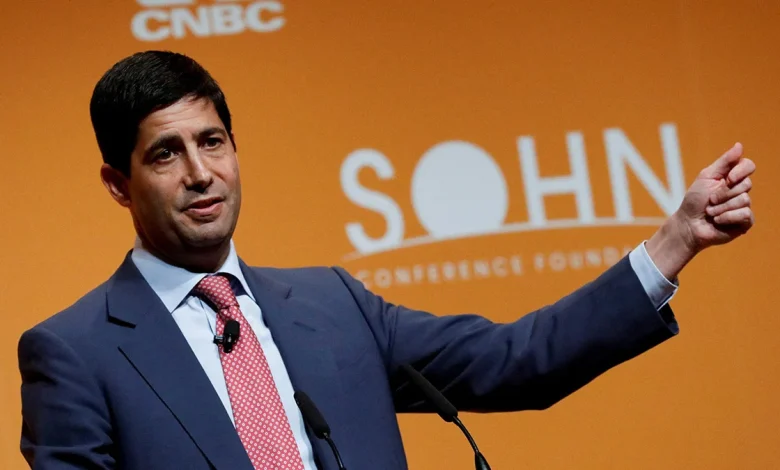
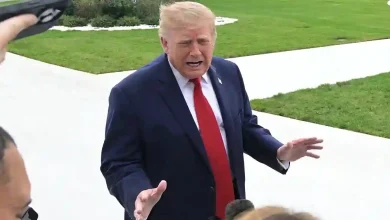
Trump expressed strong support for newly confirmed Federal Reserve Chair Kevin Warsh, while simultaneously launching a preemptive strike against potential interest rate hikes during a high-stakes media appearance. Speaking on NBC News’s Meet the Press with moderator Kristen Welker, the President walked a delicate tightrope between endorsing the independence of his hand-picked central bank leader and aggressively dictating his preferred monetary policy path. The remarks came at a pivotal moment, just days before Warsh is scheduled to preside over his first Federal Open Market Committee (FOMC) meeting, and against a backdrop of escalating geopolitical tension and surprisingly robust domestic economic data.
In the wide-ranging NBC News interview, the President sought to project a hands-off approach initially. “Kevin is fantastic, and I want him to do whatever he wants,” he told Welker. “I don’t want to have a big influence on him”. However, that stance of executive restraint was quickly overshadowed by a fierce critique of the economic establishment’s knee-jerk reaction to positive growth indicators. Referencing the latest payroll figures, he lamented, “But we had a great report. We’re doing great, and it’s unfair that whenever you do great, they want to raise interest rates”. This duality underscores a broader struggle within the administration: how to respect institutional norms while fighting what the President views as counterproductive economic orthodoxies that threaten to stifle national prosperity.
Trump and the Central Bank: Balancing Fed Independence with Policy Pressures
The relationship between the executive branch and the Federal Reserve has always been fraught with structural tension. Under the Federal Reserve Act, the central bank operates as an independent agency to shield monetary policy from short-term political pressures. This independence is designed to prevent politicians from artificially keeping interest rates low to boost the economy ahead of elections, which historically leads to runaway inflation. However, the President’s latest comments signal that this wall of separation remains highly permeable in the modern political arena.
By declaring that Kevin Warsh can “do whatever he wants,” the President attempted to pay lip service to the principle of central bank autonomy. Yet, the immediate pivot to criticizing the Fed’s policy trajectory reveals a calculated strategy. Publicly airing grievances about interest rates allows the administration to distance itself from the potential economic pain of tighter credit while applying subtle psychological pressure on the newly appointed Chair. Because Warsh was confirmed by a razor-thin Senate majority, his political capital is limited, making the public remarks from the Oval Office particularly potent as the FOMC prepares to set the nation’s borrowing costs.
The May Jobs Report and the Phillips Curve Dilemma
The immediate catalyst for this monetary debate was the release of the May jobs report, which demonstrated that the U.S. labor market remains remarkably resilient. According to data from the Bureau of Labor Statistics, employers added 172,000 nonfarm payroll jobs in May, nearly doubling the consensus expectations of mainstream economists, who had projected a modest gain of around 85,000. Meanwhile, the national unemployment rate held steady at a healthy 4.3%. In normal economic cycles, such a blowout report would be celebrated unconditionally as a sign of robust consumer demand and corporate confidence.
However, within the corridors of the Federal Reserve, a hot labor market is often viewed through the lens of the Phillips Curve. This classical macroeconomic model posits a trade-off between unemployment and inflation. When unemployment is low and jobs are plentiful, employers must compete for scarce labor by raising wages. These increased labor costs are then passed on to consumers in the form of higher prices, sparking a wage-price spiral. To prevent this overheating, the Federal Reserve traditionally raises its benchmark interest rate to cool borrowing, slow down hiring, and anchor inflation expectations. The President fiercely rejects this framework, arguing that penalizing a strong labor market is fundamentally counterproductive to national success.
Kevin Warsh: A Hawkish Appointment Face-to-Face with Political Reality
The spotlight now falls squarely on Kevin Warsh, who assumed the role of Federal Reserve Chair following a highly contentious Senate confirmation battle. Confirmed on May 13, 2026, by a narrow 54-45 margin, Warsh represents a shift in leadership style and monetary philosophy. Having previously served as a Federal Reserve Governor from 2006 to 2011, Warsh established a reputation as a monetary hawk. He resigned from the Board of Governors in 2011 largely due to his opposition to the central bank’s aggressive quantitative easing (QE) programs under then-Chair Ben Bernanke, which he feared would distort financial markets and stoke long-term inflation.
Given Warsh’s historically hawkish leanings, his first policy meeting on June 16 and 17, 2026, is highly anticipated. The federal funds rate currently sits in the range of 3.50% to 3.75%. In normal circumstances, a hawk like Warsh might look at the 172,000 jobs added in May and advocate for a preventive rate hike to keep inflation from flaring up. However, Warsh must now balance his academic and historical convictions against intense public pressure from the President who appointed him. The President’s public praise—calling Warsh “fantastic”—acts as both a shield of political legitimacy and a gilded cage, limiting Warsh’s ability to raise rates without being accused of betraying the administration’s economic agenda.
The Geopolitical Backdrop: Energy Prices and the Iran War
The Federal Reserve’s policy decisions are further complicated by external supply-side shocks that lie entirely outside the control of domestic interest rates. Chief among these is the ongoing war with Iran, which erupted in late February 2026 and has severely disrupted global energy infrastructure. The conflict initially sent Brent crude oil prices soaring from a baseline of $72 per barrel to an alarming peak of nearly $120. While energy markets have since stabilized somewhat, with Brent crude easing back to approximately $94 per barrel by early June, consumer gasoline prices remain elevated, putting a heavy squeeze on household budgets.
Rising energy prices present a classic monetary policy dilemma known as stagflationary pressure. Higher fuel costs drive up the price of transporting goods, translating into higher prices for everything from groceries to manufactured goods. Yet, because this inflation is driven by geopolitical conflict and supply bottlenecks—rather than excess consumer demand—raising interest rates is a blunt and ineffective tool to combat it. Higher borrowing costs cannot drill more oil wells or resolve international military conflicts; instead, they risk crushing domestic demand at a time when consumers are already burdened by high energy bills. The President highlighted this dynamic, noting that domestic energy production initiatives would eventually drive prices down, but acknowledging that near-term economic performance remains hostage to the trajectory of the war.
Analyzing Trump’s Economic Philosophy: Success vs. Inflation
The core of the President’s argument rests on a fundamental rejection of conventional central bank doctrine. “Growth is the greatest thing you can have, and growth does not cause inflation,” he asserted during his interview. This stance challenges decades of monetary orthodoxy, which views economic expansion as something that must be carefully managed and occasionally curbed to prevent overheating. From the President’s perspective, a growing economy increases productivity, fosters innovation, and expands the supply of goods and services—which can actually act as a deflationary force by matching rising demand with increased supply.
This supply-side economic philosophy stands in stark contrast to the demand-side management practiced by the Federal Reserve. The President expressed deep frustration with the prevailing financial market dynamics, where positive economic indicators are greeted with panic by investors who fear subsequent interest rate hikes. “Nowadays when you have good reports, the market goes down because they think they’re going to raise interest rates,” he remarked. He argued that raising rates acts as an unnecessary penalty on economic success, dampening corporate investment and hurting working-class families. Instead of using interest rates to “stamp out” growth, he advocates for a high-growth, low-rate environment designed to maximize national wealth.
Comparing Economic Perspectives on Interest Rates and Growth
To better understand the divergence in economic thinking that shapes this public debate, it is helpful to contrast the administration’s supply-side growth model with the Federal Reserve’s traditional monetary management framework. The table below outlines the core differences in assumptions, goals, and policy tools between these two schools of thought.
| Economic Dimension | Trump Administration Philosophy (Supply-Side) | Federal Reserve Framework (Demand-Side Management) |
|---|---|---|
| Primary Driver of Inflation | Supply shortages, high energy costs, geopolitical crises, and unnecessary regulatory burdens. | Excessive aggregate demand, wage-price spirals in tight labor markets, and unanchored expectations. |
| View of Economic Growth | Growth increases productivity and supply, naturally keeping prices low while building national wealth. | Unchecked growth can outstrip the economy’s potential output, leading to overheating and inflation. |
| Role of Interest Rates | Rates should be kept low to encourage capital investment, business expansion, and job creation. | Rates must adjust dynamically to balance employment and keep inflation anchored near a 2% target. |
| Labor Market Interpretation | A strong labor market (e.g., May’s 172k jobs) is a metric of success that should never be penalized. | A very tight labor market can lead to unsustainable wage growth that translates into consumer price inflation. |
| Primary Policy Tools | Deregulation, domestic energy production, and tax incentives to stimulate private sector investment. | Open market operations, adjustment of the federal funds rate, and quantitative tightening/easing. |
Market Reaction: Why Good Economic News Spooks Wall Street
The financial markets on Friday, June 5, 2026, perfectly illustrated the market paradox that the President criticized. Immediately following the release of the stronger-than-expected May jobs report, major stock indexes experienced sharp declines. Investors, rather than celebrating the resilience of the labor market, quickly recalibrated their models to price in a higher probability that the Federal Open Market Committee would raise interest rates later in the year. This phenomenon, colloquially referred to on Wall Street as “good news is bad news,” highlights the dominant role that central bank policy plays in asset valuation.
In modern finance, the present value of equities is heavily dependent on the discount rate, which is derived from the risk-free rate set by the Federal Reserve. When interest rates rise, the discount rate increases, which mathematically lowers the present value of future corporate earnings. Furthermore, higher interest rates make fixed-income assets, such as government bonds, more attractive relative to risky equities, causing capital to flow out of the stock market. Consequently, when economic data is exceptionally strong, Wall Street reacts with anxiety, anticipating that the Fed will tighten monetary conditions to prevent inflation. The President’s critique taps into the widespread frustration among retail investors who see this dynamic as a distortion of healthy market principles.
The Historical Context of Presidential Pressure on the Fed
While the President’s public comments may seem unprecedented in their directness, they fit into a long history of executive-branch pressure on the Federal Reserve. Historically, tension between presidents and Fed chairs has flared during periods of economic transition or preceding presidential elections. The most notorious example occurred during the Nixon administration, when President Richard Nixon pressured Fed Chair Arthur Burns to maintain expansionary monetary policies ahead of the 1972 election. Burns complied, keeping interest rates low, which artificially boosted short-term growth but laid the groundwork for the devastating stagflation of the mid-to-late 1970s.
Similarly, during the 1960s, President Lyndon B. Johnson reportedly confronted Fed Chair William McChesney Martin over the board’s decision to raise discount rates to curb wartime inflation, famously summoning him to his Texas ranch to demand a reversal. More recently, during his first term in office, the President repeatedly targeted then-Chair Jerome Powell in 2018 and 2019, publicly calling him an “enemy” of the state for raising interest rates and demanding that the central bank slash rates to support economic growth. By continuing this pattern with Kevin Warsh, the President is reinforcing a long-held belief that the executive branch should have a voice in the monetary policies that directly affect the nation’s economic health.
The Path Forward for the Federal Open Market Committee
As the Federal Open Market Committee prepares to gather for its highly anticipated June meeting, newly confirmed Chair Kevin Warsh faces an extraordinary challenge. He must navigate a complex economic landscape characterized by strong domestic employment, volatile global energy prices driven by the Iran war, and high-stakes political pressure from the executive branch. While the CME FedWatch Tool currently indicates a high likelihood that the committee will choose to hold the benchmark interest rate steady at the 3.50% to 3.75% range this month, the long-term outlook remains highly uncertain.
To establish his credibility and preserve the institutional independence of the Federal Reserve, Warsh must demonstrate that his decisions are guided solely by empirical data and economic indicators, rather than political directives. At the same time, the committee cannot ignore the real-world impact of its policies. If the Fed raises rates in an attempt to combat supply-side energy inflation, it risks triggering an economic slowdown that would invite severe political backlash and validate the President’s warnings. Conversely, if the Fed remains too accommodative, it risks letting inflation expectations run rampant in an economy already heated by robust employment. The upcoming policy statement and Warsh’s inaugural press conference will be scrutinized by global markets for any signs of how the new Chair intends to steer the American economy through these turbulent waters.