Ceasefire: Trump Redefines Middle East Peace Agreements
Ceasefire agreements in the Middle East are experiencing a profound identity crisis. Historically, a ceasefire represents a binary state of conflict: the guns either fire or they do not. In traditional international relations, an agreement to cease hostilities serves as the critical first step toward a durable peace, allowing humanitarians to deliver aid, diplomats to negotiate terms, and civilian populations to find respite. However, in the contemporary geopolitical landscape of 2026, this definition has been severely compromised. We are now witnessing a paradigm shift where military operations continue under the nominal banner of peace. This evolution raises a profound question: what does a ceasefire actually mean when the fighting never truly stops? The gap between official diplomatic proclamations and the violent reality on the ground has widened into a chasm, exposing a systematic devaluation of international agreements.
The Paradox of Modern Diplomacy: Redefining the Truce
The paradox of modern diplomacy lies in the normalization of ongoing violence within structured peace agreements. Across several active theaters, including Gaza, Lebanon, and the Persian Gulf, formal truces are continuously heralded as milestones of diplomatic success while tactical operations proceed. This disconnect suggests that a ceasefire is no longer designed to end a war, but rather to manage its intensity and control domestic political narratives. By decoupling peace from the actual cessation of hostilities, global leaders have created an environment where military engagements can be sustained indefinitely without technically violating their diplomatic commitments. This shifting definition poses a severe threat to global stability, as it fundamentally devalues the legal and moral weight of signed peace treaties.
Trump’s Controversial Statement on Middle East Conflict
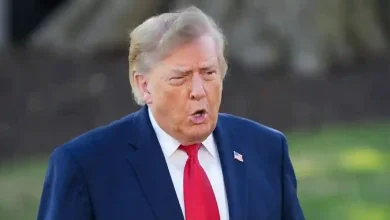
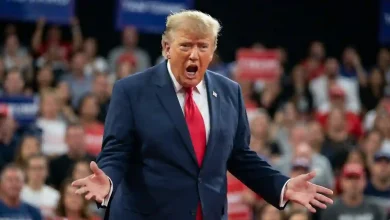
Addressing reporters on Wednesday, June 3, 2026, U.S. President Donald Trump offered a highly unconventional interpretation of regional diplomacy that highlighted this ongoing contradiction. When questioned about the persistent clashes between U.S., Israeli, and Iranian forces despite nominal truces, Trump appeared to normalize the ongoing violence, suggesting that the conventional understanding of a ceasefire does not apply to the region. ‘It’s a different part of the world, you know,’ Trump told reporters in the Oval Office. He further articulated his perspective by stating, ‘I’d say in that part of the world, a ceasefire is when you’re shooting in a more moderate manner.’ This casual redefinition has sent shockwaves through the diplomatic community, as it effectively legitimizes continued warfare under the guise of peace.
The Oval Office Press Briefing and Its Fallout
The briefing, which took place during an executive order signing ceremony, quickly shifted toward the escalating tensions in the Persian Gulf and Levant. The United States and Israel’s war against Iran has reached its 97th day, characterized by heavy strikes, retaliatory bombardments, and fragile diplomatic maneuvers. Although a tentative 60-day extension of the ceasefire with Iran had been reached in late May 2026, direct military exchanges have continued unabated. Just hours before Trump’s remarks, a significant missile strike in Kuwait—attributed to regional retaliations—provoked a deadly response. Rather than expressing concern over the breakdown of the truce, Trump downplayed the events, framing them as expected tit-for-tat actions that fit within his redefined, ‘moderate’ version of a ceasefire. This nonchalant attitude has deeply alarmed military strategists who fear it signals a green light for uncontrolled escalations.
Tactical Violations and ‘Moderate Shooting’
This concept of ‘moderate shooting’ represents a dangerous departure from established military and diplomatic doctrines. Military analysts point out that calling active combat operations ‘self-defense strikes’ or ‘moderate engagements’ is a tactical rhetorical device. It allows governments to maintain the political benefits of declaring a ceasefire domestically while executing aggressive military maneuvers abroad. According to defense experts, this framing dilutes the operational accountability of state actors. By normalizing a steady baseline of violence, international partners are discouraged from enforcing compliance, leading to a state of perpetual conflict where truces are merely used to restock munitions and recalibrate targeting coordinates rather than to seek an end to hostilities. It turns a formal commitment into an elastic concept that can be expanded or contracted based on immediate political convenience.
The Reality on the Ground: The Case of Gaza
Nowhere is this contradiction more starkly illustrated than in the Gaza Strip. On the exact same day that President Trump made his comments in Washington, Israeli airstrikes pounded residential quarters in Gaza overnight, killing at least nine Palestinians and wounding dozens. This violence did not occur in a vacuum; it took place under a formal ceasefire agreement that has been officially in effect since October 2025. That agreement, heralded as a major milestone of Trump’s mediated peace initiatives, was supposed to bring an end to the devastating campaign. Instead, local hospitals continue to receive casualties of daily bombardments, proving that the declaration of peace has done little to secure the lives of civilians trapped in the enclave.
The Human Cost of a Fragile Truce
While the massive, round-the-clock aerial campaigns that characterized the height of the war have technically subsided, the cumulative toll of this ‘moderate’ fighting is staggering. According to official reports from Gaza’s Health Ministry, more than 936 Palestinians have been killed since the October agreement took effect. This tragic figure highlights the lethal reality of a ceasefire that exists only on paper. For the civilian population, there is little practical difference between active war and a ‘moderate’ ceasefire when drone surveillance remains constant, artillery shells routinely land in civilian zones, and targeted airstrikes continue to level buildings. The high casualty count represents a systematic failure of the international community to protect vulnerable populations under negotiated agreements.
Mutual Accusations of Ceasefire Breaches
Both Israel and Hamas have consistently engaged in a bitter blame game, accusing one another of violating the terms of the October agreement. Israeli defense forces assert that their strikes are precise, defensive responses designed to neutralize imminent threats, target clandestine tunnel construction, or retaliate against rocket launches. On the other hand, Hamas and local administrative authorities in Gaza condemn these actions as unprovoked aggression designed to enforce a permanent blockade and systematically degrade civilian infrastructure. This cycle of mutual recrimination creates a diplomatic logjam. Because there are no impartial, empowered monitoring forces on the ground to enforce compliance, the ceasefire functions as a unilateral declaration where both parties define ‘defensive action’ as they see fit.
Comparing Regional Ceasefires in 2026
The discrepancy between diplomatic declarations and military operations can be seen across multiple frontlines in 2026. To understand the scale of these ongoing conflicts, the table below provides a comparative analysis of the primary active ceasefires currently overseen by international mediators:
| Conflict Zone | Key Parties Involved | Agreement Date | Reported Violations / Tactical Realities | Casualties / Impact Since Inception |
|---|---|---|---|---|
| Gaza Strip | Israel & Hamas (brokered by USA) | October 2025 | Overnight airstrikes, recurrent border fire, ongoing blockades. | Over 936 Palestinians killed; continuous displacement. |
| US-Iran (Gulf War) | United States, Israel, & Iran | April 8, 2026 | Retaliatory strikes in Kuwait, blockade actions, ‘self-defense’ bombing runs. | Disrupted shipping lanes, military bases targeted on both sides. |
| Southern Lebanon | Israel & Hezbollah (brokered by USA) | May 2026 | Deep territorial incursions by Israel, Hezbollah drone and rocket launches. | Slow civilian return to border towns, persistent localized shelling. |
The Geopolitical Implications of U.S. Foreign Policy Shift
The framing of ceasefires by the U.S. executive branch carries significant geopolitical weight. When the world’s primary superpower and peace broker publicly dismisses continuous violations as a cultural norm of ‘that part of the world,’ it signals a retreat from rules-based international orders. Historically, the United States has positioned itself as an arbiter of global democratic standards and human rights. However, Trump’s latest remarks suggest a highly transactional and cynical approach to foreign policy, where the appearance of a diplomatic success is prioritized over the substantial cessation of violence. This shift has alienated traditional Western allies, who argue that legitimizing ‘moderate shooting’ weakens the binding power of international treaties worldwide.
Normalizing Perpetual Conflict
This rhetorical normalization of continuous warfare has wider domestic and global implications. Critics argue that Trump’s statements are designed to shield his administration from accusations of diplomatic failure regarding the war on Iran and the fragile state of Gaza. By rebranding ongoing strikes and military interventions as part of a functioning ceasefire, the administration can claim political victories at home while avoiding the costly domestic backlash of an active, escalating war. A deep-dive analysis on Truthout notes that these comments essentially excuse foreign policy failures by culturalizing violence, suggesting that some regions are inherently incapable of absolute peace and must therefore settle for ‘moderate’ bloodshed. This standardizes a status of perpetual, low-grade warfare that drains regional economies and human resources.
The Impact on Iran and Lebanon Negotiations
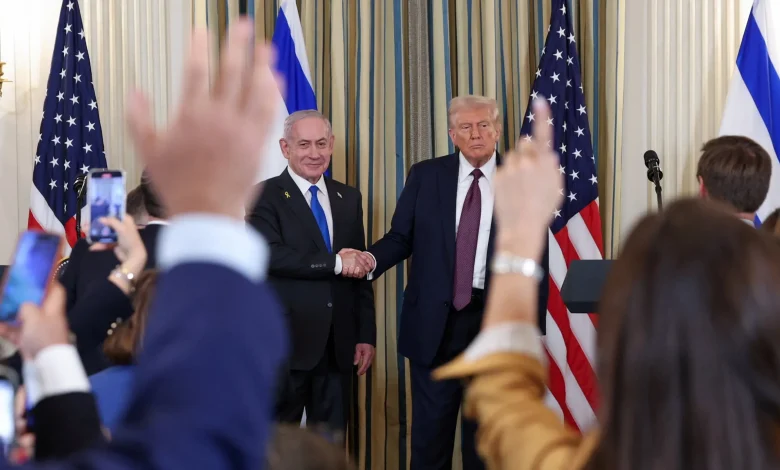
This degraded definition of a ceasefire directly impacts the broader, highly delicate negotiations taking place in Lebanon and Iran. The Israeli military has pushed deeper into Lebanese territory than at any point in the past quarter-century, even as a nominal Israel-Lebanon ceasefire remains officially active. Hezbollah continues to respond with rocket and drone attacks, yet neither side has formally declared the truce dead. This creates an incredibly complex diplomatic web. Iranian negotiators have insisted that any comprehensive regional treaty or progress on Iran’s nuclear program is contingent upon a complete cessation of hostilities in Lebanon. Conversely, Israeli Prime Minister Benjamin Netanyahu faces intense domestic pressure ahead of upcoming elections to maintain military pressure, complicating any potential path to actual peace.
Legal and Humanitarian Definitions of a Ceasefire
To understand the gravity of this rhetorical shift, it is essential to compare Trump’s comments with established legal and humanitarian frameworks. According to the United Nations and the Geneva Conventions, a ceasefire is defined as a temporary stoppage of war in which each side agrees with the other to suspend aggressive actions. It is distinct from a mere ‘reduction in violence’ or an informal truce, as it is intended to pave the way for a formal peace treaty. By substituting a legal commitment of total cessation with a subjective standard of ‘moderate shooting,’ the Trump administration risks dismantling decades of international legal precedents. Humanitarian organizations warn that if ‘moderate shooting’ becomes the accepted international standard, it will become virtually impossible to hold combatants accountable for war crimes or violations of sovereign territory.
Towards an Uncertain Future: Is True Peace Attainable?
The ongoing conflicts in Gaza, Lebanon, and the Gulf demonstrate that without robust enforcement mechanisms, ceasefires are destined to remain fragile political illusions. If the international community accepts the premise that peace in certain regions simply means a ‘moderate’ level of violence, it risks abandoning millions of civilians to a state of perpetual insecurity. True peace requires more than rhetorical repackaging; it demands absolute compliance, independent monitoring, and a genuine commitment to addressing the root causes of conflict. As long as global leaders prioritize short-term political narratives over long-term humanitarian stability, the concept of a ceasefire will continue to be a contradiction—leaving those on the ground to navigate a devastating reality where the shooting never fully stops.