Strait of Hormuz drone shootdown: US strikes Iranian radar

Strait of Hormuz drone shootdown incidents have reached a critical escalation point in the ongoing conflict between the United States and the Islamic Republic of Iran. On Friday, June 5, 2026, U.S. military forces intercepted and neutralized four Iranian one-way attack drones launched toward the strategic shipping lanes. In a swift retaliatory response, American warplanes struck key Iranian coastal surveillance radar sites, introducing profound volatility into an already fragile Middle East ceasefire. These direct military exchanges highlight the highly combustible state of Gulf security as the Trump administration continues to ramp up its maximum pressure campaign against Tehran.
The latest clash on the high seas marks a dangerous progression from indirect proxy warfare to overt, state-on-state kinetic actions. According to statements released by U.S. Central Command (CENTCOM), the intercepted drones posed an “immediate threat to regional maritime traffic” in a waterway that controls approximately 20 percent of the world’s petroleum transit. The U.S. response, targeting radar installations in Goruk and on Qeshm Island, represents a calculated move to degrade Iran’s maritime situational awareness, preventing the regime from tracking and targeting commercial and military vessels navigating the chokepoint.
The Strategic Breakdown of the Strait of Hormuz Clash
To understand the gravity of the Friday afternoon engagement, one must analyze the unique geography and economic leverage of the Strait of Hormuz. Serving as the sole maritime outlet for the oil-rich Persian Gulf, the strait is a narrow corridor bordered by Iran to the north and Oman to the south. For decades, Tehran has utilized its geographical dominance to project power, threatening to choke off global energy shipments whenever diplomatic tensions rise. In 2026, this dynamic has reached an unprecedented peak due to a comprehensive U.S. naval blockade on Iranian ports.
The U.S. military initiated the blockade as a direct counter-response to what Washington terms Iran’s “illegal chokehold” on international merchant shipping. By restricting Iran’s ability to export its own crude oil, the Trump administration seeks to force the regime into accepting a permanent, highly restrictive diplomatic agreement. In response, Iran’s Islamic Revolutionary Guard Corps (IRGC) has deployed asymmetric warfare tactics, utilizing unmanned aerial vehicles (UAVs), sea mines, and fast-attack craft to disrupt the flow of oil. This economic and military tug-of-war has sent global energy prices soaring, transforming a regional dispute into an international economic crisis that directly impacts household energy bills across Western nations.
Chronology of the Aerial Interception and Retaliatory Strikes
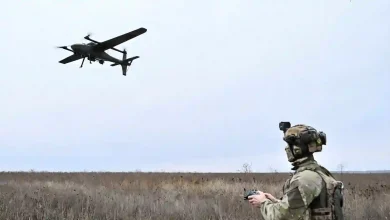
The tactical sequence of events began on the morning of Friday, June 5, 2026, when CENTCOM surveillance assets detected the launch of multiple unmanned systems from Iranian coastal bases. These aircraft were identified as one-way attack drones, colloquially known as kamikaze drones, which are designed to detonate upon impact with their targets. Moving on a direct vector toward active shipping lanes in the Strait of Hormuz, the drones presented an imminent danger to civilian tankers and allied naval patrols.
Detailed Downings: Intercepting One-Way Attack UAVs
U.S. Navy guided-missile destroyers operating in the Gulf, supported by carrier-based combat aircraft, immediately engaged the incoming threats. Utilizing advanced shipboard defense systems, including the Aegis Combat System and surface-to-air missiles, American forces successfully shot down all four Iranian drones. CENTCOM confirmed that no commercial ships or U.S. naval assets sustained damage during the interception. The rapid neutralization of the UAVs demonstrated the high state of readiness maintained by allied naval forces in the region, but it also underscored Iran’s willingness to directly challenge American defensive capabilities in international waters.
Pinpoint Retaliation: Targeting Goruk and Qeshm Island
Rather than treating the drone launch as an isolated incident, the Pentagon authorized immediate retaliatory strikes to neutralize the infrastructure that facilitated the attack. Within hours of the shootdown, American strike fighters targeted Iranian coastal surveillance radar installations situated in Goruk and on the strategically vital Qeshm Island. These radar sites are critical nodes in the IRGC’s coastal defense network, providing real-time tracking data of maritime traffic transiting the Strait of Hormuz.
By disabling these sensors, the U.S. military effectively blinded the IRGC’s ability to coordinate subsequent anti-ship missile strikes or drone launches. Military analysts note that Qeshm Island, which stretches along the strait, serves as a primary forward operating base for the IRGC Navy. Striking these installations sends a clear warning to Tehran that any hostile action against maritime commerce will result in immediate, disproportionate destruction of its domestic military infrastructure.
Regional Escalation: Iran’s Ballistic Missile Response
The confrontation did not end with the destruction of the coastal radar sites. In the early hours of Saturday, June 6, 2026, the IRGC escalated the conflict by launching a coordinated ballistic missile and drone strike targeting American military installations in neighboring Gulf countries. This retaliation represents a severe breach of regional sovereignty and threatens to engulf neighboring Arab states in the escalating conflict.
Air Raid Alerts and Interceptions in Kuwait and Bahrain
According to military reports confirmed by CENTCOM, Iran fired seven ballistic missiles toward Kuwait and Bahrain. Air raid sirens wailed across the tiny island nation of Bahrain, home to the U.S. Navy’s Fifth Fleet, prompting residents to seek shelter immediately. Simultaneously, Kuwait’s military responded to hostile targets approaching its airspace. The primary target in Kuwait was the Ali Al Salem Airbase, a key facility hosting American personnel and aircraft.
U.S. and allied air defense batteries, including the Patriot missile system, performed flawlessly under combat conditions. Six of the incoming Iranian ballistic missiles were successfully intercepted in mid-air, while a seventh failed during transit and crashed harmlessly before reaching its destination. While CENTCOM confirmed there were no reports of casualties or significant damage to U.S. personnel, the strike marks a dramatic escalation. According to international coverage by The Guardian, the security alerts in Kuwait and Bahrain have elevated regional anxiety to heights not seen since the initiation of the war, raising fears that a full-scale regional conflict could be imminent.
Geopolitical Drivers: Naval Blockades and Energy Security
The underlying driver of this kinetic escalation is the intense economic warfare between Washington and Tehran. The U.S. blockade on Iranian ports has successfully crippled the Islamic Republic’s formal oil export capacity, depriving the regime of its primary source of foreign currency. However, this aggressive economic pressure has come with substantial global side effects. Iran’s counter-blockade of the Strait of Hormuz has constricted the supply of Middle Eastern crude, causing global oil futures to spike and driving up the cost of petroleum-based products worldwide.
This economic volatility carries immense political significance within the United States. With the crucial 2026 midterm congressional elections approaching in November, the Republican party faces mounting domestic pressure over high inflation and energy costs. The Trump administration is walking a delicate tightrope: it must maintain a firm military posture to deter Iranian aggression while simultaneously seeking a diplomatic off-ramp that can reopen the strait, stabilize oil markets, and lower consumer prices before voters head to the polls.
The Diplomatic Standoff and the Fragile Ceasefire
Despite the intense exchange of fire, diplomatic channels have not been completely severed. The U.S. and Iran are currently engaged in delicate, indirect negotiations to establish an interim agreement that could halt the active hostilities. However, the recurring kinetic clashes continually threaten to tear apart the tenuous ceasefire that has theoretically been in place.
The Trump Administration’s Pressure Strategy
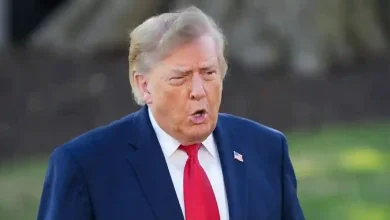
President Donald Trump has maintained an unyielding yet transactional public posture regarding the conflict. Speaking to reporters on Friday, June 5, 2026, at an agricultural event in Chippewa Falls, Wisconsin, President Trump struck a surprisingly optimistic tone. “The situation with Iran seems to be going quite well,” Trump remarked, downplaying the immediate risk of a wider war. “We’re going to come out of Iran very quickly, and it’s going to be very strong one way or the other—whether it’s a piece of paper or the very tough way. The very tough way is maybe the easier way.”
The President’s comments reflect a strategic calculus that combines military deterrence with a willingness to strike a deal. Trump linked the resolution of the Gulf crisis to domestic economic benefits, promising farmers in attendance that a successful resolution would cause fertilizer and fuel prices to drop significantly, returning to levels seen before the recent outbreak of hostilities. This rhetoric signals that the administration views the military strikes as necessary leverage to force Iran’s leadership to the negotiating table.
Stalled Indirect Negotiations and Tehran’s Demands
The diplomatic path forward remains steep. Testimony on Capitol Hill by U.S. Secretary of State Marco Rubio highlighted the major obstacles preventing a comprehensive diplomatic breakthrough. During hearings before congressional committees, Rubio emphasized that the United States would not compromise on core national security interests or allow Iran to achieve a nuclear weapons capability under the guise of an interim truce.
For its part, Tehran has laid out a highly ambitious set of demands. To agree to an interim deal and lift its chokehold on the Strait of Hormuz, Iran is demanding the immediate release of $24 billion in frozen oil revenues held in international banks. Additionally, the regime requires formal U.S. waivers on crude oil export sanctions, the total lifting of the naval blockade on its ports, and recognized sovereign oversight over shipping lanes in the Gulf. Compounding these issues is the ongoing conflict in Lebanon, where Israeli ground operations have severely weakened Hezbollah. Because Iran views Hezbollah as its primary external deterrent, the regime has insisted that any lasting ceasefire in the Persian Gulf must be tied to a comprehensive truce in Lebanon—a condition that both Washington and Jerusalem have so far rejected.
Comparative Assessment of Strategic Capabilities and Incidents
The military engagements of the past several weeks indicate a rising tempo of escalatory actions, with each side attempting to establish deterrence. To contextualize the scale and frequency of these clashes, it is useful to examine the recent operational chronology in the Gulf region.
| Date (2026) | Initial Hostile Action | U.S. Tactical Response | Iranian Retaliation | Strategic Outcome & Impacts |
|---|---|---|---|---|
| May 28 | Four Iranian one-way attack drones launched near the strait. | Shot down four drones; struck ground control station in Bandar Abbas. | Missile strikes targeted at regional airbase; intercepted by Kuwait. | Ceasefire strained; oil prices experienced a temporary 3% spike. |
| June 2 | UAV provocation targeting international maritime lanes. | U.S. forces intercepted drones; fresh precision airstrikes launched. | Increased naval patrol maneuvers; state media warning shots. | Marco Rubio testified to Congress; diplomatic pressure intensified. |
| June 5-6 | Four drones launched toward the Strait of Hormuz on Friday. | Drones shot down; struck coastal radar sites in Goruk and Qeshm Island. | Seven ballistic missiles launched toward Kuwait and Bahrain. | Six missiles intercepted; air raid sirens activated; shipping lanes highly volatile. |
The comparison table demonstrates a clear pattern: each Iranian drone provocation is met with increasingly destructive American strikes targeting shore-based infrastructure, which in turn triggers Iranian missile strikes against U.S. partners and bases. This action-reaction cycle raises the mathematical probability of a miscalculation that could lead to a broader, uncontrolled regional conflagration.
Strategic and Economic Implications for the Global Energy Market
The commercial shipping sector has borne the immediate brunt of the escalating military confrontation. With the Strait of Hormuz serving as a bottleneck for the transit of energy resources to Asia and Europe, the threat of drone attacks and missile strikes has forced global shipping conglomerates to make difficult decisions. Many major operators have suspended transits through the Persian Gulf altogether, opting instead for the lengthy and expensive route around the Cape of Good Hope, which adds up to two weeks to shipping schedules and dramatically inflates container rates.
For those vessels still attempting to navigate the strait, maritime insurance premiums have skyrocketed to unprecedented levels. This insurance surge acts as an indirect tax on global energy consumers, contributing to persistent inflationary pressures in the West. If the U.S. naval blockade continues and Iran maintains its retaliatory posture, energy analysts warn that crude oil prices could reach record highs, severely disrupting the global economic recovery. Ultimately, the resolution of the Strait of Hormuz crisis rests on whether the Trump administration can leverage its military dominance to secure a diplomatic agreement that addresses Tehran’s financial desperation while ensuring the unhindered flow of international commerce through one of the world’s most critical maritime corridors.