Karen Read Sues State Police and Canton Over Misconduct
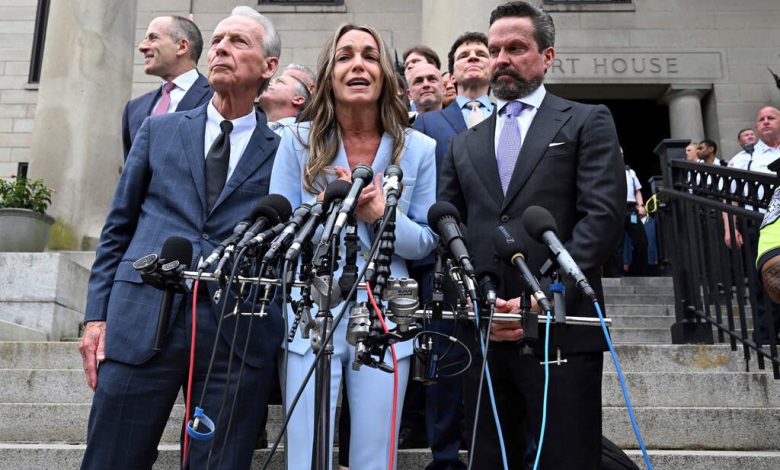
Karen Read declared on the “TODAY” show that while her initial priority was saving her own life, her battle for justice has only just entered its next phase. Flanked by her attorneys on national television, Read laid bare the painful reality of her multi-year ordeal, emphasizing that an acquittal on criminal charges was merely the first step toward exposing the deep-seated corruption that led to her prosecution. “This was always our plan, that I had to save my own life first,” Read told host Laura Jarrett. “I have to continue fighting for justice. The acquittal is deserved, but the wrongs have not been completely righted. They’ve been happening along the way, but I always knew this was going to happen if I could get the help legally to do this.”
The civil lawsuit, filed on Thursday, June 4, 2026, in Bristol County Superior Court, marks a dramatic pivot from defense to offense. Read is suing the Massachusetts State Police and the town of Canton, alleging that gross misconduct, institutional negligence, and civil rights violations directly led to her wrongful prosecution in the 2022 death of her boyfriend, Boston Police Officer John O’Keefe. The litigation represents a historic challenge to two major law enforcement agencies in Massachusetts, accusing them of harboring a toxic culture of bias that contaminated the entire investigation from day one.
The Catalyst for Litigation: Karen Read’s Multi-Million Dollar Civil Suit
Following her stunning acquittal in June 2025, which capped one of the most highly publicized and divisive criminal trials in recent Massachusetts history, Karen Read has refused to let the matter rest. Her legal team, spearheaded by high-profile defense attorneys Alan Jackson and Elizabeth Little, filed a sprawling civil complaint detailing how municipal and state authorities allegedly conspired to frame her. This lawsuit is not merely a bid for financial restitution; it is a calculated attempt to dismantle what her attorneys describe as a system of protectionism designed to shield well-connected individuals at her expense.
During her “TODAY” show interview, Read made it clear that surviving the criminal justice system took everything she had. For over three years, she faced the threat of life imprisonment under charges of second-degree murder, manslaughter, and leaving the scene of a fatal accident. Now, with the weight of the criminal charges lifted, she is leveraging the evidence uncovered during her defense to hold her investigators accountable. Her civil team is seeking unspecified damages for emotional distress, reputational damage, lost income, and the millions of dollars spent on her legal defense, arguing that the entities responsible must pay for the devastation they caused.
Inside the Lawsuit: Allegations of Misconduct and “Institutional Rot”
The newly filed complaint paints a damning picture of the law enforcement agencies tasked with investigating John O’Keefe’s death. The lawsuit argues that the investigations conducted by the Massachusetts State Police (MSP) and the Canton Police Department (CPD) were not merely incompetent, but were actively malicious and driven by an underlying bigotry. According to the filing, Read’s prosecution exposed “an embedded culture of bigotry, misogyny, systemic failures, and institutional rot at the very core of both organizations.”
Read’s lawyers contend that the town of Canton and the state police were highly negligent in how they hired, trained, supervised, and disciplined their officers. By failing to establish basic standards of accountability, these organizations allowed officers with extreme biases to rise through the ranks and take control of critical homicide investigations. The lawsuit claims that this systemic lack of oversight directly resulted in a contaminated crime scene, falsified evidence, and a single-minded focus on Read as the sole suspect, while ignoring alternative theories and evidence pointing to other potential perpetrators inside the Canton residence where O’Keefe was found dead.
The Explosive Evidence: Text Messages of Michael Proctor and Sean Goode
The most shocking elements of the civil complaint are the dozens of pages dedicated to reproducing raw, unfiltered communications between former MSP Trooper Michael Proctor and former Canton Police Sgt. Sean Goode. These messages, which span more than a decade dating back to 2013, were obtained by the defense after Proctor’s personal cellphone was preserved and analyzed as part of a federal probe. Read’s attorneys successfully argued in court on April 2, 2026, that these messages could be used to support her civil litigation, opening a window into the private discussions of the officers who spearheaded the investigation.
The text messages reveal an astonishing level of prejudice and hatred. According to the lawsuit, Proctor and Goode routinely exchanged messages filled with racial slurs, misogynistic insults, homophobic slurs, and antisemitic remarks. The complaint alleges that the two men targeted Black Americans, Asians, Latinos, Jews, and members of the LGBTQ+ community. In one highly disturbing exchange cited in the lawsuit, Proctor allegedly made a comment suggesting that “Hitler was really on to something,” alongside frequent uses of the n-word. Read’s legal team argues that these communications prove both officers were fundamentally unfit for public service and that their bias directly impacted how they handled the investigation into Read.
The Fall of Former Trooper Michael Proctor
Michael Proctor was the lead investigator assigned to the case by the Massachusetts State Police following the death of John O’Keefe in January 2022. During Read’s first criminal trial, which ended in a hung jury in mid-2024, Proctor’s professional conduct was thoroughly dismantled on the witness stand. Under intense cross-examination, Proctor was forced to read aloud crude and sexist text messages he had sent to friends, family, and colleagues about Read. In those messages, he referred to her as a “whack job,” mocked her medical conditions, and explicitly texted that he hoped she would kill herself.
Following these disclosures, Proctor was placed on administrative leave, and the state police launched an internal affairs investigation. In March 2025, after a comprehensive analysis of his phone revealed an even wider pattern of offensive behavior, Proctor was officially fired from the Massachusetts State Police. The state police union subsequently withdrew their support for his appeal, citing the indefensible nature of his racist and graphic messages. Proctor’s fall from grace remains one of the most prominent examples of police misconduct in recent state history.
The Abrupt Resignation of Sgt. Sean Goode
The repercussions of the Proctor investigation have continued to ripple through local law enforcement, claiming another high-ranking official just days before the civil lawsuit was filed. Sean Goode, a veteran sergeant with the Canton Police Department, resigned from his position on Tuesday, June 2, 2026. Goode had been on paid administrative leave since October 2025, when local authorities were notified of his involvement in the highly offensive text message chains discovered on Proctor’s phone.
Goode was a key figure on the night of O’Keefe’s death, serving as the on-duty supervisor and one of the first officers to arrive at the scene at 34 Fairview Road. He later testified during Read’s first criminal trial. The town of Canton has hired an independent, outside investigator to conduct a thorough internal affairs probe into Goode’s conduct. Canton town officials clarified that Goode’s resignation will not stop the completion of this investigation; the final report will be submitted to municipal leadership and the state’s Peace Officer Standards and Training (POST) Commission, which oversees police licensing and discipline.
The Criminal Trial Context: From Deficient Investigation to Acquittal
To fully comprehend the significance of Read’s civil suit, one must examine the extraordinary criminal case that preceded it. On the snowy night of January 29, 2022, Boston Police Officer John O’Keefe was found unresponsive on the front lawn of 34 Fairview Road in Canton—a home owned by fellow Boston Police Officer Brian Albert. Read, who was O’Keefe’s girlfriend, was quickly accused of hitting him with her Lexus SUV in a drunken rage and leaving him to freeze to death. The prosecution’s case relied heavily on circumstantial evidence, minor tail light fragments, and highly contested statements allegedly made by Read at the scene.
However, Read’s defense team presented an entirely different narrative, asserting that O’Keefe was beaten inside the Albert home after a night of drinking, and his body was later placed outside to make it appear as though he had been struck by a vehicle. They argued that a tight-knit circle of local police officers, residents, and state investigators actively conspired to cover up the truth and frame Read. While her first trial in 2024 ended in a mistrial, her second trial in 2025 concluded with a resounding acquittal on the most severe charges, as detailed in the WBUR News report on the legal fallout. The jury’s verdict was widely seen as a rejection of the flawed and biased investigation led by state and local police.
Comparative Overview of Legal Claims and Police Misconduct
The civil action filed by Read targets multiple entities and individuals, laying out specific claims of negligence, conspiracy, and civil rights violations. Below is a structured breakdown of the primary defendants named in her legal actions, their roles in the original investigation, the key allegations brought against them, and their current professional status as of June 2026.
| Defendant Entity / Individual | Key Role in Case | Primary Allegations in Lawsuit | Current Professional Status |
|---|---|---|---|
| Massachusetts State Police (MSP) | State law enforcement agency oversight | Negligent hiring, training, and supervision; fostering an embedded culture of bigotry, misogyny, and corruption. | Undergoing administrative reforms under new leadership. |
| Town of Canton (Canton Police) | Local municipal police jurisdiction | Failure to properly train and supervise local officers; complicity in a protective cover-up and negligent investigation. | Cooperating with external audits and the state POST Commission. |
| Michael Proctor | Lead MSP Detective / Homicide Investigator | Malicious prosecution, civil conspiracy, fabricating evidence, and sending abhorrent, bigoted text messages. | Terminated from the Massachusetts State Police in March 2025. |
| Sean Goode | CPD Sergeant / On-Duty Scene Supervisor | Active participation in discriminatory communications, compromised scene management, and abuse of authority. | Resigned from the Canton Police Department on June 2, 2026. |
Impact of Police Culture and the Fight for Systemic Reform
The implications of this lawsuit extend far beyond the borders of Canton, Massachusetts. Read’s legal action strikes at the heart of modern police culture, questioning the very mechanisms of accountability within municipal and state law enforcement. Her lawyers argue that the toxic behavior of Proctor and Goode was not an isolated incident of two “bad apples,” but rather a natural product of an insular culture that actively shields misconduct from public scrutiny.
By bringing these offensive text messages into the public record, Read’s civil suit highlights how personal prejudices can directly compromise the integrity of criminal investigations. When investigators harbor deep-seated animosity toward specific demographics, it inevitably distorts their perception of evidence, witnesses, and suspects. For years, the Massachusetts State Police and Canton Police Department allegedly ignored internal red flags, creating an environment where officers felt comfortable wearing “badges of hate” while exercising immense power over civilian lives. Read’s lawsuit seeks to set a legal precedent that forces police departments to actively root out bigotry within their ranks or face catastrophic financial and legal liability.
Official Responses: State Police and Canton Town Leadership
In the wake of the lawsuit’s filing, officials from both the state and local levels have scrambled to address the severe allegations of systemic bias. Massachusetts State Police Superintendent Col. Geoffrey Noble, who took command of the agency after the events of the Read trial, issued a strongly worded statement condemning the messages sent by Proctor. Noble labeled the former trooper’s language as “racist, sexist and abhorrent,” emphasizing that such comments have absolutely no place within the department. He asserted that these disclosures fully validated his decision to terminate Proctor and pointed to various administrative and cultural changes implemented under his new tenure to restore public trust.
Conversely, the Town of Canton has taken a more defensive posture. In an official statement, Canton administrators refuted any “broad stroke characterizations” regarding the overall integrity of the men and women serving in their police department. While acknowledging the seriousness of the allegations against former Sergeant Sean Goode, town leadership maintained that his actions do not represent the dedication and professionalism of the entire force. Meanwhile, the Norfolk County District Attorney’s Office, which fought aggressively to convict Read over two long trials, has officially declined to comment on the pending civil litigation.
Seeking Accountability: What Lies Ahead in the Legal Battle
The road ahead for Karen Read will be fought in the civil courtrooms of Bristol County. Unlike a criminal trial, where the burden of proof is “beyond a reasonable doubt,” a civil lawsuit requires a “preponderance of the evidence”—a standard that is significantly easier for plaintiffs to meet. Armed with thousands of documented text messages, federal investigative findings, and the stark contradictions exposed during her criminal trials, Read’s civil attorneys are in an incredibly strong position to argue their case before a jury.
Ultimately, this civil action represents Read’s final push for total vindication. While her acquittal protected her physical freedom, the emotional, financial, and reputational scars of being branded a murderer remain. By holding the Massachusetts State Police and the town of Canton legally and financially responsible, Read hopes to ensure that no other citizen has to endure the terrifying prospect of a state-sponsored frame-up. As her attorney Alan Jackson noted, the filing of this lawsuit signals that the era of silence and protected misconduct in Canton is officially over, and the long-awaited process of genuine accountability has finally begun.