Narcoterrorist Boat Strikes: U.S. Military Campaign Kills 207
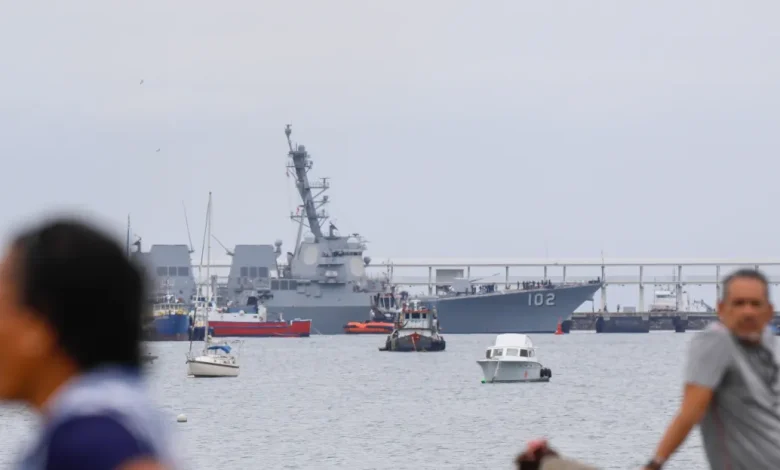
Narcoterrorist boat strikes conducted by the United States military in the Eastern Pacific and Caribbean waters have reached a highly controversial milestone. On Wednesday, June 3, 2026, the latest strike on an alleged drug-smuggling vessel claimed the lives of two men, bringing the total estimated death toll of the campaign to at least 207 since its inception in early September 2025. Operated under the auspices of U.S. Southern Command (SOUTHCOM) and its specialized Joint Task Force Southern Spear, this lethal offensive represents a dramatic militarization of the war on drugs under the second Trump administration. However, the lack of verifiable evidence that the targeted vessels were carrying narcotics, coupled with the complete bypassing of civilian due process, has triggered intense domestic and international criticism.
Historically, maritime drug interdictions were handled purely as international law enforcement operations, primarily led by the U.S. Coast Guard in tandem with regional allies. Today, they have been reframed as kinetic military engagements. The White House has declared that the United States is in an "armed conflict" with transnational cartels in Latin America, using this justification to bypass traditional arrest-and-prosecute protocols in favor of immediate, lethal airstrikes.
Introduction to Operation Southern Spear
Operation Southern Spear began in mid-August 2025 with a significant build-up of Navy warships, Air Force assets, and Marine Corps personnel in the Caribbean and Eastern Pacific. On September 1, 2025, the U.S. military conducted its first direct airstrike on a Venezuelan vessel, killing 11 people. By designating Latin American drug cartels and gangs as "foreign terrorist organizations" via executive order, the administration established a legal framework that treats civilian smugglers as enemy combatants.
While the administration asserts these measures are vital to stop the flow of illicit substances like fentanyl, critics argue the campaign sidesteps international law. The sudden transformation of maritime policing into high-tech aerial warfare has reshaped regional dynamics, creating a permanent state of tension in international waters spanning from the coast of Ecuador to the Caribbean Basin.
Anatomy of the Latest Incident in the Eastern Pacific
The latest lethal engagement occurred on Wednesday, June 3, 2026, in the international waters of the Eastern Pacific Ocean. According to a statement released by U.S. Southern Command, under the command of Gen. Francis L. Donovan, intelligence assets identified a small, high-speed vessel transiting what the military characterized as "known smuggling routes".
Acting on this intelligence, Joint Task Force Southern Spear launched a kinetic strike against the vessel. The military statement confirmed that two men, whom they labeled "narcoterrorists," were killed in the strike. Notably, the U.S. military provided no immediate physical or documentary evidence to prove that the boat was actually carrying illicit drugs. Instead, the justification relied entirely on the vessel's trajectory and behavioral profile, a standard of proof that critics argue is dangerously low for executing lethal actions.
The Video Evidence and Visual Documentation
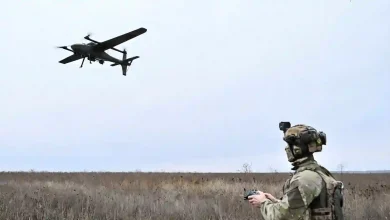
Shortly after the strike, U.S. Southern Command posted a short video clip on the social media platform X (formerly Twitter). The aerial footage, captured by a military surveillance drone, showed the small boat speeding across the calm waters of the Pacific before being struck by a projectile. Within a fraction of a second, the vessel burst into a violent fireball, leaving only a plume of black smoke and scattered debris on the surface.
This practice of releasing strike videos has been a hallmark of the administration's public relations campaign. Proponents argue it demonstrates operational transparency and acts as a deterrent to would-be smugglers. Conversely, human rights advocates view the publication of these graphic videos as a highly politicized display of military force that desensitizes the public to extrajudicial executions at sea.
The Rising Human Toll: September 2025 to June 2026
With the deaths of these two men, the cumulative toll of Operation Southern Spear has reached at least 207 lives lost over a nine-month period. This rapid escalation reflects a systematic shift in U.S. foreign policy and tactical engagement. Rather than attempting to disable boat engines, deploy non-lethal deterrents, or conduct boarding operations to arrest suspects, the military’s default response has increasingly become lethal eradication.
The escalation of these strikes is detailed in the operational summary below:
| Phase / Period | Primary Operations Area | Estimated Deaths | Key Events / Controversies |
|---|---|---|---|
| Phase 1: Sept – Oct 2025 | Caribbean Sea | ~50 | Launch of Operation Southern Spear; first lethal airstrikes; designation of cartels as foreign terrorist organizations. |
| Phase 2: Nov – Dec 2025 | Caribbean Sea & Eastern Pacific | ~100 (Cumulative) | Highly controversial double-strike incident killing survivors clinging to wreckage; "fog of war" defense by SecDef Pete Hegseth. |
| Phase 3: Jan – Apr 2026 | Caribbean Sea & Eastern Pacific | ~168 (Cumulative) | Raid capturing former Venezuelan President Nicolás Maduro; expansion of deep-sea drone interdictions. |
| Phase 4: May – June 2026 | Eastern Pacific Ocean | 207 (Cumulative) | Latest strike on June 3, 2026, killing 2 men; Pentagon Inspector General launches formal Joint Targeting Cycle probe. |
Legal and Constitutional Controversies: Armed Conflict vs. Law Enforcement
The core legal dispute surrounding Operation Southern Spear lies in the distinction between military combat and law enforcement. Historically, under international law, maritime drug trafficking is treated as a criminal enterprise. Suspects are entitled to the presumption of innocence, a fair trial, and due process under domestic and international maritime legal frameworks.
By declaring an "armed conflict" with cartels, the Trump administration has sought to apply the Law of Armed Conflict (LOAC), which permits the targeting of enemy combatants. However, military legal scholars point out that cartels do not meet the criteria of organized armed groups capable of being parties to an international or non-international armed conflict. Critics assert that designating drug smugglers as foreign combatants and launching preemptive airstrikes on vessels without judicial oversight is inherently illegal under international conventions.
Furthermore, legal scholars writing on authoritative platforms like Just Security argue that the U.S. strikes violate the UN Charter's prohibition on the unilateral use of force in international waters, especially when targeting vessels associated with sovereign nations like Ecuador, Colombia, or Venezuela without prior bilateral authorization.
Human Rights and Due Process Implications
The lack of post-strike evidence is a primary point of contention for human rights organizations. In the vast majority of the 60-plus strikes executed since September 2025, the U.S. military has not recovered any drugs or presented physical proof of smuggling. Because the vessels are completely destroyed by high-yield explosives, any potential evidence is lost to the ocean floor.
This absolute lack of accountability raises the terrifying prospect of mistaken identity. Local fishermen, commercial transporters, and migrants attempting to flee economic hardship frequently use the exact same maritime routes as drug traffickers. Legal experts warn that bypassing the court system altogether represents a dangerous precedent, echoing other legal challenges against due process violations observed in controversial detentions.
The most notorious example of this legal grey area occurred in late 2025, when a follow-up strike was ordered on survivors clinging to the wreckage of a bombed vessel in the Caribbean. Defense Secretary Pete Hegseth defended the action by citing the "fog of war," but human rights organizations denounced it as a potential war crime, as international law strictly protects shipwrecked individuals who are *hors de combat* (out of the fight).
Strategic Assessment: Are the Maritime Strikes Effective?
Despite the high human cost and legal backlash, the administration has repeatedly defended the strategic value of the maritime strikes. President Donald Trump has claimed that maritime drug trafficking is down significantly since the launch of Operation Southern Spear. However, independent analysts and federal drug enforcement data suggest a far more complex reality.
While the strikes have undoubtedly disrupted some maritime smuggling networks in the Caribbean and Eastern Pacific, they do little to address the root causes of the synthetic drug crisis plaguing the United States.
The Land-Air Border Gap: Where Fentanyl Actually Flows
The primary justification for these lethal maritime operations is the eradication of fentanyl, which is responsible for tens of thousands of fatal overdoses in the U.S. each year. However, drug intelligence agencies uniformly agree that the vast majority of fentanyl enters the United States through land ports of entry along the U.S.-Mexico border, hidden inside commercial vehicles or carried by pedestrians.
Fentanyl is synthesized using precursor chemicals imported directly from China and India into Mexico, where it is pressed into pills and smuggled overland. It is rarely, if ever, transported via low-profile boats in the open waters of the Eastern Pacific or the Caribbean Sea, which are traditionally used for bulk cocaine smuggling. Critics argue that using the fentanyl crisis to justify bombing small vessels in the Pacific is politically motivated and strategically misguided.
International Reactions and Geopolitical Fallout
The unilateral nature of these military strikes has strained relationships with Latin American nations. While countries like Ecuador have occasionally participated in joint security operations, others have voiced deep concern over the violation of sovereign maritime boundaries and the potential for civilian casualties.
This aggressive maritime posture coincides with an increasingly unilateral foreign policy stance that prioritizes absolute military deterrence over diplomatic consensus. Following the high-profile January 2026 U.S. military raid that captured former Venezuelan President Nicolás Maduro, regional tensions have escalated. Neighbors of Venezuela and other Latin American states view the boat strikes as part of a broader, unchecked expansion of U.S. hegemony in the Western Hemisphere.
Additionally, regional organizations have warned that these strikes could lead to retaliatory violence against U.S. commercial ships or civilian vessels operating in the region, destabilizing trade and maritime security.
Domestic Accountability and the Impending Pentagon Investigation
Domestically, the strikes have faced sharp criticism from progressive and moderate Democratic lawmakers, who have demanded hearings into the legal authority behind the operations. The Trump administration has consistently maintained that these strikes are fully lawful, arguing they are executed under the President's executive authority to protect the nation.
However, internal pressure has mounted to the point where the Pentagon's independent watchdog announced a formal investigation. The Inspector General’s probe will evaluate whether the military has strictly adhered to the Joint Targeting Cycle—a standardized, six-phase military process designed to verify targets, assess potential collateral damage, and ensure compliance with international law.
As the death toll reaches 207, the outcome of this internal investigation could prove pivotal. If the Inspector General finds that the military is striking vessels based on insufficient intelligence or failing to adhere to strict targeting protocols, it could trigger a major constitutional showdown over the limits of executive military power and the rules of engagement in international waters.