Ukraine war escalates: Dnipro strike kills 5, energy hit
Ukraine has become the focal point of a grueling, highly destructive war of attrition that has now lasted more than four years, shifting from a conventional territorial conflict to a systemic war targeting critical infrastructure. On June 2, 2026, this ongoing campaign of mutual infrastructure degradation reached another tragic milestone when Russian forces launched a coordinated barrage of missiles and drones at several Ukrainian cities. The southeastern city of Dnipro suffered severe human and material damage in this major wave. The latest attack highlights the persistent, devastating nature of a conflict where Russia systematically targets Ukraine’s power supply and civic infrastructure, while Ukraine increasingly retaliates with high-impact drone strikes on Russian oil refineries and economic nodes.
The Recent Devastating Strike on Dnipro
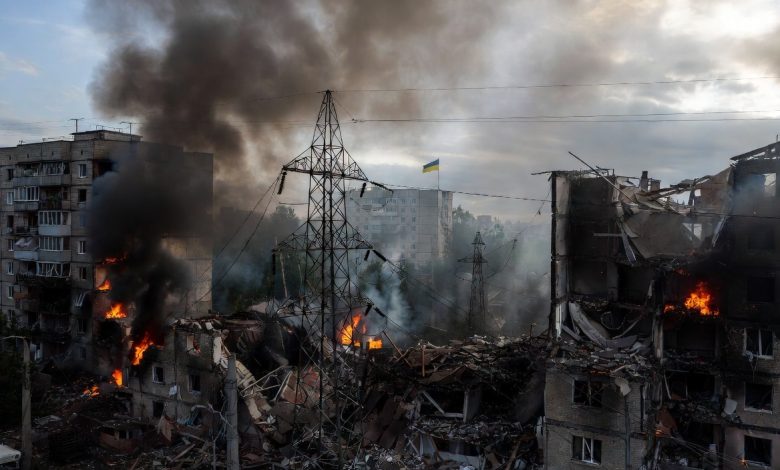
In the early hours of June 2, 2026, Russian forces deployed a massive wave of ballistic missiles, cruise missiles, and loitering munitions aimed at multiple Ukrainian population centers. The city of Dnipro bore a significant brunt of this assault. According to Oleksandr Hanzha, the regional governor of the Dnipropetrovsk Oblast Military Administration, at least five people were killed and 25 others were injured during the initial wave of the strike. Hanzha communicated these details via the messaging app Telegram, illustrating the horrific scene with photographs that captured the immediate aftermath of the bombardment.
The photographs shared by Governor Hanzha depicted a scene of absolute devastation: heavily damaged residential buildings with blown-out windows and collapsed facades, burnt-out civilian vehicles reduced to scorched metal frames, and a severely damaged children’s playground that stood as a stark symbol of the violence inflicted on residential areas. Governor Hanzha confirmed that all of the injured individuals were transported to local hospitals and remained in moderate condition, receiving emergency medical treatment for shrapnel wounds, blast injuries, and trauma. While both Moscow and Kyiv continuously deny deliberately targeting civilians, the location of these strikes—deep within residential neighborhoods—continues to draw sharp international condemnation.
Casualty Reports and Local First Responder Impacts
As the hours progressed, local emergency teams worked tirelessly under the threat of potential “double-tap” attacks, where secondary strikes hit first responders as they arrive at the scene of the initial explosion. Sadly, this has become a recurring tactic throughout the war. In Dnipro, rescuers sifted through the smoldering debris of a four-story residential building, where residents were suspected to be trapped beneath concrete slabs. The medical staff at Dnipro’s regional trauma centers worked at capacity to stabilize the injured, who presented with shrapnel cuts, fractures, and severe blast-induced acoustic trauma. Governor Hanzha emphasized that the civilian toll was direct evidence of the indiscriminate nature of the Russian munitions utilized in this massive operation.
A Systematic War on Energy Infrastructure
The strike on Dnipro is not an isolated incident but rather a continuation of Russia’s long-term strategy to paralyze the Ukrainian state by dismantling its power grid. Over the course of this four-year-old war, Russia has repeatedly launched massive, multi-vector aerial campaigns designed to disrupt Ukraine’s electrical transmission networks, thermal power plants, and hydroelectric facilities. By plunging entire cities into darkness and depriving civilians of heating, water, and sanitation, the Kremlin aims to break Ukrainian resolve and cripple the country’s defense manufacturing capabilities.
As these blackouts cascade across the nation, they force Ukraine to rely increasingly on emergency energy imports from European neighbors and expensive decentralized generation. The strategic implications of these power grid failures are immense. In the global arena, energy blockades and supply chain disruptions have become powerful geopolitical weapons. The resulting volatility mirrors other international choke points, such as when the Strait of Hormuz was closed again due to escalating naval standoffs, threatening to derail the global flow of oil and gas. For Ukraine, defending its fragile grid has become as critical as defending the front lines of Donetsk or Zaporizhzhia.
The Deepening Degradation of the Electrical Grid
The persistent strikes have systematically stripped Ukraine of its baseline power generation capacity. Thermal and coal plants, which historically provided the flexibility to meet peak demands, have been thoroughly damaged or destroyed. Consequently, Ukraine’s remaining energy infrastructure relies almost entirely on nuclear power and minor hydroelectric stations. With each wave of missile strikes, the physical connection between these power plants and major urban centers like Kyiv, Kharkiv, and Dnipro becomes more tenuous, making long-term reconstruction a multi-billion-dollar puzzle that cannot be solved while the air war continues.
Ukraine’s Asymmetric Retaliation: Hitting Russian Oil
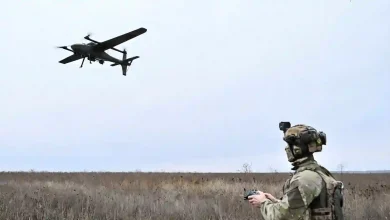
Faced with the systematic destruction of its domestic power infrastructure, Ukraine has refused to remain entirely on the defensive. Throughout 2026, Kyiv has dramatically stepped up its long-range drone campaign, specifically targeting the economic lifeblood of the Russian Federation: its vast network of oil refineries, fuel depots, and export terminals. By deploying waves of indigenously produced long-range kamikaze drones, Ukrainian forces have successfully struck oil facilities deep inside Russian territory, including plants in the Krasnodar, Rostov, and Leningrad regions.
These precise, asymmetric strikes have two primary objectives. First, they seek to disrupt the domestic supply of refined fuels—such as diesel and aviation fuel—necessary to sustain Russia’s massive military logistics machine on the front lines. Second, they aim to dent Russia’s primary source of hard-currency revenue: its oil export capacity. These actions have injected fresh volatility into global energy markets, forcing international policymakers to rethink supply chains. This shift in energy security dynamics is felt worldwide, forcing western nations to secure alternative fuel sources and sparking political friction, much like the energy policy crisis in Canada, where strategic resources have become highly politicized battlegrounds. By forcing Moscow to divert precious air defense systems to protect its domestic industrial assets, Ukraine has successfully stretched Russian military resources thin.
Targeting Key Russian Refining and Storage Assets
Ukrainian long-range strike capability has evolved rapidly over the past twelve months. Utilizing advanced composite materials and low-altitude flight paths, these domestic drones can bypass sophisticated Russian air defense grids. When an oil refinery’s distillation columns are hit, they cannot be easily replaced due to Western technology sanctions on heavy industrial components. Consequently, Ukraine’s strategy of hitting key distillation towers has managed to offline up to 10-15% of Russia’s domestic oil refining capacity at various points, creating localized fuel shortages and forcing the Kremlin to balance civilian and military energy needs.
Comparison of Infrastructure Campaigns
To understand the scope and nature of this mutual infrastructure warfare, it is helpful to contrast the strategies, technologies, and target profiles utilized by both belligerents. The table below outlines the core differences in how each nation conducts its strikes.
| Metric | Russian Infrastructure Campaign | Ukrainian Retaliatory Campaign |
|---|---|---|
| Primary Target Focus | Electrical grids, thermal/hydroelectric plants, civil gas facilities, and logistics centers. | Oil refineries, fuel storage depots, military airfields, and rail transit networks. |
| Key Weaponry Used | Kalibr cruise missiles, Iskander ballistics, Zircon hypersonic missiles, and Shahed-type drones. | Long-range indigenously developed kamikaze drones, modified Neptune cruise missiles. |
| Strategic Objective | Paralyze domestic economy, break public morale, and restrict defense production. | Cripple military fuel logistics, dry up federal export revenues, and force air defense reallocation. |
| Geopolitical Consequences | Severe humanitarian crises, mass displacement, and heavy reliance on Western air defense aid. | Global oil price fluctuations, pressure from international allies regarding escalation risk. |
Military Technology and Air Defense Bottlenecks
The evolving air war over Ukraine has highlighted the absolute centrality of advanced surface-to-air missile (SAM) systems. For Ukraine, protecting urban areas like Dnipro, Kyiv, and Kharkiv requires an incredibly dense and sophisticated air defense umbrella. High-tier systems like the U.S.-made Patriot, European NASAMS, and IRIS-T are vital for intercepting fast-moving ballistic and hypersonic missiles. However, the sheer volume of Russian strikes—which frequently combine heavy ballistic missiles with dozens of slow-moving, low-altitude decoy drones—is designed to saturate and exhaust Ukraine’s interceptor stockpiles.
This attrition of air defense assets has forced Kyiv to make agonizing choices between protecting frontline military units and shielding major civilian cities from devastation. The international community’s ability to supply high-tech military hardware remains stretched. Modern militaries are observing these dynamics closely, testing and proving their own capabilities in simulated and real-world high-threat environments, such as the U.S. Space Force’s historic validation of combat readiness during Operation Epic Fury. The lessons learned in Ukraine regarding drone saturation and electronic warfare countermeasures are rapidly reshaping global defense doctrines.
Tactics of Saturation and Interception Dilemmas
Russia has increasingly mastered the art of saturation tactics. By launching cheap, decoy drones ahead of expensive cruise and ballistic missiles, Russian forces force Ukrainian air defense operators to make split-second decisions. Shooting down a cheap drone with an expensive Patriot missile is economically unsustainable and rapidly depletes scarce ammunition. Yet, failing to intercept the decoy risks letting critical intelligence gatherers locate radar stations, paving the way for subsequent high-precision strikes. This ongoing tactical game of cat-and-mouse has placed immense strain on Ukraine’s defensive logistics.
The Escalating Humanitarian Crisis and Double-Denials
Despite the overwhelming evidence of civilian casualties and widespread damage to non-military infrastructure, both Moscow and Kyiv maintain strict public stances denying that they deliberately target civilians. The Russian Ministry of Defense consistently asserts that its strikes are highly precise and directed solely at military-industrial installations, fuel transport corridors, and electrical networks supporting the Ukrainian Armed Forces. However, Ukrainian officials point to the destroyed four-story apartment block in Dnipro, the pulverized playground, and the tragic deaths of children and emergency first responders as definitive proof of systematic terror tactics.
Conversely, Moscow frequently accuses Ukraine of launching “terrorist attacks” on sovereign Russian territory when Ukrainian drones hit energy hubs or cross-border logistics towns, occasionally resulting in civilian injuries. This war of narratives has hardened public opinion on both sides, making the prospect of diplomatic negotiations or a cease-fire increasingly remote. With each passing month of this four-year-long war, the psychological toll on the civilian population deepens, particularly as families face the prospect of another brutal winter characterized by rolling blackouts, water shortages, and constant air raid alerts.
The Geopolitical and Global Economic Fallout
The mutual targeting of infrastructure has ramifications that extend far beyond the borders of Eastern Europe. By striking Russian oil infrastructure, Ukraine has directly impacted global crude markets, causing periodic price spikes that complicate Western efforts to control inflation. At the same time, the ongoing destruction of Ukraine’s agricultural and energy capability continues to necessitate billions of dollars in foreign financial and military aid, straining Western political consensus.
Furthermore, this confrontation has solidified a deep geopolitical divide, accelerating a shifting of alliances. Russia has deepened its economic and military ties with nations like Iran, China, and North Korea, creating a powerful block of states committed to challenging the Western-led international order. On the other hand, Ukraine remains dependent on the shifting political winds of Washington and Brussels. As the conflict grinds onward, the risk of a miscalculation or a massive strike causing catastrophic damage to a nuclear power plant remains a terrifying and highly plausible scenario.
Conclusion: A War of Attrition with No Clear End
As the Russo-Ukrainian war enters its fifth year, the battle lines on the ground may appear relatively static, but the aerial infrastructure war has reached unprecedented levels of intensity. The tragic loss of life in Dnipro—where five citizens were killed, dozens injured, and a community playground shattered—serves as a grim reminder of the daily reality endured by millions of Ukrainians. With neither side willing to back down, and both finding ways to strike deep into the other’s territory, the war of infrastructure attrition is set to remain the dominant and most destructive phase of this historic conflict. For more details on international reporting on this developing situation, you can consult authoritative sources like Reuters as the global community continues to monitor these tragic events.