China’s Military Threat: Taiwan’s Response to Xi’s Remarks
Introduction
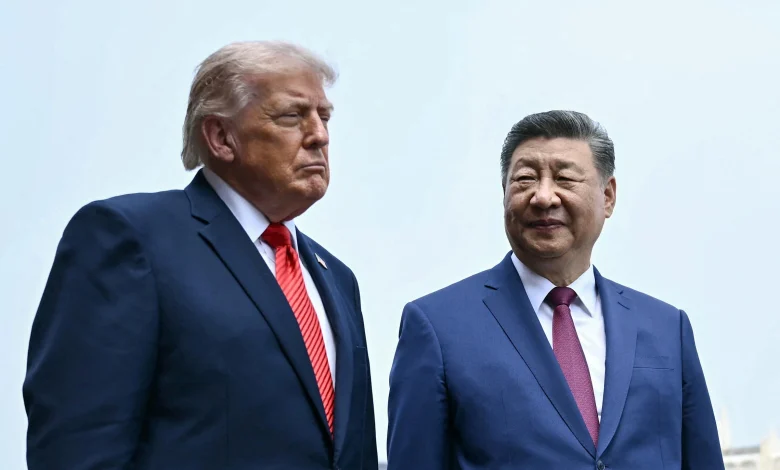
The escalating tensions across the Taiwan Strait have once again come into sharp focus following recent statements by Chinese President Xi Jinping regarding Taiwan’s independence. In response to Xi’s assertions that the idea of Taiwan’s independence is incompatible with peace, Taiwanese cabinet spokesperson Michelle Lee emphasized that China’s military threat remains the primary source of insecurity in the region. Lee highlighted the critical importance of continuous defense enhancements and effective joint deterrence in safeguarding regional security. This article delves into the complexities of the Taiwan Strait issue, examining the perspectives of both sides, the regional security dynamics, and the potential implications for global politics.
Taiwan’s Response to Xi’s Comments
Michelle Lee’s strong rebuttal to Xi Jinping’s comments underscores Taiwan’s unwavering stance on its sovereignty and security. By explicitly identifying China’s military threat as the root cause of instability, Taiwan aims to draw international attention to what it perceives as Beijing’s aggressive posture. The emphasis on enhancing defense capabilities and fostering joint deterrence reflects Taiwan’s strategy of bolstering its own defenses while seeking support from allies to maintain a credible deterrent against potential Chinese aggression. This approach is crucial for Taiwan to navigate the complex geopolitical landscape and safeguard its democratic values and way of life.
Understanding the Taiwan Strait Issue
The Taiwan Strait issue is a multifaceted challenge rooted in historical, political, and strategic considerations. At its core, it involves the status of Taiwan, officially known as the Republic of China (ROC), which has been governed independently since 1949 after the Chinese Civil War. The People’s Republic of China (PRC), under the leadership of the Chinese Communist Party (CCP), views Taiwan as a renegade province that must eventually be reunified with the mainland, by force if necessary. This stance is enshrined in China’s Anti-Secession Law, which provides the legal basis for military action against Taiwan under certain conditions. The issue is further complicated by the involvement of external powers, particularly the United States, which maintains a policy of strategic ambiguity regarding its commitment to defend Taiwan.
Xi’s Perspective on Taiwan
Xi Jinping’s perspective on Taiwan is deeply rooted in the CCP’s long-standing policy of national reunification. Xi has repeatedly emphasized that the Taiwan issue cannot be passed down from generation to generation and that resolving it is a historical mission for the CCP. His comments that Taiwan’s independence is incompatible with peace reflect the CCP’s belief that any move towards formal independence would be a red line, potentially triggering a military response. Xi’s approach is characterized by a combination of economic incentives, diplomatic pressure, and military posturing aimed at compelling Taiwan to accept reunification under the “one country, two systems” framework. However, this framework has been widely rejected by the majority of Taiwanese, particularly after its implementation in Hong Kong led to a significant erosion of democratic freedoms.
Taiwan’s Defense Strategy
Faced with the overwhelming military superiority of China, Taiwan has adopted a defense strategy centered on asymmetric warfare. This strategy aims to deter a Chinese invasion by making it as costly and difficult as possible. Key elements of Taiwan’s defense strategy include investing in advanced missile systems, developing a resilient cyber defense capability, and strengthening its reserve forces. Taiwan also relies heavily on its mountainous terrain and dense urban areas to create defensive strongholds that would be difficult for an invading force to overcome. Furthermore, Taiwan seeks to enhance its interoperability with allied forces, particularly the United States, through joint exercises and military cooperation. The recent deployment of the Dark Eagle hypersonic missile by CENTCOM to the Middle East underscores the importance of advanced military technology in regional defense strategies.
Regional Security Dynamics
The Taiwan Strait is a critical node in the broader Indo-Pacific region, and any conflict there would have far-reaching consequences. The region is characterized by complex geopolitical rivalries, territorial disputes, and economic competition. China’s growing military power and assertive foreign policy have raised concerns among its neighbors, leading to increased defense spending and security cooperation among countries like Japan, South Korea, and Australia. The United States plays a central role in maintaining regional stability through its network of alliances and its military presence in the region. The U.S. military strikes in the Caribbean, amidst escalating drug war deaths, highlight the diverse security challenges facing the region. The strategic importance of the Strait of Hormuz, as evidenced by France’s warship deployment amidst rising tensions, further illustrates the interconnectedness of global security concerns.
Military Capabilities Comparison
A comparison of the military capabilities of China and Taiwan reveals a significant imbalance. China’s People’s Liberation Army (PLA) is the largest military in the world, with a vast arsenal of advanced weapons systems, including aircraft carriers, ballistic missiles, and cyber warfare capabilities. Taiwan’s military, while well-trained and equipped, is significantly smaller and lacks the same level of resources. However, Taiwan possesses certain advantages, such as its geographic location and its investments in asymmetric warfare capabilities. The following table provides a summary of the key military capabilities of both sides:
| Capability | China (PLA) | Taiwan (ROC Armed Forces) |
|---|---|---|
| Active Military Personnel | Over 2 million | Around 200,000 |
| Defense Budget | Over $250 billion | Around $13 billion |
| Aircraft Carriers | Multiple | None |
| Ballistic Missiles | Extensive | Limited |
| Cyber Warfare Capabilities | Advanced | Developing |
Economic Factors and Interdependence
Despite the political tensions, economic ties between China and Taiwan are substantial. Taiwan is heavily reliant on trade with China, and many Taiwanese companies have invested heavily in the mainland. This economic interdependence creates both opportunities and risks for Taiwan. On the one hand, it provides access to a vast market and contributes to Taiwan’s economic prosperity. On the other hand, it makes Taiwan vulnerable to economic coercion from China. Beijing has been known to use economic levers to exert political pressure on Taiwan, such as restricting tourism or imposing tariffs on certain Taiwanese goods. However, Taiwan’s economy is also deeply integrated into the global supply chain, particularly in the semiconductor industry, which gives it significant leverage in international trade relations. The recent focus on China’s silicon wafer target of 70% domestic use by 2026 highlights the strategic importance of this sector.
International Relations and Diplomacy
The Taiwan issue is a sensitive topic in international relations, with countries around the world carefully calibrating their policies towards both China and Taiwan. Most countries, including the United States, maintain a “one China policy,” which acknowledges the PRC as the sole legal government of China but does not necessarily endorse Beijing’s claim over Taiwan. The United States, in particular, has a complex relationship with Taiwan, providing it with defensive weapons and engaging in close security cooperation while officially maintaining a policy of strategic ambiguity. Other countries, such as Japan and Australia, have also expressed concerns about China’s growing assertiveness in the region and have strengthened their security ties with the United States. International forums and organizations often serve as venues for diplomatic maneuvering and expressions of support for Taiwan’s participation in global affairs. The WHO data access concerns, as the US navigates global health information gaps, underscore the importance of international cooperation on critical issues.
Historical Context
Understanding the historical context is crucial for grasping the complexities of the Taiwan issue. Taiwan was ceded to Japan in 1895 after the First Sino-Japanese War and remained under Japanese rule until the end of World War II. After the war, Taiwan was handed over to the Republic of China, which had been the ruling government of mainland China. However, the Chinese Civil War between the Nationalist Kuomintang (KMT) and the Communist Party of China (CCP) resulted in the KMT forces retreating to Taiwan in 1949. Since then, Taiwan has been governed separately from the mainland, with its own democratic institutions and distinct identity. The legacy of the Chinese Civil War and the subsequent decades of political and military confrontation have shaped the current dynamics across the Taiwan Strait.
Potential Scenarios and Future Outlook
The future of the Taiwan Strait remains uncertain, with several potential scenarios ranging from peaceful reunification to military conflict. One possibility is that China will continue to exert economic and diplomatic pressure on Taiwan, gradually eroding its autonomy and compelling it to accept reunification. Another scenario is that Taiwan will continue to resist China’s pressure and maintain its de facto independence, potentially leading to increased tensions and the risk of military confrontation. A third possibility is that the international community will play a more active role in mediating the dispute and promoting a peaceful resolution. The US-Iran negotiations breakdown, making a 2026 peace deal harder, exemplifies the challenges in international conflict resolution. The outcome will depend on a complex interplay of factors, including the political dynamics within China and Taiwan, the evolving regional security environment, and the policies of major powers like the United States. The potential for miscalculation and unintended escalation remains a significant concern.
Implications for Global Politics
The Taiwan issue has far-reaching implications for global politics, particularly in the context of the intensifying strategic competition between the United States and China. A conflict in the Taiwan Strait would not only have devastating consequences for the people of Taiwan but also disrupt global trade, destabilize the Indo-Pacific region, and potentially draw the United States and China into a direct military confrontation. The international community has a strong interest in preventing such a scenario and promoting a peaceful resolution of the dispute. The ongoing tensions in the Strait of Hormuz, with Russia defending Iran’s blockade at the UN, illustrate the potential for global conflicts to arise from regional disputes. The stakes are high, and the need for careful diplomacy and crisis management is paramount.
Conclusion
The Taiwan Strait remains a potential flashpoint in the Indo-Pacific region, with China’s military threat being a significant source of insecurity. Taiwan’s response, emphasizing enhanced defense and joint deterrence, reflects its determination to safeguard its sovereignty and security. Understanding the historical context, political dynamics, and regional security environment is crucial for navigating this complex issue. The future of the Taiwan Strait will depend on the choices made by China, Taiwan, and the international community. Continued dialogue, diplomacy, and a commitment to peaceful resolution are essential to prevent conflict and maintain regional stability. The challenges are significant, but the potential consequences of failure are even greater. The need for a comprehensive and nuanced approach to the Taiwan issue has never been more urgent. For example, the SpaceX shatters record with back-to-back Falcon launches, indicating advancement of defense and space technology.
Council on Foreign Relations – Conflict Tracker: China-Taiwan Relations