West Bengal Election: Modi’s Party Wrests Control, Reshaping Indian Politics
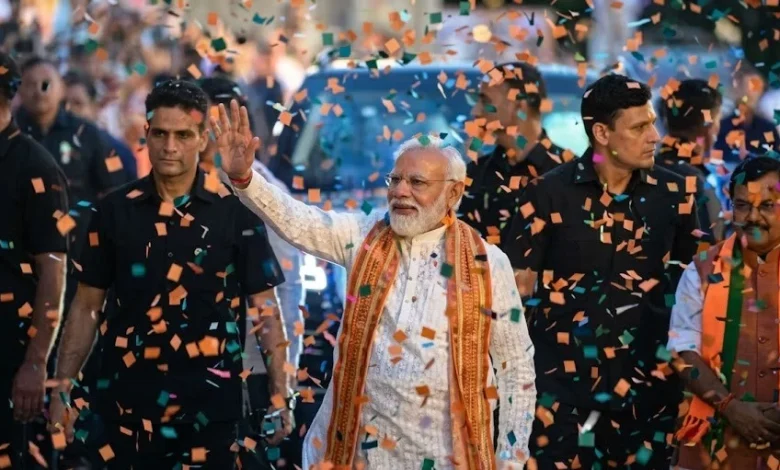
West Bengal Election results have sent ripples across India’s political landscape, signaling a monumental shift in power dynamics. In a stunning reversal, Prime Minister Narendra Modi’s ruling Hindu nationalist Bharatiya Janata Party (BJP) has successfully wrested control of West Bengal, a long-held stronghold of the opposition All India Trinamool Congress (TMC). The Election Commission of India’s partial results, released Monday, showed the BJP securing at least 124 seats in the 294-member West Bengal assembly and leading in 83 others. This victory marks a significant breakthrough for the BJP, a party that has never previously governed West Bengal and has relentlessly pursued its expansionist agenda in the eastern state for years. The ousting of Mamata Banerjee, one of Modi’s most vocal critics and the Chief Minister who has dominated the state’s politically charged arena since 2011, represents not just a local upheaval but a profound recalibration of national political forces.
The Seismic Shift in West Bengal’s Political Landscape
The outcome of the West Bengal Election is more than just a change of government; it is a seismic shift that redefines the contours of Indian federalism and the narrative of the ruling BJP’s pan-India ambitions. West Bengal, with its rich cultural heritage, intellectual legacy, and substantial electoral weight, has historically resisted the national wave of various ruling parties, often nurturing its unique brand of regional politics. For decades, it was a bastion of communist rule, followed by the sustained dominance of Mamata Banerjee’s Trinamool Congress. The BJP’s victory here shatters the perception of an impenetrable regional fortress, demonstrating its growing organizational prowess and ability to penetrate diverse linguistic and cultural strongholds across the country. This strategic win comes after years of systematic groundwork, extensive campaigning, and significant resource allocation by the BJP, underscoring their long-term vision for a ‘Congress-mukt Bharat’ (Congress-free India) that now seems to extend to ‘Opposition-mukt’ states as well.
BJP’s Decades-Long Endeavor to Conquer the East
The BJP’s ascension in West Bengal is the culmination of a meticulously planned strategy that dates back several years. Historically, the BJP’s presence in West Bengal was marginal, overshadowed by the Communist Party of India (Marxist) and later the TMC. However, under the leadership of Prime Minister Modi and Home Minister Amit Shah, the party identified West Bengal as a crucial frontier for its national expansion. Their strategy involved a multi-pronged approach: leveraging nationalistic narratives, focusing on perceived corruption within the TMC government, and actively engaging with the state’s substantial Hindu population through appeals to cultural identity. The party systematically built its cadre base, capitalized on local grievances, and launched a relentless media campaign. Prime Minister Modi himself addressed numerous rallies, drawing massive crowds and projecting the election as a battle for Bengal’s ‘ashol poriborton‘ (real change). This concerted effort allowed the BJP to steadily increase its vote share and seat count in previous Lok Sabha and assembly elections, setting the stage for this historic triumph. The party’s ability to navigate the complex social fabric of West Bengal, marked by its unique demographic composition and strong regional sentiments, stands as a testament to its evolving electoral machinery. This endeavor highlights a clear intention to not merely win elections but to fundamentally alter the political geography of India, often through fierce negotiations and resolute political stances, reminiscent of situations where other political entities defy demands and engage in fierce negotiations to assert their sovereignty and political will.
Mamata Banerjee and the Trinamool Congress: A Legacy Challenged
Mamata Banerjee, affectionately known as ‘Didi’ (elder sister), has been the undisputed political force in West Bengal since she unseated the 34-year-old Left Front government in 2011. Her rise to power was predicated on her fiery grassroots activism, populist policies, and a fierce opposition to the perceived authoritarianism of the Communist regime. She cultivated an image of a street fighter, directly connected to the aspirations and grievances of the common people. Under her leadership, the TMC introduced numerous welfare schemes, focusing on women, farmers, and marginalized communities. Her political brand was synonymous with Bengal’s regional pride and resistance to external influence. However, the 2024 election presented an unprecedented challenge. The BJP, backed by the immense resources of the central government and a formidable election machine, directly attacked her administration on issues of corruption, law and order, and alleged appeasement politics. Banerjee, despite her enduring popularity and charismatic appeal, found herself fighting a battle on multiple fronts, including internal dissensions and defections of key leaders to the BJP. Her spirited defense, often characterized by her trademark defiance and appeals to Bengali identity, ultimately proved insufficient against the powerful BJP juggernaut. Her steadfast refusal to engage in certain negotiations, much like the Lebanese stance on talks, showcased her unwavering resolve, yet in this instance, it wasn’t enough to stem the tide.
The Campaign Trail: Strategies and Rhetoric
The West Bengal election campaign was one of the most intense and vitriolic in recent Indian history. Both the BJP and TMC employed aggressive rhetoric, frequent public rallies, and extensive social media campaigns. The BJP’s strategy heavily relied on Prime Minister Modi’s towering image and the promise of a ‘double engine’ government – referring to the benefits of having the same party in power at both the state and central levels. They lambasted the TMC for alleged corruption in welfare schemes, political violence, and what they termed ‘minority appeasement.’ On the other hand, Mamata Banerjee fiercely defended her government’s record on development and welfare, while simultaneously accusing the BJP of being an ‘outsider’ party attempting to impose a Hindi-Hindu majoritarian agenda on Bengal. She rallied support by invoking Bengali pride and culture, portraying the election as a battle to protect Bengal’s unique identity. The political discourse often descended into personal attacks, with leaders from both sides engaging in sharp exchanges. The deployment of central forces, the Election Commission’s strictures, and the sheer scale of public mobilization highlighted the high stakes involved. Economic policies and nationalistic declarations also played a significant role, echoing sentiments seen in other countries where leaders declare trade policies as national weaknesses or strengths, influencing public perception and electoral outcomes.
Electoral Integrity Under Scrutiny: Voter Rolls and Commission’s Role
A significant controversy surrounding the West Bengal Election involved allegations of electoral irregularities, particularly the removal of millions of voters from electoral rolls. Opposition parties across West Bengal raised strong criticisms against the Election Commission of India (ECI), alleging that the deletions were politically motivated and disproportionately affected minority communities and economically weaker sections. These claims sparked widespread debate about the fairness and transparency of the electoral process. The ECI, an autonomous constitutional body responsible for conducting free and fair elections, found itself under intense scrutiny. Its role in maintaining accurate voter lists, ensuring security, and enforcing the Model Code of Conduct is paramount in India’s vast democratic exercise. However, the sheer scale of the Indian electorate, exceeding 1.4 billion people across 28 states and eight federal territories, presents unparalleled logistical and administrative challenges. Conducting staggered elections, with several states and territories voting each year, requires immense coordination and resources. Despite the ECI’s assurances, the controversy over voter rolls fueled distrust among segments of the populace and became a major talking point during the campaign, adding another layer of complexity to an already contentious election. The integrity of the electoral process is fundamental to democracy, and any perceived compromise can significantly impact public confidence and legitimacy.
Allegations of Disenfranchisement and Opposition Outcry
The allegations of disenfranchisement were not merely procedural concerns; they were deeply political. Opposition parties, including the TMC, argued that the removal of voters from the rolls was a deliberate attempt to alter the demographic balance and suppress votes in their strongholds. They pointed to instances where entire families or neighborhoods found their names missing, despite having voted in previous elections. Activists and civil society groups also joined the chorus, demanding greater transparency and accountability from the ECI. While the ECI typically maintains that voter list revisions are a standard and necessary process to update records and remove duplicate or deceased voters, the scale and timing of the removals in West Bengal raised suspicions. The outcry underscored the fragility of trust between political parties, the electorate, and the institutions designed to uphold democratic principles. Such accusations, whether substantiated or not, can undermine the perceived legitimacy of the election results, leading to prolonged political contention and challenges to the mandate. This situation often requires delicate political maneuvering and potentially even mediation, akin to efforts seen in international diplomacy, such as when Pakistan mediates talks between the U.S. and Iran, highlighting the complexities of resolving deep-seated political disputes.
National Implications: A Resurgent BJP and Fragmented Opposition
The BJP’s victory in West Bengal has profound implications for national politics. It consolidates the party’s dominance and further weakens an already fragmented opposition. The loss of West Bengal, a state where the opposition had a strong regional leader in Mamata Banerjee, deals a significant blow to the collective efforts to challenge the BJP’s hegemony at the national level. With this victory, the BJP has not only expanded its geographical footprint but also demonstrated its ability to overcome regional strongmen and identity politics. This success could embolden the party to intensify its efforts in other states where it is still a junior partner or a nascent force. For the opposition, the result necessitates a serious introspection. The inability to forge a united front against the BJP, coupled with the erosion of regional strongholds, raises critical questions about their future strategies and leadership. The fragmentation of the opposition, often characterized by internal squabbles and a lack of a cohesive national narrative, contrasts sharply with the BJP’s centralized command and clear ideological direction. This election further solidifies the BJP’s narrative that it is the only truly national party capable of governing a diverse India, potentially paving the way for further political realignments in the years to come.
West Bengal’s Future: Policy Shifts and Governance Challenges
With the BJP now at the helm, West Bengal is poised for significant policy shifts and governance challenges. The party’s manifesto for the state promised a focus on industrial development, job creation, and improved law and order, alongside a strong emphasis on cultural nationalism, including promoting Bengali language and heritage within a broader Hindu framework. The new government will face the immediate task of addressing the state’s economic challenges, including unemployment and attracting investment, while also navigating the complexities of implementing its ideological agenda in a historically diverse state. The transition of power is also likely to spark changes in the state bureaucracy and administration, with a potential overhaul of policies and programs implemented by the previous TMC government. Moreover, the dynamic between the state and the BJP-led central government is expected to change. While cooperation on development projects might increase, there could also be heightened friction over political and ideological issues. The BJP’s emphasis on national integration and uniform policy frameworks might clash with West Bengal’s long-standing tradition of asserting regional autonomy. The success or failure of the BJP government in West Bengal will serve as a crucial litmus test for its ability to govern diverse states with unique political and cultural identities, demonstrating whether its national formula can be successfully adapted to local contexts.
Broader Electoral Trends Across India
The West Bengal election was part of a larger electoral cycle that saw simultaneous assembly elections in several other Indian states. While West Bengal garnered significant national attention due to its high-stakes nature and the direct contest between Modi and Banerjee, results from other states also contributed to the broader narrative of India’s evolving political landscape. In two other states, incumbent governments were ousted, reflecting a persistent anti-incumbency sentiment or the successful consolidation of opposition forces. Conversely, Modi’s party managed to retain power in another state that held elections in April, indicating its continued strength in its traditional bastions. These varied outcomes underscore the complex and multi-faceted nature of Indian elections, where local issues, caste dynamics, religious affiliations, and the popularity of regional leaders often play as crucial a role as national political narratives. The BJP’s overall performance, however, points to its continued dominance and strategic prowess in navigating these diverse electoral terrains. The party’s ability to win and retain power across different regions, despite facing formidable regional parties, highlights its effective ground game and capacity to mobilize voters on various issues ranging from development to national security and cultural identity. The outcomes of these staggered elections provide valuable insights into the political pulse of the nation, illustrating shifts in voter preferences and the enduring challenges faced by opposition parties in mounting a credible alternative to the BJP.
| Party | Seats Won (Preliminary) | Leading In (Preliminary) | Total Effective Seats | Previous Election (2019 Lok Sabha Segment Lead) |
|---|---|---|---|---|
| Bharatiya Janata Party (BJP) | 124 | 83 | 207 | 121 |
| All India Trinamool Congress (TMC) | 105 | 72 | 177 | 164 |
| Others (Left Front, Congress, etc.) | 2 | 8 | 10 | 9 |
| Note: Based on partial results released by the Election Commission of India. Final seat tally may vary. | ||||
A New Chapter for West Bengal
The conclusion of the West Bengal Election marks the beginning of a new chapter for the state. For the first time, West Bengal will be governed by the BJP, a party whose ideological moorings and policy priorities differ significantly from its predecessors. This transition holds the promise of both opportunities and challenges. On one hand, the prospect of closer coordination with the central government could unlock new avenues for development and investment. On the other hand, the imposition of national policies or cultural agendas might face resistance in a state fiercely proud of its distinct identity. The coming months and years will witness how the BJP navigates these complexities, how it builds consensus, and how it addresses the aspirations of a diverse electorate. The performance of the new government will be closely watched, not just within West Bengal, but across India, as it will inevitably influence future electoral strategies and the broader trajectory of Indian politics. The implications extend beyond the state’s borders, impacting regional alliances, national political narratives, and the overall balance of power in the world’s largest democracy. For further detailed election analysis and results, a comprehensive resource is the Election Commission of India’s official website.