Jeffery: Young Thug’s Quest to Erase His Name Amid Epstein Stigma
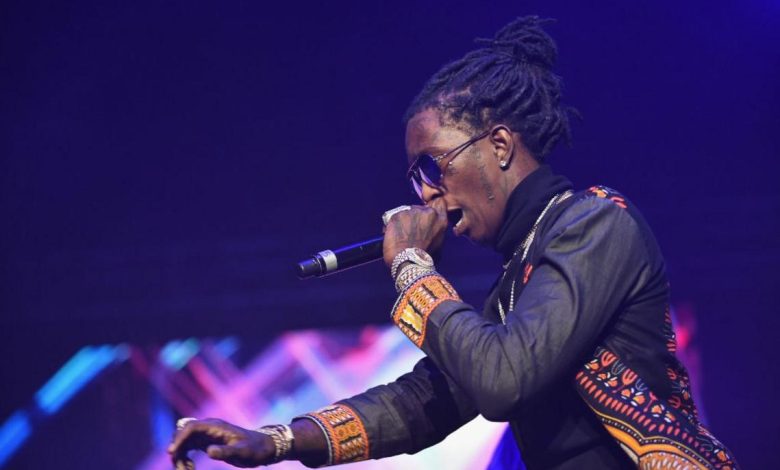
Jeffery Lamar Williams II, universally recognized by his stage moniker Young Thug, has ignited a massive conversation regarding celebrity branding, personal identity, and the heavy burden of historical associations. In a sudden and explosive reaction to a social media post highlighting the lingering dark legacy of Jeffrey Epstein, the prolific Atlanta rapper declared his immediate intention to legally and publicly alter his birth name. Responding to the grim reminder of the disgraced financier, Young Thug bluntly stated, “I’m changing my f*cking name asap bro.” This raw, unfiltered admission underscores a fascinating intersection of internet culture, public relations, and the unexpected ways in which global scandals can seep into the personal lives of entirely unrelated individuals. In this comprehensive analysis, we explore the intricate dynamics behind this proposed name change, the historical significance of the name to his musical catalog, and the broader implications for celebrity identity in an unforgiving digital age.
The Catalyst: Why Young Thug is Rejecting the Name Jeffery
The sudden urge to discard a birth name is rarely a decision made lightly, particularly for an artist who has spent years establishing a global empire under various aliases tied back to that original identity. For Young Thug, the name Jeffery was not just what his family called him; it was a celebrated facet of his artistic persona. However, the catalyst for this dramatic reversal was undeniably rooted in the pervasive cultural shockwaves still emanating from the Jeffrey Epstein scandal. When an internet post circulated, detailing the heinous crimes and the sheer magnitude of the global elite implicated in Epstein’s orbit, it struck a nerve with the rapper. The visceral disgust associated with the name “Jeffrey” (or in his case, “Jeffery”) became overwhelmingly apparent. For a public figure constantly under the microscope, sharing a first name with one of the most notorious criminals of the 21st century suddenly felt like an unbearable and toxic anchor.
The Viral Post and the Epstein Connection
Social media operates at a breakneck speed, often resurfacing past traumas or scandals to draw new parallels. The viral post that caught Young Thug’s attention was a grim reminder of how deeply the name Epstein has scarred the public consciousness. In the modern digital arena, where controversies are dissected relentlessly, guilt by association—even purely linguistic association—can trigger massive personal branding crises. Much like how the internet scrutinizes corporate missteps, as seen in the broadcasting controversies surrounding ABC licenses, public figures must actively navigate and mitigate how they are perceived in the wake of surrounding cultural phenomena. The visceral reaction from Young Thug—”I’m changing my f*cking name asap bro”—was a direct, unfiltered glimpse into the psychological toll that sharing a stigmatized name can exact. It wasn’t merely a joke; it reflected a genuine desire to distance himself from a cultural poison.
The Historical Weight of the Name
To fully grasp the magnitude of Young Thug’s declaration, one must reflect on the pivotal role the name Jeffery has played in his career trajectory. For years, the rapper operated under the moniker “Young Thug,” a title that carried its own set of preconceived notions, street associations, and hip-hop stereotypes. In an effort to humanize himself, break down industry barriers, and showcase his artistic evolution, he famously leaned into his birth name. This was a strategic and highly successful move designed to peel back the layers of the “thug” persona and reveal the complex, avant-garde artist underneath. Abandoning the name now represents a jarring reversal of a decade of meticulous brand building.
From the ‘No, My Name is Jeffery’ Era to Now
In August 2016, Young Thug released one of the most critically acclaimed and culturally significant projects of his career, titled simply, “Jeffery” (often stylized as “No, My Name is Jeffery”). The mixtape’s cover art famously featured the rapper in a stunning, gender-fluid, cascading purple dress designed by Alessandro Trincone. At the time, adopting his birth name for the project was hailed as a masterful statement of self-acceptance, artistic liberation, and a bold rejection of toxic masculinity within the hip-hop community. It was the era where “Jeffery” meant growth, high fashion, and breaking boundaries. Fast forward to the present day, and the irony is stark. The very name that once symbolized his liberation and personal truth is now viewed by the artist as an intolerable burden, tainted by an unrelated monster’s legacy.
Celebrity Identity and Brand Transformation
The mechanics of celebrity identity are incredibly fragile. A name is not merely a legal identifier; it is a trademark, a brand, and a vessel for public sentiment. To illustrate the dramatic shift in how the name is perceived within the context of Young Thug’s career, consider the following comparative analysis:
| Era / Timeframe | Context of the Name ‘Jeffery’ | Public Sentiment & Branding Impact | Key Cultural Associations |
|---|---|---|---|
| 2016 – “No, My Name is Jeffery” | Used as a vehicle for personal rebranding and artistic maturity. | Highly positive, hailed as boundary-pushing and avant-garde. | High fashion, gender fluidity, musical evolution. |
| 2020 – YSL Empire Building | Established as the executive and human side of “Young Thug.” | Respected, seen as an industry leader and mentor to new artists. | Business acumen, label ownership, philanthropic efforts. |
| Present Day (Post-Epstein Viral Outrage) | Viewed as a toxic liability due to shared nomenclature with a criminal. | Negative personal association, triggering an immediate desire to rebrand. | Stigma, disgust, sudden rejection of birth identity. |
The Broader Phenomenon: When Names Carry Undesirable Luggage
Young Thug’s predicament is not an isolated incident in the annals of nomenclature. Throughout history, certain names have become so inextricably linked to tragedy, villainy, or cultural mockery that they are practically rendered unusable by the general public. The phenomenon is well-documented. Consider how the name “Karen” evolved from a standard, popular birth name into a ubiquitous pejorative for entitled behavior. Similarly, the name “Isis” suffered a catastrophic decline in popularity following the rise of the terror organization, devastating businesses and individuals who had used the name for decades. The name “Jeffrey,” unfortunately, is teetering on a similar precipice. The horrific nature of Epstein’s crimes—and the endless stream of documentaries, news articles, and viral posts keeping the trauma fresh in the public eye—has permanently stained the name. For an artist like Young Thug, who relies on public adoration and positive cultural cachet, carrying a stigmatized name is an unnecessary occupational hazard.
Young Thug’s Legal Battles and PR Strategizing
Beyond the immediate disgust sparked by the Epstein post, one must also consider the broader context of Young Thug’s current public standing. The rapper has recently navigated one of the most intense legal battles in modern hip-hop history, specifically the sprawling YSL RICO indictment. When facing massive legal scrutiny, every single aspect of a public figure’s persona is analyzed, dissected, and utilized by both the media and the justice system. The necessity for immaculate public relations has never been higher for him. Changing his name could serve a dual purpose: distancing himself from the Epstein stigma while simultaneously executing a massive public relations reset following his prolonged legal ordeals. Managing public perception is an incredibly delicate task, much like the intense scrutiny seen when the internet heavily dissects sudden viral moments, as evident in the internet’s reaction to controversies. By initiating a narrative focused on a name change, Young Thug effectively redirects public discourse away from his legal history and toward a conversation about identity and cultural sensitivity.
Evaluating the Cost of an Identity Shift in the Music Industry
The operational and financial logistics of a prominent celebrity changing their name are staggering. It is not merely a matter of updating social media handles. It involves legal filings, trademark overhauls, updating publishing rights, altering streaming metadata across platforms like Spotify and Apple Music, and a massive re-education campaign for the fan base. For insights into how high-stakes PR moves are monitored, one can look at the entertainment industry branding strategies employed by major agencies. Yet, for artists of Young Thug’s caliber, these hurdles are surmountable if the perceived long-term benefit outweighs the short-term chaos. Historically, artists like Prince (who temporarily changed his name to an unpronounceable symbol) and Sean Combs (Puff Daddy, P. Diddy, Diddy, Love) have proven that massive identity shifts can be successfully executed, often resulting in renewed media attention and a fresh artistic slate.
Moreover, the modern media landscape is unforgiving. A misstep or an unaddressed controversy can spiral out of control rapidly. This environment forces public figures to be exceedingly proactive. We see similar proactive defenses in global news, such as when public figures undergo extreme scrutiny and must fiercely protect their image, akin to a journalist fighting to clear their name after a media storm. Young Thug’s spontaneous decision to change his name may seem like a fleeting social media outburst, but it highlights a profound awareness of cultural currents. He understands that in the court of public opinion, a name is never just a name. It is an emotional trigger. By declaring his intent to shed the name “Jeffery,” Young Thug is attempting to reclaim ownership of his narrative, ensuring that when the public thinks of him, they are not reminded of the darkest corners of human behavior, but rather of the music and the legacy he has actively chosen to create.