Dark Eagle Hypersonic Missile Deployed to Middle East by CENTCOM
Introduction to the Strategic Request
Dark Eagle hypersonic missiles have officially entered the most critical phase of their strategic deployment history, following an urgent and unprecedented request by the United States Central Command (CENTCOM) to position these formidable weapons in the Middle East. With regional tensions boiling over, the potential deployment of the U.S. Army’s first operational hypersonic weapon system signifies a monumental shift in American deterrence capabilities, specifically aimed at neutralizing emerging threats from Iran. Military commanders and geopolitical analysts alike recognize that the introduction of this advanced weapon system completely redefines the rules of engagement in a theater historically dominated by conventional ballistic and cruise missiles. As Iran continues to fortify its military installations and expand its network of proxy forces, the strategic necessity of a weapon capable of striking high-value, time-sensitive targets with zero warning has become absolutely paramount. The sheer kinetic force and extreme velocity of this system represent a technological leap that adversaries currently have no reliable means to intercept or defend against. By moving to deploy this asset to the Middle East, CENTCOM is sending a deliberate and unmistakable message regarding the United States’ willingness to utilize its most advanced classified strike capabilities if regional stability is further compromised.
What is the Long-Range Hypersonic Weapon (LRHW)?
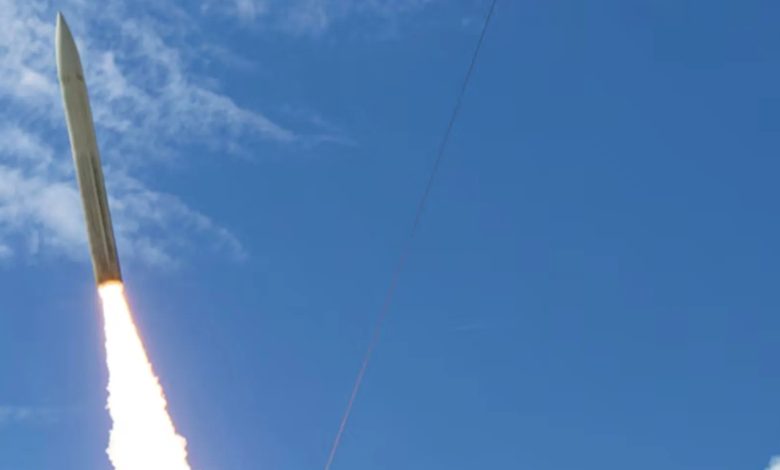
The Long-Range Hypersonic Weapon, officially designated by the U.S. Army, is a cutting-edge military asset engineered to deliver devastating precision strikes across intercontinental distances in a fraction of the time required by traditional weaponry. Utilizing a specialized hypersonic glide body, the weapon is launched via a large rocket booster that carries it to the upper reaches of the Earth’s atmosphere. Once it achieves optimal altitude and velocity, the glide body detaches and begins its descent, surfing the atmospheric layers at speeds exceeding Mach 5. This unique trajectory differs fundamentally from traditional intercontinental ballistic missiles (ICBMs), which follow a predictable parabolic arc. The glide body’s ability to maneuver unpredictably at hypersonic speeds renders conventional radar tracking and missile defense interceptors largely obsolete. Developed in tandem by the Army and the Navy—with the Navy fielding a sea-launched variant—the system represents the pinnacle of modern defense engineering. It was designed from the ground up to address the critical capability gaps identified by military planners in the face of increasingly sophisticated anti-access/area denial (A2/AD) networks deployed by near-peer adversaries and heavily armed regional powers.
Unmatched Speed and Precision
Traveling at speeds well above Mach 5—which translates to over 3,800 miles per hour—the system shrinks the strike window against fleeting targets to mere minutes. A mobile missile launcher in hostile territory, which might previously have had time to deploy its payload and relocate before a conventional Tomahawk cruise missile could traverse the distance, can now be obliterated before its operators even register the launch detection. This operational speed is not merely a tactical advantage; it is a profound strategic deterrent. The precision guidance systems integrated into the hypersonic glide body ensure that even while maneuvering violently to evade enemy air defenses, the warhead remains locked onto its designated coordinates with pinpoint accuracy. The United States Department of Defense has continuously emphasized the necessity of these characteristics in neutralizing pop-up threats and deeply entrenched military assets.
Targeting Deeply Buried Command Bunkers
One of the primary strategic rationales for bringing this specific weapon system to the Middle East theater is its unparalleled capability against hardened underground facilities. Iran has spent decades burying its most critical nuclear enrichment sites, command bunkers, and ballistic missile manufacturing plants deep within mountains and subterranean complexes. Facilities like Natanz and Fordow were intentionally constructed beneath layers of rock and reinforced concrete specifically to withstand strikes from conventional bunker-buster munitions. However, the immense kinetic energy generated by an object striking the earth at hypersonic velocities changes the physical physics of penetration. Even without a traditional explosive warhead, the kinetic transfer of a dense glide body impacting at Mach 5 or higher can trigger catastrophic shockwaves capable of collapsing deeply buried structures and destroying sensitive equipment housed within. This gives CENTCOM a viable non-nuclear option to hold Iran’s most secure installations at risk, fundamentally altering the strategic calculus in the region.
The Operational Capabilities of the Dark Eagle System
Understanding the full scope of this system requires a detailed examination of its operational metrics. With a confirmed range exceeding 1,725 miles, a battery stationed in friendly Gulf nations or on secure island bases in the Indian Ocean can easily hold the entirety of the Iranian landmass at risk. This vast reach allows American forces to maintain a safe standoff distance, reducing the vulnerability of U.S. troops and regional allies to retaliatory strikes from shorter-range enemy munitions.
| System Attribute | Dark Eagle (LRHW) Specification | Conventional Comparison (Subsonic Cruise) |
|---|---|---|
| Maximum Speed | Mach 5+ (3,800+ mph) | High Subsonic (~550 mph) |
| Operational Range | 1,725+ miles | 1,000 – 1,500 miles |
| Trajectory | Maneuverable Hypersonic Glide | Low-altitude predictable flight path |
| Target Penetration | High kinetic energy against hardened bunkers | Relies primarily on explosive warhead payload |
| Interception Difficulty | Extremely High (Evades modern defense systems) | Moderate to High (Vulnerable to modern SAMs) |
Overcoming the Arsenal Shortage
Despite the immense capabilities of this revolutionary weapon, military planners face a daunting reality: there are extremely few of these missiles currently in existence. The system was only officially declared operational in 2025 following a rigorous and occasionally delayed testing cycle. The manufacturing process for hypersonic glide bodies involves exotic materials capable of withstanding extreme thermal stress, intricate engineering, and highly specialized production facilities. This scarcity transforms the deployment request into a massive geopolitical gamble. Committing such a rare and valuable asset to the Middle East theater underscores the perceived severity of the Iranian threat. It also highlights a broader systemic issue within the military-industrial complex regarding the rapid scaling of advanced munitions. This limitation is heavily tied to the broader crisis surrounding an empty arsenal and depleted munitions stockpile, a factor that adversaries are acutely aware of. U.S. commanders must carefully weigh the psychological deterrence of deploying these few weapons against the risk of expending them in a localized conflict, potentially leaving other global theaters, such as the Indo-Pacific, exposed to similar aggression.
Shifting the Balance of Power in the Middle East
Deploying a weapon of this magnitude serves as a massive force multiplier for allied nations operating within the region. For years, Iran has relied on its vast arsenal of ballistic missiles, cruise missiles, and loitering munitions to project power and intimidate neighbors. Their strategy of asymmetrical warfare, heavily reliant on the threat of overwhelming regional infrastructure through sheer volume of fire, has allowed them to operate with a degree of impunity. The introduction of U.S. hypersonic capabilities forces a strategic reset. Iranian military leadership must now contend with the reality that their deepest command centers, most heavily defended missile silos, and mobile leadership assets can be eliminated instantly. This realization fundamentally neutralizes the psychological advantage of their underground network. Furthermore, the deployment bolsters the confidence of regional allies who have grown increasingly anxious over shifting U.S. defense postures. The sheer technological dominance of the hypersonic glide body proves that conventional defense systems, such as the Russian-supplied S-300 or S-400 batteries operated by Iran, are entirely incapable of shielding their critical infrastructure from a determined American strike.
Geopolitical Ramifications and Potential Fallout
The timing of CENTCOM’s request is intrinsically linked to the rapidly deteriorating diplomatic situation. In recent months, the global community has witnessed a total breakdown of U.S.-Iran negotiations, leaving diplomatic channels entirely frozen and military posturing as the primary medium of communication. In this vacuum, hardliners in Tehran have accelerated their military readiness and increased provocations, directly contributing to the standoff in the Strait of Hormuz. The deployment of the military’s most advanced strike weapon is a classic example of coercive diplomacy. It is designed to demonstrate overwhelming resolve and force a behavioral change in an adversary without necessarily firing a shot. However, the presence of such a potent weapon also carries the inherent risk of escalation. If Tehran perceives the deployment not as a deterrent but as a precursor to an imminent preemptive decapitation strike against its leadership or nuclear facilities, it may choose to accelerate its own timeline for aggression. The economic implications are equally staggering, as military posturing of this scale directly impacts global energy markets and ensures that the defense industry and geopolitical economy remain highly volatile and reactive to every troop and asset movement in the region.
Conclusion: A New Era of Tactical Warfare
The prospect of moving the Army’s premier hypersonic capability into the Middle East marks the dawn of a new era in tactical and strategic warfare. No longer are military forces bound by the speed limits of conventional rocketry or the penetration limits of traditional explosives. The convergence of extreme speed, maneuverability, and kinetic devastation provides military commanders with options that were previously relegated to the realm of science fiction. While the actual number of these weapons remains highly classified and profoundly limited, their mere presence in the theater alters the behavioral calculus of every regional actor. As 2026 unfolds and the geopolitical landscape continues to fracture, the successful deployment and potential combat utilization of this system will be watched closely by military strategists globally. It stands as a testament to advanced defense engineering and serves as the ultimate sword of Damocles hanging over those who seek to destabilize international security through asymmetrical aggression and entrenched fortification.