Elon Musk OpenAI Trial Court Sketch Mocked Amid AI Boom
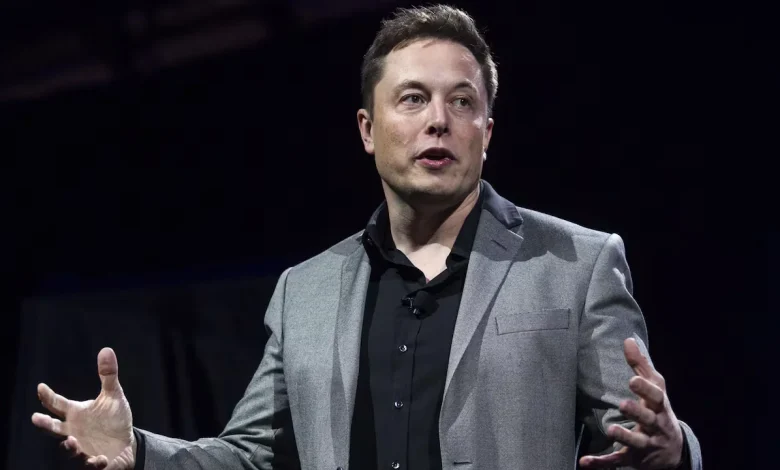
Elon Musk is currently at the center of one of the most consequential legal battles in modern technological history, yet the internet cannot stop talking about a courtroom sketch. In a lawsuit that could determine the future trajectory of artificial general intelligence (AGI), the proceedings against OpenAI have inadvertently highlighted a hilarious and glaring dichotomy: we live in a world where artificial intelligence can instantly generate ultra-realistic, cinematic videos of Will Smith voraciously eating spaghetti, yet our highest courts still rely on rapidly scribbled pastel and pencil drawings to document historic events. When the first courtroom sketch of the billionaire tech mogul surfaced, it was so startlingly inaccurate that social media users immediately began speculating whether he had sent the world’s worst body double to face the judge. This surreal intersection of cutting-edge technology and 19th-century documentation practices has sparked a massive cultural conversation about the state of our judicial system, the explosive growth of AI, and the irony of the situation.
Elon Musk’s OpenAI Trial: A Bizarre Courtroom Visual
The trial itself represents a massive clash of titans. The lawsuit centers around foundational agreements, the original non-profit mission of the organization, and the subsequent pivot to a capped-profit model that has generated billions in revenue. However, the gravitas of the legal arguments was momentarily eclipsed when the official court sketch was released to the press. Depicting a man who arguably looked more like a melted wax figure of a 1980s television host than the CEO of Tesla and SpaceX, the sketch quickly became a viral sensation. The profound irony is inescapable: the very trial debating the existential risks, capabilities, and ownership of the most advanced digital brain ever created is being visually recorded using tools that haven’t evolved since the invention of colored chalk.
In the fast-paced ecosystem of digital news, visual representation matters immensely. While cameras are often banned in federal courts to preserve the integrity of the judicial process and protect the privacy of jurors and witnesses, the public relies on courtroom artists to provide a window into these restricted rooms. In high-profile cases involving celebrities, politicians, or tech billionaires, these sketches are scrutinized intensely. When the subject is a global figure with one of the most recognizable faces on the planet, any deviation from reality is instantly magnified and ridiculed by millions online. The stark contrast between the futuristic nature of the trial’s subject matter and the archaic medium of its documentation serves as a potent metaphor for the law’s struggle to keep pace with technological advancement.
The Viral Disconnect: AI Video vs. Human Sketching
To truly understand the internet’s collective exasperation, one must look at the current state of generative media. Just a few years ago, the quintessential benchmark for AI video generation was a bizarre, nightmarish clip of actor Will Smith enthusiastically consuming a plate of spaghetti. It was heavily flawed, featuring morphed faces, shifting physics, and a surreal, dreamlike quality. Today, that technology has evolved at a breakneck pace. AI models can now produce hyper-realistic, high-definition videos with accurate lighting, physics, and human anatomy in mere seconds. The fact that any teenager with a smartphone can prompt an AI to generate a photorealistic image of the CEO sitting in a courtroom, while the actual official court record looks like a hurried caricature, is what drives the current wave of online mockery.
Why Court Sketches Still Exist in the 21st Century
Despite the mockery, courtroom sketching is not a dying art out of sheer stubbornness; it exists due to strict legal frameworks. Federal Rule of Criminal Procedure 53 broadly prohibits the broadcasting of judicial proceedings in federal criminal cases, and similar rules apply across various civil courts. The rationale is rooted in the belief that cameras can alter the behavior of participants, intimidate witnesses, and turn the solemn pursuit of justice into a theatrical spectacle. Court artists act as a necessary filter. They are tasked with capturing not just the physical likeness of the participants, but the mood, tension, and atmosphere of the room under extreme time constraints and often from poor vantage points. Unlike an AI that requires a clear prompt and dataset, the human artist must interpret the chaotic reality of a dynamic legal battle.
The Internet Reacts: The World’s Worst Body Double
The reaction to the sketch was swift and merciless, mirroring the viral internet reactions and meme culture that dominate modern digital discourse. Social media platforms were immediately flooded with side-by-side comparisons of the sketch and the actual entrepreneur. Commentators joked that the billionaire had hired a low-budget body double to attend the grueling legal proceedings in his stead. Others posited that the artist must be a covert AI loyalist, deliberately drawing an unflattering portrait as a form of silent protest against the lawsuit. While humorous, these reactions underscore a broader societal impatience with analog systems in a digital world. We have grown so accustomed to instant, high-fidelity visual gratification that the inherent imperfections of human-made art are often perceived as failures rather than subjective interpretations.
Inside the Elon vs. OpenAI Legal Battle
Moving beyond the viral sketch, the substance of the trial is of monumental importance. The lawsuit alleges breach of contract, breach of fiduciary duty, and unfair business practices. The core argument rests on the assertion that the AI research organization abandoned its original charter—to develop artificial general intelligence for the benefit of humanity as a non-profit—in favor of enriching itself and its corporate partners, primarily Microsoft. This legal confrontation is not just a standard corporate dispute; it is a battle over who gets to control the foundational technology of the future. Will AGI be locked behind proprietary corporate walls, or will it be open-sourced and scrutinized by the global community?
The stakes are astronomical, particularly for someone whose portfolio includes SpaceX’s ongoing military and governmental milestones. The integration of advanced AI into aerospace, national defense, and global telecommunications networks means that the outcome of this trial will have ripple effects across multiple trillion-dollar industries. The plaintiff argues that the shift to a capped-profit structure fundamentally betrayed the researchers, donors, and the public who supported the organization in its infancy. As the legal teams dissect complex technical definitions of what constitutes AGI and whether current large language models meet that threshold, the juxtaposition of these futuristic debates against the backdrop of a traditional courtroom setting becomes even more pronounced.
Analyzing the Tech Landscape: Human Tradition vs. Machine Precision
The clash between the courtroom artist’s output and the capabilities of modern AI provides a fascinating case study in human tradition versus machine precision. While AI can perfectly replicate a face based on vast datasets, it lacks the context of the moment. A court artist, despite potential flaws in rendering exact facial geometry, captures the human element: the slump of a shoulder during a tough cross-examination, the smirk of a lawyer, or the palpable tension in the gallery. However, as the demand for accuracy increases, the gap between what the public expects and what traditional methods can deliver widens significantly.
| Feature | Traditional Court Artist | Generative AI Model |
|---|---|---|
| Tooling & Medium | Pastels, pencils, watercolors, sketchpads | Neural networks, deep learning models, GPUs |
| Speed of Output | Minutes to hours per detailed sketch | Seconds for hyper-realistic renders |
| Accuracy & Fidelity | Subjective, stylistic, often impressionistic | Photorealistic, mathematically precise |
| Legal Admissibility | Fully accepted, deeply integrated into tradition | Currently banned or highly restricted |
| Contextual Understanding | High (captures emotion, atmosphere, tension) | Zero (relies entirely on text prompts) |
The Legal Admissibility of AI in Courtrooms
The integration of technology in the courtroom is a notoriously slow process. While lawyers now use tablets and digital projectors, the core mechanisms of the trial remain largely unchanged. The resistance to utilizing AI or advanced digital recording stems from a deep-seated fear of manipulation. In an era where deepfakes can convincingly put words into the mouths of public figures, the judiciary is understandably wary of introducing any technology that could compromise the infallible nature of the court record. Thus, the court sketch, no matter how flawed or widely mocked, remains a trusted, verified, and fundamentally human document.
Will We Ever See AI Replacing Court Artists?
This raises the inevitable question: will artificial intelligence eventually render the human court artist obsolete? The answer is complex. From a purely technical standpoint, AI could easily be linked to a closed-circuit, heavily restricted camera feed to automatically generate privacy-compliant, anonymized, yet highly accurate visual representations of courtroom events. It could blur the faces of jurors while providing perfect renderings of the judge and the litigators. However, the legal profession is deeply conservative when it comes to procedural changes. The transition would require a massive overhaul of federal and state laws regarding courtroom documentation.
Furthermore, there is a philosophical argument to be made for preserving the human element. Just as the development of advancements in global internet connectivity has changed how we consume information, AI will undoubtedly change how we process visual data. But justice is an inherently human endeavor. It deals with morality, intent, guilt, and consequence—concepts that a machine cannot truly comprehend. The imperfections of a court sketch serve as a subtle reminder that the justice system, despite its pursuit of absolute truth, is administered by flawed human beings.
The Intersection of High-Stakes Tech and Low-Tech Justice
As the trial against OpenAI continues to unfold, the public will likely be treated to more pastel interpretations of the tech titan. The jokes about the world’s worst body double will eventually fade, replaced by the substantive headlines generated by the judge’s rulings on artificial general intelligence and corporate governance. Nevertheless, this viral moment serves as a fascinating time capsule. It perfectly captures the friction of our current era: a time when we are capable of engineering digital minds that can paint masterpieces, write code, and generate cinematic video on command, yet we are still constrained by the centuries-old rules of physical institutions. The billionaire may be fighting a battle for the future of humanity’s technological supremacy, but in the eyes of the law, and the hands of the court artist, he is just another subject waiting to be sketched.




One Comment