Hwasong-11 Ra Cluster Missile Test Exposes Defense Flaws
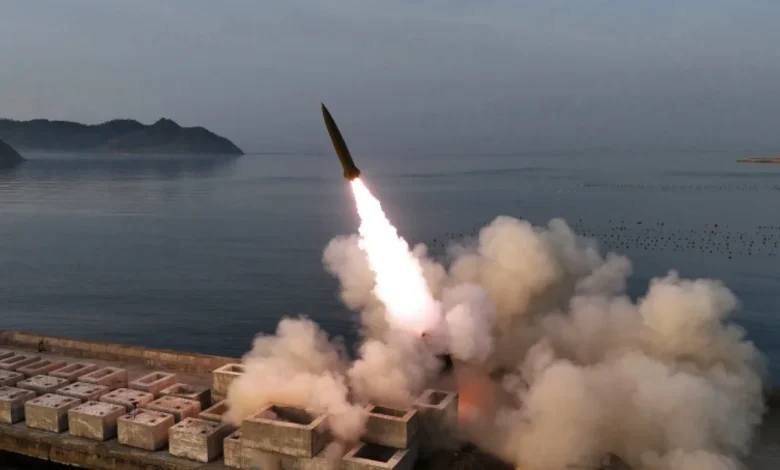
Hwasong-11 Ra ballistic missile tests executed by North Korea this week have fundamentally shifted the geopolitical and military balance across the Korean Peninsula, exposing severe vulnerabilities in traditional air defense networks. While global attention remains heavily fixated on the relatively quiet diplomatic negotiations occurring in the Middle East, Kim Jong Un has predictably seized the international spotlight to demonstrate unprecedented conventional warfare capabilities. The recent launch of the upgraded short-range ballistic missile (SRBM) into the Sea of Japan is not just another standard weapons demonstration; it represents a profound tactical evolution. By fitting the advanced missile with cluster munitions, Pyongyang has effectively neutralized the primary advantages of modern kinetic interception systems. This comprehensive analysis delves deep into the mechanics of this launch, the limitations of current South Korean air defense arrays, and the broader global security implications of an arms race transitioning toward uninterceptable area-denial weaponry.
Hwasong-11 Ra: The Dawn of a New Ballistic Threat
The introduction of cluster munitions to the existing missile framework signals a highly calculated escalation in North Korea’s military strategy. Historically, the isolated nation’s missile program focused on achieving maximum range and nuclear payload delivery capabilities to deter Western intervention. However, the latest modifications highlight a distinct shift toward maximizing conventional battlefield lethality. The Sea of Japan launch served as a public verification of this new capability, demonstrating not just the flight reliability of the solid-fueled projectile but the precise deployment mechanics of its submunitions. This test fundamentally alters the threat matrix for South Korean and allied forces stationed along the demilitarized zone. The primary danger no longer stems solely from the sheer explosive yield of a single centralized warhead, but from the systemic saturation of defensive radars and the subsequent widespread destruction of soft targets, runways, and radar installations critical to any coordinated counter-attack.
Understanding the Specifications of the Short-Range Ballistic Missile
To truly grasp the severity of this development, one must dissect the engineering marvels and terrifying capabilities embedded within the missile’s design. This system operates on advanced solid-fuel technology, which drastically reduces launch preparation times compared to older liquid-fueled variants. This rapid deployment capability means that allied early warning satellites and reconnaissance assets have mere minutes to detect a launch before the weapon breaches the atmosphere. With a suspected range capable of striking any strategic asset within the southern half of the peninsula, its trajectory is deliberately designed to fly at depressed altitudes. By maintaining a quasi-ballistic trajectory, the weapon actively evades the optimal tracking envelopes of high-altitude defense radars. When combined with the newly integrated payload of bomblets, the technical specifications present an almost insurmountable mathematical problem for defensive algorithms tasked with calculating intercept vectors in real-time.
The Cluster Munitions Advantage in Modern Warfare
Cluster munitions fundamentally rewrite the rules of offensive engagement by transforming a single delivery vehicle into a catastrophic area-of-effect weapon. Instead of relying on a singular point of impact, the primary warhead functions as a dispenser. At a pre-calculated altitude above the target zone, the outer casing of the missile breaches, utilizing a localized explosive charge to scatter hundreds, or potentially thousands, of smaller explosive bomblets across the landscape. This dispersion mechanism is meticulously engineered to maximize coverage and ensure that localized air defenses are completely overwhelmed by the sheer volume of incoming threats. According to detailed analyses by global defense organizations, including the Center for Strategic and International Studies, such capabilities dramatically alter the cost-to-kill ratios that modern defense architectures rely upon to maintain deterrence.
Blanket Coverage: Devastating an Area of 24 Football Fields
The statistical realities of the recent test highlight a terrifying operational capacity: a single launch can effectively blanket an area equivalent to 24 football fields. This equates to roughly 130,000 square meters of absolute devastation from a solitary projectile. In a practical military context, this level of blanket coverage is tailored for crippling large-scale military infrastructure. South Korean and American airbases, such as Osan and Kunsan, rely on exposed runways, parked aircraft, and vulnerable above-ground logistical hubs. A single successful penetration by this modified missile could render an entire airfield inoperable, destroying dozens of multimillion-dollar aircraft on the tarmac and eliminating the defending force’s ability to launch retaliatory sorties. The submunitions themselves can be mixed-use, incorporating anti-armor shaped charges, anti-personnel fragmentation, and incendiary elements to ensure maximum infrastructural degradation.
Why South Korea’s Air Defenses Are Fundamentally Vulnerable
South Korea has invested billions of dollars in establishing a multi-layered air and missile defense network designed to protect its populace and military assets. However, these systems were explicitly conceptualized and procured to counter traditional, unitary warhead threats. The fundamental architecture of these defense networks relies on identifying a singular incoming threat, calculating its predictable trajectory, and launching a highly sophisticated interceptor to collide with it in mid-air. When faced with a dispenser that unleashes a swarm of independent submunitions, the entire defensive paradigm collapses. The mathematical and physical limitations of tracking and engaging hundreds of distinct targets simultaneously expose a fatal flaw in the current security posture of the region.
THAAD and Patriot Systems: Designed for Single Targets
The backbone of the allied defense strategy relies on the Terminal High Altitude Area Defense (THAAD) system and the Patriot Advanced Capability-3 (PAC-3) Missile Segment Enhancement (MSE). Both systems are engineering masterpieces in their own right, utilizing hit-to-kill kinetic energy interceptors to obliterate targets through sheer force of impact rather than relying on proximity explosives. THAAD is designed to intercept threats at high altitudes during their terminal phase, while Patriot systems provide point defense at lower altitudes. However, both interceptors are strictly designed to engage single targets. The AN/TPY-2 radar associated with THAAD can track multiple objects, but the system simply does not possess the physical inventory of interceptors required to engage a dispersed cloud of bomblets. Firing a five-million-dollar interceptor at a single low-cost submunition is an economic and logistical impossibility that offensive strategists in Pyongyang have clearly recognized and exploited.
The Post-Deployment Interception Dilemma
The core tactical dilemma centers entirely on the moment of deployment. If allied defenses fail to destroy the ascending missile before the dispenser activates, all conventional defensive measures become instantly obsolete. This post-deployment interception impossibility heavily mirrors the tactical complexities witnessed during the recent Iranian missile barrage that struck Beersheba, where advanced defensive perimeters faced highly complex saturation strategies that successfully bypassed sophisticated tracking networks. Once the outer casing fractures and the submunitions achieve freefall, the defensive radars are immediately blinded by a phenomenon known as radar clutter. The defensive algorithms cannot prioritize which of the hundreds of descending objects pose the greatest threat, resulting in a system overload. Consequently, the bomblets rain down uncontested, fulfilling their devastating purpose without facing any further resistance from ground-based interceptors.
Geopolitical Ramifications of Kim Jong Un’s Satisfactory Test
Following the successful detonation and atmospheric dispersion of the payloads, North Korean state media reported that Supreme Leader Kim Jong Un expressed immense satisfaction with the results. This public endorsement is far more than routine propaganda; it is a direct message to Washington, Seoul, and Tokyo regarding the shifting dynamics of deterrence. While global diplomats evaluate the lasting effects of the comprehensive ceasefire in the Middle East, Pyongyang capitalized on the distracted intelligence apparatus to redefine the baseline of acceptable aggression in the Pacific. By openly displaying a weapon that directly bypasses American-designed defense networks, Kim is effectively diminishing the perceived security guarantee that the United States provides to its regional allies, thereby strengthening his negotiating leverage for any future diplomatic or economic discussions.
Comparative Analysis of Conventional and Cluster Missiles
| Tactical Metric | Traditional Unitary SRBM | Hwasong-11 Ra (Cluster Variant) |
|---|---|---|
| Primary Payload Structure | Single High-Explosive Warhead | Multi-Munition Dispenser |
| Target Area Damage | Point-specific impact zone | 24 Football Fields (Area Denial) |
| Interception Feasibility | High (Pre and Post Re-entry) | Impossible (Post-Deployment) |
| Strategic Objective | Hardened Bunkers / Specific Buildings | Airbases, Radar Arrays, Troop Concentrations |
| Defensive System Saturation | Low (1 Interceptor required per missile) | Extreme (Hundreds of targets generated) |
Reshaping the Global Security Architecture
The successful integration of these advanced mechanics into North Korea’s permanent arsenal fundamentally forces a reevaluation of modern military posturing. The sheer volume of potential damage aligns with the brutal realities of modernized conflicts, echoing the massive scale of destruction highlighted by the corrected figures revealing Russian war casualties, where area-of-effect artillery and conventional barrages dictated the pace of attrition. For South Korea, the strategic response cannot merely be the acquisition of more Patriot batteries. The immediate future requires a paradigm shift toward pre-emptive strike capabilities—often referred to as the Kill Chain strategy—aimed at destroying these specific launchers before they can fire. Additionally, immense funding must now be funneled into the accelerated development of directed energy weapons, such as high-energy lasers or advanced microwave emitters, which offer the only theoretical means of blinding or destroying massive swarms of submunitions cost-effectively.
Furthermore, such tactical pivots emphasize the importance of continuous military-industrial adaptation, a reality highly visible when rogue states prioritize rebuilding missiles amid tactical pauses to outpace defensive technologies. The strategic genius of the recent test in the Sea of Japan lies in its undeniable proof of concept. North Korea has definitively proven that it possesses the technological maturity to bypass billions of dollars in defensive investments using relatively cost-effective modifications. As long as Kim Jong Un retains the ability to reliably blanket vast swathes of critical South Korean infrastructure with uninterceptable explosives, the balance of power on the peninsula will remain precariously tilted in favor of offensive escalation. South Korea and its allies are now engaged in a race against time to develop countermeasures that can bridge this newly exposed, catastrophic vulnerability before diplomatic tensions inevitably flare once again.