Treasury buyback: U.S. Spends $15B in Record Debt Purchase
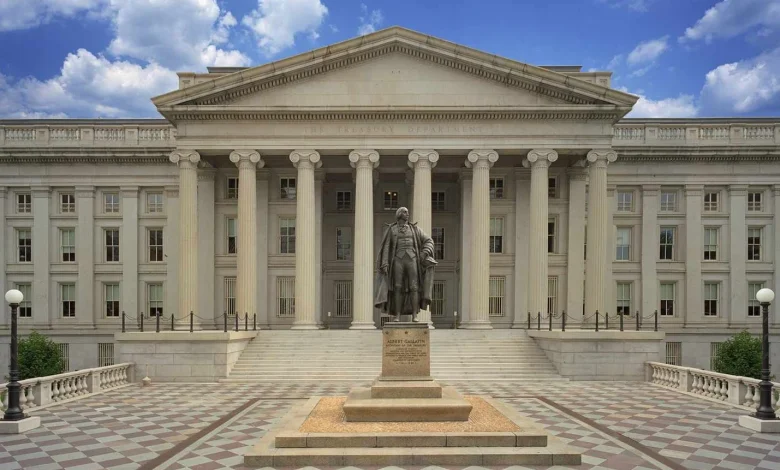
Treasury buyback activities reached an unprecedented scale today as the United States government repurchased a staggering $15 billion of its own debt in a single 24-hour period. This transaction represents the largest single-day buyback of outstanding government obligations in American financial history. While the Treasury Department has consistently maintained that these operations are merely routine cash management exercises designed to ensure market liquidity, the sheer magnitude of a $15 billion intervention demands intense scrutiny. In plain English, the government is essentially buying back loans it took out years ago, long before they are scheduled to mature. It sounds highly responsible on the surface—after all, retiring debt is generally viewed as a positive fiscal step. However, the underlying reasons for initiating such a massive repurchase matter immensely. When the Treasury buys back old debt, it forcefully pumps fresh cash into the financial system. Banks, institutional investors, and primary dealers who held that specific debt suddenly find themselves flush with billions of dollars to reinvest elsewhere. It is a highly effective method of injecting liquidity into a strained system without officially labeling it as quantitative easing. To comprehend why this is happening right now, we must look at the broader macroeconomic picture, shifting foreign relations, and the fragile state of global bond markets.
The Mechanics of a Treasury Buyback
To fully grasp the implications of this monumental event, it is crucial to understand the fundamental mechanics behind a government debt repurchase operation. Under normal circumstances, the U.S. Treasury issues securities—bonds, notes, and bills—to finance the national deficit and fund ongoing government operations. Investors purchase these securities, effectively lending money to the government in exchange for regular interest payments and the return of their principal upon maturity. A buyback, however, reverses this established process. Instead of issuing new debt, the Treasury enters the secondary market to purchase previously issued, outstanding bonds before their maturity dates arrive. This is typically executed through a reverse auction system via primary dealers. The government announces which specific maturities it wishes to buy, and dealers submit offers detailing the prices at which they are willing to sell those bonds back to the Treasury. By selecting the most competitive offers, the Treasury retires that specific tranche of debt.
Stealth Liquidity: Injecting Cash Without Calling It QE
The secondary effect of this process is what economists and market analysts are currently focusing on: liquidity injection. When the Treasury buys $15 billion worth of older, less frequently traded bonds (often referred to as ‘off-the-run’ treasuries), it simultaneously hands over $15 billion in highly liquid cash to the financial institutions that previously held those bonds. Those institutions are now actively looking for new places to deploy that capital. This dynamic behaves remarkably similarly to the Federal Reserve’s Quantitative Easing (QE) programs, where the central bank buys assets to flood the market with cash and drive down yields. By initiating a buyback of this size, the Treasury is effectively providing a massive liquidity backstop to a bond market that has shown signs of severe internal strain, all while avoiding the politically sensitive terminology associated with central bank bailouts or monetary stimulus.
Why Now? The Timing Behind the $15 Billion Move
The timing of this historic financial maneuver is arguably the most critical component of the story. Financial markets do not exist in a vacuum; they are highly reactive ecosystems that respond to domestic policy shifts, international relations, and overall investor sentiment. Executing the largest single-day buyback in history at this specific moment suggests a high level of urgency within the Treasury Department. Markets have been increasingly volatile over the past several quarters, and confidence in the unwavering stability of U.S. government debt has shown uncharacteristic signs of shakiness. A record buyback executed right now is either a display of impeccably proactive housekeeping or a glaring signal that structural vulnerabilities required immediate, overwhelming intervention.
Market Volatility and Investor Confidence
Volatility in the Treasury market is a severe concern for global financial stability. U.S. government debt serves as the foundational bedrock for global finance; it is the ultimate risk-free asset against which virtually all other financial instruments are priced. When the Treasury market experiences severe volatility, it sends violent shockwaves through equity markets, corporate bond yields, and mortgage rates. Recently, erratic macroeconomic data, fluctuating inflation reports, and aggressive monetary policy debates have caused unprecedented swings in bond yields. By stepping in as the buyer of last resort for $15 billion in off-the-run securities, the Treasury is attempting to smooth out these pricing anomalies and restore a baseline level of confidence among fixed-income investors who have grown weary of sudden, unpredictable drawdowns.
The Strategic Retreat of Foreign Buyers
Compounding the domestic volatility is the strategic behavior of international debt holders. Historically, foreign central banks, sovereign wealth funds, and international institutional investors have been the most reliable and voracious buyers of U.S. debt. However, detailed Treasury International Capital (TIC) data has revealed a quiet, sustained trend: foreign buyers have been systematically stepping back from U.S. treasuries. Countries seeking to diversify their foreign exchange reserves, reduce dependency on the U.S. dollar, or manage their own domestic economic crises are no longer rolling over their Treasury holdings at the same aggressive pace. This global retreat leaves a significant demand vacuum in the Treasury market. If foreign demand continues to wane, the U.S. government must find alternative ways to support the market for its own debt, making massive domestic buybacks a crucial, albeit controversial, tool in managing supply and demand dynamics.
Comparing Historical Debt Purchases
To contextualize the sheer scale of a $15 billion single-day buyback, it is necessary to compare it against historical Treasury operations. The practice of buying back debt is not entirely new, but the magnitude and the economic environment surrounding the current operation are entirely unprecedented.
| Year / Era | Buyback Operation Scale | Primary Stated Purpose | Macroeconomic Context |
|---|---|---|---|
| 2000 – 2001 | $30 Billion (Over several months) | Retiring debt using budget surplus | Dot-com boom, federal budget surplus, strong dollar |
| 2014 | Small-scale testing | System testing and infrastructure checks | Post-financial crisis recovery, zero interest rate policy |
| 2024 (Announced) | Up to $2 Billion per week | Market liquidity support for off-the-run bonds | Post-pandemic inflation battles, rising interest rates |
| 2026 (Current) | $15 Billion (Single Day Record) | ‘Routine’ liquidity management | Global trade wars, kinetic conflicts, foreign buyer retreat |
As the table illustrates, the buybacks executed at the turn of the millennium were funded by actual federal budget surpluses. The government simply had excess cash and used it to pay down the national debt. Today, the U.S. is operating with a multi-trillion-dollar annual deficit. Conducting a $15 billion buyback while simultaneously running massive deficits requires complex financial maneuvering and highlights the primary goal: managing market functionality rather than legitimately reducing the national debt burden.
Deconstructing the Routine Claim Amid Global Crises
Treasury officials have repeatedly characterized this $15 billion intervention as a ‘routine’ operation. In official press releases and financial briefings, the department insists that managing a national debt portfolio that exceeds $34 trillion naturally requires occasional large-scale transactions to retire illiquid securities and issue new, highly traded benchmark bonds. For further information on official strategies, one can review the U.S. Department of the Treasury financing policies. However, labeling a record-shattering $15 billion single-day injection as routine stretches the definition of the word, especially when viewed against the backdrop of current global crises.
Trade Wars, Shooting Wars, and Bond Markets
The global geopolitical landscape is currently defined by intersecting crises that directly impact sovereign debt markets. We are witnessing aggressive, multi-front economic hostilities. For instance, as supply chains are weaponized, we see unprecedented moves such as escalating trade disputes with key partners altering the flow of capital across borders. A trade war fundamentally alters inflation expectations and currency valuations, both of which dictate Treasury yields. Simultaneously, the escalation of actual kinetic conflicts—shooting wars—demands massive defense expenditures and creates global risk-off environments where capital flees to safety. When the natural safe-haven demand for U.S. Treasuries is disrupted by inflation fears or foreign policy realignments, the Treasury must artificially manufacture that stability through large-scale buybacks.
Geopolitical Pressures on U.S. Treasuries
The interconnectedness of maritime security, global energy supplies, and U.S. debt markets cannot be overstated. Tensions in critical global chokepoints directly influence domestic economic policy. Recent total trade halt threats have panicked global logistics networks, forcing institutional investors to rapidly reassess their risk exposure. When international trade faces existential threats, the velocity of money slows, and the Treasury must ensure that its own debt markets remain highly liquid and functional to prevent a broader domestic credit freeze. Furthermore, energy shocks, such as oil prices exposing market gaps, apply intense upward pressure on inflation. If inflation rises, bond yields typically rise with it, crashing the value of older debt. A $15 billion buyback helps absorb the older, devalued debt from the balance sheets of vulnerable financial institutions.
Broad Economic Implications for the Financial Ecosystem
Beyond the abstract world of high finance and primary dealers, a $15 billion liquidity injection carries profound implications for the broader economy. For commercial banks, offloading stagnant, low-yield government debt in exchange for instant cash dramatically improves their balance sheets. This newly acquired liquidity can, theoretically, be deployed into the real economy via corporate loans, consumer credit, and mortgage lending. By freeing up this capital, the Treasury is indirectly attempting to stimulate economic activity or, at the very least, prevent a systemic credit contraction during a period of intense global uncertainty. However, the domestic political environment complicates this strategy. With domestic coalition fractures severely limiting the ability to pass cohesive fiscal stimulus packages through Congress, the Treasury and the Federal Reserve are increasingly forced to rely on complex, obscure market mechanisms like debt buybacks to maintain economic momentum.
Inflation Risks and Cash Flow
The most immediate and dangerous risk associated with this strategy is the potential exacerbation of inflation. Whenever massive amounts of liquidity are injected into the financial system, the risk of asset price inflation and consumer price inflation rises proportionately. If the $15 billion simply sits in bank reserves, the inflationary impact may be muted. However, if that capital aggressively hunts for higher yields in equities, real estate, or speculative corporate debt, it can create dangerous asset bubbles. Furthermore, if the broader public perceives these buybacks as a stealth form of money printing—a way to monetize the debt by stealth—it could severely damage long-term confidence in the purchasing power of the U.S. dollar.
Future Outlook: Will Debt Repurchases Continue to Escalate?
Looking to the immediate future, the most pressing question for economists, institutional investors, and policymakers is whether this record-breaking $15 billion operation is a localized anomaly or the inaugural move of a sustained, aggressive new debt management paradigm. If foreign central banks continue their quiet divestment from U.S. assets, and if global conflicts continue to disrupt the natural flow of international capital, the U.S. Treasury may find itself permanently entrenched as the primary market maker for its own debt. This scenario would require increasingly frequent and larger buybacks to prevent yield curve inversions and market illiquidity. Ultimately, while the Treasury may continue to label these massive interventions as routine housekeeping, the undeniable reality is that a $15 billion single-day buyback is a defensive maneuver. It is a clear reflection of a financial system operating under immense strain, navigating the treacherous waters of geopolitical conflict, shifting global alliances, and unprecedented market volatility.