Amal Khalil Death: Israeli Intelligence Link to Fatal Strike
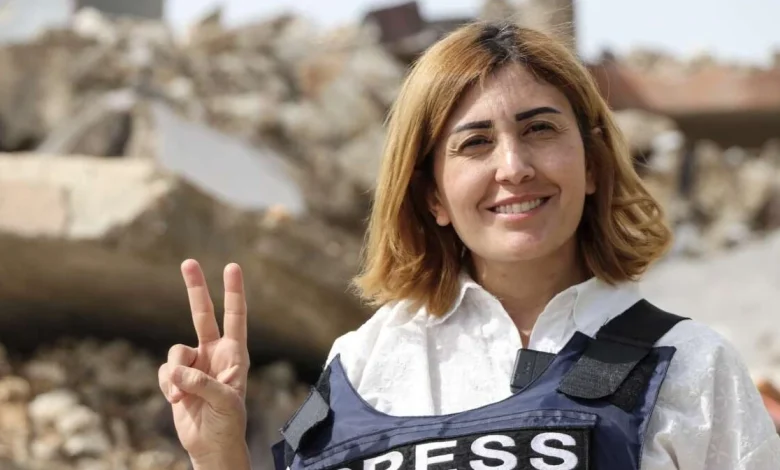
Amal Khalil spent fifteen years meticulously documenting the devastating reality of wars in southern Lebanon, only to be killed yesterday in a targeted Israeli airstrike. The assassination of the veteran Lebanese journalist has sent shockwaves through the international press community, not merely because of her tragic death, but due to the chilling premeditation that preceded it. In 2024, Khalil received explicit death threats from an individual who warned her to leave the country “if you want to keep your head on your shoulders.” Following her death in the recent strike, a fellow reporter reached out to the very same phone number that had issued the threat. The response was a horrifying justification of her murder: “These are not innocent people. Send greetings to all journalists affiliated with Hezbollah, for anyone who works for the organization should know that they are destined for death.” The individual behind the number described himself as a retired Israeli military officer who continues to actively assist Israeli intelligence. This deep-dive investigation explores the life of the courageous reporter, the systematic intimidation of journalists in conflict zones, and the profound geopolitical implications of this targeted killing.
The Life and Legacy of a Fearless War Correspondent
For more than a decade and a half, the name of this dedicated reporter was synonymous with front-line journalism in the turbulent region of southern Lebanon. Her dispatches brought the harsh realities of cross-border conflict, internal displacement, and civilian suffering to a global audience. Working in an environment where the line between combatant and civilian is tragically often blurred by advanced military operations, she stood as a pillar of journalistic integrity. Her reporting was characterized by an unflinching commitment to truth-telling, often placing her in the direct line of fire during periods of intense geopolitical escalation.
Throughout her career, she documented the cyclical nature of violence that has plagued the Levantine border. From minor skirmishes to full-scale military offensives, her camera and pen recorded the human cost of the conflict. However, this relentless pursuit of the truth inevitably made her a target. Investigative journalism in an active war zone is inherently dangerous, but the risks are exponentially magnified when state-aligned intelligence apparatuses begin actively monitoring and threatening members of the press. Her death highlights the extreme vulnerability of journalists who refuse to self-censor in the face of overwhelming state pressure and militarized intimidation.
The 2024 Death Threats: Forewarning of a Tragic Assassination
The tragedy of her assassination cannot be viewed as an isolated incident of collateral damage. It is the culmination of a documented campaign of psychological warfare and intimidation.
The Menacing Text Messages
In 2024, the journalist’s phone began receiving highly specific and deeply disturbing messages. The most notable threat explicitly warned her to flee Lebanon entirely. The phrase “if you want to keep your head on your shoulders” was not a vague political critique; it was a visceral, highly personalized death threat designed to paralyze her operations. These messages were meticulously logged and reported, serving as a grim testament to the fact that her movements and communications were under sophisticated surveillance. The psychological toll of living under such a dark cloud cannot be overstated, yet she courageously chose to remain at her post, continuing her vital work in southern Lebanon.
A Retired Israeli Military Officer Steps Out of the Shadows
The origin of these threats was traced back to a number operated by a man who openly identified himself as a retired Israeli military officer. Crucially, this individual claimed to still be providing “help” to Israeli intelligence networks. This admission blurs the lines between official state action and rogue, state-sanctioned vigilantism. The phenomenon of “retired” intelligence operatives engaging in extrajudicial intimidation tactics is a known strategy in modern asymmetrical warfare. It allows state actors to maintain a degree of plausible deniability while effectively terrorizing adversaries and critical observers. By using former military personnel to issue threats, the intelligence apparatus can distance itself from direct culpability while achieving the desired chilling effect on press freedom.
The Fatal Strike in Southern Lebanon
The realization of these threats manifested in a devastating airstrike yesterday, extinguishing the life of a reporter who had spent her career exposing the horrors of war.
Details of the Targeted Airstrike
The precise details of the strike indicate a highly coordinated military operation. The airstrike struck her location in southern Lebanon with pinpoint accuracy, a hallmark of advanced precision-guided munitions utilized by the Israeli Defense Forces (IDF). Such strikes rely on extensive intelligence gathering, signal tracking, and real-time surveillance. The fact that her exact coordinates were targeted raises profound questions about the categorization of journalists as military targets. The deliberate nature of the attack points to a calculated decision to silence a critical voice, demonstrating a terrifying weaponization of intelligence data against the press.
Civilian Casualties and Rules of Engagement
The theater of war in southern Lebanon is complex, with civilian infrastructure often overlapping with alleged military installations. To understand the broader context of the region’s defense mechanisms and internal political dynamics, one must look at ongoing discussions regarding national security. For instance, recent developments highlight Lebanon’s southern strategy and pledges concerning the army’s role. Despite the presence of armed groups, international humanitarian law firmly dictates that journalists must be treated as civilians. The strike that claimed her life blatantly disregarded these foundational rules of engagement, utilizing overwhelming lethal force in an area populated by non-combatants and press members.
Post-Assassination Justification: Chilling Admissions
Perhaps the most disturbing element of this assassination is the unabashed justification offered in its immediate aftermath.
Contacting the Perpetrator’s Number
Following the confirmation of her death, a courageous colleague dialed the exact number from which the 2024 death threats had originated. The response received was not a denial or a deflection, but a brazen confirmation of intent. The individual at the other end stated unequivocally, “These are not innocent people.” This stark declaration is a harrowing window into the mindset of those who authorize and execute such strikes. It reveals a deliberate reclassification of journalists from protected civilian observers to legitimate military targets based entirely on their geographic location and the subjects they report on.
Hezbollah Affiliation Accusations
The justification continued with a sweeping, dangerous generalization: “Send greetings to all journalists affiliated with Hezbollah, for anyone who works for the organization should know that they are destined for death.” This rhetoric is frequently deployed to strip individuals of their civilian protections under the Geneva Conventions. By arbitrarily labeling reporters as “affiliated with an organization,” the perpetrators attempt to construct a legal loophole for extrajudicial killings. Amal Khalil, like many regional journalists, interviewed and reported on all factions involved in the conflict, a core requirement of objective journalism. Conflating the act of reporting on an organization with being an operative of that organization is a fatal distortion of facts used to sanitize targeted assassinations.
Data Table: Timeline of Intimidation and Attacks
| Date / Period | Event Description | Key Details |
|---|---|---|
| 2009 – 2024 | Extensive War Reporting | Documented 15 years of conflict, displacement, and civilian impact in southern Lebanon. |
| Early 2024 | Initial Surveillance and Intimidation | Reports of digital tracking and anonymous warnings directed at the journalist’s communications. |
| Mid 2024 | Explicit Death Threat Received | Text message from an Israeli number warning her to leave “if you want to keep your head on your shoulders.” |
| Yesterday | Fatal Airstrike in Southern Lebanon | Precision Israeli strike hits her location, resulting in immediate death. |
| Post-Strike | Reporter Contacts Threat Number | Retired intelligence officer justifies the killing, citing alleged “affiliation” and issuing broader threats to the press. |
International Outcry and the Erosion of Press Freedom
The deliberate targeting of a known, veteran journalist has ignited a firestorm of international condemnation and brought the precarious state of global press freedom into sharp relief.
Protections Under International Law
Under Article 79 of Additional Protocol I to the Geneva Conventions, journalists engaged in dangerous professional missions in areas of armed conflict are strictly protected as civilians. The deliberate targeting of a journalist, provided they take no direct part in hostilities, constitutes a severe breach of international humanitarian law and amounts to a war crime. The Committee to Protect Journalists (CPJ) and other watchdog organizations have repeatedly warned against the escalating trend of utilizing military assets to silence reporters. The brazen admission by the retired operative highlights a systemic failure to adhere to these internationally recognized legal boundaries, fostering an environment of total impunity.
The Broader Targeting of Journalists in the Middle East
This tragic event is symptomatic of a much larger, darker trend sweeping across the Middle East, where institutional targeting has become alarmingly normalized. Various state and non-state actors frequently expand their lists of legitimate targets to include critics, academics, and the press. We can see reflections of this expanding target matrix in other regional declarations, such as when the IRGC declared certain universities as targets amidst the broader crisis. When the definitions of military targets are stretched to encompass educational institutions and the free press, the fundamental pillars of civil society begin to crumble. The death of this reporter serves as a grim milestone in this accelerating erosion of democratic norms and human rights.
Regional Escalation: Southern Lebanon Under Fire
The assassination occurs against a backdrop of severe regional escalation. Southern Lebanon has transformed into a high-intensity conflict zone, with daily exchanges of artillery and aerial bombardments. The diplomatic avenues to halt the violence appear increasingly blocked. Reflecting this diplomatic stalemate, Lebanon’s refusal of direct talks underscores the deep entrenchment of hostilities. In this highly polarized and volatile environment, journalists serve as the only reliable witnesses to the unfolding humanitarian disaster. By systematically eliminating these witnesses through targeted strikes and psychological terror, military forces seek to control the narrative and operate without the burden of international oversight.
Seeking Justice and Accountability
The legacy of this fearless reporter demands more than just commemorative words; it demands robust international action and accountability. The fact that the perpetrator felt secure enough to openly justify a war crime over a telephone line speaks volumes about the current state of international justice. The global community, human rights tribunals, and press advocacy groups must push for independent, transparent investigations into the chain of command that authorized the fatal strike. Furthermore, the role of retired military intelligence operatives operating as semi-autonomous agents of terror must be scrutinized and curtailed. Amal Khalil devoted fifteen years of her life to ensuring that the stories of the marginalized and the victims of war were not buried in the rubble. It is now the responsibility of the international community to ensure that the truth behind her targeted assassination is dragged into the light, and that the perpetrators are ultimately held responsible for silencing a vital voice of truth in southern Lebanon.