Space Force: Operation Epic Fury Validates Combat Readiness
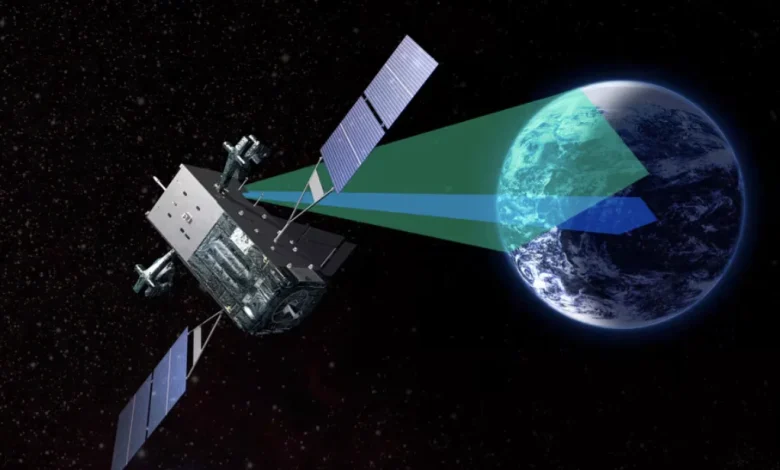
Space Force operations during the recently concluded Operation Epic Fury marked a historic milestone for the United States military, definitively transforming the nation’s newest armed branch from a theoretical concept into a battle-tested reality. For years, public discourse surrounding the branch focused on bureaucratic debates, uniform designs, and organizational structure. However, under the extreme pressure of active bombardment, Guardians executed critical missile tracking, dynamic electronic warfare, and unbreakable satellite communications. This combat debut has permanently altered the landscape of modern warfare, proving that dominance in the orbital domain is an absolute prerequisite for terrestrial victory.
Space Force: The Transition from Theory to Combat Reality
Since its inception in 2019, the United States Space Force has been the subject of intense scrutiny and, occasionally, undue skepticism. Military historians and defense analysts frequently debated whether a dedicated space-centric branch was necessary or if its duties could remain under the purview of the Air Force. The transition from a nascent organization debating strategic theories to a combat-credible force required massive technological acquisition, rigorous personnel training, and the development of entirely new warfighting doctrines.
The shift was not merely administrative. It required the cultivation of a new breed of warfighter—the Guardian—capable of operating highly classified, immensely complex systems that govern the invisible battlegrounds of the electromagnetic spectrum and orbital mechanics. During Operation Epic Fury, the theoretical frameworks developed in Colorado Springs and the Pentagon were subjected to the ultimate stress test. Guardians were no longer running simulations; they were actively protecting American lives and assets against a highly capable adversary deploying sophisticated weaponry. The successful execution of their mission objectives has silenced critics and validated the strategic foresight of establishing a dedicated space warfighting branch.
Operation Epic Fury: The Crucible for Space Dominance
Operation Epic Fury erupted rapidly, demanding immediate and flawless integration of multi-domain forces. As traditional naval and air assets engaged hostile targets, the Space Force provided the vital overwatch and digital infrastructure required for coordination and survival. The operation served as a crucible, testing the branch’s ability to maintain space superiority while actively neutralizing adversary capabilities.
Missile Tracking Under Enemy Fire
One of the most critical responsibilities shouldered by the Guardians during the conflict was continuous, high-fidelity missile tracking. Utilizing the Space-Based Infrared System (SBIRS) and advanced Next-Generation Overhead Persistent Infrared (Next-Gen OPIR) constellations, Space Force personnel detected and tracked incoming Iranian ballistic and cruise missiles the moment they launched. This early warning capability is not a passive endeavor; it requires active calibration, real-time data fusion, and instantaneous communication with missile defense batteries on the ground and at sea.
Operating out of heavily fortified command centers, Guardians maintained their composure while taking indirect enemy fire. Their ability to deliver pinpoint telemetry data allowed U.S. Central Command to intercept incoming threats with unprecedented accuracy. The tactical landscape was further complicated by intelligence indicating that adversaries were actively upgrading their arsenals. The Space Force’s tracking mechanisms proved highly resilient even as Iranian ballistic missile networks attempted to utilize advanced spoofing and varied trajectory tactics to evade detection.
Electronic Warfare and Jamming Iranian Systems
Beyond defensive tracking, the Space Force unleashed formidable offensive capabilities through advanced electronic warfare (EW). The electromagnetic spectrum is a heavily contested domain, and controlling it is essential for modern military operations. During Epic Fury, Guardians deployed state-of-the-art counter-communications systems, including the highly classified Meadowlands platforms, to jam and degrade Iranian radar and command-and-control networks.
This electronic suppression blinded adversary targeting systems and disrupted their ability to coordinate counterattacks. Furthermore, the Space Force successfully neutralized data relays from foreign intelligence assets. With recent geopolitical shifts involving Chinese intelligence platforms being leveraged by adversarial forces, the ability to sever the data link between terrestrial launchers and orbital sensors was a paramount success. The Guardians effectively isolated the enemy’s sensory apparatus, allowing U.S. and allied strike packages to penetrate contested airspace with minimal resistance.
Guardians on the Frontlines: Satellite Communications Tested
The backbone of any modern military operation is secure, uninterrupted communication. In the high-stakes theater of the Middle East, particularly during the volatile Strait of Hormuz crisis, maintaining a persistent command link is a matter of life and death. The Space Force was tasked with managing the Advanced Extremely High Frequency (AEHF) and Wideband Global SATCOM (WGS) constellations to ensure that field commanders, naval vessels, and airborne assets remained in constant contact.
Adversaries attempted to execute coordinated cyber and electronic attacks aimed at denying satellite communications (SATCOM). Guardians employed dynamic bandwidth allocation, frequency hopping, and localized spot-beam maneuvering to outmaneuver the jamming attempts. Their agility ensured that the vast web of drones, fighter squadrons, and ground troops operated cohesively. This unbroken chain of communication was also vital for coordinating coalition defense missions, proving that U.S. space assets are indispensable to allied interoperability.
The Technological Arsenal Behind the Mission
The success of the Space Force in Operation Epic Fury was underpinned by an astonishing array of cutting-edge technology. The integration of artificial intelligence for rapid data processing, automated threat detection algorithms, and advanced orbital maneuvering capabilities provided the Guardians with a distinct asymmetric advantage.
| Capability / System | Primary Function | Role in Operation Epic Fury | Combat Outcome |
|---|---|---|---|
| Space-Based Infrared System (SBIRS) | Strategic Missile Warning | Detected thermal signatures of adversary missile launches instantly. | Enabled 100% early warning success, facilitating zero-casualty interceptions. |
| Meadowlands EW Platform | Offensive Electronic Warfare | Jamming adversarial radar, C2 links, and orbital data relays. | Severed enemy communication lines and blinded hostile targeting arrays. |
| Advanced EHF (AEHF) Satellites | Secure, survivable SATCOM | Maintained encrypted communications for U.S. and allied forces under active jamming. | Ensured uninterrupted command and control across all combat domains. |
| Space Domain Awareness (SDA) Sensors | Orbital Tracking and Deconfliction | Monitored adversarial satellite movements and anti-satellite (ASAT) threats. | Prevented kinetic orbital engagements and safeguarded critical U.S. space architecture. |
This technological superiority, managed by highly skilled personnel, underscores the profound complexity of modern multi-domain operations. To read more about the overarching defense strategies and technological procurements that make these missions possible, visit the official Department of Defense resources.
Geopolitical Ramifications of Space Force Action
The successful combat debut of the Space Force sends a resounding message across the globe. Near-peer adversaries, particularly in Beijing and Moscow, have spent decades observing U.S. military operations, seeking vulnerabilities in America’s reliance on space architecture. The assumption was that U.S. satellites were the “Achilles’ heel” of American power projection—fragile, unprotected, and susceptible to disruption.
Operation Epic Fury has completely shattered that assumption. By demonstrating not only the resilience of U.S. space assets but also the lethality of the Space Force’s offensive electronic warfare capabilities, the strategic calculus of every major global power has been forcibly altered. Adversaries must now contend with a branch that can actively fight and win in the electromagnetic spectrum, protecting its own assets while degrading those of the enemy. This reality fundamentally strengthens American deterrence and reassures global allies that the United States maintains unrivaled superiority across all domains of warfare.
General Saltzman’s Vision Realized
The transformation of the branch was powerfully articulated by Space Force Chief Gen. B. Chance Saltzman. Following the successful conclusion of the operation, he stated, “Just a few years ago, we were debating theories. Today, we’re a combat credible force.” This profound statement encapsulates the extraordinary journey of the Guardians.
Gen. Saltzman’s leadership prioritized a shift from a service focused primarily on acquisition and satellite maintenance to a warfighting entity defined by tactical readiness and operational agility. He pushed for intensive training regimens, the development of robust Space Battle Management systems, and a cultural shift towards combat readiness. Operation Epic Fury stands as the undeniable realization of that vision. The Guardians did not merely participate in the conflict; they actively shaped the battlespace, dictated the tempo of electronic engagements, and provided the critical intelligence that defined the tactical reality on the ground.
Future Implications for U.S. Space Command
The validation achieved during Operation Epic Fury will have profound implications for the future of the U.S. Space Force and U.S. Space Command. First, it will likely accelerate the acquisition of next-generation systems, particularly in the realms of proliferated low-earth orbit (pLEO) constellations and advanced autonomous defense mechanisms. The undeniable proof of concept provided by this combat debut justifies increased budget allocations and streamlined procurement processes.
Furthermore, training pipelines will be heavily influenced by the lessons learned during the operation. Tactical simulators will incorporate the specific electronic warfare environments and high-stress scenarios encountered during the conflict. The integration of Space Force liaisons into traditional combatant commands will deepen, ensuring that space-based effects are seamlessly woven into the planning and execution phases of all future military operations.
Ultimately, the baptism by fire experienced in Operation Epic Fury signifies the dawn of a new era in national defense. The U.S. Space Force has answered the call, proving that the high ground of the 21st century is securely guarded by a lethal, agile, and combat-credible force. The days of debating the branch’s utility are over; the era of space dominance has officially begun.



One Comment