Lebanon Partition Plan Leaked: Israel Demands Three Zones
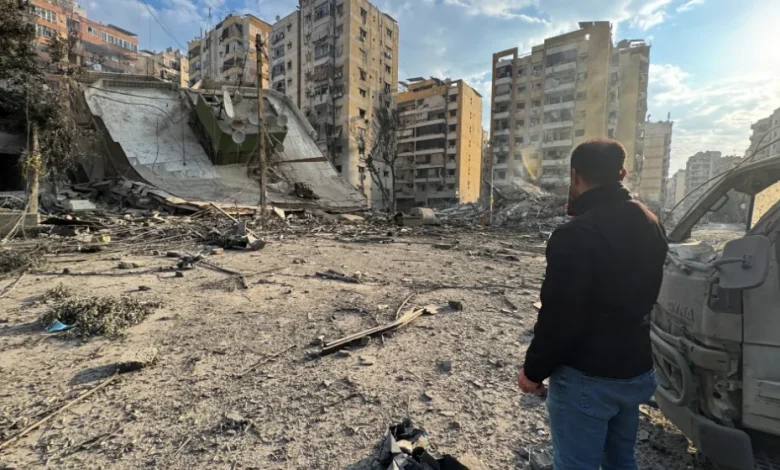
Lebanon stands at the precipice of a radical territorial reconfiguration as recently leaked diplomatic documents reveal a sweeping Israeli partition plan that could fundamentally alter the geopolitical landscape of the Middle East. Diplomatic sources, speaking to the news outlet Al-Modon, have unveiled a highly controversial blueprint outlining Israel’s rigid conditions for a cessation of hostilities. These conditions effectively divide the sovereign nation into three distinct military zones, imposing draconian mandates that threaten to plunge the country into an indefinite state of occupation and internal strife. This unprecedented framework is not merely a border adjustment; it represents a comprehensive overhaul of national sovereignty, placing impossible burdens on the state’s fragile military institutions while fundamentally contradicting international diplomatic narratives regarding the nature of the conflict. The sheer magnitude of these demands indicates a shift from defensive posturing to aggressive territorial acquisition, fundamentally reshaping the diplomatic reality on the ground.
Lebanon Partition Plan: The Diplomatic Leak That Shook the Middle East
Lebanon is no stranger to conflict, but the scope of the leaked demands represents an escalation that has sent shockwaves through international diplomatic circles. According to the Al-Modon report, the Israeli strategy does not simply seek a temporary ceasefire or a return to the parameters established by United Nations Security Council Resolution 1701. Instead, it mandates a permanent architectural change to the region’s geography. The plan outlines a tiered system of control, incrementally increasing the pressure from the southern border all the way to the northern reaches of the nation. By demanding permanent buffer zones and indefinite military operational freedom, the blueprint systematically strips the central government in Beirut of its sovereign rights. Observers note that these leaks arrive at a critical juncture, effectively signaling that the military establishment in Tel Aviv is preparing for an entrenched, long-term physical presence rather than a rapid tactical withdrawal. The psychological and diplomatic impact of this leak cannot be overstated, as it transitions the dialogue from border security to outright territorial partition, presenting an existential threat to the state apparatus.
Lebanon’s Proposed Zone 1: The Permanent Buffer Strip
Lebanon would face its most immediate and permanent territorial loss in what the leaked plan designates as Zone 1. This area comprises an eight-kilometer deep buffer strip extending directly from the southern border inward. According to the diplomatic sources, Israel intends for this zone to be a permanent, sterile military sector. The most devastating stipulation associated with Zone 1 is the explicit prohibition against the return of displaced civilians. Entire communities, villages, and agricultural lands that have been inhabited for centuries would be forcibly depopulated and annexed into a permanent no-man’s-land. This condition violates numerous international humanitarian laws regarding the right of return for civilians displaced by conflict and represents a demographic engineering effort designed to create a physical void between Israeli settlements and any potential threats. The permanence of this buffer strip fundamentally alters the recognized borders, creating an occupied territory that operates entirely under foreign military jurisdiction without any pretense of eventual handover, thereby rewriting the maps of the Levant through unilateral force.
Lebanon’s Proposed Zone 2: Military Operations South of the Litani River
Lebanon faces further systematic subjugation in Zone 2, which encompasses all territory south of the strategically vital Litani River. Under the leaked blueprint, this vast geographic expanse would be transformed into an active, indefinite military operations area. Israel’s stated objective in this sector is the total dismantlement of Hezbollah’s infrastructure and the complete disarmament of its operatives. However, the critical caveat is the timeline: Israeli forces would retain the unilateral right to occupy and conduct kinetic operations in this zone until they alone decide their objectives have been achieved. There are no measurable metrics, no international oversight mechanisms, and no United Nations peacekeeping mandates dictating the end of this occupation. This grants an occupying army carte blanche to conduct indefinite sweeps, detentions, and structural demolitions. The open-ended nature of Zone 2 means that southern communities not trapped in the permanent buffer of Zone 1 will still live under continuous martial law, subject to the whims of a foreign military apparatus that defines its own success criteria, guaranteeing decades of civil unrest and instability.
Lebanon’s Proposed Zone 3: The Northern Mandate for Disarmament
Lebanon experiences perhaps the most politically destabilizing demand in Zone 3, which covers all territory north of the Litani River, encompassing the capital, Beirut, and the rest of the nation. For this zone, the Israeli plan dictates that the Lebanese Armed Forces (LAF) must independently execute the complete disarmament and dismantling of Hezbollah. The enforcing mechanism for this demand is a severe geopolitical hostage situation: Israel categorically refuses to withdraw its forces from the southern zones until the central government in Beirut definitively proves it has eradicated the armed faction in the north. This effectively places the burden of a monumental, practically unachievable military campaign squarely on the shoulders of an underfunded and politically constrained national army. By tying the liberation of the south to an internal purge in the north, the leaked conditions guarantee continuous leverage over the entirety of the state, holding national sovereignty hostage to an impossible set of domestic security parameters engineered to foster perpetual internal conflict.
| Lebanese Zone | Geographic Boundary | Israeli Operational Demand | Duration of Control |
|---|---|---|---|
| Zone 1 | Southern Border up to 8km Inland | Complete civilian depopulation and sterile military buffer | Permanent (No civilian return allowed) |
| Zone 2 | From 8km line up to the Litani River | Unrestricted military operations to dismantle infrastructure | Indefinite (Until Israel decides completion) |
| Zone 3 | North of the Litani River to Northern Borders | Mandatory disarmament by the Lebanese Armed Forces | Contingent (Tied to successful eradication of factions) |
Lebanon and the Impossible Task: Dismantling a 40-Year Power Base
Lebanon is fundamentally incapable of meeting the demands placed upon it in Zone 3, a reality that makes the leaked partition plan a blueprint for perpetual conflict rather than peace. To demand that the national military dismantle Hezbollah is akin to demanding a patient perform open-heart surgery on themselves without anesthesia. Hezbollah is not merely an isolated militia operating on the fringes of the state; it is a deeply entrenched socio-political movement that has been woven into the fabric of Lebanese society for over forty years. It operates massive social services networks, runs hospitals, maintains a formidable political bloc in the national parliament, and commands the loyalty of a significant portion of the country’s demographic. Attempting to forcefully disarm such a heavily armed and politically integrated entity would instantly trigger a catastrophic civil war, pitting various sectarian and political factions against one another in a bloodbath that would entirely collapse the state structure. The architects of these demands are likely well aware of this impossibility, suggesting that the condition is purposefully designed to be unfulfillable.
Lebanon’s Armed Forces Versus Hezbollah’s Military Might
Lebanon possesses a national army that is respected as one of the few unifying institutions within the deeply sectarian country, yet it is starkly outmatched by the very faction it is supposedly tasked to dismantle. The Lebanese Armed Forces suffer from chronic underfunding, a lack of advanced weaponry, and severe limitations imposed by international aid providers who restrict the types of offensive capabilities the LAF can acquire. In stark contrast, Hezbollah boasts an arsenal of advanced precision-guided munitions, extensive subterranean logistical networks, and tens of thousands of highly trained, battle-hardened fighters who have gained extensive combat experience in regional theaters. To thrust the LAF into a direct conventional war against this embedded socio-political and military organization would lead to the immediate fracture of the army along sectarian lines. Many soldiers would simply refuse to fire on their own communities, leading to mass desertions and the complete dissolution of the military apparatus. Consequently, making the withdrawal of foreign troops contingent upon this impossible internal war is a strategic maneuver ensuring that the occupation of the south remains a permanent fixture of the regional map.
Lebanon on the Agenda: Rubio Hosts Unprecedented Washington Summit
Lebanon took center stage in Washington, D.C., as United States Senator Marco Rubio hosted the ambassadors from both the Israeli and Lebanese delegations. This meeting is highly significant, representing the most direct, high-level diplomatic engagement between representatives of the two nations since the pivotal negotiations of 1993. The gravity of the moment cannot be ignored, as these extreme partition conditions represent the exact framework the Israeli delegation is walking into the room with. Senator Rubio’s involvement highlights the intense focus of American foreign policy on the escalating crisis, attempting to navigate the treacherous waters of Middle Eastern diplomacy amidst unprecedented demands. However, hosting these delegates under the shadow of a leaked plan that demands the effective vivisection of a sovereign state sets an extraordinarily tense tone. The diplomatic posturing in Washington contrasts sharply with the harsh military realities being proposed on the ground, creating a high-stakes environment where the very existence of a unified Lebanese state is being actively negotiated behind closed doors in the halls of the American capital.
Lebanon at the Negotiating Table: Historical Context Since 1993
Lebanon and its southern neighbor have a fraught history of diplomatic engagements, making the current Washington summit a historical anomaly that demands intense scrutiny. Not since 1993, during the era of broader Middle Eastern peace processes and the aftermath of the devastating civil war, have high-level representatives engaged so directly under American auspices. Historically, negotiations have been indirectly mediated through third parties like the United Nations or European envoys due to the complete lack of formalized relations. The direct nature of this contemporary summit underscores the unprecedented severity of the current crisis. However, the historical context also serves as a grim reminder of past failures. Previous attempts to forge lasting peace or even stable armistices have repeatedly collapsed under the weight of irreconcilable security demands and internal Lebanese political paralysis. Entering these rare direct talks with a maximalist partition plan indicates a radical departure from traditional diplomatic compromise, pivoting instead toward a dictatorial imposition of terms leveraging overwhelming military superiority and threatening the erasure of historical diplomatic progress.
Lebanon Crisis Framing: The State Department’s Contradiction
Lebanon finds itself caught in a dizzying paradox constructed by the official narratives of the United States State Department. Throughout the escalating conflict, American officials have meticulously maintained the framing that Israel is at war with Hezbollah, not Lebanon as a sovereign nation. This carefully crafted diplomatic rhetoric is designed to preserve the legitimacy of the central government in Beirut, maintain international financial support for the state, and avoid the geopolitical fallout of an outright invasion of a sovereign United Nations member state. However, the leaked three-zone partition plan absolutely shatters this narrative beyond any recognizable repair. It is logically and physically impossible to reconcile the statement that one is not at war with a country while simultaneously planning to indefinitely occupy a third of its internationally recognized territory. The permanent annexation of an 8-kilometer buffer, the martial law imposed over the Litani region, and the holding of the state’s sovereignty hostage to an impossible internal mandate are actions fundamentally directed against the state itself. The contradiction exposes a massive rift between American diplomatic messaging and the actual strategic realities being executed on the ground.
Lebanon’s Sovereignty vs. Israel’s Security Demands
Lebanon cannot survive as a sovereign, functioning entity if the current security demands are actualized into permanent geopolitical realities. The clash between the inherent right of a nation to govern its own territory and the aggressive security posture of its neighbor has reached a terminal breaking point. The partition plan does not seek to bolster Lebanese sovereignty to naturally counter non-state actors; rather, it actively degrades the state’s sovereignty by imposing external military dominion over its borders and internal security apparatus. By dictating the operational parameters of the national army and permanently seizing fertile border lands, the demands treat the country not as a neighboring state, but as a hostile territorial expanse to be managed, divided, and subdued. This framework completely bypasses the foundational principles of international relations, effectively reducing a historically rich and complex nation into a series of subjugated military security sectors. The international community’s muted response to this blatant violation of sovereign rights will set a dangerous precedent for how powerful militaries can unilaterally redraw borders under the guise of preemptive defense, dismantling the post-World War II international order.
Lebanon Geopolitics: What This Means for Regional Stability
Lebanon is often described as the geopolitical fault line of the Middle East, and the implementation of this leaked partition plan would invariably trigger seismic shifts across the entire region. If an occupying force is permitted to permanently annex territory and dictate the internal military affairs of a sovereign neighbor without international repercussion, the established rules-based international order is severely compromised. Other regional actors, observing the successful imposition of such extreme conditions, may be emboldened to pursue their own territorial ambitions using similar security justifications, leading to a cascade of border conflicts. Furthermore, the indefinite occupation of the south and the likely internal destabilization of the north will create a massive power vacuum, fostering a breeding ground for further extremism and radicalization among disenfranchised populations. Far from ensuring long-term security, the forced division of the nation guarantees perpetual resistance, widespread humanitarian crises, and the continuous threat of regional conflagration involving major external powers. As the diplomats meet in Washington to debate these draconian terms, the future of the entire Middle Eastern geopolitical architecture hangs precariously in the balance, with the survival of the Lebanese state serving as the ultimate test of international diplomacy.