Financial Crisis: BoE Warns U.S.-Iran War Threatens Markets
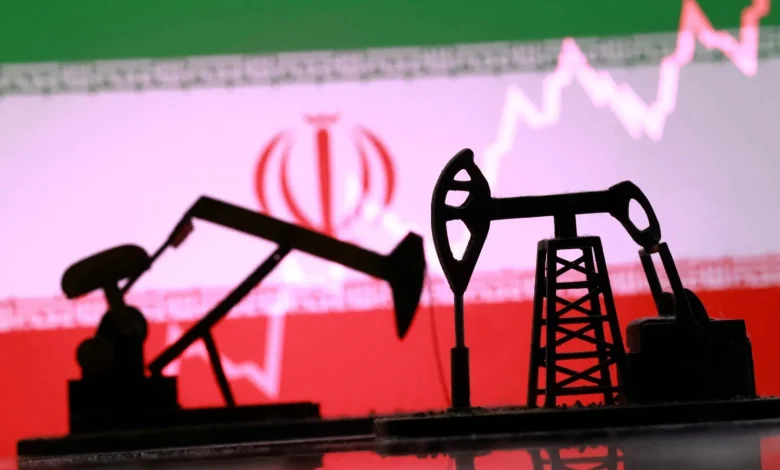
Financial markets are bracing for unprecedented turbulence as the Bank of England issues a stark warning regarding the ongoing geopolitical escalations in the Middle East. The escalating military engagements between the United States and Iran have pushed global risk sentiment to the brink, threatening to transform pre-existing structural vulnerabilities into a full-blown systemic crisis. Over the past decade, central banks have artificially suppressed market volatility through quantitative easing and ultra-low interest rates. While this era has ended with the aggressive tightening cycles of 2022 to 2025, the legacy of cheap debt remains deeply embedded in the global economy. Now, with the specter of a widespread regional conflict looming, policymakers are sounding the alarm. The Bank of England’s latest macroprudential guidance suggests that the shockwaves from military actions could cause these underlying frailties to bubble over, resulting in devastating consequences for global equity markets, bond yields, and everyday consumer inflation. This comprehensive report breaks down exactly how this geopolitical flashpoint interacts with the fragile mechanics of international finance.
The Core of the Bank of England Warning
The Bank of England’s Financial Policy Committee has maintained a vigilant stance on global systemic risks, but their most recent communications have taken a notably urgent tone. The core of their warning centers on the concept of ‘risk premia compression’—a phenomenon where investors, starved for yield, have historically ignored underlying risks. As the U.S.-Iran conflict intensifies, investors are rapidly recalibrating their risk assessments. The BoE warns that a sudden and disorderly repricing of these assets could lead to severe fire sales. When geopolitical shocks occur, capital inherently flees to safe-haven assets such as US Treasuries or gold. However, the speed at which this capital flight happens can drain liquidity from riskier asset classes overnight. According to official Bank of England financial stability reports, the interconnected nature of modern derivatives means that a failure in one obscure sector could trigger margin calls across the entire global banking apparatus, potentially paralyzing credit creation.
Identifying Existing Weaknesses in the Financial System
To understand the Bank of England’s severe outlook, one must first diagnose the existing comorbidities within the global financial architecture. Firstly, commercial real estate (CRE) valuations remain highly distressed due to structural shifts in post-pandemic work habits and elevated refinancing rates. Trillions of dollars in CRE loans are sitting on the balance sheets of regional and mid-sized banks. Secondly, sovereign debt levels in both developed and emerging markets have reached unsustainable peaks. Governments accumulated massive deficits to combat recent global crises, leaving them with little fiscal space to absorb new shocks. Finally, the opaque realm of shadow banking—non-bank financial intermediation (NBFI)—houses immense leverage. Private equity firms, hedge funds, and private credit vehicles operate with significantly less regulatory oversight than traditional retail banks. If an external shock—such as a massive spike in energy prices triggered by the U.S.-Iran conflict—forces sudden margin requirements upon these leveraged entities, the resulting contagion could easily spill over into the regulated banking sector.
How the U.S.-Iran Conflict Exacerbates Global Market Fragility
The strategic theater of the Middle East remains the lifeblood of the global industrial economy. The U.S.-Iran conflict is not merely a regional dispute; it is a catalyst capable of severing critical arteries of international commerce. Any disruption in the Strait of Hormuz, through which approximately 20% of the world’s daily oil consumption passes, translates directly into a massive supply shock. For financial markets already struggling with the tightrope walk between inflation containment and recession avoidance, this is the worst possible scenario. The Iran war fallout extends far beyond the battlefield; it forces corporate boards to completely rewrite their forward earnings guidance, triggers automated algorithmic selling across global indices, and forces commodity traders into frenzied hedging strategies that inherently drive up the cost of raw materials for manufacturers globally.
The Immediate Impact on Global Energy Markets
Energy markets act as the primary transmission mechanism between geopolitical conflict and macroeconomic distress. When missiles fly, the premium on crude oil immediately balloons. In the context of the current escalation, the destruction of critical hydrocarbon infrastructure has already sent shockwaves through the commodities exchanges. Analysts monitoring the global energy fallout note that an extended closure of vital shipping lanes would cripple not just crude oil delivery, but also liquified natural gas (LNG) shipments to Europe and Asia. Such a profound constraint on energy supply instantly raises the input costs for virtually every sector of the global economy, from transportation and agriculture to advanced manufacturing. Furthermore, market speculators are actively debating the catastrophic upper bounds of price movements, questioning will oil hit $200 per barrel if key refining facilities and extraction sites in the Persian Gulf are incapacitated. A prolonged energy price spike of that magnitude would almost guarantee a synchronized global recession.
Cascading Effects on Supply Chains and Inflation Rates
The secondary effect of an energy crisis is the rapid deterioration of global supply chains. Maritime freight rates, which are highly sensitive to bunker fuel costs and war risk insurance premiums, skyrocket during Middle Eastern conflicts. Companies are forced to reroute vessels around the Cape of Good Hope, adding weeks to transit times and dramatically increasing working capital requirements. This logistical nightmare translates directly into delayed product deliveries, factory shutdowns due to missing components, and ultimately, a resurgence of cost-push inflation. Retailers and manufacturers, faced with shrinking margins, will inevitably pass these costs onto consumers. This inflationary wave fundamentally undermines the progress central banks have made over the past three years. As inflation expectations un-anchor, consumer confidence plummets, driving down aggregate demand and putting heavily indebted retail sectors at risk of widespread bankruptcies.
Interest Rate Projections and Central Bank Dilemmas
Central banks, including the Federal Reserve and the Bank of England, find themselves trapped in an impossible macroeconomic paradox. Traditionally, central banks respond to wars and recessions by cutting interest rates to stimulate economic activity. However, if the recession is caused by an inflationary supply shock—such as an energy crisis sparked by military conflict—cutting rates would only pour gasoline on the inflationary fire. Conversely, raising rates further to combat the energy-driven inflation risks accelerating the collapse of the fragile commercial real estate market and increasing the burden on heavily indebted governments. A detailed economic analysis of current monetary policy trajectories reveals that central bankers may be forced to hold rates ‘higher for longer’ even as economic growth stalls, a textbook stagflationary environment that historically destroys equity valuations and triggers sovereign debt defaults in emerging markets.
Comparative Analysis of Global Financial Vulnerabilities
To quantify the threat landscape, we must analyze how the escalation in the Middle East interacts with specific financial vulnerabilities. The table below outlines the pre-existing weaknesses in the global financial system and how the U.S.-Iran conflict acts as an accelerant to these risks.
| Risk Factor | Pre-Conflict Vulnerability Status | Escalated Risk Level Post-Conflict | Potential Market Impact |
|---|---|---|---|
| Shadow Banking Leverage | High; minimal regulatory oversight. | Critical; massive margin call risks. | Rapid forced liquidations of corporate bonds and equities. |
| Commercial Real Estate | Severe distress; high refinancing costs. | Catastrophic; prolonged high interest rates. | Widespread defaults impacting regional bank solvency. |
| Sovereign Debt (Emerging Markets) | Fragile; elevated debt-to-GDP ratios. | Extreme; capital flight to USD safe havens. | Currency collapses and sovereign debt restructuring. |
| Energy Supply Chains | Moderate; recovering from previous shocks. | Critical; Strait of Hormuz closure threat. | Hyper-inflationary spike in industrial input costs. |
| Corporate Credit Spreads | Complacent; artificially tight spreads. | Elevated; rapid repricing of default risk. | Frozen debt capital markets limiting corporate borrowing. |
Historical Precedents versus Modern Geopolitical Risks
While economists frequently draw parallels to the oil embargoes of the 1970s, the current landscape is significantly more perilous due to the hyper-financialization of the global economy. In the 1970s, the transmission mechanism of the shock was primarily through the real economy—long lines at gas stations and direct manufacturing constraints. Today, the shock is instantaneously transmitted and amplified through algorithmic trading, complex derivative structures, and highly correlated global asset classes. The speed at which information and capital flow means that a military escalation in the Middle East can trigger a multi-trillion dollar sell-off in New York, London, and Tokyo within milliseconds. Modern financial architecture is built on the assumption of uninterrupted liquidity; when a geopolitical event shatters that assumption, the systemic plumbing can seize up entirely.
The Role of Secondary Markets and Non-Bank Institutions
The Bank of England’s warnings place heavy emphasis on non-bank financial institutions (NBFIs), which currently account for nearly half of global financial assets. Unlike traditional banks that have access to central bank discount windows and deposit insurance, NBFIs—such as pension funds, insurance companies, and private credit funds—operate without a formal safety net. If an Iranian retaliation disrupts global shipping and sends oil soaring, the resulting inflationary panic would violently push bond yields higher. As bond prices fall, highly leveraged NBFIs utilizing liability-driven investment (LDI) strategies could face massive collateral calls. We saw a microcosm of this during the UK gilt crisis in recent years, but a global geopolitical shock could cause this phenomenon to erupt simultaneously across multiple jurisdictions, overwhelming the capacity of regulators to ring-fence the damage.
Credit Markets Facing Imminent Liquidity Crunches
Corporate credit markets are uniquely vulnerable to the unfolding chaos. Over the past decade, a vast amount of corporate debt has been issued with variable interest rates, particularly in the leveraged loan and private credit sectors. These companies are already dedicating a record percentage of their earnings merely to service existing debt. The combination of slowing consumer demand (driven by energy inflation) and elevated borrowing costs (maintained by central banks fighting that inflation) creates a lethal pincer movement for corporate cash flows. As default probabilities rise, credit rating agencies will be forced into mass downgrades, pushing trillions of dollars of debt from ‘investment grade’ to ‘junk’ status. Institutional investors with strict mandate requirements would be forced to sell these downgraded bonds into a market with no buyers, triggering a severe liquidity crunch and freezing primary issuance markets entirely.
Strategic Responses from Central Banks Worldwide
In response to the escalating threats, central banks are covertly preparing emergency liquidity facilities. The Bank of England, the Federal Reserve, and the European Central Bank have established massive swap lines to ensure that US dollars—the world’s reserve currency—remain available to foreign institutions during a crisis. However, providing liquidity does not solve the underlying solvency issues facing highly leveraged entities. Policymakers are navigating an incredibly narrow path. They must communicate vigilance without inciting panic, providing forward guidance that reassures markets while acknowledging the stark reality of the military conflict. The daily tracking of strategic updates and escalations is no longer the sole purview of defense ministries; it is now the primary data input for global central banking monetary policy committees.
Coordinated Efforts Among the G7 and Beyond
To mitigate the risk of a systemic collapse, the G7 finance ministers and central bank governors are engaging in unprecedented levels of back-channel coordination. Contingency plans are being drafted to implement synchronized regulatory forbearance if the banking sector faces catastrophic losses. Furthermore, strategic petroleum reserves (SPR) are being monitored for coordinated releases to artificial suppress the energy shock, although the efficacy of such measures remains highly disputed given the depleted state of many reserves. These geopolitical and financial forces are inextricably linked; the success of macroeconomic stabilization depends entirely on the swift resolution of the underlying military conflict. Without a diplomatic breakthrough, the financial engineering of central banks can only delay, not prevent, the inevitable unwinding of systemic risk.
Future Outlook for International Trade Amidst Escalation
The medium to long-term outlook for the global financial system remains exceptionally perilous as long as the U.S.-Iran conflict persists. The geopolitical fragmentation of the world economy—often referred to as ‘friend-shoring’ or de-globalization—will rapidly accelerate. Supply chains will become more resilient but inherently more expensive, structurally embedding higher inflation into the global baseline. For the financial sector, this means a permanent end to the era of ‘cheap money’. Institutions that built their business models on the assumption of low volatility and low interest rates will face extinction. The Bank of England’s warning is not merely a hypothetical exercise; it is an urgent call for banks, asset managers, and policymakers to aggressively deleverage and build unprecedented capital buffers before the geopolitical friction ignites the tinderbox of global financial frailties. The coming months will definitively test whether the post-2008 regulatory frameworks are robust enough to withstand the sheer concussive force of modern superpower warfare.