Azzedine Ounahi’s 3 Powerful Performances That Lift Morocco to Quarterfinals
Table of Contents
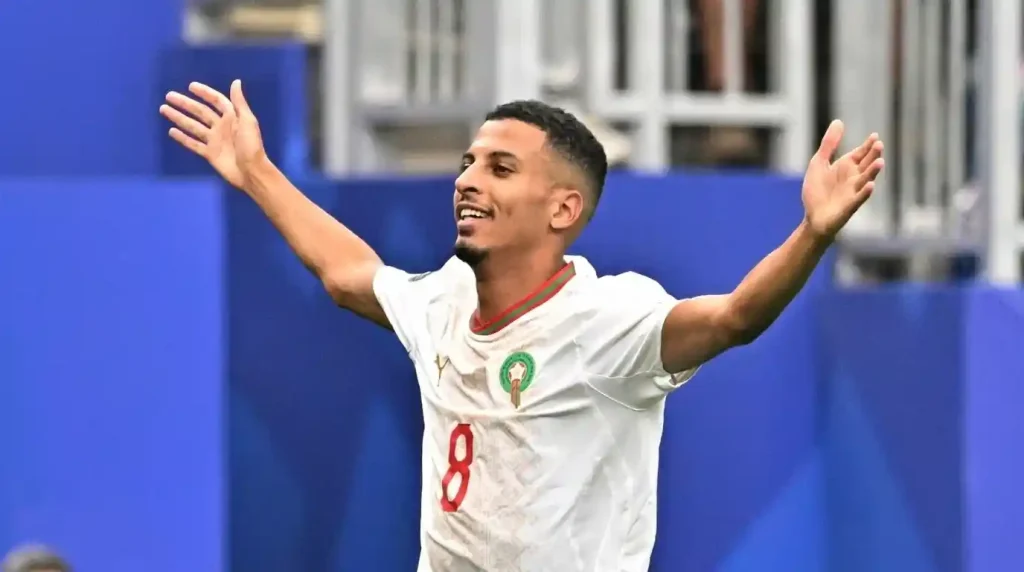
Azzedine Ounahi spearheaded Morocco’s historic march into the World Cup quarterfinals in Houston on Saturday, putting on a clinic in clinical finishing that Canada simply had no answer for. In a highly anticipated Round of 16 clash at a packed Houston Stadium, the Atlas Lions secured a comprehensive 3-0 victory over the tournament co-hosts, proving that their magical run to the semifinals in 2022 was no fluke. By advancing to the quarterfinals for the second consecutive tournament, Morocco has carved its name in the annals of football history, becoming the first African nation to reach the final eight of the FIFA World Cup on more than one occasion.
The matchup in Texas was billed as a battle between two of the tournament’s most exciting storylines: the tactical discipline and continental pride of Morocco against the youthful, relentless energy of Jesse Marsch’s Canadian side. For forty-five minutes, Canada looked like they might pull off yet another monumental upset, pinning the higher-ranked Moroccans back with a ferocious high press. However, championship pedigree and clinical execution ultimately won out, with midfielder Azzedine Ounahi stepping up to deliver a masterclass performance when his country needed it most.
The Historical Azzedine Ounahi Significance of Morocco’s Victory
Morocco’s sensational victory represents a watershed moment for African football. Prior to Saturday’s clash in Houston, continental powerhouses like Cameroon, Senegal, Ghana, and indeed Morocco itself had reached the quarterfinals of the World Cup, but none had ever managed to repeat the feat in a subsequent tournament. By securing their place in the 2026 quarterfinals, the Atlas Lions have shattered this historical glass ceiling, demonstrating a level of structural consistency and elite player development that sets a new standard for the entire African continent.
Their journey in 2022 captivated the globe as they dismantled European giants and became the first African team to reach the semifinals. Returning to the global stage in 2026 under intense pressure and scrutiny, Morocco has proved that they belong among the world’s footballing elite. This historic feat is not just a victory for Moroccan fans, but a significant milestone that elevates the prestige and competitive standing of the Confederation of African Football (CAF) on the global stage.
Tactical Analysis: How Morocco Weathered the Canadian Storm
Tactical chess matches are often decided by who can adapt quickest to adversity, and this fixture was no exception. Canada head coach Jesse Marsch once again demonstrated his tactical flexibility by shuffling his starting eleven. He brought in midfielder Niko Sigur for his first-ever World Cup start, while also opting for defenders Moïse Bombito and Luc de Fougerolles to shore up the backline. Marsch also thrust midfielder Ali Ahmed into the starting lineup, aiming to suffocate Morocco’s creative midfield hub right from the opening whistle.
The strategy worked to perfection in the opening stages. Canada’s high-intensity pressing forced Morocco into cheap turnovers, preventing them from establishing any sort of possession-based rhythm. For the first twenty-five minutes, the Atlas Lions looked uncharacteristically rattled, struggling to bypass the first line of the Canadian press. Morocco was forced into desperate defending, racking up multiple yellow cards before the halftime whistle as they tried to halt Canada’s rapid transition play.
Canada’s Energetic First-Half Press
Canada dominated the opening forty-five minutes, keeping Morocco pinned deep in their own territory. Just five minutes into the game, vice-captain Stephen Eustáquio sent a dangerous, swinging corner toward the Moroccan goal, forcing goalkeeper Yassine Bounou to react quickly and punch the ball away from danger. Bounou, who was born in Montreal but chose to represent Morocco internationally, was called into action again in the tenth minute. Capitalizing on a loose defensive clearance, Ali Ahmed fed Tani Oluwaseyi, who brilliantly spun away from defender Redouane Halhal to find himself one-on-one with the keeper. Bounou made a spectacular save with his left foot to deny the Canadian striker.
The statistical dominance of Canada in the first half was staggering. The co-hosts registered thirteen touches inside the Moroccan penalty box, while Morocco managed only a single touch in Canada’s box. Despite their dominance and creating multiple high-quality opportunities, Canada’s inability to find the back of the net ultimately left the door open for a clinical Moroccan response in the second half.
The Injury Blow of Ismael Saibari and Rahimi’s Entry
Morocco’s challenges in the first half were further compounded in the 22nd minute when rising star Ismael Saibari was forced off with an apparent muscle injury. Saibari, the newly signed Bayern Munich forward, had been Morocco’s leading goalscorer in the tournament and was a crucial focal point for their attack. His early departure threatened to derail the Atlas Lions’ game plan entirely.
In response, Morocco brought on Soufiane Rahimi, a tactical substitution that initially forced the team to alter their attacking shape. While Saibari provided physical presence and direct runs, Rahimi offered a more fluid, hard-working alternative. Although Morocco struggled to adjust immediately to this change, Rahimi’s relentless work rate and tactical discipline in tracking back helped ease the pressure on the midfield, setting the stage for a dramatic second-half turnaround.
The Second-Half Breakthrough: How the Deadlock Ended
Halftime provided a crucial sanctuary for Morocco to recalibrate. Whatever instructions were given in the dressing room worked wonders, as the Atlas Lions emerged for the second half looking remarkably calm and composed. They stopped trying to force risky vertical passes through the center of Canada’s narrow press and instead looked to utilize the technical brilliance of their wing-backs to stretch the pitch.
By letting the game breathe and shifting the tempo, Morocco quickly seized control of the midfield. The frantic energy that defined their first-half performance was replaced by the patient, methodical possession play that has become their trademark. It did not take long for this tactical adjustment to yield dividends, completely shifting the momentum of the match in a matter of minutes.
Ounahi’s Brilliant Opener in the 50th Minute
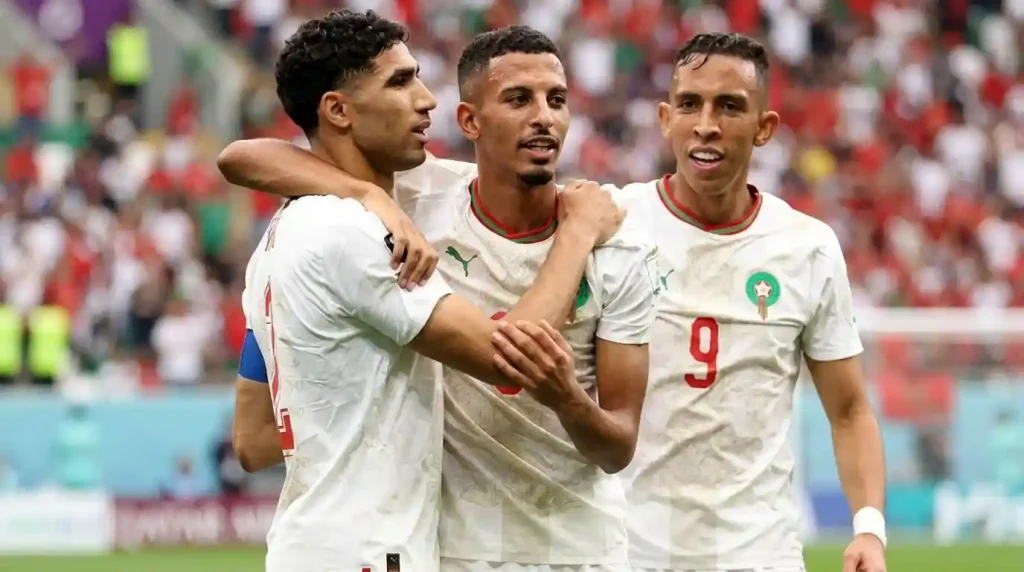
The deadlock was finally broken in the 50th minute through a beautifully designed dead-ball routine. Morocco won a free kick on the right flank, and superstar right-back Achraf Hakimi stepped up to take it. Instead of sending a high cross into a crowded penalty box, Hakimi spotted Ounahi lurking unmarked near the edge of the box and played a crisp, low pass across the face of the area.
Ounahi met the ball perfectly at the D, unleashing a first-time, right-footed strike. The shot traveled through a dense forest of Canadian and Moroccan players, completely unsighting the Canadian goalkeeper before nesting snugly into the bottom right corner of the net. The stadium erupted as Morocco took a 1-0 lead, a goal that completely deflated Canada’s high-press strategy and forced the co-hosts to abandon their defensive shape in search of an equalizer.
The Counter-Attack Masterclass in the 82nd Minute
With Canada throwing caution to the wind and committing more players forward, Morocco’s world-class counter-attacking threat was unleashed. In the 82nd minute, Brahim Díaz intercepted a loose Canadian pass deep in his own half and drove forward with frightening speed. Díaz drew the attention of three Canadian defenders before executing a perfectly timed lay-off pass to Ounahi, who had surged forward in support.
Receiving the pass in the middle of the box, Ounahi demonstrated immense composure. Rather than rushing his shot, he took a delicate touch to set himself and buried a powerful right-footed strike high into the roof of the net, past the helpless goalkeeper. The goal marked Ounahi’s second of the game, securing a historic brace and effectively sealing Morocco’s passage into the quarterfinals. To put the icing on the cake, Soufiane Rahimi added a third goal in the eighth minute of stoppage time, converting a rolling shot to make the final score 3-0.
Defensive Resilience: Yassine Bounou and the Backline
While Ounahi will capture the headlines for his goalscoring exploits, Morocco’s defensive unit deserves immense praise for securing a clean sheet against a highly potent Canadian attack. Goalkeeper Yassine Bounou was the undisputed anchor of the defense, put under immense pressure early on but never wavering. His ability to command his penalty area during Canada’s early barrage of corners was vital in keeping his side level.
The backline, anchored by Redouane Halhal and shielded by a hardworking midfield, did an exceptional job of neutralizing Canada’s star players. Tajon Buchanan, who has been a constant threat throughout the tournament, was limited to a single low drive that Bounou saved comfortably. Morocco’s defensive organization and tactical discipline in the second half ensured that Canada was unable to create any clear-cut chances, showcasing the elite defensive structure that has defined Morocco’s success under pressure.
Canada’s Historic Journey and Jesse Marsch’s Legacy
Despite the painful exit in Houston, the 2026 World Cup will forever be remembered as a landmark tournament for Canadian soccer. Under the guidance of head coach Jesse Marsch, Canada achieved milestones that seemed unimaginable just a few years ago. Entering the tournament ranked 30th in the official FIFA standings, Canada proved that they could compete with the absolute best teams on the planet.
Canada secured their first-ever World Cup point in a hard-fought draw against Bosnia and Herzegovina in Toronto, followed by an astonishing 6-0 thrashing of Qatar that captured the imagination of the entire country. Their historic journey to the Round of 16 represents a massive leap forward, establishing a solid foundation for the future. As the players hold their heads high, the Canadian soccer federation can look forward to a bright future with a talented young squad that has now tasted elite knockout football.
The Road Ahead: Quarterfinals Clash in Boston
Morocco’s journey now takes them to Boston, where they will compete in the quarterfinals on Thursday, July 9. They are scheduled to face the winner of the highly anticipated Round of 16 match between powerhouse France and Paraguay. The Atlas Lions will enter that matchup with immense confidence, knowing they have the tactical flexibility, defensive solidity, and individual brilliance to beat anyone on their day.
However, the health of forward Ismael Saibari will be a major talking point leading up to the quarterfinal. His presence in the attacking lineup is crucial, and Morocco’s coaching staff will be working around the clock to assess his fitness. Fans can follow all the latest match schedules, bracket updates, and official analysis on the FIFA official tournament portal as the tournament enters its most thrilling phase.
Summary of Morocco vs Canada Match Facts
Below is a summary of the key statistics and events from the historic Round of 16 encounter in Houston:
| Match Metric / Event | Morocco (Atlas Lions) | Canada (Les Rouges) |
|---|---|---|
| Final Score | 3 | 0 |
| Goals Scored | Azzedine Ounahi (50′, 82′), Soufiane Rahimi (90+8′) | None |
| First-Half Performance | Struggled under high press, 1 shot in box | Dominant, 13 touches in opponent box |
| Goalkeeper Saves | Yassine Bounou (Several key saves) | Dayne St. Clair / Defence under pressure |
| Key Playmakers | Achraf Hakimi, Brahim Díaz | Stephen Eustáquio, Tani Oluwaseyi |
| Quarterfinal Destination | Boston (vs France or Paraguay) | Eliminated (Round of 16) |
Morocco’s ability to withstand pressure and deliver clinical blows has once again placed them in the driving seat of World Cup history. As they prepare for Boston, the world will watch with bated breath to see if the Atlas Lions can repeat, or even surpass, their legendary 2022 campaign.