Cape Verde Reaches World Cup Knockout Stage in Historic Run
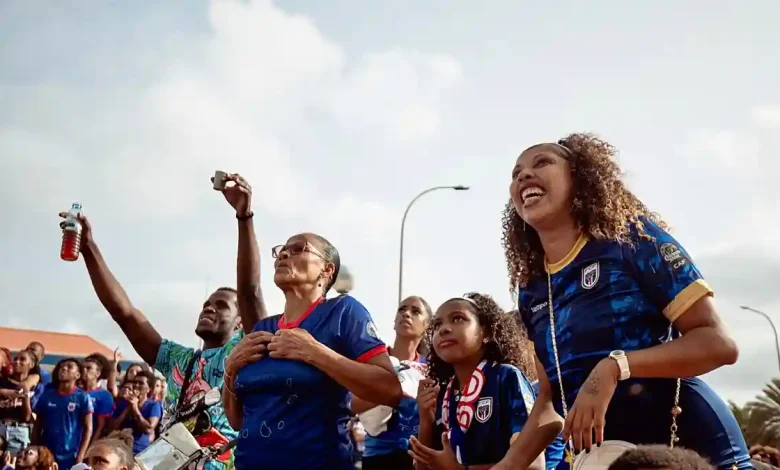
Cape Verde has written a breathtaking chapter in international football history, defying microscopic odds to secure an improbable spot in the knockout stages of the 2026 FIFA World Cup. In navigating their way out of a daunting Group H, the tiny West African archipelago has captured the imagination of football fans worldwide, proving that passion, tactical discipline, and collective belief can triumph over sheer demographic and economic scale. Representing a nation of just over 500,000 residents, the Blue Sharks emerged undefeated from a group featuring multiple former World Cup champions, solidifying their status as the ultimate giant-killers of the modern era.
The final whistle at the Houston Stadium on Friday night triggered an agonizing wait for players and fans alike. Cape Verde had done their part, grinding out a grueling, hard-fought 0-0 draw against Saudi Arabia. However, their ultimate tournament fate rested hundreds of miles away in Guadalajara, where Spain and Uruguay were locked in a fierce battle. With their match ending several minutes ahead of the concurrent fixture, Cape Verde’s players huddled in anxious circles on the pitch, staring intensely at mobile phones streaming the final moments of the other game. When news filtered through that Spain had held on to defeat Uruguay 1-0, the tension evaporated instantly, replaced by a roar of pure, unbridled joy. The fairytale had officially been extended into the Round of 32.
To put this historic milestone into perspective, we must examine the final standings of Group H. Cape Verde, despite entering the tournament with the lowest expectations, managed to secure the runner-up spot without suffering a single defeat.
| Pos | Team | Pld | W | D | L | GF | GA | GD | Pts |
|---|---|---|---|---|---|---|---|---|---|
| 1 | Spain (A) | 3 | 2 | 1 | 0 | 5 | 0 | +5 | 7 |
| 2 | Cape Verde (A) | 3 | 0 | 3 | 0 | 2 | 2 | 0 | 3 |
| 3 | Uruguay (E) | 3 | 0 | 2 | 1 | 3 | 4 | -1 | 2 |
| 4 | Saudi Arabia (E) | 3 | 0 | 2 | 1 | 1 | 5 | -4 | 2 |
Cape Verde and the Miracle in Houston: A Historic World Cup Qualification
Securing qualification to the knockout stages of a major tournament is a monumental task for any team, but doing so as a debutant from an island nation with a population smaller than most major global suburbs borders on the miraculous. Long after the stadium lights had begun to dim in Houston, the Cape Verdean squad lingered on the pitch, wrapped in their national flags, shedding tears of joy and celebrating with the thousands of ecstatic supporters who had traveled to witness history. They had officially become the smallest country by population ever to reach the knockout phase of a men’s FIFA World Cup.
This achievement represents a landmark shift in how small-nation football is perceived. For decades, major international tournaments were dominated by a select elite, with smaller countries often relegated to the role of atmospheric gatekeepers. Cape Verde has shattered that paradigm. Their qualification is not a result of luck or statistical anomaly; it is the culmination of years of structural planning, meticulous scouting of the diaspora, and an unshakeable belief in their own tactical identity.
Anatomy of the Group H Climax
The final matchday was a masterclass in emotional endurance. Needing only a draw to keep their hopes alive, Cape Verde played with a maturity that belied their complete lack of tournament experience. Every player understood their responsibilities, tracking back tirelessly to deny the Saudi Arabian attackers any clear sight of goal. The synergy between the midfield block and the back four was flawless, demonstrating an organizational discipline that many established footballing powerhouses have struggled to replicate during this tournament.
How Group H Was Conquered: An Unbeaten Path Through Giants
When the Group H draw was first announced, analysts almost universally dismissed Cape Verde’s chances. To expect a debutant country to survive in a group containing 2010 world champions Spain, two-time world champions Uruguay, and a highly seasoned Saudi Arabian squad seemed like wishful thinking. Yet, game by game, the Blue Sharks methodically dismantled these pre-conceived notions, establishing themselves as a highly competitive, stubborn, and brilliant unit.
Holding the Spanish Masters: The Opening Statement
The journey began with what many considered an impossible task: facing Spain. The Spanish side, renowned for their suffocating possession play and positional dominance, expected to cruise to an easy victory. Instead, they met a Cape Verdean defense that operated with mechanical precision. Squeezing the spaces in the central channels, Cape Verde forced Spain into wide areas, clearing cross after cross with absolute authority. The historic 0-0 draw was a massive shockwave that vibrated throughout the tournament, signaling to the world that the debutants were not merely here to make up the numbers.
The Uruguayan Shootout: Showing Offensive Teeth
Having proved their defensive credentials, Cape Verde demonstrated that they also possessed the attacking quality to match elite opposition in their second match against Uruguay. In a thrilling, box-to-box encounter, the Blue Sharks fought back from a deficit to secure a spectacular 2-2 draw. They weaponized their electric transitions, using the blistering speed of their wingers to expose the aging Uruguayan defensive line. This match was crucial because it proved Cape Verde was not a one-dimensional side that simply sat deep and hoped for the best; they had the technical capacity to hurt top-tier opponents in open play.
The Saudi Stalemate: Sealing the History Books
With their destiny on the line, Cape Verde faced a hostile, highly energetic Saudi Arabian team in their final group fixture. The match was a grueling tactical chess match. Saudi Arabia dominated possession, but the Blue Sharks remained completely unfazed. In the 74th minute, Cape Verde nearly stole the victory when Laros Duarte’s blistering run and first-time effort was kept out by a sensational leg-save from Saudi goalkeeper Mohammed Al-Owais. At the other end, Cape Verde’s defensive unit held firm through a frantic stoppage-time period to secure the final, historic point needed for qualification.
The Staggering Numbers Behind the Miracle: Population and Scale Compared
To truly grasp the magnitude of what the Blue Sharks have accomplished, one must look at the demographics. With a population of approximately 525,000, Cape Verde is roughly the size of a single mid-sized European or American city, such as Fresno or Luxembourg. To put this in further perspective, their entire national population could fit into some of the world’s largest metropolitan regions multiple times over. They entered the tournament as the smallest country in terms of population size to qualify for the 2026 expansion, and they now hold the record as the smallest nation to ever advance past the group stage.
Previously, nations like Iceland in 2018 had captured global headlines by qualifying for the World Cup, but they were unable to navigate their way into the knockout stages. Cape Verde’s success raises the bar for what is possible, proving that a robust scouting system, a unified tactical approach, and immense national pride can bridge the gap against countries with populations 100 times their size and footballing budgets that dwarf their entire national sporting infrastructure.
Architects of the Dream: Bubista, Vozinha, and the Golden Squad
Behind every sporting miracle is a group of visionary leaders, and for Cape Verde, that starts with head coach Bubista. The 56-year-old manager, a legendary former captain of the national team, has spent years building a culture of complete self-belief and absolute tactical discipline. Bubista’s management style is deeply rooted in mutual respect and national pride. Under his leadership, the squad does not view themselves as underdogs; they view themselves as equals to any team they share the pitch with.
On the pitch, the absolute star of the group stage was their 40-year-old goalkeeper, Vozinha. His stunning reflexes, impeccable command of his penalty area, and leadership during high-pressure moments turned him into an overnight global sensation, amassing more than 16 million followers on Instagram as the tournament progressed. Vozinha’s crucial saves, particularly a soaring deflection of a header from Mohamed Kanno in first-half stoppage time against Saudi Arabia, kept his team alive when they were under siege.
The squad’s success is also a tribute to the Cape Verdean diaspora. Outfield players like Laros Duarte, Nuno da Costa, and Willy Semedo have combined seamlessly with domestic talents, forming a tight-knit family on and off the field. This unique blend of European tactical education and raw, passionate national pride has created a formidable unit that refuses to bend under pressure.
Tactical Stoicism and Defensive Resilience: How the Blue Sharks Shut Down the World
Tactically, Bubista implemented a masterfully organized defensive shape that frequently transitioned into a compact 4-5-1 or low block. The key to this system was the defensive midfielder, who acted as a screen directly in front of the center-backs, suffocating the spaces that elite playmakers like Spain’s midfielders love to exploit. By maintaining narrow distances between the midfield and defensive lines, Cape Verde made it incredibly difficult for opponents to play through the center of the pitch.
Furthermore, their defensive discipline was complemented by incredibly smart physical conditioning. Despite playing in high-intensity matches against teams that possess vast resources, the Blue Sharks never looked physically outmatched. Their lateral shifting was crisp, their aerial duel success rate in the penalty box was remarkably high, and their decision-making under heavy fatigue remained flawless. It was a clinic in modern defensive football, proving that defending is not merely about passion, but about elite positioning, physical conditioning, and cognitive focus.
The Global Impact: Why Cape Verde’s Triumph is a Victory for Every Football Underdog
The ripples of Cape Verde’s achievement will be felt far beyond the archipelago’s borders. For years, critics of the newly expanded 48-team World Cup format argued that increasing the number of participants would dilute the quality of the tournament, leading to uncompetitive blowout matches. Cape Verde has completely dismantled that argument, serving as the ultimate justification for the expanded format. They have shown that when given the platform, smaller nations can not only compete but actively elevate the drama and quality of the world’s greatest sporting event.
To learn more about the nation’s footballing pedigree, you can explore Cape Verde’s historical record at the FIFA World Cup. Their journey will undoubtedly serve as a blueprint for other small countries, illustrating that through meticulous organization, structural belief, and strategic development of both domestic and diaspora talent, the absolute pinnacle of international football is within reach.
The Road Ahead: Preparing for the Ultimate Clash Against Defending Champion Argentina
As the celebrations continue across the islands of Santiago, Santo Antão, and São Vicente, Bubista and his squad must now prepare for the most formidable challenge of their footballing lives. In the Round of 32, Cape Verde is set to travel to Miami Gardens, Florida, where they will face the reigning World Cup champions, Argentina. It is a true David vs. Goliath matchup, pitting a nation of 500,000 against the global giants of the sport.
Yet, if this group stage has taught us anything, it is that the Blue Sharks fear no one. They have already faced down European royalty and South American powerhouses without tasting defeat. When asked about the upcoming clash, Bubista smiled and reiterated his core philosophy: “We have shown the world that nothing is impossible. We respect Argentina enormously, but we do not fear them. We will play with our hearts, our organization, and our flag on our chests. We are ready to write another chapter.” Regardless of the final scoreline in Miami, Cape Verde’s historic fairytale has already secured its place in the pantheon of the greatest World Cup stories ever told.





One Comment