Section 301 Tariffs: Trump Sidesteps SCOTUS Trade Ruling
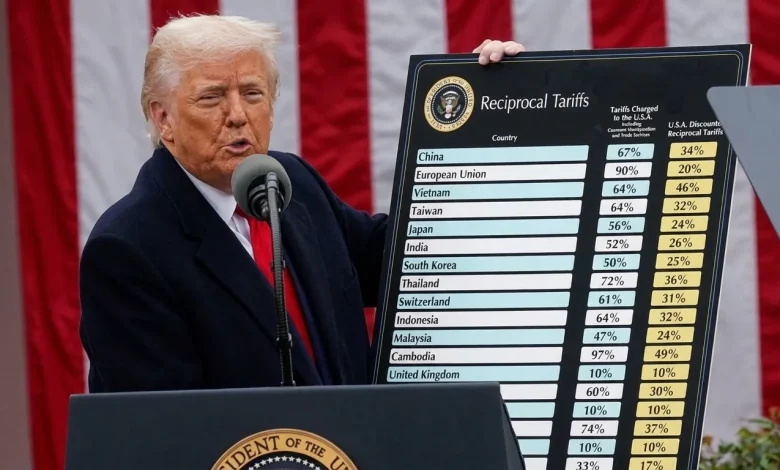
Table of Contents
Section 301 of the Trade Act of 1974 is now the primary legal weapon in the White House’s trade arsenal, marking a pivotal transformation in American economic policy. Following a dramatic escalation in international trade tensions, the Office of the United States Trade Representative (USTR) has officially launched a highly systematic trade offensive. This sweeping strategy comes immediately after the U.S. Supreme Court struck down the administration’s previous tariff framework, prompting trade officials to quickly assemble a legally resilient fallback plan. With close to 80 investigations currently underway, Washington is signaling its readiness to levy severe economic penalties on major global trading partners, including China, the European Union, India, Japan, South Korea, and Mexico. This aggressive repositioning reached a major milestone on Wednesday, July 15, 2026, when the USTR finalized its investigation into Brazil, ordering a punitive 25% tariff on thousands of imports from the South American nation. By looking closely at this dramatic strategic pivot, we can observe the administrative machinery designed to reshape global trade in real-time.
The Fall of IEEPA: How Learning Resources v. Trump Shattered the Tariff Wall
The legal architecture underpinning the U.S. trade regime was thrown into absolute chaos on February 20, 2026. In the landmark consolidated cases of Learning Resources, Inc. v. Trump and Trump v. V.O.S. Selections, Inc., the U.S. Supreme Court ruled in a 6-3 decision that the International Emergency Economic Powers Act (IEEPA) of 1977 does not authorize the President to unilaterally impose sweeping across-the-board tariffs. Chief Justice John Roberts, writing for the majority, concluded that while IEEPA permits the executive branch to “regulate” foreign commerce and economic transactions during declared national emergencies, it does not convey the constitutional power to levy taxes or set import duties without explicit congressional authorization. The ruling essentially dismantled nearly 70% of the administration’s active tariff architecture, including the flagship “Liberation Day” tariffs that had elevated average U.S. tariff rates to historic levels.
The financial and administrative consequences of this ruling have been staggering. According to Treasury Department budget figures released on Monday, July 14, 2026, the federal government has been forced to refund an astonishing $81 billion to domestic importers so far this fiscal year. This massive cash outflow—which dwarfs the mere $5 billion refunded during the same period in the previous fiscal year—has significantly widened the federal budget deficit at a time when national debt interest payments have crossed the historic $1 trillion threshold. This sudden judicial constraint demonstrated that the executive branch could no longer rely on emergency declarations to govern the borders, underscoring how complex legal and federal court rulings continue to shape the limits of executive power across the modern administrative state. Faced with a gaping hole in its protectionist agenda, the administration immediately directed the USTR to formulate a permanent, legally unassailable alternative.
The Section 301 Pivot: Reconstructing the Trade Firewall
Rather than retreating, the White House has executed a comprehensive tactical pivot toward Section 301 of the Trade Act of 1974. Unlike the broad and immediate actions permitted under the now-restricted IEEPA, Section 301 requires the USTR to conduct structured, evidence-based investigations into whether foreign nations are engaging in “unreasonable, discriminatory, or unjustifiable” practices that burden or restrict American commerce. This statute provides the executive branch with unilateral authority to retaliate, but only after building an extensive administrative record. This includes soliciting public comments, holding multi-day hearings, and conducting direct, government-to-government negotiations. While this methodology is inherently slower and more administratively burdensome, it rests on a firm statutory foundation that is virtually immune to the constitutional overreach arguments that felled the IEEPA tariffs.
By anchoring these massive trade restrictions in administrative procedures, the administration seeks to systematically insulate its trade wall from judicial review, reshaping the entire economic landscape of the nation. The USTR’s strategy has been characterized by legal scholars as “Section 301’ing the world”. Under the leadership of U.S. Trade Representative Jamieson Greer, the office has initiated close to 80 separate investigations, covering issues ranging from excess industrial capacity to labor standards and environmental degradation. By utilizing a highly targeted, sector-specific investigative approach, the administration is effectively rebuilding its global tariff firewall piece by piece, forcing foreign governments to either negotiate under extreme pressure or face targeted exclusions from the lucrative American consumer market.
The Brazil Case Study: Deforestation, Digital Trade, and Geopolitics
The first sovereign nation to feel the full weight of this reconstructed trade policy is Brazil. On Wednesday, July 15, 2026, Ambassador Greer announced that the USTR had finalized its yearlong investigation into Brazil, determining that its state policies heavily restricted American commerce. Consequently, starting July 22, 2026, the United States will impose a punitive 25% tariff on a broad range of Brazilian exports, excluding agricultural commodities like beef and coffee. This decision follows a proposal first floated by the administration in June, which sparked intense diplomatic negotiations. The USTR’s investigation ultimately concluded that Brazil had implemented several unreasonable practices, including discriminatory digital services taxes targeting American technology firms, weak intellectual property enforcement, preferential tariff concessions granted to India and Mexico, and a systemic failure to combat illegal deforestation.
The inclusion of illegal deforestation as an actionable trade barrier under Section 301 marks a highly unusual and historic integration of environmental policy into U.S. trade enforcement. The USTR argued that by allowing domestic agricultural conglomerates to exploit illegally logged land in the Amazon basin, the Brazilian government granted its producers an unfair cost advantage over American farmers who must comply with rigorous conservation laws. Targeting Brazil’s failure to curb illicit logging aligns with the President’s complex history with conservation, which was previously marked by intense environmental protection controversies during his first term. While some critics view this environmental clause as hypocritical given the administration’s own history of domestic structural environmental rollbacks, trade officials argue that international double standards cannot be ignored. The Brazil ruling serves as a stark warning to other developing nations that environmental and digital policies are now fully fair game in Washington’s trade calculus.
Mapping the Global USTR Investigations: Close to 80 Nations in the Crosshairs
While Brazil represents the opening salvo of this administrative campaign, the USTR is simultaneously managing nearly 80 other investigations that threaten to destabilize trade relations with dozens of countries. These investigations are organized into distinct tranches. The largest tranche consists of 60 separate investigations focused on global supply chains tainted by forced labor, a policy that collectively impacts nations accounting for over 99% of all goods imported into the United States. A second major tranche targets excess manufacturing capacity, particularly in heavy industries and green technology. Major trading partners like China, the European Union, India, Japan, South Korea, and Mexico are all currently under the microscope, facing the imminent threat of punitive tariff stacking.
The structural layout of these investigations and their potential tariff implications are summarized in the comprehensive overview below:
| Target Economy / Region | Primary Investigated Practices | Proposed / Imposed Tariffs | Key Exposed Industries |
|---|---|---|---|
| Brazil | Digital trade taxes, IP violations, preferential tariffs, illegal deforestation | 25% tariff (Imposed; effective July 22, 2026) | Sugar, machinery, apparel, paper products |
| China | Industrial overcapacity, forced labor, systemic IP theft, state subsidies | 12.5% forced labor tariff (Proposed); existing Section 301 stacking | Electronics, EV batteries, solar panels, primary metals |
| European Union | Digital services taxes, industrial carbon border adjustments, forced labor | 10% tariff (Proposed) | Automobiles, luxury apparel, chemicals, machinery |
| India | Digital trade barriers, agricultural subsidies, forced labor | 12.5% tariff (Proposed) | Textiles, generic pharmaceuticals, industrial machinery |
| South Korea | Heavy industry subsidies, forced labor, steel transshipment | 12.5% tariff (Proposed) | Semiconductors, steel components, automotive parts |
| Mexico | Forced labor, third-party transshipment of Chinese components | 10% tariff (Proposed; CUSMA compliance reviews pending) | Auto parts, manufactured goods, consumer electronics |
The scale of this administrative effort demonstrates that the USTR is no longer using Section 301 as a surgical tool for isolated disputes, but rather as a blunt-force instrument to reconstruct the global trading order. If these proposed duties are finalized, they will effectively re-establish the protective barriers that the Supreme Court dismantled earlier this year, entirely outside of the legislative branch’s purview.
Economic Fallout: Inflationary Pressures and Supply Chain Chaos
The rapid expansion of Section 301 investigations is already sending shockwaves through the global economy, creating deep policy uncertainty that is suppressing growth. Many U.S. firms, unable to predict the final outcome of these 80 concurrent investigations, have adopted a conservative “wait-and-see” approach, pausing long-term investment and capital expansion. For American consumers, the immediate consequence of these tariffs is a likely increase in retail prices, further destabilizing already volatile consumer price index metrics. Economists warn that substituting broad-spectrum tariffs with dozens of overlapping Section 301 duties will continue to drive up supply chain costs, particularly for raw materials and intermediate components.
As businesses struggle to absorb these escalating duty costs, some sectors may be forced to initiate sweeping macroeconomic workforce adjustments to preserve operating margins. The manufacturing sector is particularly vulnerable, as domestic producers of primary and fabricated metals are already facing escalating costs for imported inputs. Furthermore, the administrative push to crack down on “tariff fraud” and third-party transshipment—particularly involving Chinese goods routed through Vietnam, Thailand, or Mexico—has added layers of expensive compliance and customs audits for importers. This rising protectionism is also impacting highly technological fields, where corporate IP protection and data sovereignty have become fierce battlegrounds. This structural tension mirrors the legal battles seen in the private tech sector, where disputes over proprietary intellectual assets frequently boil over into multi-billion dollar trade secret litigation, further complicating the international operational landscape for multinational corporations.
Geopolitical Blowback: Lula’s Retaliation and the Fracturing WTO
The international community has responded to the USTR’s announcement with severe condemnation, signaling a dramatic fracturing of the rules-based global trading system. In Brazil, President Luiz Inácio Lula da Silva rejected the 25% tariff as completely unjustified, calling July 15 a “lamentable milestone” in the bilateral history of the two countries. Lula announced that Brazil will immediately invoke its domestic “Reciprocity Law” to penalize American imports and will file a formal dispute within the World Trade Organization (WTO). However, with the WTO’s dispute settlement mechanism largely paralyzed by a persistent lack of consensus on judge appointments, a rapid international resolution remains highly unlikely.
In Washington, the administration has taken a characteristically defiant stance. Secretary of State Marco Rubio defended the tariffs, accusing President Lula of failing to negotiate in good faith and letting personal political ideology override the economic welfare of the Brazilian people. This is confirmed by the official Office of the United States Trade Representative, which detailed that despite extensive negotiations, Brazil refused to eliminate its non-tariff barriers. This confrontational dynamic is expected to repeat itself across other capitals. The European Union has already threatened retaliatory tariffs on American agricultural and industrial goods if the proposed 10% forced labor duties are finalized, setting the stage for a coordinated, multi-front trade war that could severely test Western diplomatic alliances.
Corporate Playbook: How Businesses Can Navigate Tariff Stacking
For multinational corporations and supply chain logistics managers, the current era of trade policy uncertainty requires a complete overhaul of traditional sourcing strategies. Importers can no longer rely on simple geographical diversification, as the USTR’s broad investigations mean that shifting manufacturing from China to countries like Vietnam, India, or Mexico may still expose them to significant tariff risk. Corporate strategists must prepare for “tariff stacking,” where goods face overlapping duties under Section 301, Section 232, and anti-dumping statutes simultaneously.
To mitigate these risks, businesses should immediately implement the following administrative safeguards:
- Conduct Comprehensive Audits: Importers must trace their entire supply chain down to the raw material level to ensure compliance with the USTR’s aggressive forced labor standards.
- Reassess Country-of-Origin Status: Ensure that manufacturing processes in third-party countries like Vietnam or Mexico involve “substantial transformation” to prevent customs officials from classifying the imports as transshipped Chinese goods subject to tariff fraud penalties.
- Engage in the Public Comment Process: The Section 301 framework relies heavily on administrative records. Businesses must actively submit public comments and participate in USTR hearings to request exclusions for critical raw materials that cannot be sourced domestically.
- Model Landed Cost Scenarios: Factor in potential 10% to 25% tariff increases across all major trading partners when calculating future operational costs and setting product pricing.
Conclusion: The Future of Global Trade Under Unilateral Scrutiny
The aggressive rollout of the USTR’s Section 301 program represents a fundamental paradigm shift in how the United States projects economic power. By turning away from multilateral trade agreements and sweeping emergency declarations, Washington is attempting to build a highly structured, legally resilient system of unilateral economic leverage. While this approach may successfully shield the administration’s trade policies from domestic judicial oversight, it risks isolating the United States economically and triggering a cascade of retaliatory protectionism worldwide. As the July 22 implementation date for the Brazil tariffs approaches, the global business community must brace for a volatile new era where trade policy is dictated not by treaties, but by an endless cycle of administrative investigations.