Tesla Lawsuit: Family Sues After Fatal Katy Model 3 Crash
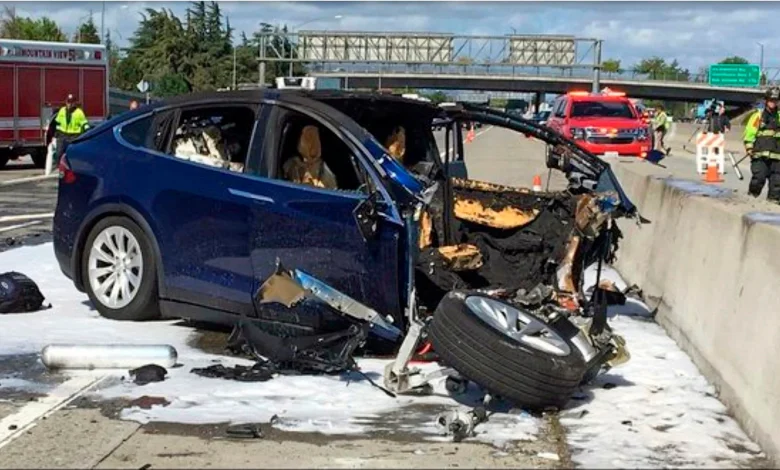
Tesla is at the center of a tragic and highly polarized legal dispute in Texas after a fatal collision on June 19, 2026, claimed the life of a beloved grandmother inside her own home. The victim, 76-year-old Martha Avila, was standing in a front room of her family’s Katy residence when a Tesla Model 3 left the roadway, struck a curb, and plowed directly through the home’s brick facade. The vehicle pinned Avila under heavy household objects and rubble, resulting in critical injuries that proved fatal despite rapid transport to a nearby trauma hospital. This horrific incident has not only devastated a local family but has also reignited an intense national conversation regarding the safety, regulatory oversight, and liability of semi-autonomous driving software.
The Lawsuit Filed in Harris County District Court
Following this tragedy, Jennifer Barbour, the daughter of Martha Avila, and her husband, Justin Barbour, took legal action. On behalf of themselves and the estate of Martha Avila, they filed a comprehensive civil lawsuit in the Harris County District Court. The lawsuit seeks substantial compensatory damages and, perhaps more importantly, transparent answers from the parties involved in the catastrophic event. Representing the family is Chris Adkins, an attorney with the Houston-based firm Zehl & Associates, who emphasized that the litigation is necessary to uncover the technical truth and hold negligent actors accountable.
Allegations of Design Defect and Failure to Warn
A primary pillar of the lawsuit is the claim of a serious “design defect” inherent to Tesla’s automated driving systems. The plaintiffs argue that Tesla, Inc. has designed, marketed, and distributed vehicles equipped with semi-autonomous software—such as Autopilot and Full Self-Driving (FSD)—that contain latent safety risks. The legal filing alleges that the software fails to properly detect residential road boundaries and is vulnerable to sudden, unintended acceleration or command misinterpretation. Furthermore, the suit alleges a critical “failure to warn.” The plaintiffs assert that Tesla has consistently failed to provide adequate warnings to operators and the general public about the limitations of its autonomous features, particularly in residential zones where high-speed collisions can have immediately lethal consequences.
Accusations of Negligence Against Driver Michael Butler
While the lawsuit aggressively targets the engineering and corporate marketing practices of Tesla, it also names the driver of the Model 3, 44-year-old Michael Butler, as a co-defendant. The plaintiffs allege that Butler acted with severe negligence on the night of the crash. Specifically, the suit claims that Butler failed to maintain a single lane of travel, failed to keep a proper lookout, operated his vehicle at a highly unsafe speed for a residential neighborhood, and failed to maintain physical control of his vehicle. By suing both Tesla and Butler, the family’s legal team aims to address both the human element of driver error and the systemic technological failures that combined to cause the fatal crash.
Details of the Fatal Accident on Rose Hollow Lane
The tragedy occurred at approximately 8:00 p.m. on Friday, June 19, 2026, in a quiet suburban neighborhood in Katy, Texas, located in west Harris County. The area, characterized by two-story brick family homes and quiet streets, became the scene of chaos when a Tesla Model 3 traveling eastbound on Rose Hollow Lane suddenly left the road. Surveillance video captured by neighboring properties showed the vehicle traveling at an extremely high rate of speed down the street, completely out of character for the 25-mph residential zone, before jumping the curb and striking the front of the Barbour family home.
The Immediate Impact and Loss of Martha Avila
Martha Avila was standing inside the front room of the residence when the vehicle breached the exterior brick wall. The impact was so severe that the Model 3 pushed a refrigerator and heavy furniture directly against Avila, pinning her beneath the collapsed wall and household rubble. Jennifer Barbour, who was in the backyard at the time, described hearing a massive, explosion-like boom. Upon rushing inside, the family was met with a scene of utter devastation. Emergency responders from the Harris County Sheriff’s Office and local fire departments worked quickly to extricate Avila from the wreckage. She was airlifted by Life Flight to a nearby hospital, but due to the extreme trauma sustained during the impact, she was tragically pronounced dead shortly after arrival.
Survival of Other Family Members in the Home
The circumstances of the crash highlight a miraculous yet bittersweet survival story for the rest of the household. The front room that was destroyed by the Tesla had been designated as a playroom for Avila’s three young grandchildren. For over a decade, Avila had lived with her daughter’s family, acting as a full-time caregiver and babysitter for the children, allowing both parents to maintain demanding careers. It was only by sheer chance that the children were not playing in the room at the moment of impact. Justin Barbour had been cooking dinner in the kitchen and had briefly stepped away to his computer moments before the crash occurred. While the family survived physically, they have been left deeply traumatized, and their home has been rendered entirely uninhabitable due to severe structural damage.
Data Analysis: Driver Claims vs. Corporate Telemetry
As the legal battle begins, a sharp divergence has emerged between the driver’s initial account of the accident and the digital telemetry data claimed by Tesla’s executive leadership. Below is a comparative breakdown of these competing narratives:
| Investigation Variable | Driver Michael Butler’s Account | Tesla Corporate Telemetry Claims | Official Investigative Agency Status |
|---|---|---|---|
| System Engagement | Claims automated driving assistance (Autopilot/FSD) was actively engaged. | Claims self-driving was active but manually overridden by the operator. | Under investigation; digital forensics teams are extracting physical data. |
| Vehicle Speed | Did not specify speed but indicated system was in control. | Alleges the vehicle reached a speed of 73 mph in a residential neighborhood. | Confirmed to be a high-speed crash based on local security footage. |
| Pedal Application | Implies the vehicle accelerated or failed to slow down autonomously. | Claims driver pressed the accelerator pedal to 100% capacity. | Event Data Recorder (EDR) analysis pending validation. |
| Post-Crash Action | Remained cooperative, showed no signs of intoxication at the scene. | Alleges driver kept the accelerator pedal pressed even after initial impact. | Harris County Sheriff’s Office confirmed driver’s cooperation and sobriety. |
The Automated Driving System Dispute: Telemetry vs. Driver Testimony
The core of the legal and public relations battle revolves around whether the Tesla Model 3’s automated systems were responsible for the high-speed trajectory or if manual driver intervention overrode the vehicle’s safety protocols. This dispute has placed a spotlight on how semi-autonomous vehicles interact with human inputs during critical emergencies.
Michael Butler’s Statements to the Sheriff’s Office
Following the crash, Michael Butler, who was also treated at a hospital for injuries sustained in the collision, cooperated fully with responding law enforcement officers. Butler explicitly stated to deputies that he was operating the vehicle with its automated driving assistance system engaged at the time of the crash. The Harris County Sheriff’s Office confirmed that Butler showed absolutely no signs of alcohol or drug impairment at the scene, which ruled out chemical intoxication as a contributing factor. For Butler and his legal defense, the focus remains on the vehicle’s software, suggesting that the system failed to safely navigate the residential road and instead propelled the car into the home.
Public Statements from Elon Musk and Ashok Elluswamy
In response to the public outcry and media coverage of the fatal accident, Tesla’s top executives bypassed traditional public relations channels to release specific telemetry claims on social media. Tesla CEO Elon Musk posted on the platform X that the driver’s story made “no sense,” asserting that the Full Self-Driving (FSD) system is designed to navigate slowly through residential streets, whereas this incident was a high-speed crash. Following Musk’s post, Ashok Elluswamy, Tesla’s Vice President of AI Software, provided detailed telemetric assertions. Elluswamy claimed that Tesla’s internal logs show the driver manually overrode the self-driving software by pressing the accelerator pedal to 100% capacity. According to Elluswamy, the vehicle reached 73 mph and the accelerator remained fully depressed even after the car had crashed into the brick home. These claims, however, remain unverified by independent investigators.
Federal and State Investigations Underway
Because of the fatal outcome and the direct involvement of semi-autonomous driving claims, multiple regulatory and law enforcement agencies have launched concurrent investigations into the Katy crash. These investigations will serve as the foundation for both criminal and civil proceedings.
NHTSA Opens a Special Crash Investigation
The federal government has intervened in the matter, with the National Highway Traffic Safety Administration (NHTSA) officially opening a Special Crash Investigation (SCI) into the June 19 incident. This federal probe is highly significant, as it adds to more than three dozen active or completed NHTSA investigations involving Tesla vehicles utilizing Autopilot or FSD. The federal agency is particularly focused on whether the vehicle’s safety safeguards failed to prevent a catastrophic collision in a residential area, and whether Tesla’s software allows for dangerous override conditions that compromise public safety.
The Role of the Harris County Sheriff’s Office and District Attorney
At the local level, the Vehicular Crimes Division of the Harris County Sheriff’s Office is leading the physical reconstruction of the crash. Forensic investigators are working to download the physical data from the Tesla’s Event Data Recorder (EDR), commonly referred to as the vehicle’s “black box.” While sheriff’s representatives have noted that they have found no evidence of a mechanical or hardware malfunction so far, they emphasized that the digital software analysis is still highly active. Once the local sheriff’s office concludes its investigation, the complete file will be presented to the Harris County District Attorney’s Office. Prosecutors will then evaluate the forensic data to determine if criminal charges, such as manslaughter or criminally negligent homicide, are warranted against Michael Butler.
Timeline of Events Surrounding the Katy Tesla Incident
To understand the rapid escalation of this case, a chronological timeline outlines the key events from the night of the crash to the filing of the lawsuit:
- June 19, 2026 (approx. 8:00 p.m.): A Tesla Model 3 operated by Michael Butler crashes through the brick wall of a residence on Rose Hollow Lane in Katy, Texas, striking Martha Avila inside the home.
- June 19, 2026 (approx. 8:30 p.m.): Martha Avila is airlifted by Life Flight to a Houston trauma center, where she is later pronounced deceased. Butler is treated for injuries and cooperates with investigators, claiming Autopilot was engaged.
- June 22, 2026: The National Highway Traffic Safety Administration (NHTSA) formally opens a Special Crash Investigation into the crash.
- June 22, 2026: Tesla CEO Elon Musk and VP of AI Software Ashok Elluswamy publish posts on X claiming vehicle telemetry proves 100% manual accelerator override by the driver.
- June 23, 2026: Attorney Chris Adkins of Zehl & Associates files a wrongful death lawsuit in Harris County District Court on behalf of Jennifer and Justin Barbour, naming Tesla and Michael Butler as defendants.
Technical and Legal Implications for Tesla’s Autonomous Software
The litigation in Harris County raises profound questions about the legal definitions of control, override, and liability in the age of semi-autonomous driving. The resolution of this case could shape future automotive regulations and product liability standards globally.
Full Self-Driving (FSD) and Autopilot Under Scrutiny
The central technical debate in this case centers on the concept of “driver-in-the-loop” overrides. If Tesla’s telemetry is verified, it prompts an essential safety design question: why does a vehicle marketed with advanced safety features allow an operator to override autonomous mode and accelerate to 73 mph in a densely populated suburban neighborhood without triggering automatic emergency braking (AEB) or obstacle-aware acceleration limits? Industry safety experts argue that autonomous vehicles should feature fail-safes that prevent extreme manual inputs when the vehicle’s forward-facing cameras and sensors clearly detect an imminent structural collision. If the software allowed the driver to plow through a brick wall without intervening, the argument for a design defect remains legally viable, regardless of who pressed the pedal.
Regulatory Pressures and Broader Legal Precedents
This lawsuit is not the first time Tesla has defended its automated features in court, but the setting—a fatal intrusion into a private home—presents an exceptionally challenging narrative for the automaker. Historically, courts have evaluated accidents where drivers crashed into other vehicles or highway barriers while using Autopilot. In those cases, defense strategies often succeeded by demonstrating that the driver failed to maintain active supervision as instructed by Tesla’s user manuals. However, when an innocent bystander is killed inside their own home, the legal landscape changes. The plaintiffs’ legal team will likely focus on strict product liability, arguing that Tesla’s marketing of “Full Self-Driving” creates a foreseeable risk of driver complacency and catastrophic pedal confusion, making the system inherently defective. The outcome of the Harris County District Court case, combined with the findings of the NHTSA, will undoubtedly influence how automotive manufacturers design manual override limits and how insurance companies assess liability in the future.