PESHAWAR Attack: Suicide Bombing Kills 14 Police Officers in Pakistan
Introduction
PESHAWAR, Pakistan – A devastating suicide attack targeted a security post in the Khyber Pakhtunkhwa province of northwest Pakistan, resulting in the death of 14 police officers. The incident occurred in Bannu, a district bordering Afghanistan, and has raised serious concerns about the escalating militant violence in the region. The attack was claimed by Ittehad-ul-Mujahideen Pakistan, a newly formed group reportedly splintered from the Tehrik-e-Taliban Pakistan (TTP). This incident underscores the persistent security challenges faced by Pakistan, particularly in its border regions, and highlights the complex dynamics of militant groups operating in the area.
Details of the Attack
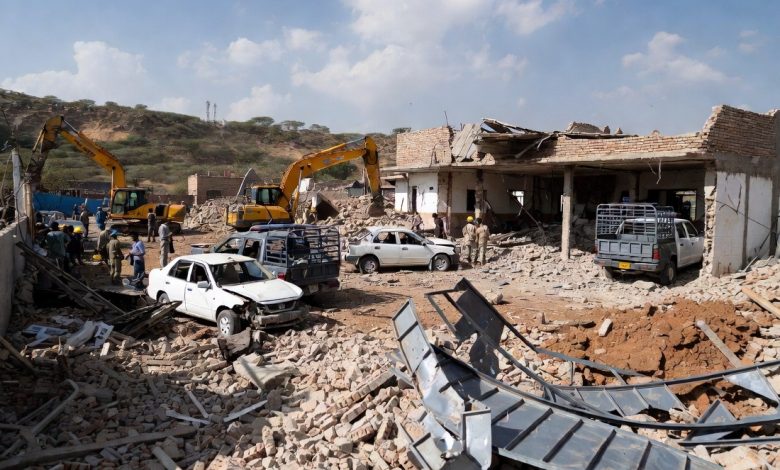
The attack unfolded late Saturday when a suicide bomber detonated a vehicle laden with explosives near the security post in Bannu. Simultaneously, several gunmen launched an assault, leading to a fierce exchange of fire. According to senior police official Sajjad Khan, the intensity of the explosions and gunfire resulted in immediate casualties, with some officers succumbing to their injuries during the shootout. Tragically, the situation worsened when the building housing the security post collapsed, trapping officers beneath the rubble. Rescue teams initiated an extensive search operation, employing heavy machinery to retrieve the bodies of those trapped. The operation lasted for hours, revealing the extent of the devastation. In addition to the 14 fatalities, three police officers sustained injuries in the attack and are receiving medical treatment. The coordinated nature of the attack, involving both a suicide bombing and armed assault, indicates a sophisticated level of planning and execution by the perpetrators.
Ittehad-ul-Mujahideen Pakistan
A relatively unknown entity, Ittehad-ul-Mujahideen Pakistan, claimed responsibility for the Bannu attack in a statement released to the media. The group asserted that it comprises breakaway factions of the Pakistani Taliban (TTP). However, Pakistani authorities suspect that Ittehad-ul-Mujahideen Pakistan is merely a front for the TTP, designed to obfuscate the TTP’s involvement and potentially broaden its appeal. The emergence of such groups and their complex relationships with established militant organizations like the TTP presents a significant challenge for Pakistani security agencies. Understanding the motivations, capabilities, and affiliations of these groups is crucial for developing effective counter-terrorism strategies. This also highlights the evolving nature of militancy in the region, where groups may adopt new names and structures to further their objectives while evading scrutiny.
Pakistan Taliban (TTP)
The Tehrik-e-Taliban Pakistan (TTP) has been a major source of instability and violence in Pakistan for many years. The group shares ideological alignment with the Afghan Taliban and has been responsible for numerous attacks targeting security forces and civilians. Following the return of the Afghan Taliban to power in 2021, Pakistan has witnessed a surge in militant activities, many of which are attributed to the TTP. The TTP seeks to enforce its interpretation of Islamic law in Pakistan and has waged a protracted insurgency against the Pakistani state. The group’s ability to conduct attacks, even after years of military operations aimed at dismantling its infrastructure, underscores its resilience and the ongoing challenges in countering its influence. The porous border between Pakistan and Afghanistan further complicates efforts to control the movement of TTP fighters and prevent cross-border attacks. Recent reports also indicate that the U.S. is engaging in backchannel diplomacy with Iran, a move that could have implications for regional stability and potentially impact the TTP’s operations.
Regional Security Context
The security situation in Pakistan is inextricably linked to the broader regional context, particularly the situation in Afghanistan. The withdrawal of international forces from Afghanistan and the subsequent rise of the Taliban have had profound implications for Pakistan. The Afghan Taliban’s victory has emboldened militant groups in Pakistan, and the porous border facilitates the movement of fighters and weapons. Furthermore, the complex interplay of regional powers, including Iran, adds another layer of complexity to the security landscape. Pakistan’s efforts to manage its relationship with the Afghan Taliban while also addressing the threat posed by the TTP require a delicate balancing act. The region has also seen increased activity around the Hormuz Strait, with France deploying warships amidst rising tensions, adding to the overall instability.
Government Response and Security Operations
In response to the Bannu attack, Pakistani security forces have launched an operation to apprehend the perpetrators. This operation likely involves intelligence gathering, surveillance, and targeted raids on suspected militant hideouts. The Pakistani government has reiterated its commitment to combating terrorism and has vowed to bring those responsible for the attack to justice. However, the effectiveness of these operations is often hampered by the challenging terrain, the presence of sympathetic local populations, and the ability of militants to blend in with civilians. A long-term solution to the problem of militancy in Pakistan requires a multi-faceted approach that addresses the root causes of extremism, strengthens law enforcement, and promotes economic development in marginalized areas.
International Implications
The escalating violence in Pakistan has implications that extend beyond its borders. The presence of militant groups in the region poses a threat to international security, and the potential for these groups to collaborate with other terrorist organizations is a major concern. The international community has a stake in supporting Pakistan’s efforts to combat terrorism and stabilize the region. This support can take various forms, including financial assistance, intelligence sharing, and training for Pakistani security forces. However, it is also important to address the underlying factors that contribute to extremism, such as poverty, lack of education, and political grievances. Moreover, recent incidents, such as the security investigation at the Israeli embassy in Britain, highlight the global reach and interconnectedness of security threats.
Historical Context of Militancy in Pakistan
Militancy in Pakistan has a long and complex history, dating back to the Soviet-Afghan War in the 1980s. During that conflict, Pakistan played a key role in supporting the Mujahideen against the Soviet Union, and the country became a hub for foreign fighters and weapons. After the Soviet withdrawal, many of these fighters remained in Pakistan, and some went on to form militant groups. The rise of the Taliban in Afghanistan in the 1990s further fueled militancy in Pakistan, and the country became a breeding ground for extremism. The US intervention in Afghanistan in 2001 led to a further influx of militants into Pakistan, and the country has been battling various insurgent groups ever since. Understanding this historical context is essential for comprehending the current security challenges faced by Pakistan.
Impact on Local Communities
The ongoing violence in Khyber Pakhtunkhwa and other parts of Pakistan has had a devastating impact on local communities. The attacks have resulted in loss of life, displacement, and economic hardship. Many people have been forced to flee their homes due to the insecurity, and the ongoing conflict has disrupted education, healthcare, and other essential services. The psychological toll on the population is also significant, with many people suffering from trauma and anxiety. The government and international organizations are working to provide assistance to affected communities, but the scale of the challenge is immense. Addressing the needs of these communities and restoring stability to the region will require a sustained and coordinated effort. The situation is further complicated by economic factors; for example, recent warnings about a jet fuel crisis in Europe could affect aviation and related industries globally, indirectly impacting Pakistan as well.
Challenges for Pakistani Security Forces
Pakistani security forces face numerous challenges in their efforts to combat militancy. These include the difficult terrain, the porous border with Afghanistan, the presence of sympathetic local populations, and the ability of militants to blend in with civilians. The security forces also face resource constraints and a lack of training in counter-insurgency tactics. Furthermore, the complex political dynamics of the region and the involvement of various external actors complicate the security situation. Overcoming these challenges will require a comprehensive strategy that includes improved intelligence gathering, enhanced border security, and closer cooperation with local communities. Moreover, events like the breaching of thousands of schools by ShinyHunters highlight the need for enhanced cybersecurity measures, adding another layer of complexity to the security landscape.
Recent Terrorist Activities in Pakistan
Pakistan has experienced a surge in terrorist activities in recent years. Here is a summary of some major incidents:
| Date | Location | Description | Casualties |
|---|---|---|---|
| May 9, 2026 | Bannu, Khyber Pakhtunkhwa | Suicide attack on a security post | 14 police officers killed |
| April 15, 2026 | Quetta, Balochistan | Bomb blast targeting a police vehicle | 5 police officers killed |
| March 22, 2026 | Islamabad | Suicide bombing near a government building | 8 civilians killed |
| February 10, 2026 | Peshawar | Attack on a Shia mosque | 30 worshippers killed |
These incidents reflect the ongoing threat posed by militant groups in Pakistan and the challenges faced by the security forces in maintaining law and order. The attacks also highlight the vulnerability of both security personnel and civilians to terrorist violence.
Conclusion
The suicide attack in Bannu, Pakistan, which resulted in the tragic loss of 14 police officers, underscores the persistent and evolving threat of militancy in the region. Claimed by Ittehad-ul-Mujahideen Pakistan, a group believed to be a front for the TTP, the attack highlights the complex web of militant organizations operating in the area. The incident occurs against a backdrop of increasing instability in the region, exacerbated by the situation in Afghanistan and the intricate involvement of various regional powers. The Pakistani government’s response, involving security operations to apprehend the perpetrators, reflects a commitment to combating terrorism, but the effectiveness of such measures is often hampered by numerous challenges. Ultimately, addressing the root causes of extremism, strengthening law enforcement, and fostering economic development in marginalized areas are crucial for achieving long-term stability and security in Pakistan. The international community must also play a supportive role in these efforts, recognizing that the security of Pakistan is intertwined with regional and global security. Recent events, such as the UAE’s warning to the US about shifting to Yuan for oil sales, also indicate a changing geopolitical landscape that could indirectly affect Pakistan’s stability. Furthermore, the ongoing U.S. military strikes in the Caribbean highlight the global nature of security challenges and the need for comprehensive strategies to address them.