US Uncovers Illegal Vape Factory in Chinese Onshore Shift 2026
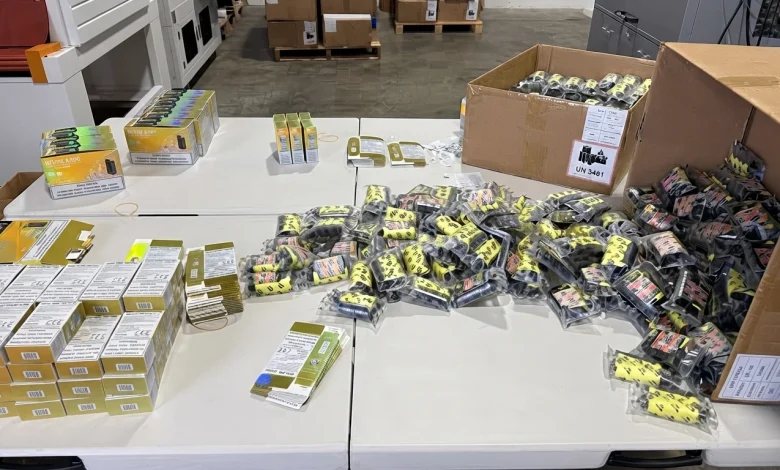
Table of Contents
In a development that signals a major tactical evolution in the illicit nicotine trade, United States authorities uncovered an illegal vape factory operating domestically last month, according to police records and photographs reviewed by Reuters. The discovery provides concrete evidence that overseas producers—facing intensifying federal interdictions at American ports—have begun relocating portions of their manufacturing and assembly footprint directly onto US soil.
For years, the pipeline supplying unauthorized flavored e-cigarettes to American convenience stores and smoke shops followed a predictable maritime and air-cargo route originating in southern China. Today, that dynamic is changing. While Chinese-owned disposable vape brands continue to dominate the United States—the world’s largest market for smoking alternatives—the vast majority of those products still lack the mandatory marketing authorization from the U.S. Food and Drug Administration (FDA) required for legal sale.
By moving manufacturing closer to end consumers, illicit operators aim to insulate their supply chains from customs seizures. Yet this geographic pivot also introduces new legal exposures, local law enforcement scrutiny, and acute public health questions regarding uninspected domestic production.
Inside the Discovery of an Illegal Vape Factory on US Soil
According to police and photographic evidence seen by Reuters, the domestic facility uncovered last month was actively producing unauthorized electronic nicotine delivery systems. While law enforcement disclosures have centered on the immediate operational footprint of the site, the broader strategic implication is unmistakable: moving from finished-goods importation to onshore fabrication marks an inflection point in how unauthorized brands defend their US market share.
Historically, US enforcement agencies concentrated their heaviest firepower at maritime ports, international mail facilities, and express air hubs. Inspecting shipping containers before they clear customs allowed federal agents to intercept millions of dollars worth of unauthorized devices in single sweeps. Once an operator establishes an illegal vape factory inside the country, however, that border choke point is partially neutralized.
Instead of shipping fully assembled, branded disposable vapes in retail packaging—items easily flagged by customs manifest screening—manufacturers can import generic, unbranded subcomponents. Lithium-ion battery cells, heating coils, plastic housings, and bulk chemical feedstocks rarely trigger the same automated tobacco-enforcement alerts as finished e-cigarettes bearing well-known disposable brand names. Final assembly, e-liquid filling, and retail packaging can then take place quietly in leased industrial parks far from coastal ports of entry.
Key Investigative Takeaway: Shifting from finished-product imports to domestic assembly allows unauthorized vape networks to fragment their supply chains—bypassing port-level customs screening while keeping retail shelves stocked in the world’s largest vaping market.
Why Chinese Manufacturers Are Pivoting to Domestic Assembly
The emergence of domestic unauthorized production did not occur in a vacuum. Over the past two years, coordinated federal enforcement has raised the financial cost and logistical friction of exporting finished disposable vapes from manufacturing hubs such as Shenzhen into the United States. Every seized container represents lost inventory, disrupted wholesale relationships, and potential scrutiny of upstream importers of record.
Several converging pressures explain why operators are testing domestic production models despite higher US labor and real estate costs:
- Heightened Customs Interdiction: Joint operations between the FDA and U.S. Customs and Border Protection (CBP) have increasingly targeted misdeclared shipments, using targeted import alerts to detain merchandise labeled as toys, flashlights, or generic electronics.
- Tariff and Freight Volatility: Shifting trade duties and rising domestic freight and logistics costs have squeezed margins for bulk finished-goods shippers, making localized fulfillment and component-level shipping comparatively more attractive when factored against seizure losses.
- Rapid Inventory Replenishment: Domestic production compresses lead times from months to days, allowing illicit networks to adapt quickly to shifting state-level flavor restrictions or sudden wholesale shortages.
- Evasion of Import Alerts: When specific overseas exporters are placed on FDA import red lists, domestic assembly provides a workaround that obscures the product’s foreign brand lineage until the point of retail distribution.
To illustrate how fundamentally this operational shift alters enforcement exposure, the following comparison outlines the structural differences between traditional cross-border smuggling and onshore illicit production.
| Operational Dimension | Traditional Import Model | Onshore Illicit Factory Model |
|---|---|---|
| Primary Chokepoint | US ports of entry and international air cargo hubs | Local industrial zoning, warehouse leases, and domestic trucking |
| Customs Visibility | High; finished devices and brand names appear on manifests | Low; generic batteries, shells, and bulk liquids enter separately |
| Lead Enforcement Agencies | CBP, FDA Office of Regulatory Affairs | Local police, state tax/revenue agents, FDA, and DOJ |
| Supply Chain Agility | Slow; vulnerable to maritime delays and container holds | Fast; localized assembly responds rapidly to regional demand |
| Legal Exposure | Administrative seizure and civil import penalties | Direct criminal liability, asset forfeiture, and state prosecution |
The FDA Authorization Gap and Disposable Market Dominance
At the center of this enforcement struggle is a stark market paradox: the products driving the vast majority of consumer spending in the US vaping sector remain legally unauthorized for sale. Under the Federal Food, Drug, and Cosmetic Act—as amended by the Family Smoking Prevention and Tobacco Control Act—every new tobacco or nicotine product must obtain a formal marketing granted order through the FDA’s Premarket Tobacco Product Application (PMTA) pathway before entering interstate commerce.
To date, the FDA has authorized only a narrow roster of e-cigarette products, almost exclusively tobacco- and menthol-flavored cartridge-based systems produced by major legacy tobacco companies. Virtually none of the brightly colored, fruit- and candy-flavored disposable vapes engineered by Chinese-owned manufacturers hold valid FDA authorization. Despite that regulatory prohibition, disposable devices have captured the lion’s share of US retail sales.
Consumer demand for high-puff-count, sweet-flavored disposables has created an immense financial incentive for suppliers willing to operate outside federal compliance. When authorized competitors are restricted to tobacco and menthol profiles, unauthorized brands fill the flavor vacuum across tens of thousands of independent convenience stores, gas stations, and dedicated vape shops nationwide. Even aggressive warning-letter campaigns from federal regulators have struggled to clear shelves when wholesale demand remains entrenched.
Because the United States represents the single most lucrative market globally for smoking alternatives, losing access to American distributors is commercially unacceptable for major disposable brands. The revelation of an illegal vape factory operating domestically demonstrates just how far some supply networks are willing to go to preserve revenue streams that reach into the billions of dollars annually.
Multi-Agency Enforcement: Borders, Warehouses, and Local Raids
When unauthorized vape manufacturing moves inside US borders, the enforcement architecture required to dismantle it shifts dramatically. Port interdiction relies on customs brokers, harmonized tariff codes, and manifest anomalies. Domestic factory investigations, by contrast, depend on traditional detective work: local police tips, municipal code violations, utility usage anomalies, state excise tax audits, and coordinated multi-agency task forces.
In recent years, the FDA and the U.S. Department of Justice (DOJ) established an interagency task force specifically designed to bring civil injunctions, product seizures, and criminal prosecutions against unauthorized e-cigarette manufacturers and distributors. That federal push runs parallel to broader federal law enforcement accountability and investigative actions aimed at tightening institutional oversight across complex regulatory jurisdictions.
State governments have also stepped into the breach. Facing frustration over the pace of federal enforcement, several states have enacted PMTA registry laws—statutes that require manufacturers to certify under penalty of perjury that their products are either FDA-authorized or actively under valid premarket review before they can be sold within state lines. Violators face escalating daily fines, state attorney general lawsuits, and loss of retail tobacco licenses.
| Enforcement Mechanism | Primary Authority | Target in Supply Chain | Core Penalty / Lever |
|---|---|---|---|
| Import Alerts & Detentions | FDA & U.S. Customs and Border Protection | Foreign exporters and US importers of record | Refusal of admission and destruction of cargo |
| DOJ Civil Injunctions | Department of Justice & FDA | Domestic manufacturers and wholesale hubs | Court-ordered shutdowns and asset seizures |
| PACT Act Compliance | ATF & State Revenue Departments | Interstate shippers and delivery carriers | Criminal felony charges for untaxed shipping |
| State PMTA Directories | State Attorneys General & Revenue Agencies | Distributors and brick-and-mortar retailers | Contraband seizure and license revocation |
Another potent but frequently overlooked statute in domestic vape enforcement is the Prevent All Cigarette Trafficking (PACT) Act. Amended by Congress to cover electronic nicotine delivery systems, the PACT Act prohibits the use of the U.S. Postal Service to ship vaping products, mandates strict age-verification on private deliveries, and requires monthly reporting of all interstate shipments to state tobacco tax administrators. An unlicensed domestic factory distributing finished goods across state lines without PACT Act registration creates an immediate paper trail of tax evasion and federal shipping violations—offenses that carry far stiffer criminal penalties than an administrative FDA warning letter.
Consumer Safety, Quality Control, and Supply Chain Opacity
Beyond trade policy and tax enforcement, the discovery of an underground domestic manufacturing operation raises urgent public health and product-safety concerns. Legitimate, FDA-authorized tobacco and nicotine manufacturers are subject to facility registration, ingredient listing requirements, adverse-event reporting, and rigorous manufacturing inspections designed to prevent contamination and mechanical failure.
In contrast, an illegal vape factory operating covertly to evade regulators has zero institutional incentive to adhere to Good Manufacturing Practices (GMP). When illicit operators relocate assembly into uncertified domestic warehouses, several acute risks emerge for end consumers:
- Unverified E-Liquid Formulations: Without batch testing or regulatory oversight, nicotine concentrations can vary wildly from label claims, and unauthorized flavorings or carrier solvents may introduce harmful thermal degradation byproducts when heated.
- Chemical Contamination Risks: Mixing and filling nicotine solutions in non-sterile industrial spaces—potentially alongside packaging adhesives, dust, or machinery lubricants—exposes consumers to unknown inhalation hazards.
- Lithium-Ion Battery Hazards: Disposable vapes rely on compact rechargeable or single-use lithium-ion cells. Improper soldering, substandard battery management circuitry, or damaged cells assembled by untrained workers heighten the risk of thermal runaway, fires, and device explosions.
- Counterfeit Labeling and Traceability Failures: Because underground facilities operate outside legitimate serial-tracking frameworks, defective or contaminated batches cannot be recalled effectively, leaving consumers and emergency clinicians without reliable ingredient disclosure.
Across consumer product sectors, lapses in manufacturing oversight and ingredient safety have repeatedly triggered massive legal reckoning, echoing lessons seen in high-stakes corporate product liability and regulatory settlements. For illicit vape operators hiding behind shell companies, however, traditional civil accountability is often impossible to enforce until law enforcement physically shuts down the site.
Public Health Warning: Uninspected domestic assembly removes even the basic factory-floor consistency of large overseas plants, exposing consumers to unverified nicotine levels, contaminated e-liquids, and defective lithium-ion batteries with no mechanism for product recalls.
What the Onshore Shift Means for Retailers and Regulators
The Reuters-reported discovery is unlikely to remain an isolated anomaly. As long as federal border seizures remain aggressive and consumer demand for unauthorized flavored disposables stays resilient, illicit supply chains will continue seeking the path of least resistance. For regulators, law enforcement, and legitimate market participants, the emergence of domestic clandestine factories reshapes the strategic outlook across several fronts.
1. Domestic Intelligence Sharing Must Replace Siloed Enforcement
Stopping onshore manufacturing requires closer coordination between federal regulators and local authorities. Police departments, fire marshals, environmental regulators, and municipal building inspectors are often the first to encounter unusual chemical odors, hazardous waste disposal, or unpermitted assembly lines in commercial warehouses. Equipping local officials to recognize unauthorized nicotine fabrication—and linking those findings immediately to FDA and DOJ investigators—will be critical to preventing a proliferation of underground sites.
2. Component-Level Scrutiny at Ports
If manufacturers are importing disassembled hardware and bulk chemicals rather than finished vapes, CBP and FDA screening algorithms must evolve accordingly. Tracking bulk shipments of empty disposable shells, pre-printed branded outer cartons, and high-volume nicotine salts can expose domestic assembly networks before finished products ever reach wholesale distribution.
3. Heightened Legal Risk for Wholesalers and Retailers
For convenience store chains, distributors, and independent vape retailers, the compliance landscape is tightening rapidly. Purchasing popular disposable brands from unverified regional wholesalers—even those claiming products are