Digital Scent Technology Enables Real-Time Olfactory Sharing 2026
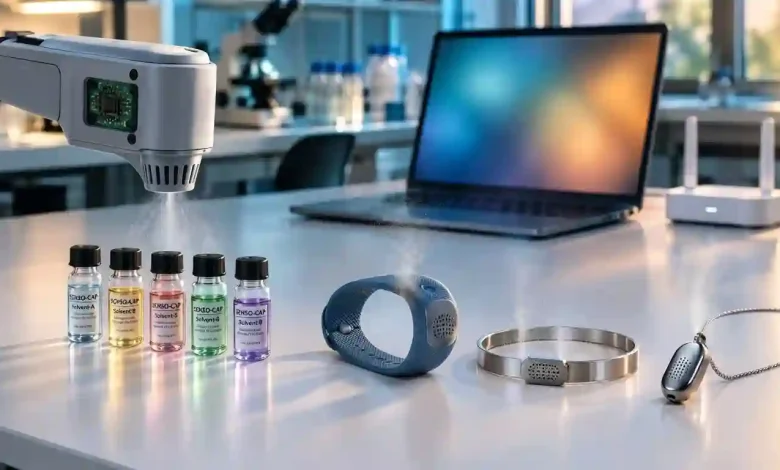
Table of Contents
Digital scent technology is breaking open the final sensory boundary of remote telecommunications. For decades, mobile computing, high-definition displays, and spatial audio systems have saturated human visual and auditory senses. Billions of smartphones connect the modern world through pixels and acoustic vibrations, yet smell has remained stubbornly absent from everyday digital interactions. A breakthrough engineered by bioelectronic researchers has transformed remote olfactory communication from speculative laboratory concepts into a functioning prototype system. By uniting an artificial olfactory sensor—colloquially called an electronic nose—with a miniaturized, wearable dispensing mechanism, scientists have achieved remote synthesis and release of authentic aroma signatures across digital networks, operating seamlessly whether the recipient is stationed across the hallway or on an entirely different continent.
The Digital Olfactory Frontier
Modern telecommunication thrives on digitizing physical phenomena into binary packets. Optical cameras record visible light wavelengths, and acoustic diaphragms convert air pressure fluctuations into audio waveforms. In contrast, smell relies on physical chemical volatility, requiring volatile organic compounds (VOCs) to physically bind with olfactory receptors in the human nasal epithelium. The sheer complexity of chemical combinations has historically stymied engineers attempting to construct digital smell pipelines. While primary colors like red, green, and blue can be mixed to generate the entire visible spectrum on digital panels, odor perception involves hundreds of distinct olfactory receptor genes firing in complex combinatorial patterns.
The newest leap forward circumvents this computational barrier by utilizing targeted odor categorization alongside rapid chemical indexing. Much like early breakthroughs in multimodal AI and spatial computing, modern sensory systems depend on unified data architectures that translate chaotic real-world inputs into actionable telemetry. By isolating common volatile organic signatures—such as the distinct pyrazines and ketones that establish the signature aroma of roasted coffee—the new system condenses complex biochemical information into lightweight digital transmission packets.
How Electronic Noses Capture Chemical Signatures
At the input end of this communication pipeline lies the electronic nose (e-nose), an analytical device outfitted with an array of chemical sensors coupled with machine learning pattern recognition. When air containing aroma molecules passes across the sensor array, the individual sensor elements exhibit varying physical and electrical responses. Metal-oxide semiconductors (MOS), conductive polymers, or quartz crystal microbalances within the sensor array react selectively to functional chemical groups, creating a unique conductivity or mass-shift fingerprint.
Rather than attempting to decipher every individual molecule in a sample, the machine learning model matches the overarching conductivity curve against a comprehensive library of known aroma fingerprints. The identification process occurs in milliseconds. When a user brews a fresh cup of coffee near the capture device, the e-nose detects the chemical profile, confirms the identity of the substance, quantifies its relative concentration, and encodes the olfactory data into a standardized digital instruction set ready for immediate cloud distribution.
Wearable Scent Synthesis and Dispensing Hardware
Generating the scent on the receiving end requires completely different physical mechanics than reproducing pixels or sound waves. The receiving hardware consists of an unobtrusive, miniaturized wearable module—often designed as a collar, pendant, or headset attachment—equipped with micro-reservoirs filled with safe, concentrated aroma compounds suspended in liquid matrices or biocompatible polymers.
Upon receiving the digital trigger code, thermal micro-actuators or ultrasonic piezoelectric transducers within the wearable activate. By applying minute heat pulses or vibration bursts, the device vaporizes microscopic amounts of the required base compounds, blending them into a localized scent plume directly below the user’s nostrils. The micro-dosing mechanism prevents ambient contamination, ensuring the aroma is perceived intensely by the wearer for several seconds before dissipating naturally into the air without leaving lingering residue on clothing or skin.
Comparing Digital Sensory Modalities
Understanding how olfactory telecommunication fits into existing computational architectures requires comparing its mechanics, data footprints, and hardware constraints with visual, auditory, and haptic systems.
| Sensory Modality | Input Mechanism | Transmission Data Size | Output Hardware | Primary Bottleneck |
|---|---|---|---|---|
| Vision | CMOS / CCD optical sensors | High (Megabytes per frame) | OLED / MicroLED displays | Display resolution & power |
| Audition | Electret / MEMS microphones | Moderate (Kilobaud to Megabytes) | Dynamic speakers / bone conduction | Bandwidth & ambient noise cancellation |
| Haptics | Pressure & motion sensors | Low (Bytes to Kilobytes) | Vibration motors / ERM actuators | Mechanical wear & tactile fidelity |
| Olfaction | Multi-sensor E-Nose arrays | Extremely Low (Bytes per packet) | Wearable micro-dispensers | Consumable chemical replenishment |
Transmitting Chemical Data Across Global Networks
One of the most remarkable characteristics of olfactory transmission is its data efficiency. Unlike 8K video streams or uncompressed multi-channel spatial audio, digital scent profiles require only a few bytes of binary instructions. The packet merely specifies compound index identifiers, intensity values, delivery curve dynamics, and pulse duration metrics. As a result, the communication packet travels seamlessly across high-speed mobile networks, satellite links, and standard internet protocols without causing network congestion.
This ultra-low bandwidth demand mirrors developments across distributed sensor systems, where edge devices process heavy raw data locally and transmit only distilled parameters. Just as enterprises implement strict protocols when threat intelligence coordinates edge defense, digital olfactory systems rely on synchronized cloud APIs to verify user identity, delivery permissions, and payload authenticity before triggering remote aerosolized chemicals.
Immersive Virtual Realities and Olfactory Media
The integration of olfactory synthesis into virtual and augmented reality environments marks a fundamental milestone for simulated physical immersion. Visual realism in virtual reality has advanced rapidly, yet users frequently report an uncanny detachment due to missing non-visual environmental stimuli. Integrating an olfactory wearable with head-mounted hardware eliminates this sensory void.
When a user traverses a digital pine forest, strolls past a digital bakery, or observes rain falling on digital earth, the software triggers olfactory micro-pulses tailored to spatial coordinates. This multi-sensory synchronization creates deeper memory formation and emotional resonance than visual fidelity alone. The gaming and entertainment sectors are heavily investing in these peripherals to deliver experiences where tactical feedback includes smelling ozone during digital lightning strikes or gunpowder during historical simulation sequences.
E-Commerce and Consumer Market Transformation
The retail landscape stands to be revolutionized by functional scent telecommunications. Online shopping currently falters in categories heavily reliant on olfactory evaluation, such as perfumery, cosmetics, specialty roasted coffees, teas, and gourmet foods. Consumers must either purchase products based on abstract verbal descriptions or visit brick-and-mortar storefronts to sample physical testers.
With scent-enabled telecommunications, digital marketplaces can provide real-time aroma samplers directly to a consumer’s personal wearable. While browsing high-end perfumery or roasted beans, users click a sample prompt on their smartphone, prompting their personal dispenser to release a precise, low-dose micro-blend representing the item. This capability bridges the trust gap in luxury goods, mirroring consumer shifts documented when examining how autonomous commerce reshapes the digital retail space. High-end lifestyle brands are already anticipating a sharp reduction in product return rates as consumers evaluate scent profiles prior to shipping.
Medical, Therapeutic, and Diagnostic Frontiers
Beyond entertainment and retail, remote olfactory systems possess tremendous utility in digital therapeutics and telemedicine. Human olfactory bulbs connect directly to the limbic system—the brain’s emotional and memory hub—bypassing the thalamic relay that processes sights and sounds. Consequently, aromas elicit immediate neurochemical reactions, rendering them uniquely effective for mental health interventions.
Clinicians managing post-traumatic stress disorder, severe anxiety, and sleep dysregulation are testing digital scent actuators to deliver automated aroma cues during teletherapy sessions. Calming scents like lavender or linalool derivatives can be pulsed remotely by mental health professionals during guided relaxation techniques. Furthermore, researchers are deploying e-noses for non-invasive medical triage, identifying bacterial infections, metabolic disorders, and respiratory illnesses from the subtle chemical signatures present in patient breath analysis.
Technical Hurdles and Cartridge Miniaturization
Despite impressive laboratory milestones, commercializing digital smell technology requires overcoming substantial industrial hurdles. The primary challenge involves the physics of consumables. Unlike screens that emit photons indefinitely or speakers that vibrate air molecules, olfactory dispensers consume finite chemical payloads. Miniaturizing multi-well scent cartridges while preventing evaporation, nozzle clogging, and cross-contamination remains an engineering bottleneck.
Moreover, developers must navigate safety and allergen compliance across international regulatory borders. Dispensing aerosolized chemicals into personal spaces demands hypoallergenic carrier solvents and rigorous testing against respiratory sensitivities. Tech companies must safeguard hardware firmware against malicious intrusion, ensuring bad actors cannot trigger uncomfortable, toxic, or disorienting chemical combinations. Similar security principles apply when developers address vulnerabilities like unintended computational failures in automated systems or design fault-tolerant runtimes that govern autonomous edge devices.
The Future of Multisensory Telecommunications
As micro-electro-mechanical systems (MEMS) advance and chemical synthesis cartridges become more modular, the inclusion of digital scent into personal mobile setups will become increasingly commonplace. The integration pathway mirrors the evolution of haptic motors, which transitioned from bulky rumble packs into microscopic linear resonant actuators embedded invisibly inside pocket smartphones.
Emerging research is exploring universal primary scent palettes—a compact set of 20 to 30 base odorants that, when combined at varying ratios, can simulate thousands of natural aroma profiles. When married with wearable hardware, these universal cartridges will allow consumers to download scent packs just as they download audio files or color palettes today. Whether reconnecting distant family members through the familiar aroma of home-cooked cuisine, enriching interactive education, or augmenting telepresence robotics, olfactory telecommunications are set to reshape human connectivity by completing the digital sensory spectrum.