Abortion pill lawsuits: Red States Target Shield Laws in Interstate Legal War 2026
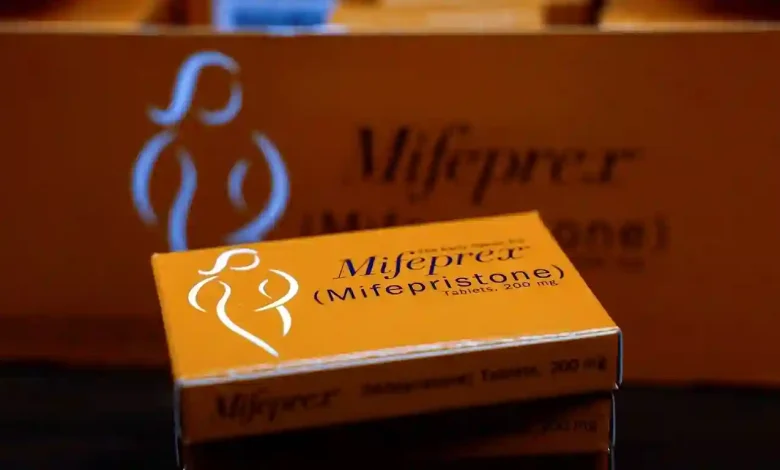
Table of Contents
Abortion pill lawsuits have entered an unprecedented legal frontier as Louisiana, Alabama, and Arkansas launch coordinated challenges against out-of-state healthcare providers. In twin legal actions, these conservative states assert that mailing medication abortion compounds directly to their citizens constitutes an actionable public nuisance under state and common law. The litigation directly attacks the shield law statutes established by New York, California, and Massachusetts, creating a profound constitutional clash between sovereign states with diametrically opposed statutory mandates. This escalating confrontation threatens to fundamentally destabilize the established norms governing interstate commerce, telemedicine delivery models, and extraterritorial jurisdiction.
Abortion Pill Lawsuits: The Novel Public Nuisance Strategy
The core theory of these newly initiated abortion pill lawsuits hinges on an expansive reimagining of public nuisance law. Traditionally invoked to mitigate environmental degradation, defective manufacturing, or unregulated chemical distribution, public nuisance claims are now being weaponized to target reproductive healthcare providers situated thousands of miles away. The attorneys general representing Louisiana, Alabama, and Arkansas contend that distributing mifepristone and misoprostol across state borders directly degrades public welfare and subverts local statutory health mandates.
By framing the receipt of pharmaceuticals as an injury to public order, plaintiffs seek to bypass traditional extradition limits and cross-jurisdictional hurdles. The filings claim that clinics in coastal safe havens consciously disrupt community standards by providing clandestine access to prohibited medicines. Observers following federal litigation trends, much like ongoing reviews seen when the Supreme Court term opens, note that novel common-law theories often serve as testing grounds for broader systemic challenges.
Mechanisms of the Cross-Border Clash: Shield Laws vs. State Bans
The catalyst for this legal confrontation lies in the robust shield laws enacted in progressive states following the reversal of federal constitutional abortion protections. Lawmakers in states such as New York, California, and Massachusetts enacted comprehensive statutory shields designed to insulate in-state doctors, pharmacists, and clinic administrators from out-of-state legal repercussions. These protections prohibit local law enforcement, courts, and licensing agencies from executing subpoenas, assisting out-of-state depositions, or honoring extradition requests arising from lawful reproductive healthcare services provided within their boundaries.
Consequently, providers residing in shield states have used asynchronous telehealth pipelines to evaluate patients remotely and arrange the physical delivery of pharmaceuticals via the United States Postal Service. Because these clinicians are physically stationed within jurisdictions where medication abortion remains fully legal, they operate under explicit state-sanctioned liability immunities. The newly filed petitions assert that these shield statutes intentionally facilitate illicit activity in states where life begins at conception under local statute, challenging the limits of interstate comity.
Deconstructing the Public Nuisance Doctrine in Healthcare
Public nuisance torts generally require proof that a defendant has substantially and unreasonably interfered with a right common to the general public. Historically, states employed this cause of action to penalize water contamination, unlawful fireworks manufacturing, and illegal firearm sales networks. More recently, municipal and state governments adapted the doctrine against pharmaceutical manufacturers in sprawling opioid litigation, claiming overprescription degraded civic health.
In the abortion pill lawsuits, conservative attorneys general argue that mailing chemical abortifacients creates an unmonitored medical hazard within their borders. They claim that when self-administered without an in-person clinical exam or ultrasound, the medications lead to higher emergency department visits, thereby burdening local healthcare infrastructure. Conversely, civil rights advocates and medical associations emphasize that decades of scientific data demonstrate mifepristone’s exceptional safety profile. They argue that applying tort-based nuisance liability to federally approved pharmaceuticals represents an untenable deviation from statutory tort jurisprudence.
Comparative Analysis of Conflicting Legal Frameworks
The conflict between plaintiff states and defender states highlights conflicting structural architectures regarding statutory enforcement, professional liability, and regulatory priorities.
| Jurisdiction Category | Core Legal Mechanism | Primary Objective | Constitutional Counter-Argument |
|---|---|---|---|
| Plaintiff States (LA, AL, AR) | Public Nuisance Common Law & Civil Injunctions | Enforce total bans on medication distribution within state borders | Violation of Interstate Commerce Clause; Lack of personal jurisdiction |
| Shield States (NY, CA, MA) | Statutory Provider Shields & Non-Cooperation Mandates | Protect in-state licensed clinicians from extraterritorial sanctions | Alleged defiance of Full Faith and Credit Clause |
| Federal Regulatory Baseline | FDA Risk Evaluation and Mitigation Strategies (REMS) | Maintain nationwide distribution standards for approved medicines | States assert police powers over health supercede federal minimums |
Constitutional Flashpoints: Extraterritoriality and the Commerce Clause
This unprecedented litigation brings several long-dormant constitutional questions directly to the forefront. The foremost constitutional dilemma involves extraterritoriality—the principle that one state lacks the constitutional authority to project its police powers directly into another sovereign state. Under traditional constitutional doctrine, an act that is entirely lawful within the state where it occurs cannot be criminalized or subjected to civil penalties by an external jurisdiction.
Furthermore, the dormant Commerce Clause severely restricts states from enacting protectionist regulations or imposing excessive burdens on interstate commerce. When postal couriers transport pharmaceuticals originating from an out-of-state pharmacy, federal oversight over national mail and interstate carriage becomes central. Similar to debates surrounding systemic federal oversight, such as when Heidi Overton FDA discussions centered on agency autonomy, the division of power between federal statutory approval and local enforcement represents a major friction point.
The litigation also engages the Full Faith and Credit Clause. While states must honor the judicial proceedings of sister states, established exceptions allow states to decline enforcement if an out-of-state mandate directly violates their fundamental public policy. The conflicting policies surrounding reproductive healthcare provide an acute test of this doctrine, raising the likelihood of widespread legal gridlock.
Operational Repercussions for National Telehealth Networks
The practical implications for healthcare delivery extend far beyond courtroom discourse. Modern telehealth platforms rely on decentralized digital infrastructure to treat patients across administrative boundaries. Medical practices operating under protective shield networks have expanded dramatically over recent years, delivering care to dozens of thousands of individuals living in restrictive regions. Just as institutional disruption forces operational adaptations in federal programs—seen in evolving debates around government paid health systems and broader shifts in Medicare Advantage plans—these medical organizations must now reconsider their administrative safeguards.
Clinicians practicing under shield networks face complex logistical obstacles. If plaintiff states obtain default judgments or injunctive relief in local courts, clinicians risk aggressive asset forfeiture actions or frozen business operations if their clinical entities hold financial assets in regional institutions. Malpractice insurers are also closely assessing whether policies cover civil defense expenditures arising from cross-border public nuisance litigation, potentially driving up administrative overhead across the entire telehealth ecosystem.
Judicial Pathways and Anticipated Federal Court Precedents
The progression of these lawsuits through the federal judiciary is expected to encounter substantial procedural battles before any judge considers substantive arguments. Provider defendants are almost certain to file motions seeking removal from state dockets to federal courtrooms, asserting both federal preemption and diversity of citizenship. In federal venues, defense attorneys will argue that the Federal Food, Drug, and Cosmetic Act preempts state-level attempts to restrict distribution of an agency-approved chemical compound.
Courts will also examine whether individual state attorneys general possess standing to file public nuisance suits against remote medical entities. Establishing an unbroken causal link between out-of-state mailings and concrete public harms poses severe evidentiary hurdles. However, given the deep ideological divisions across federal circuits, conflicting appellate opinions appear virtually inevitable. Such splits would force the issue onto the emergency docket of the nation’s highest tribunal, mirroring contentious administrative milestones such as an impactful denecimig FDA approval or legal challenges regarding remigromig meets primary clinical testing benchmarks.
The Broader Regulatory Landscape Across the United States
The public nuisance strategy marks an intentional tactical pivot in state-level legislative and prosecutorial planning. Having enacted stringent criminal prohibitions within their own geographic lines, anti-abortion strategists recognize that border closures are impossible to maintain without restricting digital networks and postal transit. This conflict demonstrates how regional political divergence can fracture the administrative fabric of the nation, prompting comparisons to structural disputes over federal intervention, such as debates when Donald Trump invokes emergency statutory provisions or when policymakers demand swift AI regulation demand controls.
As these two legal frameworks move toward an inevitable clash, the case will test the cohesion of the American federalist system. If conservative states successfully impose civil liability across borders using common-law nuisance doctrines, the precedent could quickly expand beyond reproductive medicine. Blue states might respond by deploying public nuisance claims against red-state firearm sellers whose weapons cross state borders, or against corporate entities whose operations impact regional emissions. Ultimately, these legal actions will force a definitive judicial judgment on the limits of state sovereignty in a digitally unified, borderless commerce economy.