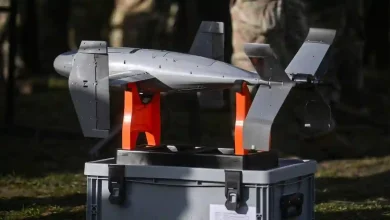
Autonomous interceptor drones tested in Dutch airspace for European air defense 2026
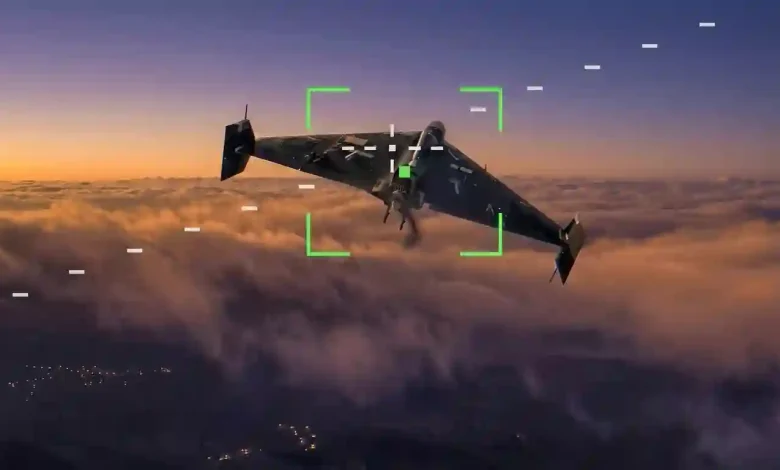
Table of Contents
Autonomous interceptor drones are redefining tactical kinetic air defense as next-generation aerial threats outpace legacy surface-to-air missile stockpiles across the continent. At a decommissioned Dutch military airfield fronting the tempestuous waters of the North Sea, an advanced projectile recently broke cloud cover with sustained acoustic force, accelerating along an automated vector to intercept an incoming mock hostile aircraft. The demonstration, conducted by software firm Intelic in coordination with the Netherlands Ministry of Defence, marks an operational inflection point in Europe’s quest to deploy machine learning at the tactical edge. Driven by a €30-million procurement framework intended to modernize national defenses while provisioning advanced systems to Ukraine, this initiative exemplifies the industrial response to the relentless aerial attrition observed throughout Eastern Europe.
Autonomous Interceptor Drones Take Flight Over the North Sea
During the trials, the interceptor emerged from a modular launch canister, instantly acquiring high subsonic velocity. Unlike conventional loitering munitions or remotely piloted quadcopters, these aerial interceptors rely on rapid burn solid-state propellants coupled with aerodynamic canard controls to sustain extreme agility during terminal homing. Ground-based phased array radars initially tracked the simulated threat, projecting a kinematic intercept corridor that was beamed directly to the drone’s flight avionics.
As the drone approached the target vector, onboard computer vision modules analyzed multi-spectral optical data, isolating the silhouette of the adversary craft against cloud clutter and maritime background noise. The demonstration confirmed that low-cost, software-driven munitions could neutralize simulated one-way attack loitering drones without expending multimillion-dollar surface-to-air interceptors. The urgency for such capabilities has been echoed across NATO, particularly as military planners seek synergies between digital agility and kinetic resilience to secure allied airspace.
The €30-Million Ministry Deal and Intelic’s Engineering
The operational trials represent the realization of a €30-million investment authorized by Dutch defense authorities, structured to rapidly prototype, validate, and mass-produce scalable counter-UAS platforms. Historically, procurement cycles within European defense establishments have spanned decades. However, the operational tempo enforced by the conflict in Ukraine has mandated compressed research and deployment cycles, establishing dynamic private-public partnerships.
Intelic, a specialized European defense software and systems engineering outfit, structured the interceptor’s architecture around modular open-system guidelines. This programmatic methodology permits rapid payload swapping, alternative propulsion integration, and immediate updates to target identification models. Financial and defense analysts tracking continental rearmament note that strategic initiatives like this echo broad realignments within international treaties and domestic funding, similar to the multi-state frameworks analyzed in recent reports on the Ukraine defense deal.
Autonomous :Radar Integration and Algorithmic Optical Verification
The fundamental technical challenge of counter-unmanned aerial systems (C-UAS) lies in detection, classification, and tracking amidst harsh environmental conditions and active electronic warfare. The North Sea coastal proving grounds provided an ideal electronic proving ground, characterized by heavy maritime clutter, shifting atmospheric pressure, and moisture saturation. Active phased-array radar sent raw tracking feeds to a local edge compute hub running proprietary classification algorithms.
Once airborne, the interceptor severed physical data reliance from the ground station, transitioning to onboard edge processing. This autonomy addresses critical vulnerabilities associated with jamming, GPS spoofing, and electromagnetic counter-measures commonly deployed on contemporary frontlines. By relying on hardened, neuromorphic onboard inference units, the drone correlates sensor telemetry directly with historical visual models, demonstrating the robust resilience demanded across modern AI infrastructure.
While software integration dominates software-defined warfare, regulatory frameworks concerning autonomous terminal engagement remain stringent. Defense ministries insist on human-on-the-loop oversight during initial target assignment. Yet, once authorization is granted, the speed of modern engagement requires algorithmic micro-corrections during terminal maneuvering. This balance reflects wider civil and military deliberations surrounding AI regulation demand across sovereign nations.
Autonomous :Bridging the Asymmetric Air Defense Gap
Modern air defense doctrines were designed around countering complex cruise missiles, ballistic payloads, and fourth- or fifth-generation manned fighters. The proliferation of low-cost Shahed-136 type loitering munitions, manufactured for tens of thousands of dollars, has upended classical attrition metrics. Firing interceptor missiles such as the MIM-104 Patriot PAC-2/PAC-3 or NASAMS AMRAAM against mass waves of cheap fiberglass drones imposes an unsustainable economic burn rate on defending nations.
Intelic’s drone platform directly addresses this imbalance by functioning as an attritable, mass-producible hard-kill kinetic interceptor. By keeping manufacturing costs orders of magnitude below the assets they protect, European defense planners preserve strategic interceptor stockpiles for hypersonic or ballistic threats. This operational logic closely aligns with tactical reviews from the Defense Department, which emphasize that layered, tier-one air defenses must deploy cost-matched effectors against saturating drone barrages.
Direct Applications for Ukrainian Battlefield Defense
The primary motivation driving the rapid testing program at the Dutch coastal base is direct assistance to Ukrainian frontline formations and metropolitan air defense grids. Ukrainian infrastructure has sustained sustained barrages of one-way attack drones and low-flying cruise missiles intended to exhaust radar batteries and deplete vital power grids. Mobile fire groups mounted on light trucks armed with searchlights and manual machine guns have provided stopgap defense, but their operational range and interception probability drop sharply during overcast weather or coordinated nocturnal swarm attacks.
Deploying autonomous interceptors offers a persistent, automated shield capable of being dispatched on minutes’ notice across contested regional envelopes. Because the interceptors feature rapid vertical or canister-assisted launches, they can be distributed throughout critical infrastructure perimeters, rail transit nodes, and fuel depots without requiring extensive runways or fragile ground support infrastructure.
Technical Overview: Interceptor Drone vs Traditional Air Defense
To understand the paradigm shift embodied by Intelic’s technology, military planners compare the operational variables between autonomous kinetic drones and traditional short-to-medium-range surface-to-air systems.
| Parameter | Autonomous Kinetic Interceptor | Traditional Short-Range SAM | Man-Portable Air Defense (MANPADS) |
|---|---|---|---|
| Average Effector Cost | $15,000 – $35,000 | $500,000 – $1,500,000 | $80,000 – $150,000 |
| Engagement Range | 10 km – 25 km | 15 km – 40 km | 4 km – 6 km |
| Propulsion Type | Solid-Rocket Booster / High-Output Turbine | Multi-stage Solid Rocket Motor | Single-stage Rocket Motor |
| Guidance Architecture | Edge AI, Optical Computer Vision, Dual Radar Link | Active Radar Homing / Command Line-of-Sight | Infrared / Ultraviolet Reticle Tracker |
| Counter-Jamming Capability | High (Autonomous Terminal Target Tracking) | Very High (Integrated EW Suites) | Moderate (Vulnerable to Flare Deceptions) |
| Launch Infrastructure | Mobile Pneumatic or Sealed Canister | Heavy Wheeled Vehicle / TELAR | Shoulder-Launched by Ground Personnel |
European Defense Industrial Base and Sovereign Tech
The collaborative development between the Netherlands Ministry of Defence and Intelic signals a structural transition within Western Europe’s industrial framework. Decades of peace dividends hollowed domestic production capacity, leaving several European nations reliant on foreign suppliers for critical munition components. By financing local software developers and agile robotics engineering labs, European governments are developing sovereign technological ecosystems designed to counter high-threat scenarios.
Advanced algorithmic models and computer vision pipelines are increasingly outperforming legacy defense systems, paralleling shifts in private tech where lightweight software suites challenge traditional monopolies, much like how specialized models such as Mistral AI outperforms established enterprise code bases. Simultaneously, concerns regarding software security, spoofing risks, and algorithmic verification are receiving heightened focus, mirroring broader industrial debates over AI risks inside historic deployment pipelines.
Defense manufacturers across the continent are also establishing common data-link architectures and interoperable protocols to integrate interceptors into integrated command networks. Multinational defense companies have embraced dual-use and software-driven systems, drawing direct parallels with regional aerospace protection efforts, such as programs highlighted in discussions regarding Saab space defense architectures.
The Trajectory of Autonomous Counter-Swarm Doctrines
Looking beyond the immediate requirements of European air corridors and Ukrainian frontlines, autonomous kinetic interceptors represent the foundation for future networked counter-swarm doctrines. Future battlefield spaces are anticipated to witness simultaneous drone deployments comprising hundreds of synchronized small-scale targets designed to saturate defensive fire sectors. Conventional missile defenses cannot physically manage or financially sustain engagements against saturated swarm vectors.
By leveraging decentralized mesh communications and swarm coordination algorithms, groups of interceptors can communicate dynamically in-flight, assigning target prioritization based on telemetry, fuel reserve, and closing speed. This distributed approach mirrors advancements in high-tempo multi-domain doctrines seen across allied space and aerial programs, including initial findings from operations such as the Space Force combat debut in Operation Epic Fury.
The test on the Dutch coast demonstrates that software intelligence, combined with low-cost precision aerodynamics, provides a path forward through modern air warfare bottlenecks. As long-range drone strikes remain central to territorial aggression, the capability to quickly field, adapt, and deploy high-speed autonomous interceptors will serve as an indispensable cornerstone of continental security and sovereignty.