Yumeki Kojima Shatters Asian Games Medley Record in Tokyo 2026
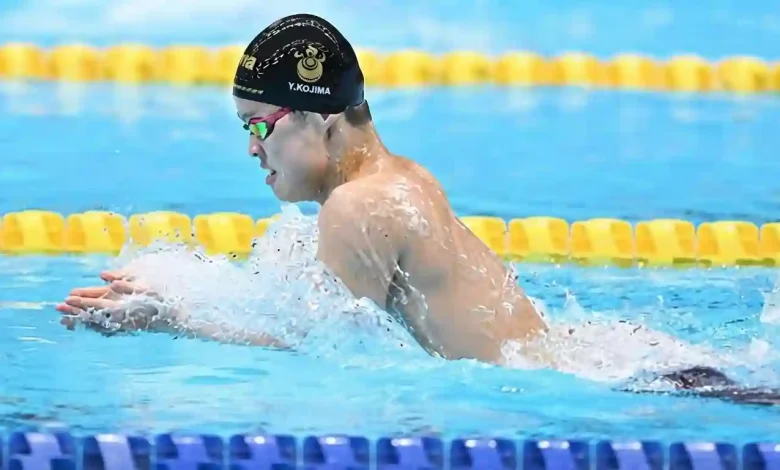
Table of Contents
Yumeki Kojima has emphatically announced his arrival on the international swimming stage with an extraordinary gold medal performance in the men’s 400-metre individual medley at the Tokyo Aquatics Centre. The 17-year-old Japanese sensation stopped the clock at four minutes 7.02 seconds, obliterating a venerable 12-year-old Asian Games standard that had stood as a testament to the golden era of Japanese medley swimming. In an arena already buzzing with excitement surrounding teenage prodigies across the continent, Kojima produced a swim of such clinical precision, power, and maturity that even reigning Olympic champion and world record holder Leon Marchand could not help but take notice.
Tokyo Aquatics Centre Electrified by Rising Japanese Phenom
The atmosphere inside the Tokyo Aquatics Centre was already reaching a fever pitch during an evening that highlighted some of the brightest young talents in international aquatic sports. Just as continental spectators were marveling at the astonishing technical proficiency of China’s 13-year-old phenom Yu Zidi, the host nation discovered its own transcendent star. Stepping up to lane four, the teenager showed no outward hints of intimidation. Much like we have seen elite competitors perform under intense pressure, such as when Carlos Alcaraz dominates marquee stages across tennis tournaments, Kojima channeled the thunderous roar of the home crowd into mechanical perfection across all four strokes.
From the sound of the starting horn, Kojima asserted control over a field composed of hardened senior veterans and emerging international contenders. The men’s 400-metre individual medley is universally considered the most grueling physical challenge on the competitive swimming program, demanding equal parts pure cardiovascular stamina, flawless stroke mechanics, and high-speed transition efficiency across butterfly, backstroke, breaststroke, and freestyle. Rather than pacing conservatively, Kojima went on the attack immediately, setting an aggressive tempo that pulled the rest of the finalists well into deep water before the race even reached its halfway mark.
Shattering Kosuke Hagino’s 12-Year Historic Benchmark
Prior to Tuesday’s historic heat, the Asian Games benchmark belonged to Kosuke Hagino, one of Japan’s most celebrated Olympic icons. Hagino set his fabled mark of 4:07.75 back at the 2014 Incheon Games, a swim that propelled him toward Olympic glory at the 2016 Rio de Janeiro Games. For over a decade, that time represented a barrier that eluded successive generations of Asian medley swimmers. Kojima not only eclipsed the record by more than seven-tenths of a second, but he did so while exhibiting a physical composure that suggests there is still room for dramatic improvement.
The cultural significance of surpassing Hagino cannot be overstated in Japan. Hagino’s epic duels with compatriot Daiya Seto helped establish Japan as an undisputed superpower in medley swimming throughout the 2010s. By breaking this specific milestone at age 17, Kojima validates the continued viability of national high-performance training systems. The sheer poise displayed by the teenager recalls the determination seen when young stars break through on high-stakes athletic circuits, similar to when top players battle through the Davis Cup Final 8 to bring pride back to their respective nations.
Split Breakdown: Engineering a 4:07.02 Masterpiece
A granular look at Kojima’s splits reveals the tactical genius behind his record-setting performance. Rather than overextending himself during the opening butterfly leg, Kojima clocked an efficient 56.12 seconds, positioning himself within striking distance of the leaders without generating premature lactic acid accumulation. His backstroke leg was where his technical evolution became undeniably apparent, churning through the water in 1:02.85 to open up daylight against the rest of the pool.
The decisive strike occurred during the breaststroke split. Historically, Japanese medley swimming has built its success on a foundation of world-class breaststroke mechanics, and Kojima is the direct inheritor of that lineage. His tempo remained rock-solid through the third 100 metres, clocking 1:10.21. Turning for home with a substantial lead, he dropped his head and unleashed a blistering freestyle anchor of 57.84 seconds, touching the wall to etch his name into the annals of Asian swimming history.
Statistical Retrospective: Comparing Elite Medley Timings
To contextualize the historical significance of Kojima’s 4:07.02, it is illuminating to examine how his performance compares against historic benchmarks and iconic swims at the Asian Games and world championship levels:
| Swimmer | Nation | Time (400m IM) | Meet / Year | Age at Race |
|---|---|---|---|---|
| Yumeki Kojima | Japan | 4:07.02 | Asian Games (Tokyo) | 17 |
| Kosuke Hagino | Japan | 4:07.75 | Asian Games (Incheon, 2014) | 20 |
| Daiya Seto | Japan | 4:08.79 | Asian Games (Jakarta, 2018) | 24 |
| Leon Marchand | France | 4:02.50 | World Aquatics Championships (2023) | 21 |
| Michael Phelps | United States | 4:03.84 | Olympic Games (Beijing, 2008) | 23 |
Catching the Eye of Olympic Champion Leon Marchand
When an athlete posts a sub-4:08 time in the 400m IM before their eighteenth birthday, the global swimming community pays close attention. French superstar Leon Marchand, who shattered Michael Phelps’ legendary world record and swept the individual medleys in Paris, shared praise for the young Japanese prodigy’s execution. International commentators were quick to point out that very few swimmers in history have navigated the event so rapidly at age 17, placing Kojima into an elite echelon inhabited only by generational talents.
Marchand’s own path to greatness involved meticulous attention to underwater dolphin kicking and stroke balance, two exact areas where Kojima demonstrated elite-tier execution on Tuesday. This sudden international focus transforms Kojima from an emerging national talent into a bonafide medal contender on the world stage. Athletic ascents of this magnitude often trigger intense anticipation across the sport, akin to how spectators monitor top contenders when an established favorite like Alexander Zverev cruises through major championship draws without dropping sets.
Duel of Teen Prodigies: Kojima Meets China’s Yu Zidi
The 400m medley final unfolded amidst an Asian Games program defined by the emergence of fearless teenage swimmers. Prior to Kojima’s breakthrough, the media narrative had centered primarily around China’s 13-year-old sensation Yu Zidi, whose precocious medal-winning displays had captivated audiences across the globe. Yu’s poise demonstrated that Asian junior swimming programs are currently producing generational athletes capable of matching senior international paces.
Rather than feeling overshadowed by the intense spotlight on his Chinese peer, Kojima leveraged the electric dynamic to fuel his own campaign. The competitive interplay between China and Japan has long been the primary driving force behind the elevated standard of swimming in Asia. This spirit of mutual elevation mirrors competitive rivalries throughout athletics, where youthful momentum frequently challenges veteran dominance, much like when young tennis standouts such as Ben Shelton beats US Open opponents through pure athleticism and fearless shot-making.
Japan’s Storied Tradition in Individual Medley Swimming
Japan has long maintained a unique technical philosophy regarding the individual medley. Rather than training specialists to merely survive their weaker strokes, the Japanese training framework emphasizes universal proficiency. Swimmers are conditioned from childhood to master the precise hip action and body rotation specific to each discipline. This comprehensive pedagogical method created legends such as Kosuke Hagino and Daiya Seto, both of whom claimed world titles and Olympic medals by exploiting their seamless stroke transitions.
Kojima’s technique represents the modern perfection of that heritage. Watching him transition from the high hips of his backstroke into the driving power of his breaststroke reveals countless hours spent mastering turn mechanics and underwater dolphin propulsion. The discipline required to execute this strategy at full race tempo parallels the mental endurance observed when athletes like Brazil’s Alison Santos negotiate grueling hurdle layouts on the track, where technical precision dictates the outcome as much as raw speed.
Technical Evolution and Modern High-Performance Regimes
Behind Kojima’s meteoric rise lies a modern revolution in Japanese sports science. Training at high altitudes, incorporating advanced biometric feedback systems, and utilizing hydro-dynamic cameras have enabled his coaching staff to fine-tune his stroke efficiency to millimeter accuracy. Every pull of his arms and kick of his legs has been scrutinized to eliminate drag, allowing him to conserve energy during the grueling transition between the backstroke and breaststroke.
Moreover, his physiological conditioning emphasizes rapid lactate clearance. In previous eras, swimmers who attacked the butterfly leg too aggressively paid a severe price in the final 50 metres of the freestyle leg. Kojima’s ability to maintain a streamlined body position even under peak anaerobic strain demonstrates that modern high-performance sports training has successfully expanded the human engine’s operational limits. It brings to mind the exceptional cardiovascular resilience shown across prolonged competitive campaigns, such as when baseball powerhouse teams like the Atlanta Braves clinch NL divisional titles through month-after-month tactical execution.
Looking Forward: The Road to Future Global Supremacy
With a 4:07.02 already in his portfolio, Kojima is no longer a prospect to watch for the future; he is a reality that world swimming must confront immediately. The next steps for the 17-year-old will involve stepping onto the premier global stages of the World Aquatics Championships and preparing for the next Olympic cycle. Maintaining this trajectory will require navigating the physical maturation process, handling intensified media scrutiny, and adjusting race strategies as competitors inevitably study his splits.
The intense pressure on young superstars is a common phenomenon throughout elite international sport. When a young athlete delivers a historic breakthrough, the expectations of an entire nation can suddenly rest on their shoulders. We have witnessed similar pressures unfold across premier basketball organizations, such as when trade speculation surrounded the Kawhi Leonard trade talks that shifted franchise paradigms overnight. If Kojima can preserve his humble demeanor, technical discipline, and ferocious work ethic, he possesses every ingredient needed to turn his Asian Games gold into Olympic immortality, following the path of competitors who build on initial momentum to secure an undisputed Arthur claim Cincinnati victory or international tournament trophies.