AvroTros Boycotts Eurovision 2027 Over Israel and Gaza Conflict
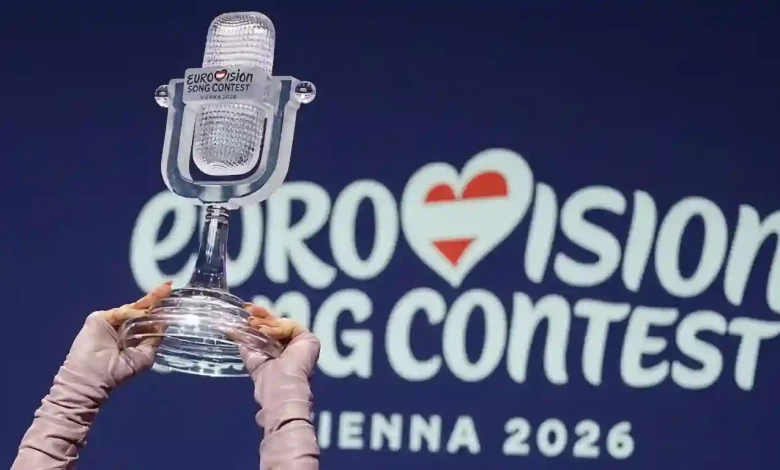
Table of Contents
AvroTros has officially announced its withdrawal from the 2027 Eurovision Song Contest, initiating a second consecutive year of boycott in protest of Israel’s continued participation and the severe humanitarian crisis in Gaza. The Dutch public broadcaster released a detailed statement on Monday, August 24, 2026, expressing deep dissatisfaction with the European Broadcasting Union’s (EBU) regulatory changes. According to the broadcaster, these reforms fail to restore the “independent and neutral character” of the international music competition. The decision marks a watershed moment in the intersection of geopolitics and popular entertainment, signaling that the divisions surrounding the contest are far from resolved.
The decision to step away from the 2027 competition, which is scheduled to take place in Burgas, Bulgaria, follows a year of lobbying by Dutch television executives. AvroTros had repeatedly petitioned the EBU to implement a more robust framework regarding countries involved in active military conflicts. In their view, the lack of definitive criteria for suspending states undergoing active military engagement erodes the moral foundation of the show. By choosing to boycott, AvroTros is prioritizing its core institutional values of human rights and editorial integrity over international exposure.
The Core Conflict: AvroTros Stands Firm Against Participation
The official position of the broadcaster is rooted in the belief that the music festival can no longer call itself a neutral event while a participating nation remains a primary actor in an active regional conflict. In a statement that sent shockwaves through the European entertainment landscape, Director-General Taco Zimmerman noted that international conflicts are increasingly bleeding into the competition, fundamentally undermining its neutral character. For smaller independent production houses, obtaining national representation is often the pinnacle of small business success in the highly competitive European broadcasting market. However, AvroTros has chosen to sacrifice these professional opportunities in pursuit of a broader ethical standard.
The public broadcaster’s leadership argued that the contest has drifted away from its original post-war mission, which was to unite nations and citizens through the universal language of music. Instead, they assert that the show has become a highly charged lightning rod for geopolitical division. Over the course of the previous broadcast cycle, the event was plagued by extensive protests, press restrictions, and security concerns, leading to an environment that AvroTros describes as unsustainable for public broadcasting and incompatible with their mission to serve the Dutch public ethically.
The Catalyst: Israel’s Presence and the War in Gaza
The primary point of contention remains the ongoing military engagement in Gaza and the subsequent humanitarian crisis. Critics of the EBU have repeatedly pointed to the severe civilian casualties and structural damage in the Gaza strip as reasons why Israel should face suspension from international cultural events, drawing direct parallels to the swift exclusion of Russia following its invasion of Ukraine in 2022.
This growing tension within international events echoes broader geopolitical friction where diplomatic ties are tested, such as the public discussions surrounding norways fm us relations and how Western nations evaluate unilateral actions. Simultaneously, legislative actions, such as the iran sanctions scott senator spearheaded in the U.S. Congress, show how governments use formal frameworks to address international conflict—frameworks that the EBU has notably struggled to establish. In the absence of such clear rules, AvroTros argues that the EBU has left member stations with no choice but to take individual, unilateral action to preserve their moral authority.
Critiquing the European Broadcasting Union’s Amended Regulations
In response to the unprecedented friction that occurred during the 2026 contest in Vienna, the EBU introduced several changes to its code of conduct. The most notable reform prevents a winning country from hosting the following year’s competition if they are involved in an active armed conflict or are experiencing a geopolitical crisis that poses direct security risks. While the EBU framed this as a compromise designed to protect the safety of artists and attendees, AvroTros dismissed the measure as a half-measure that avoids the real ethical questions.
Just as public figures find their paths blocked by formal regulations—for instance, when actor brian hickerson denied appeals to clear his records, leaving unresolved legal questions—the EBU’s internal policies are viewed by member broadcasters as incomplete. This organizational discord is not unique to entertainment; it mirrors situations where top sports executives like kevin lamour depart fifa amidst major administrative disagreements. By shifting the conversation to hosting eligibility rather than participation eligibility, the EBU has failed to pacify its critics, who argue that the actual presence of a nation engaged in military conflict ruins the competitive spirit of the show.
The Hosting Exclusion Loophole
The primary flaw in the EBU’s updated regulation is what critics call the “hosting exclusion loophole”. Under the current framework, a nation undergoing active military conflict can still compete, vote, and promote its national image on a global stage. The only restriction is that they cannot host the next iteration of the event if they win. AvroTros argues that this does nothing to resolve the moral friction of active participation. If a controversial state wins or ranks highly, the platform still serves to normalize and sanitize actions that are widely condemned by international bodies, defeating the purpose of a neutral cultural event.
Ethical Alignment and Organizational Values of AvroTros
For the Dutch public broadcaster, remaining associated with the event under these terms is no longer tenable. In their official statement, Taco Zimmerman emphasized that participation is no longer consistent with the core corporate values of AvroTros: trustworthiness, independence, and humanity. The broadcaster has faced growing pressure from domestic viewers, staff, and political factions who argue that paying license fees to fund the EBU while the Middle East conflict remains unresolved is an endorsement of double standards.
These institutional standards reflect a broader societal trend where ethical considerations guide structural policies, much like how government policy child safety measures are mandated to prioritize human well-being over operational ease. For smaller entities, maintaining such high ethical standards is crucial, just as establishing trust is a cornerstone of small business success in any local economy. AvroTros has chosen to take a public stand, accepting the financial and reputational risks associated with pulling out of one of Europe’s most-watched television broadcasts in order to keep its integrity intact.
Shifting the Responsibility: What Lies Ahead for the Netherlands and NPO
While AvroTros has formally declared its withdrawal, the Netherlands’ presence at the 2027 contest is not entirely ruled out. AvroTros is the specific public broadcasting association historically tasked with managing the Dutch entry. However, they have returned the structural responsibility for Eurovision representation to the Nederlandse Publieke Omroep (NPO), the overarching national coordinating body for public broadcasting. While the NPO deliberates on how to handle this shift, the economic and political effects of international conflicts continue to ripple through standard markets, exemplified by how global oil prices slip amid diplomatic changes in the Middle East.
The NPO must now decide whether to appoint another Dutch public broadcaster to select and send an entry to Burgas, or to honor the spirit of the AvroTros boycott and withhold the country from the competition altogether. In 2026, when AvroTros first boycotted, the NPO stood by them and did not seek an alternative broadcaster. Observers suggest that the NPO is likely to maintain a unified front, meaning the Netherlands is highly unlikely to participate in 2027.
A Growing European Trend of Broadcaster Discontent
The Dutch boycott is not an isolated incident but rather the latest escalation in a growing wave of discontent among European public service media. The 2026 contest in Vienna saw a coordinated boycott by five national broadcasters, including those of Spain, Ireland, Slovenia, Iceland, and the Netherlands. This marked the largest collective withdrawal from the event since the famous 1970 boycott, which occurred under very different cultural circumstances.
The collective pushback highlights deep structural cracks in how cultural governing bodies operate, drawing parallels to global sports organizations, such as when FIFA president gianni infantino under fire 5 stunning signs of open revolt became evident due to controversial administrative decisions. As broadcasters across Europe face intense pressure from their own tax-paying publics, more nations may follow AvroTros’ lead and pull out of the 2027 contest, potentially triggering an existential crisis for the EBU.
Analyzing the Geopolitical Friction in Modern Cultural Institutions
The Eurovision Song Contest was established in the mid-1950s as a way to foster European unity following the destruction of World War II. It was deliberately designed to be a non-political, purely cultural event. However, in the modern era of instant communication and global conflicts, separating art from politics has proved nearly impossible. The EBU’s attempts to enforce strict “apolitical” rules have frequently resulted in accusations of bias and hypocrisy, particularly as cultural professionals and musicians continue to demand that the organization take a consistent moral stance on global human rights issues.
Implications for the 2027 Eurovision Song Contest in Burgas
The 2027 contest is set to be hosted in Burgas, Bulgaria, following the victory of Bulgarian artist Dara in 2026. However, the event faces significant headwinds. The loss of major participating countries like the Netherlands not only reduces the variety of musical entries but also impacts television ratings, sponsorship deals, and the overall prestige of the contest. If the EBU continues to ignore the calls for systematic reforms, the 2027 contest could go down in history as one of the most politically fragmented and poorly attended editions of the modern era.
| Key Stakeholder | Primary Position | Action Taken for 2027 | Broader Strategic Impact |
|---|---|---|---|
| AvroTros (Netherlands) | Demands clear rules to exclude countries involved in active military conflicts. | Boycotting the contest for a second consecutive year; returned mandate to NPO. | Demonstrates a willingness to sacrifice media exposure in favor of ethical principles. |
| European Broadcasting Union (EBU) | Maintains the contest is non-political; changed rules to ban combatants from hosting, but not competing. | Proceeding with the event in Burgas, Bulgaria; regrets the Dutch decision. | Faces ongoing accusations of hypocrisy and a compounding crisis of legitimacy. |
| NPO (Dutch Overarching Body) | Coordinating public broadcasting policy; supported previous boycotts. | Reviewing whether to broadcast the contest or assign a different member broadcaster. | Unlikely to bypass AvroTros’ stance, making a full Dutch absence highly probable. |
| Participating Boycott Allies (e.g., Spain, Ireland) | Expressed deep concerns over Gaza and Israel’s participation. | Under pressure from internal cultural groups to extend their 2026 boycotts. | Could trigger a domino effect of withdrawals, severely diminishing the contest’s scale. |